St Edward the Confessor: life, feast day, and legacy
St Edward the Confessor: life, feast day, and legacy
St Edward usually refers to St Edward the Confessor, the English king who ruled from 1042 until his death in 1066. He is remembered for his personal devotion, support for the church, and connection with Westminster Abbey. His feast day is celebrated on October 13.
The name can also refer to St Edward the Martyr, another medieval English king who ruled briefly in the 10th century. Knowing which Edward you mean matters: the Confessor is associated with prayer, justice, and Westminster, while the Martyr is remembered for his violent death and witness to the faith.
Several English kings named Edward have been honored in Christian history, but two are recognized as saints. Their stories are different, and their feast days are not the same.
St Edward the Confessor: King of England from 1042 to 1066, remembered for holiness, charity, prayer, and the building of Westminster Abbey. His feast day is October 13.
St Edward the Martyr: King of England from 975 to 978, killed while still a young man. His feast day is March 18.
Edward I, Edward II, and Edward III: Important English monarchs, but not saints recognized in the same way as Edward the Confessor or Edward the Martyr.
When a church, school, parish, hospital, or organization is named St Edward without another title, it often refers to Edward the Confessor. His reputation remained especially strong because of his association with Westminster Abbey and the long-standing English monarchy.
Quick answer: If you need a prayer, feast-day explanation, or saint biography for “St Edward,” start with Edward the Confessor. If the subject involves a young king killed in 978, the correct saint is Edward the Martyr.
How to identify and learn about St Edward
A few simple steps can help you find the right information, especially when the name appears on a parish website, school sign, or church calendar.
Check the title. “The Confessor” means Edward the king who died in 1066. “The Martyr” means the younger king who died in 978.
Look at the feast date. October 13 belongs to Edward the Confessor; March 18 is associated with Edward the Martyr.
Look for the setting. Westminster Abbey, royal patronage, and a peaceful reign usually point to Edward the Confessor.
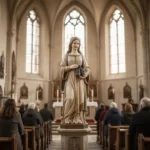
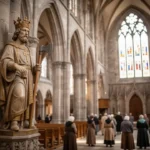
Consider the image. A crown, ring, scepter, or model of a church may represent Edward the Confessor. A youthful king shown near a horse or in a scene of betrayal may represent Edward the Martyr.
Read the local dedication. A parish may use “St Edward” in a way that reflects its own history. Its official name or feast-day notice will usually provide the full title.
Who was St Edward the Confessor?
Edward the Confessor was born around the beginning of the 11th century, during a period when England was affected by conflict among English, Danish, and Norman rulers. He was the son of King Æthelred II, also called Æthelred the Unready, and Emma of Normandy.
Edward spent part of his early life in exile in Normandy after Danish rule displaced his family. This experience shaped his character and placed him within a complicated network of English and Norman political relationships. He eventually returned to England and became king in 1042, following the death of his half-brother, King Harthacnut.
His reign lasted nearly 24 years. Medieval accounts portray him as a king who valued prayer, generosity, and the church, although he also had to manage the practical demands of ruling a country divided by powerful nobles and competing claims to authority.
The title “Confessor” does not mean that Edward was killed for his faith. In the language of Christian tradition, a confessor is a person who publicly witnesses to the faith and is honored for holiness without dying as a martyr. Edward’s title distinguishes him from Edward the Martyr.
Why Edward the Confessor became known for holiness
Traditional accounts emphasize Edward’s devotion to prayer, his generosity toward the poor, and his support for religious communities. Medieval biographies often present him as a king who tried to combine royal responsibility with a disciplined spiritual life.
His reputation should be understood within the values of medieval Christianity. A holy ruler was expected to protect the church, support monasteries, administer justice, care for the vulnerable, and restrain personal ambition. Edward became an example of this ideal, even though the political realities of his reign were more complicated than later devotional stories suggest.
Edward married Edith, daughter of Godwin, Earl of Wessex, one of the most powerful men in England. The marriage connected Edward to a major political family, but they had no children. Later tradition described the marriage as celibate, though historians must distinguish devotional accounts written after Edward’s death from evidence that can be firmly established.
Stories about Edward’s compassion helped shape his public image. One well-known tradition says that he gave a ring to a poor or pilgrim-like stranger and later received it back through messengers who identified the person as St John the Evangelist. The story is part of Edward’s medieval legend and illustrates the saintly themes of hospitality, generosity, and care for people in need.
Edward’s reign and the political challenges he faced
Edward was not simply a religious figure separated from government. He was an active medieval monarch ruling during a time when military power, family alliances, and regional authority all mattered. The earls who supported or challenged him could control large territories and command substantial forces.
The most influential political figure during much of Edward’s reign was Godwin, Earl of Wessex. Godwin’s family held exceptional power, and his son Harold became one of Edward’s most important advisers. Edward’s relationship with the Godwin family shifted over time, producing conflict, exile, reconciliation, and uncertainty about the succession.
Edward’s years in Normandy also brought Norman connections into English affairs. After his death, both Harold Godwinson and William, Duke of Normandy, claimed that they had grounds to succeed him. The disputed succession led to the Norman Conquest after William defeated Harold at the Battle of Hastings in 1066.
Edward died on January 5, 1066, and was buried at Westminster. His death left England without a straightforward succession, and the political crisis that followed changed English history. William became king, but Edward’s reputation continued to grow after his burial.
What Westminster Abbey has to do with St Edward
St Edward the Confessor is closely connected with Westminster Abbey, one of the most important religious and historical buildings in England. Edward began rebuilding a church at Westminster in the years before his death. The project was dedicated in honor of St Peter and became the foundation of the later abbey.
The building Edward knew was not the same structure visitors see today. Westminster Abbey was enlarged and transformed over the centuries, especially under later medieval kings. Even so, the abbey’s origins and Edward’s burial there established a lasting connection between the saint and the site.
Edward’s shrine became a major place of pilgrimage. His remains were moved to a shrine within Westminster Abbey in 1163, two years after Pope Alexander III formally canonized him. The shrine remains an important part of the abbey’s history, although access and arrangements can vary.
The abbey also became the setting for royal coronations. Edward’s association with Westminster helped strengthen the idea that the site was connected with English kingship. The coronation chair, used in the abbey for centuries, is traditionally linked with this royal setting, although it should not be confused with Edward’s shrine itself.
Historical distinction: Edward did not build the entire Westminster Abbey seen today. He began an important predecessor church, and later monarchs expanded and remodeled the site across many centuries.
When is St Edward the Confessor’s feast day?
The feast day of St Edward the Confessor is October 13. Churches and communities may mark the day with Mass, prayer services, readings about Edward’s life, or reflections on Christian leadership and service.
October 13 is also a useful date for distinguishing Edward the Confessor from Edward the Martyr. The Martyr’s feast is generally observed on March 18. Local calendars can include additional commemorations, transfers, or community celebrations, so a parish notice may differ from a universal or national calendar.
Feast days are not merely historical anniversaries. In Christian worship, a saint’s day connects the memory of a person with prayer, Scripture, the Eucharist in traditions that celebrate it, and a renewed focus on the virtues associated with that saint. Edward’s day often highlights faithful leadership, humility, prayer, and generosity.
What St Edward the Confessor symbolizes
Edward is commonly associated with several themes that remain meaningful beyond his royal biography.
Faith in public responsibility: Edward is remembered as a ruler whose authority was understood as a duty, not only a privilege.
Prayer and discipline: Traditional accounts present him as someone who sought to keep a life of devotion alongside the demands of kingship.
Mercy toward the poor: His legends repeatedly connect him with charity and attention to people with little social power.
Peace and reconciliation: Edward’s image as a gentle ruler contrasts with the violence that surrounded medieval succession disputes.
Support for the church: His building project at Westminster became part of a much larger religious and national tradition.
These themes do not mean that Edward’s reign was free from political conflict. They show how later Christians interpreted his life and chose to remember him. Saints are often honored not because every detail of their historical circumstances was simple, but because their lives are seen as pointing toward particular virtues.
Why Edward is called the Confessor rather than the Martyr
The word confessor has a technical meaning in Christian saintly tradition. It describes a person who openly professes the faith and is honored for holiness without being killed specifically because of that profession.
A martyr, by contrast, is honored because he or she died as a witness to the faith. Edward the Martyr’s death is the reason for his title. Edward the Confessor died as a king after a long reign, so “Confessor” is the more accurate designation.
The distinction can be useful when reading older church records. Medieval documents may use titles that sound like descriptions of personality, but they often identify a recognized category of sainthood. “Confessor” does not suggest that Edward was guilty of a crime or that he spent his life hearing confessions.
How Edward the Confessor was canonized
Edward’s reputation for holiness grew after his death. Stories about miracles, his piety, and his concern for the church circulated among clergy and pilgrims. His tomb at Westminster became a focus of devotion, helping establish the case for official recognition.
Pope Alexander III canonized Edward in 1161. His remains were later translated to a shrine at Westminster in 1163, during the reign of Henry II. Medieval canonization involved investigation, testimony, and papal approval, although the procedures were not identical to the modern processes used by the Catholic Church.
Edward’s canonization also served a broader religious and political purpose. Honoring a former English king at Westminster reinforced the abbey’s importance and connected the monarchy with a sacred historical tradition. This connection continued to influence how later rulers and communities remembered him.
How churches and schools use the name St Edward
Organizations named for St Edward often choose him as a model of Christian education, service, leadership, or worship. A school may emphasize his dedication to learning and faith, while a parish may focus on prayer, pastoral care, or the local history of its patron.
The name can also reflect a connection with English heritage. Because Edward the Confessor is linked with Westminster Abbey and the monarchy, his name appears in churches and institutions that draw on English religious history. A dedication does not necessarily mean that every member or student is expected to study medieval England. It usually expresses an aspiration to live out values associated with the patron saint.
If you are preparing a presentation, service, or school project about St Edward, useful subjects include:
Edward’s childhood and years in Normandy
His accession as king in 1042
His relationship with Edith and the Godwin family
The rebuilding of the church at Westminster
The meaning of the title “Confessor”
His canonization and shrine
The difference between Edward the Confessor and Edward the Martyr
A careful presentation should separate historical evidence from later legend. Medieval biographies can preserve valuable information, but they also present saints in ways intended to inspire devotion. A ring story, miracle account, or description of unusual holiness may communicate a spiritual ideal even when its historical details cannot be independently confirmed.
How to pray with St Edward’s example
People who turn to St Edward in prayer may reflect on the responsibilities they have toward family, colleagues, communities, or institutions. His traditional image connects authority with service, reminding you that leadership is measured not only by decisions but also by how you treat people who have less power.
A simple prayer may ask for wisdom in responsibility, patience during conflict, courage to act justly, and compassion for people in need. You can also pray for peace in families and communities, especially when disagreements involve status, inheritance, authority, or competing expectations.
St Edward’s example can be used in several practical ways:
Begin with silence. Spend a few minutes becoming attentive before naming the concerns you bring to prayer.
Name your responsibility. Ask where you have influence and how you can use it fairly.
Remember people with less power. Include the poor, lonely, sick, displaced, or overlooked in your prayers.
Seek reconciliation. Consider one relationship or dispute that needs patience and honest action.
End with a concrete intention. Choose one act of service, generosity, or restraint to practice that day.
Prayer to a saint is understood differently across Christian traditions. Catholics and Orthodox Christians may ask St Edward to pray for them, while many Protestant Christians honor his example without addressing prayers to him. Both approaches can involve learning from the virtues associated with his life.
St Edward the Martyr: the other saint with this name
Edward the Martyr became king of England in 975 while still a teenager. His reign was short and politically unstable. He was killed in 978 at Corfe, in circumstances connected with opposition to his rule and the ambitions surrounding his succession.
Because he died violently, Edward is remembered as a martyr. His story is separate from that of Edward the Confessor, although the two are sometimes confused because both were English kings and both were later honored as saints.
Edward the Martyr’s feast day, March 18, is especially significant for communities dedicated to him. Churches may portray him as a young ruler whose faithfulness endured through political danger. His life raises different questions from those connected with Edward the Confessor: how should Christians respond to injustice, betrayal, and the misuse of power?
When searching for a church, icon, biography, or feast-day resource, include the complete name. Searching for “Edward the Confessor” or “Edward the Martyr” will produce more reliable results than using “St Edward” alone.
What remains of St Edward’s legacy
Edward the Confessor’s legacy reaches beyond the years of his reign. His name is linked with Westminster Abbey, one of England’s most significant places of worship and royal memory. His shrine, feast day, and title continue to connect medieval devotion with present-day Christian practice.
His story also illustrates how history and religious memory develop together. Edward was a king involved in the difficult politics of 11th-century England, yet later generations remembered him primarily through prayer, charity, kingship, and the church at Westminster. That combination of historical complexity and spiritual interpretation is central to understanding many medieval saints.
For a concise description, you can say: St Edward the Confessor was an English king, Christian patron, and saint remembered for his devotion, charity, and connection with Westminster Abbey. If the subject is the young king who died in 978, use the full title St Edward the Martyr instead.
Frequently asked questions
What is St Edward the patron saint of?
St Edward the Confessor is traditionally associated with kings, rulers, difficult marriages, and people seeking a model of Christian leadership. These patronages developed through historical devotion and later tradition rather than from one single official list. Churches may also look to him when praying for peace, responsible authority, generosity, and faithfulness in public life.
Is St Edward the same as Edward the Confessor?
In most church and historical contexts, “St Edward” means Edward the Confessor, especially when the subject involves Westminster Abbey or the English monarchy. However, St Edward the Martyr is another recognized English saint. Check the title, feast date, or local church dedication to determine which Edward is intended.
Where is St Edward the Confessor buried?
St Edward the Confessor is buried at Westminster Abbey in London, where his remains were placed in a shrine during the 12th century. The shrine became an important pilgrimage site and remains connected with the abbey’s religious and royal history. Access arrangements may depend on the abbey’s schedule and services.
Why was Edward the Confessor made a saint?
Edward was canonized because of his longstanding reputation for holiness, prayer, generosity, and support for the church. Devotion to him grew after his death, particularly around his tomb at Westminster. Pope Alexander III formally canonized him in 1161, and his remains were transferred to a shrine two years later.
















Leave a Reply