St Dymphna: story, patronage, prayer, and feast day
St Dymphna: story, patronage, prayer, and feast day
St Dymphna is traditionally honored as the patron saint of mental illness, emotional distress, and those who care for people experiencing psychological suffering.
Who St Dymphna was according to Christian tradition
St Dymphna is remembered as a young Christian woman who lived in the early medieval period and died because she refused to violate her faith and personal dignity. Her story comes primarily from a later medieval account rather than from records written during her lifetime, so details should be understood as religious tradition rather than fully documented history.
According to the traditional story, Dymphna was born in Ireland to a pagan king and a Christian mother. Her mother’s death created a crisis in the family. Dymphna’s father, grieving and unstable, reportedly wanted to marry his daughter because she resembled his deceased wife. Dymphna rejected the proposal and sought advice from a priest named Gerebernus, who had baptized or instructed her in the Christian faith.
Dymphna, Gerebernus, and several companions fled across the sea and eventually reached the region around Geel, Belgium. There, tradition says, Dymphna lived quietly and helped people in need. Her father eventually discovered her location, demanded that she return, and killed her after she continued to refuse his wishes. Gerebernus and others were also killed in the account.
The story is difficult and should not be treated as a simple legend about family conflict. It includes themes of coercion, abuse of power, forced flight, religious conviction, and the protection of vulnerable people. Those themes help explain why many people have turned to Dymphna during situations involving fear, trauma, mental illness, and unsafe relationships.
Historical perspective: The traditional account of St Dymphna is meaningful to many Christians, but the surviving narrative was written centuries after the events it describes. The broad story is best presented with care rather than as independently verified biography.
Why St Dymphna is associated with mental illness
Dymphna’s connection with mental illness comes largely from the behavior attributed to her father. The traditional account portrays him as overcome by grief, obsession, and disturbed judgment after his wife’s death. Medieval communities came to associate the saint with people experiencing mental and emotional suffering, especially those whose behavior or condition left them isolated from society.
Her patronage developed in a setting where people had few medical explanations or effective treatments for psychiatric disorders. A person described in older sources as “possessed,” “mad,” or “deranged” might have been living with a condition that modern medicine would describe differently. Historical language about mental illness does not map neatly onto current diagnoses, so modern readers should avoid assigning a specific condition to Dymphna’s father.
Over time, people prayed to Dymphna for those experiencing anxiety, depression, psychosis, trauma, addiction, neurological disorders, and other forms of distress. She also became associated with caregivers, families, psychiatric workers, and people who felt rejected because of their mental health challenges.
Prayer to a patron saint is not a substitute for professional treatment. A person experiencing suicidal thoughts, hallucinations, severe confusion, or immediate danger needs prompt help from emergency services, a crisis line, a physician, or a qualified mental health professional. Religious support can exist alongside medical care, counseling, medication, and practical safety planning.
How to understand St Dymphna’s story step by step
The traditional account can be read through several connected points. Each one highlights a reason people continue to remember her.
A young woman held a clear moral boundary. Dymphna refused a demand she considered wrong, even though the person making it held power over her.
She sought trusted guidance. The priest Gerebernus is portrayed as someone who helped her respond to danger rather than face it alone.
She left an unsafe environment. Her journey to Geel represents protection, refuge, and the difficult decision to seek safety elsewhere.
She served people on the margins. Tradition connects her with care for the poor and vulnerable after she arrived in Geel.
She became a symbol for people who suffer invisibly. Her name came to be invoked by people affected by mental illness, trauma, and social exclusion.
Her legacy became practical as well as devotional. Geel developed a distinctive tradition of welcoming people with mental illness into family homes and community life.
This reading does not require you to accept every detail as historical fact. It shows how a saint’s story can gain meaning over time through the needs of the people who remember her. Dymphna’s reputation grew because her story addressed both personal suffering and the way communities respond to vulnerable people.
Geel is closely connected with St Dymphna because tradition places her death there. The town is home to the Church of Saint Dymphna, often called the Basilica of St Dymphna, where devotion to her has continued for centuries. The site became a destination for people seeking prayer and help for mental and emotional distress.
Geel also became known for a community-based approach to mental health care. Instead of isolating every person with a psychiatric condition in an institution, local families took some residents into their homes and included them in everyday activities. This practice is often described as family care or community integration.
The tradition did not mean that every person received identical care or that serious illness could be managed without clinical support. Rather, it reflected the belief that a person with mental illness could remain part of ordinary community life. That principle still influences discussions about belonging, dignity, supported living, and social inclusion.
Geel’s association with Dymphna should therefore be understood on two levels. It is a religious pilgrimage tradition centered on a saint, and it is also a social history of how one community responded to people who were often separated from society elsewhere.
A useful lesson from Geel: Care is not only about diagnosis or treatment. Stable relationships, meaningful routines, safe housing, and freedom from stigma can also make a major difference in a person’s life.
St Dymphna’s patronage and the people who pray to her
St Dymphna is best known as the patron saint of mental illness. Her patronage is especially meaningful to people who live with psychiatric conditions and to relatives who provide daily support. Some people also ask her intercession for protection from abuse, recovery from trauma, and strength when a loved one’s behavior becomes difficult or frightening.
Different Catholic sources and local traditions describe her patronage in slightly different ways. Common associations include:
Mental illness and emotional distress, including suffering that others may not understand.
Caregivers and families who need patience, wisdom, and practical support.
People experiencing abuse or coercion who need safety and the courage to seek help.
Neurological conditions, epilepsy, and other illnesses historically grouped with mental or nervous disorders.
People who are socially isolated because of stigma, poverty, disability, or psychiatric symptoms.
Professionals and volunteers who work in mental health, social services, pastoral care, and community support.
These associations do not mean that Dymphna’s intercession guarantees a particular medical outcome. Catholic prayer traditionally asks for healing, accompaniment, protection, wisdom, and endurance, while leaving the form and timing of an answer to God. Many people also pray for the grace to recognize when professional intervention is needed.
When St Dymphna’s feast day is celebrated
St Dymphna’s feast day is traditionally celebrated on May 15. The date is observed in Catholic communities connected with her, especially in Ireland, Belgium, and places where people work in or receive mental health care.
A parish or shrine may mark the feast with Mass, a procession, prayers for people with mental illness, or a special remembrance of families and caregivers. Some communities display an image or statue of Dymphna and invite people to write down the names of those for whom they are praying.
Feast-day customs can vary by country and parish. A local church may celebrate the saint on another date when the liturgical calendar requires a change, or it may combine her observance with a broader service for the sick. Checking the parish or shrine’s current schedule is the best way to confirm local arrangements.
How St Dymphna is usually depicted in art
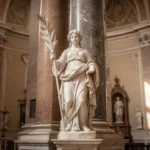
Images of St Dymphna commonly show her as a young woman wearing a crown, reflecting the tradition that she was the daughter of a king. She may hold a sword or palm branch, symbols associated with martyrdom. Some images include a book, a lily, or a small figure representing a person seeking help.
The sword can refer to the manner of her death in the traditional story, while the palm branch is a broader Christian sign of martyrdom and faithful witness. A crown may identify her royal background, but it can also suggest that spiritual dignity is not erased by violence or suffering.
Artists sometimes portray Dymphna with a chained or distressed person nearby. This visual connection emphasizes her patronage of mental illness, although the imagery should be approached thoughtfully. People living with psychiatric conditions should not be reduced to symbols of helplessness, danger, or disorder. The strongest interpretation presents them as whole persons deserving respect, safety, and participation.
How to pray to St Dymphna responsibly
There is no single required prayer format. You can speak plainly, use a traditional prayer, attend Mass, or sit quietly with the needs of a loved one. A meaningful prayer can name the person’s suffering while also asking for practical wisdom and the courage to accept appropriate care.
A simple approach may include these steps:
Name the person or situation. Mention the person, diagnosis if known, fear, conflict, or uncertainty you are carrying.
Ask for St Dymphna’s intercession. Request her prayers for healing, protection, clarity, and strength.
Ask for wise human help. Pray for a trustworthy doctor, therapist, clergy member, advocate, or support group.
Pray for safety and dignity. Ask that the person receive care without shame, neglect, exploitation, or unnecessary isolation.
Take a practical next step. Make an appointment, contact a crisis service, check on someone, or ask another person to share the responsibility.
For example, you might pray: “St Dymphna, pray for everyone living with mental or emotional suffering. Ask God to give them safety, compassionate care, and hope. Pray also for their families and caregivers, that they may receive wisdom, rest, and support.” This wording is an original prayer rather than a fixed liturgical text.
Prayer can be private or shared. A family might pray before a difficult appointment, a hospital chaplain might include Dymphna in pastoral care, or a person with mental illness might ask for help in finding a safe and respectful treatment plan.
How devotion to St Dymphna can avoid harmful assumptions
Devotion is most helpful when it protects a person’s dignity. Mental illness is not a moral failure, a punishment, or proof of weak faith. A person may pray deeply and still need medication, hospitalization, therapy, disability support, or long-term treatment.
It is also unhelpful to describe every unusual behavior as spiritual possession or to advise someone to stop prescribed medication. Mental health symptoms can have many causes, and assessment belongs to qualified clinicians. Clergy and spiritual advisers can offer comfort and religious guidance, but they should cooperate with medical professionals when serious symptoms are present.
Families can honor Dymphna by combining prayer with concrete care:
Listen without mocking, shaming, or arguing over every symptom.
Help the person connect with a licensed mental health professional.
Learn the person’s warning signs and preferred emergency contacts.
Protect privacy while involving trusted people when safety requires it.
Set boundaries when behavior becomes threatening, abusive, or impossible to manage alone.
Seek caregiver support rather than carrying the situation in isolation.
The story of Dymphna includes escape from danger, which makes boundaries especially relevant. Compassion does not require you to remain in an unsafe situation. If someone threatens violence, cannot care for basic needs, or may harm themselves or someone else, contact emergency services or a local crisis resource immediately.
What makes St Dymphna different from a general patron of the sick
Many saints are associated with illness, healing, hospitals, or particular medical conditions. Dymphna’s distinctive connection is with mental and emotional suffering and with people whose conditions have historically led to exclusion. Her story also links personal prayer with a broader question: how should a community treat people who are frightened, confused, dependent, or difficult to understand?
That question gives her devotion a social dimension. Asking for Dymphna’s intercession can be a reminder to challenge stigma, include people in ordinary life, and treat psychiatric care as legitimate health care. It can also encourage families to seek help before a crisis becomes unmanageable.
Her story should not be used to romanticize suffering or suggest that tragedy is necessary for holiness. The value of remembering Dymphna lies in the care, protection, and solidarity that her name inspires—not in the violence described by the legend.
How to visit a church or shrine connected with St Dymphna
The Basilica of St Dymphna in Geel is the best-known place associated with her devotion. Visitors may attend worship, view religious art, learn about the local tradition, and pray for people affected by mental illness. Visiting a shrine can be meaningful, but it should be approached as a spiritual practice rather than as a replacement for treatment.
Before visiting, check practical details such as opening hours, Mass times, accessibility, photography rules, and whether special services require advance planning. If you are traveling with someone who has anxiety, sensory sensitivity, or a psychiatric condition, plan for breaks and identify a quiet place where the person can step away from crowds.
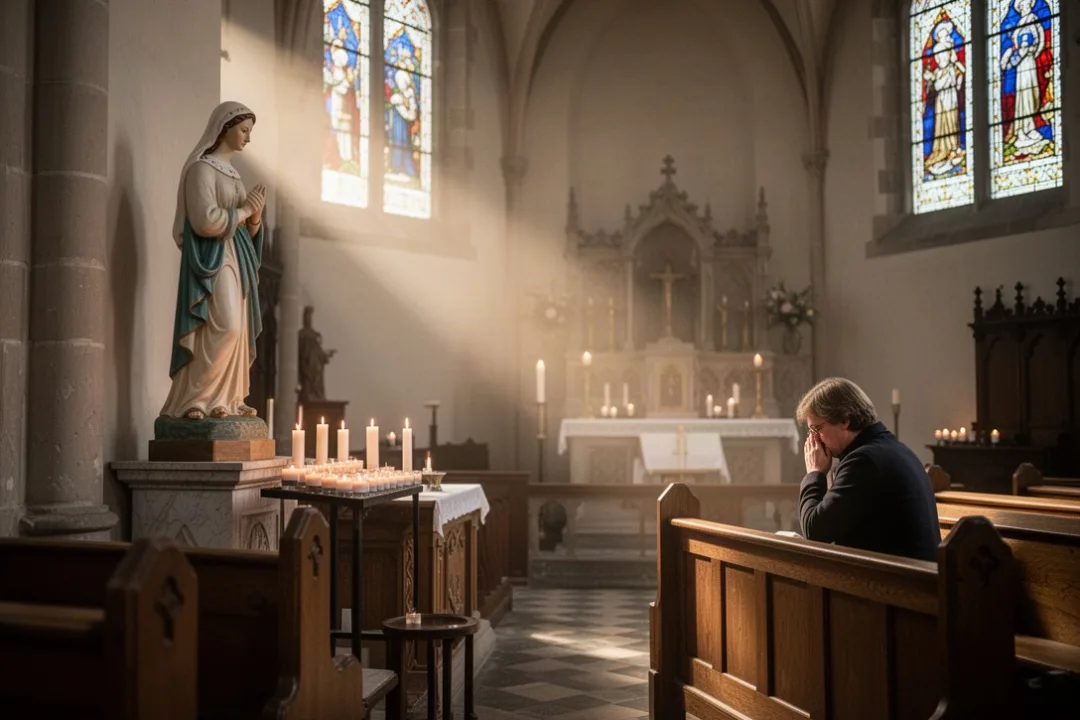
You can also honor Dymphna without traveling. A local parish may offer prayers for the sick, and a household can create a small prayer space with a candle, a cross, or an image of the saint. The central purpose is not the object or location but the commitment to compassionate presence and responsible care.
What St Dymphna’s legacy means now
St Dymphna remains important because her name brings together several needs that are often separated: spiritual comfort, protection from abuse, respect for people with mental illness, and support for caregivers. Her traditional story is painful and historically uncertain, yet its moral questions remain recognizable.
Remembering her can lead to practical acts: making a supportive phone call, arranging a clinical evaluation, learning about a loved one’s condition, challenging hurtful language, or asking for help before exhaustion becomes a crisis. It can also remind a congregation that people with mental illness should be welcomed as members of the community rather than treated only as problems to solve.
For people who pray to her, St Dymphna represents courage under pressure and compassion for those who suffer. For communities, her legacy asks for something equally concrete: safe relationships, competent care, patient listening, and a place for every person to belong.
Frequently asked questions
Is St Dymphna a real historical person?
St Dymphna is venerated as a Christian martyr, but the main written account of her life appeared centuries after the period in which she is traditionally believed to have lived. Her story is therefore rooted in longstanding religious tradition rather than extensive contemporary documentation. The shrine and devotion in Geel are historically significant even though individual details of the narrative cannot be independently confirmed.
What condition is St Dymphna the patron saint of?
She is most commonly associated with mental illness, emotional distress, and people who care for those experiencing psychiatric or neurological conditions. Older devotional traditions may use broader language about “madness” or nervous disorders, but those terms do not correspond precisely to modern diagnoses. Her patronage should be understood as spiritual support, not as a medical diagnosis or treatment recommendation.
Can I pray to St Dymphna for someone who refuses mental health treatment?
Yes. You can pray for the person’s safety, openness to help, and access to compassionate care. Prayer should be paired with practical action when needed, such as consulting a doctor, contacting a crisis service, or asking trusted relatives to help. If there is immediate danger, seek emergency assistance rather than relying on prayer alone or trying to manage the crisis privately.
Why is Geel especially connected with St Dymphna?
Tradition places Dymphna’s death in or near Geel, Belgium, where a church and shrine were later dedicated to her. The town also became known for welcoming some people with mental illness into local households and community life. That combination of pilgrimage and community-based care made Geel one of the most significant places associated with her patronage.














Leave a Reply