Saint for depression: prayers, patron saints, and support
Saint for depression: prayers, patron saints, and support
If you are looking for a saint for depression, St. Dymphna is the name most often associated with mental illness, emotional suffering, and psychological distress. Many Catholics also turn to St. John of God, St. Benedict Joseph Labre, St. Thérèse of Lisieux, and the Blessed Virgin Mary for companionship in difficult seasons.
Prayer to a saint does not replace professional mental health care, medication, counseling, or practical support. It can, however, give you language for your pain and a steady spiritual practice while you seek the help you need.
Why St. Dymphna is associated with depression and mental illness
St. Dymphna is widely honored as a patron of people experiencing mental illness, emotional distress, and psychological suffering. Her story has been connected with Geel, Belgium, where a long tradition of caring for people with mental health conditions developed around devotion to her. Because of this association, many people ask St. Dymphna to intercede for depression, anxiety, trauma, and other forms of inner suffering.
Historical details about Dymphna’s life come mainly from traditional accounts rather than sources that can be verified in the same way as modern biographies. The traditional story describes her as a young Christian who fled an unsafe situation, remained faithful under pressure, and died because of that faithfulness. The story’s details should be approached carefully, but her place in Catholic devotion remains significant for people who feel afraid, isolated, or misunderstood.
People often pray to St. Dymphna because her patronage speaks directly to the experience of being treated as a problem rather than as a person. Depression can make you feel separated from ordinary life, unable to explain what is happening, or ashamed that you cannot simply feel better. A patron saint associated with mental suffering can remind you that your condition does not erase your dignity.
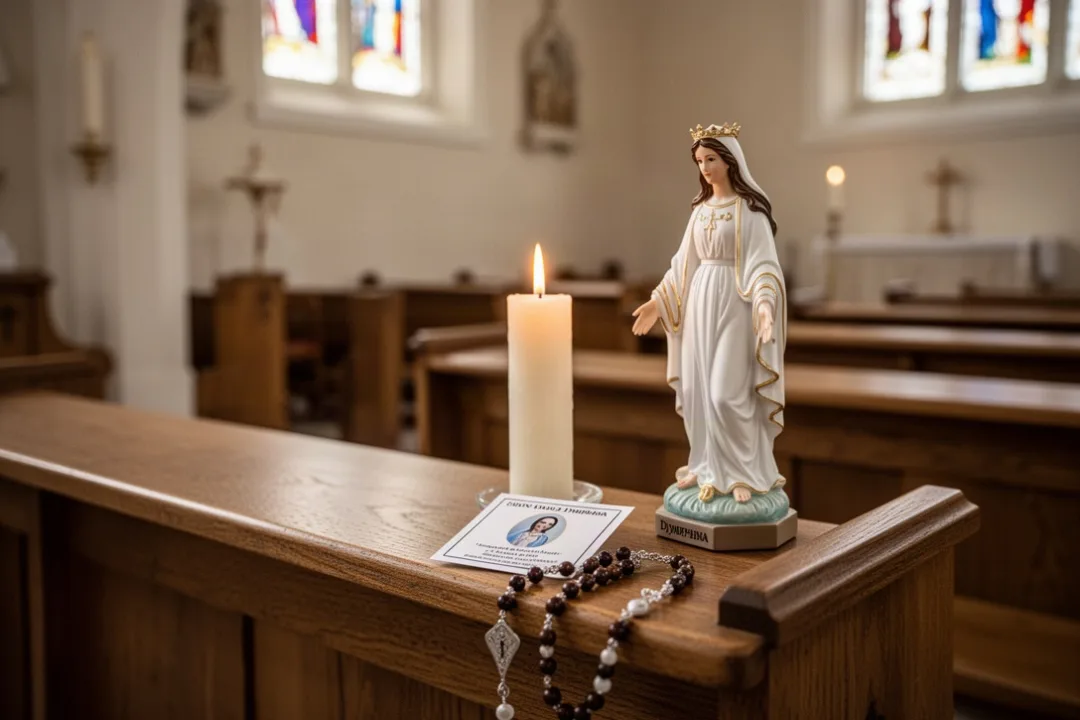
Devotion to St. Dymphna may include a novena, a short daily prayer, visiting a church dedicated to her, lighting a candle where permitted, or simply saying her name when words are difficult. You do not need elaborate materials or a perfect spiritual routine. A sincere prayer such as “St. Dymphna, pray for me as I seek healing and support” can be enough for that moment.
Important distinction: A saint’s intercession is a form of spiritual support, not a diagnosis or treatment plan. Persistent sadness, loss of interest, hopelessness, sleep changes, or thoughts of death deserve attention from a qualified health professional.
Other saints people pray to during depression
St. Dymphna may be the most recognized choice, but she is not the only saint connected with emotional suffering. Catholic prayer has room for several kinds of intercession: saints associated with illness, people who endured darkness themselves, and figures whose lives model compassionate service.
St. John of God and compassionate care
St. John of God is associated with hospitals, healthcare workers, and the care of people who are sick or vulnerable. He is a fitting intercessor when depression has affected your daily functioning, relationships, work, or ability to care for yourself. You might ask him to pray for good medical care, a trustworthy therapist, patience during recovery, and the humility to accept help.
His example can also shape the way you support someone else who is depressed. Rather than trying to force a cheerful attitude, compassionate care means listening, helping with practical tasks, and taking suffering seriously. A person with depression may need someone to help schedule an appointment, prepare food, or remain nearby while they make a difficult phone call.
St. Benedict Joseph Labre and people who feel forgotten
St. Benedict Joseph Labre is remembered for a life marked by poverty, pilgrimage, rejection, and dependence on the kindness of others. People who feel homeless emotionally, socially isolated, or unable to fit into ordinary expectations may find his story meaningful. His example does not romanticize deprivation; rather, it can help you bring experiences of exclusion and shame honestly into prayer.
Praying with St. Benedict Joseph Labre can be especially appropriate when depression has damaged your sense of belonging. You might ask for the grace to receive one small act of kindness, identify one safe person, or take one practical step toward stable housing, healthcare, or community support.
St. Thérèse of Lisieux and small acts of faithfulness
St. Thérèse of Lisieux is often associated with an approach sometimes called the “little way”: doing small acts with love rather than measuring your worth by dramatic achievements. For someone with depression, this perspective can reduce the pressure to perform spiritually or emotionally. Getting out of bed, eating something, taking prescribed medication, or answering a message may be meaningful steps on a hard day.
Thérèse also experienced periods of spiritual dryness and serious illness. Her writings are not a clinical account of depression, and they should not be used to suggest that depression is merely a spiritual test. Still, her trust can offer companionship when prayer feels empty and progress is difficult to recognize.
Mary, Mother of Sorrows, and grief that cannot be quickly fixed
The Virgin Mary is not usually described as the patron saint of depression, but many Christians turn to her when they feel overwhelmed by grief, fear, or helplessness. The title Our Lady of Sorrows reflects a devotion centered on her suffering and her presence at the suffering of others. She can be a meaningful companion when you do not want advice and need someone to remain with you in pain.
Prayers such as the Hail Mary or the Rosary may provide a familiar structure when concentration is limited. You do not have to complete an entire Rosary for the prayer to be worthwhile. Holding a rosary, repeating one short phrase, or sitting quietly with an image of Mary can be a gentler practice than demanding that yourself produce strong feelings of faith.
How to pray to a saint when depression makes prayer difficult
Depression can affect concentration, memory, motivation, and the ability to imagine a hopeful future. That means a complicated prayer routine may become another source of guilt. A useful spiritual practice should be brief, repeatable, and flexible enough for low-energy days.
You can begin with one sentence addressed to God and one request for the saint’s intercession. For example: “God, I feel exhausted and afraid. St. Dymphna, pray for me as I seek help today.” This prayer does not need to sound polished. Honest words are more useful than pretending that you feel peaceful when you do not.
Several simple approaches can make prayer more accessible:
Use a short invocation: Repeat “St. Dymphna, pray for me” once or several times, without treating repetition as a test you must pass.
Pray with a written card: Keep a prayer near your bed, medication, calendar, or phone so you do not have to remember the words.
Ask for one concrete grace: Pray for courage to make an appointment, tell someone the truth, shower, eat, or leave an unsafe situation.
Pray with another person: Ask a trusted friend, family member, priest, deacon, or pastoral minister to pray with you when speaking feels difficult.
Choose a quiet physical action: Light a candle safely, sit in a church, hold a cross, or look at an image of the saint for a few minutes.
A novena can be helpful because it gives prayer a beginning and an end, but completing every day is not a condition for receiving care or mercy. If you miss a day, you have not failed. You can simply resume, shorten the prayer, or stop for a while and return when you have more strength.
Prayer can ask for help without pretending that the pain is small.
Some people worry that depression means they are weak in faith. That conclusion is not justified. Depression can involve biological, psychological, social, and spiritual factors, and it can affect people who pray regularly and live with deep commitment. Symptoms are not moral failures, and the inability to feel consolation does not prove that God has abandoned you.
How spiritual support and depression treatment can work together
Spiritual care and clinical care address different needs, and they can responsibly exist together. A priest or spiritual director may help you explore guilt, grief, purpose, forgiveness, and religious fears. A licensed therapist or medical professional can assess symptoms, identify possible causes, and recommend evidence-based treatment. Neither role needs to replace the other.
If depression has lasted more than a brief period or is interfering with daily life, schedule an appointment with a primary care clinician or mental health professional. A clinician may ask about mood, sleep, appetite, concentration, substance use, medical conditions, medications, and safety. Honest answers help them understand what support may be appropriate.
Possible forms of support can include psychotherapy, medication, lifestyle changes, treatment for an underlying medical issue, peer support, or a combination of approaches. Do not stop prescribed medication suddenly or change the dose without speaking with the prescriber. If side effects or cost are a problem, tell the clinician; there may be safer alternatives or assistance options.
A faith community can help with practical support when it understands that depression is a health condition rather than a simple failure of willpower. You might ask someone to:
Help you find a therapist or primary care appointment.
Drive you to a clinic, church, or support group.
Bring a meal or help with household responsibilities.
Check in at an agreed time without demanding a cheerful response.
Pray with you while respecting your medical decisions and privacy.
Choose spiritual companions carefully. A responsible priest, minister, or pastoral counselor will not tell you to abandon treatment, conceal suicidal thoughts, stop medication, or interpret every symptom as punishment. Be cautious of anyone who promises instant healing, blames you for remaining depressed, or pressures you to reveal private information publicly.
If you may hurt yourself: In the United States, call or text 988 for the Suicide & Crisis Lifeline, available 24/7. If there is immediate danger, call 911 or go to the nearest emergency department. If possible, stay with a trusted person and move away from weapons, medications, or other means of harm.
Practical ways to honor a patron saint while seeking help
Devotion becomes more useful when it supports real acts of care rather than replacing them. You might choose St. Dymphna as a personal patron and connect prayer with a specific health goal. For example, pray briefly before contacting a therapist, ask for strength before attending an appointment, or thank God for one person who treated you with patience.
A small written plan can help you remember what to do when depression narrows your attention. Keep it simple and include both spiritual and practical steps:
Name what is happening: Write, “I am experiencing depression symptoms,” rather than judging yourself as lazy or broken.
Contact one person: Choose someone who can listen or help you arrange care.
Take one health step: Make an appointment, take medication as prescribed, drink water, eat, or rest safely.
Use a short prayer: Ask St. Dymphna or another trusted saint to intercede for you.
Review safety: If thoughts of self-harm are present, contact 988, emergency services, or a crisis professional immediately.
You can also honor St. Dymphna by supporting compassionate mental health care in your community. Learn how your parish responds to people in crisis, encourage accurate language about mental illness, or support organizations that provide counseling and housing assistance. Reducing shame is a practical expression of respect for people who live with depression.
If you are supporting a depressed loved one, avoid making the saint’s story sound like a demand to endure silently. Do not say that prayer should be enough or that suffering will automatically make the person holier. Instead, you can say, “I am praying for you, and I also want to help you find professional support.” Then offer one concrete option and listen to the answer.
The right saint for you may be St. Dymphna because of her traditional connection with mental illness. It may be St. John of God because you need compassionate care, St. Benedict Joseph Labre because you feel excluded, St. Thérèse because small steps are all you can manage, or Mary because you need a presence that does not rush your grief. The choice is personal; there is no required patron and no single correct prayer.
Let that devotion accompany care that protects your life and dignity. You can ask for intercession while calling a doctor, beginning therapy, accepting help from family, or contacting a crisis line. Seeking treatment is compatible with faith, and asking for help is itself a courageous and responsible act.
Frequently asked questions
Is St. Dymphna officially the patron saint of depression?
St. Dymphna is widely recognized in Catholic devotion as a patron of mental illness, emotional distress, and psychological suffering. Depression is often included within that broader association, but the exact wording of patronages can vary by devotional tradition and local practice. You may pray to her for depression without treating the devotion as a formal medical classification or a substitute for clinical care.
Can I pray to a saint if I am not Catholic?
You can respectfully learn about a saint and use the story as a source of comfort even if you are not Catholic. Some people pray directly to God while asking a saint to intercede; others reflect silently on the saint’s compassion or courage. Choose practices consistent with your own beliefs, and do not feel pressured to adopt a devotional practice that causes discomfort.
What should I do if depression makes me unable to pray?
You do not need to force a long prayer. Sitting quietly, saying one sentence, holding a rosary, listening to calming sacred music, or asking another person to pray for you can all be meaningful. If you cannot pray at all, focus first on safety and basic care. Difficulty praying is a symptom of distress, not proof of spiritual failure.
How can I support someone who prays to a saint for depression?
Respect the person’s faith while encouraging appropriate treatment. Ask what practical help would be useful, such as transportation, appointment scheduling, meals, or regular check-ins. Avoid promising that prayer will cure depression or suggesting that ongoing symptoms reflect weak faith. If the person mentions suicide or immediate danger, take the statement seriously and contact crisis or emergency support.














Leave a Reply