People often search for a single saint of protection, but Catholic tradition does not assign one universal protector for every kind of threat. Different saints are associated with protection because of their lives, martyrdoms, miracles, patronages, or long-standing devotion among the faithful.
Saint Michael is the most familiar choice for spiritual protection. Saint Joseph is often invoked for families, homes, workers, and fathers. Saint Benedict is associated with protection from evil, while Saint Christopher is commonly connected with travelers. These associations can guide your prayer, but they are not strict rules.
In Catholic belief, saints do not replace God or act as independent sources of supernatural power. A person asking a saint for help is asking that saint to pray with and for them. The protection requested ultimately comes from God, according to divine providence and the circumstances of each person’s life.
The central idea: A saint’s medal or prayer is a reminder of faith and a request for intercession, not a guarantee that accidents, illness, hardship, or harm will never occur.
Which saints are associated with protection?
The best saint for your situation depends on the kind of protection you are seeking. The following list describes common Catholic associations while recognizing that traditions can differ by country, parish, family, and religious community.
Saint Michael the Archangel: spiritual warfare, defense against evil, courage, and protection of the Church.
Saint Joseph: families, homes, fathers, workers, the vulnerable, and faithful responsibility.
Saint Benedict: protection from evil and a life centered on prayer, discipline, and trust in God.
Saint Christopher: travelers, drivers, pilgrims, and people beginning a journey.
Saint Florian: firefighters, emergency workers, and protection from fire.
Saint Barbara: people facing storms, explosions, sudden danger, and dangerous work; local customs vary.
Saint Agatha: protection against fire and care for people facing serious illness or physical suffering in certain traditions.
Saint Patrick: spiritual defense and missionary courage, especially in traditions connected with his use of Christian symbols.
Saint George: courage in danger and perseverance against evil, particularly in Eastern Christian and other longstanding traditions.
These patronages are devotional associations, not promises that a saint will prevent a particular event. If you feel drawn to a saint because of that person’s example, family history, cultural background, or feast day, that connection can be a meaningful reason to pray.
Why Saint Michael is called a protector
Saint Michael is described in Scripture as a powerful heavenly defender. The Book of Daniel presents Michael as a great prince who stands with God’s people, while the Book of Revelation portrays him leading the heavenly hosts against the forces of evil. These passages form the foundation for his reputation as a guardian and defender.
The name Michael is traditionally understood as a question affirming God’s uniqueness. His role is therefore not that of a rival power. Instead, devotion to Michael points believers toward God’s authority over evil, the need for courage, and the responsibility to reject wrongdoing.
Many Catholics pray to Saint Michael when they feel spiritually threatened, tempted, frightened, or burdened by conflict. Others ask his intercession for the protection of their homes, communities, clergy, military personnel, or first responders. A prayer to him can also be a way to ask for clarity when fear is making it difficult to act wisely.
Saint Michael is especially appropriate when your concern involves spiritual protection. That does not mean every troubling experience has a supernatural cause. Anxiety, trauma, exhaustion, illness, and unsafe circumstances may require medical care, counseling, practical intervention, or emergency assistance alongside prayer.
How to choose a saint for your specific need
Choosing a patron saint does not require a complicated process. Start by naming the situation honestly, then consider which saint’s life or traditional patronage speaks most directly to it.
Identify the kind of protection you need. Is the concern spiritual fear, travel, family safety, dangerous work, illness, conflict, or a major decision?
Learn about one or two saints. Read a reliable biography, examine the saint’s virtues, and consider how that person responded to danger or suffering.
Choose a simple form of devotion. You might say a short prayer, attend Mass on the saint’s feast day, ask for a blessing, or keep a holy card as a reminder.
Ask for a specific virtue. Instead of focusing only on escape from trouble, ask for courage, prudence, patience, forgiveness, or strength.
Take practical action. Prayer should support responsible decisions, such as seeking help, wearing protective equipment, securing a home, or contacting emergency services.
Keep the devotion steady and peaceful. You do not need to repeat a prayer anxiously or treat a particular object as if it were magical.
A saint’s example can help you see protection in a broader way. Sometimes protection means being spared from harm. At other times, it means receiving the wisdom to avoid danger, the courage to leave an unsafe situation, or the endurance to remain compassionate during hardship.
Saint Joseph is widely honored as the protector of the Holy Family and a patron of families, fathers, workers, and homes. The Gospels describe him as a man who listens, acts responsibly, and protects Mary and Jesus during periods of uncertainty. His example is quiet rather than dramatic, which makes him a natural choice for ordinary responsibilities.
People may ask Saint Joseph’s intercession when they are worried about their household, employment, housing, parenting, or family relationships. A person could also turn to him when trying to create a safer home environment through patience, honest communication, and dependable care.
Devotion to Saint Joseph should not be limited to a request for material security. His life is often connected with faithful work and moral courage. Someone praying to him might ask for help protecting children, resisting anger, supporting a spouse, finding honest employment, or making wise decisions under financial pressure.
If your home is affected by domestic violence, abuse, neglect, or serious conflict, prayer should never be used to excuse danger or delay help. Contact trusted people, local support services, or emergency authorities as appropriate. Seeking safety is consistent with the dignity and protection that devotion to Saint Joseph is meant to honor.
Saint Benedict and protection from evil
Saint Benedict of Nursia is associated with a strong tradition of protection from evil, temptation, and destructive influences. The Medal of Saint Benedict contains words and symbols connected with rejecting evil and choosing Christ. Catholics may wear the medal, keep it in a home, or use it as a prompt for prayer.
The medal is a sacramental, meaning a sacred sign that helps prepare a person to receive grace and encourages a life of faith. It is not an amulet or an object with automatic power. Its meaning depends on trust in God, prayer, and a sincere effort to live according to Christian teaching.
People sometimes turn to Saint Benedict when they feel surrounded by hostility, temptation, addiction, resentment, or spiritual confusion. A helpful devotion might include asking for freedom from destructive habits, wisdom about unhealthy relationships, and the strength to accept support.
If you use a Saint Benedict medal, ask a priest or deacon about having it blessed according to the practice of your church. A blessing does not transform the medal into a protective device. It sets the object apart as a reminder of God’s presence and the believer’s commitment to reject evil.
Saint Christopher for travel and transportation
Saint Christopher is traditionally recognized as a patron of travelers and travelers’ safety. Many people keep his medal in a car, carry one on a trip, or pray through his intercession before flying, driving, hiking, or beginning a pilgrimage.
Stories about Saint Christopher emphasize service, strength, and helping people cross a dangerous passage. Details of the popular account have developed through tradition, so the most useful focus is the saint’s reputation for carrying others safely through difficulty.
A prayer to Saint Christopher can mark the beginning of a journey and encourage calm, alert behavior. Before driving, that may mean checking the vehicle, fastening seat belts, avoiding impaired driving, respecting speed limits, taking breaks, and refusing to use a phone while operating the car.
For immediate danger: Call 911 or your local emergency number, move to a safer place when possible, and follow qualified instructions. A prayer or religious medal should accompany practical safety measures, never replace them.
Saints connected with fire, storms, and dangerous work
Several saints have developed particular associations with physical hazards. These traditions can be especially meaningful for firefighters, miners, sailors, soldiers, construction workers, and others whose work involves serious risk.
Saint Florian is widely honored as a patron of firefighters. He was a Roman military officer and Christian martyr, and later devotion connected him with protection from fire. Firefighters or their families may ask for his intercession before a shift, while remembering that training, equipment, teamwork, and emergency planning remain essential.
Saint Barbara is associated in different traditions with sudden death, lightning, explosions, artillery, miners, and other dangerous circumstances. Her patronage is not interpreted identically everywhere. Someone who turns to her may ask for steadiness in a hazardous workplace and for protection of those who face sudden threats.
Saint Agatha is often connected with protection from fire and with care for people who suffer physically. Her story of faithfulness under persecution has made her a source of comfort for people facing illness, pain, or coercion. Devotion to her should be paired with qualified medical treatment and emotional support when needed.
These saints can help communities recognize the dignity of people who protect others. A badge, medal, or feast-day observance can express solidarity, but it should never suggest that a worker is expected to accept preventable danger without proper equipment or safeguards.
How Catholic prayer to a saint works
When Catholics say “Saint Michael, protect me” or “Saint Joseph, pray for us,” the request is directed through the saint to God. The saint is not being treated as a god. Instead, the person is asking a member of the heavenly Church to join in prayer, much as you might ask a trusted Christian friend to pray for you.
This practice is connected with the Catholic understanding of the communion of saints: the unity of believers on earth, the souls being purified, and the saints with God. Devotion can strengthen a person’s awareness that faith is lived in relationship, not isolation.
A prayer can be very brief. You might name the danger, ask for God’s protection, request the saint’s intercession, and commit yourself to the wise action available to you. The value of the prayer does not depend on a perfect formula or a certain number of repetitions.
For example, you could say: “Saint Michael, pray for me and help me resist evil with courage and good judgment. Saint Joseph, watch over my family and help us care for one another. God, guide our decisions and keep us faithful to what is good.” This is an original devotional prayer, not a quotation from Scripture or a required Catholic text.
Using medals, statues, and holy cards appropriately
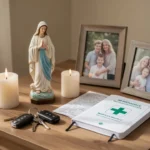
Religious objects can provide a visible reminder of prayer. A medal of Saint Christopher may remind you to drive carefully. A Saint Joseph statue may represent your household’s desire for faithful service. A Saint Michael image may call you to resist hatred, dishonesty, and fear.
The object itself does not control events. Avoid treating a medal as a guarantee, a charm, or a substitute for repentance and responsible behavior. Catholic devotion encourages a person to turn toward God and practice virtue, not to depend on an object mechanically.
Choose an object connected with a saint whose life you have taken time to understand.
Ask a priest or deacon about having it blessed if that is part of your tradition.
Use it as a prompt for a short prayer or examination of conscience.
Do not blame yourself or the saint if something painful happens.
Do not let a religious object delay medical, legal, emergency, or professional assistance.
Some people wear a saint medal, place one near a doorway, or keep one in a vehicle. These practices can be meaningful when they express faith and remembrance. They become unhealthy when fear leads someone to believe that losing, removing, or forgetting the object will automatically cause disaster.
When protection prayer should include professional help
Prayer is compatible with practical care. If you are experiencing a medical emergency, call emergency services. If you are in an abusive relationship, contact a domestic violence advocate or another trusted source of safety. If you are struggling with panic, depression, addiction, or thoughts of self-harm, speak with a qualified professional and seek immediate help in a crisis.
Spiritual language can sometimes make ordinary problems feel mysterious or frightening. Not every disturbing thought, dream, illness, argument, or run of bad luck indicates spiritual attack. A priest, doctor, therapist, or other qualified professional can help you consider the situation without dismissing your beliefs or intensifying unnecessary fear.
Good devotion encourages clear judgment, compassion, humility, and responsible action. If a religious leader tells you to stop necessary treatment, isolate yourself from safe people, give unreasonable amounts of money, or remain in danger, seek another trusted source of guidance.
A simple daily practice for asking a saint’s intercession
A short routine can make devotion meaningful without turning it into an anxious ritual. Set aside a quiet moment, name the people or situation you want to place before God, and ask a saint whose example fits the need to pray with you.
Pause and become attentive. Take a few calm breaths and acknowledge what you are feeling.
Name the concern plainly. Mention a person, journey, household, workplace, illness, or moral struggle.
Ask for intercession. Invite the chosen saint to pray for protection and for the grace you need.
Ask for a virtue. Request prudence, courage, patience, forgiveness, or perseverance.
Choose one responsible action. Make a phone call, check a safety plan, seek counsel, apologize, or get medical care.
Release the outcome to God. Continue acting wisely without demanding a particular result.
This practice keeps prayer connected to real life. Saint Michael may remind you to oppose evil without becoming hateful. Saint Joseph may remind you to protect others through dependable care. Saint Christopher may remind you that safe travel requires attention and preparation.
Finding the right saint for your prayer
If you are uncertain, Saint Michael is a fitting choice for a general request for protection from evil and spiritual danger. Saint Joseph is a natural choice for family and home concerns, Saint Christopher for travel, Saint Benedict for a devotion focused on resisting evil, and Saint Florian for firefighters or protection from fire.
You can also choose a saint based on personal connection. A baptismal patron, a family’s traditional saint, a saint from your cultural heritage, or someone whose courage resembles the challenge you face may become a trusted intercessor. There is no requirement to choose only one.
The most helpful devotion is one that leads you toward God, honest self-examination, and care for other people. Ask not only to be kept from harm, but also to become a source of protection for those entrusted to you through wise decisions, compassionate action, and faithfulness.
Frequently asked questions
Is Saint Michael the only saint who protects people?
No. Saint Michael is the most widely recognized Catholic protector, particularly against spiritual evil, but many saints have specific protective associations. Saint Joseph is linked with families and homes, Saint Christopher with travelers, Saint Benedict with resistance to evil, and Saint Florian with firefighters. You may ask any saint to intercede, especially one whose life or patronage relates to your situation.
Can I wear a saint medal for protection?
Yes, many Catholics wear medals as sacramentals and reminders of prayer. A medal can help you remember a saint’s example and ask for intercession. It should not be treated as a magical charm or a guarantee of safety. If you wish, ask a priest or deacon to bless it, and continue taking ordinary precautions and seeking professional help when necessary.
What saint should I pray to for family protection?
Saint Joseph is a traditional choice because he is honored as the protector of the Holy Family. You might also ask the intercession of the saint connected with your family’s patron, parish, or cultural tradition. Pray for more than physical safety: ask for patience, wise parenting, honest communication, financial prudence, and the courage to seek help when someone in the household is at risk.
Does praying to a saint prevent bad things from happening?
Prayer is not a promise that hardship, accidents, illness, or loss will never occur. Catholic devotion asks for God’s care and a saint’s intercession while recognizing that life remains uncertain. Prayer may bring courage, clarity, comfort, or strength to act wisely. It should always be combined with sensible precautions, medical care, emergency assistance, and protection from abuse or other danger.














Leave a Reply