What is a patron saint? Meaning, examples, and traditions
What is a patron saint? Meaning, examples, and traditions
You may have heard someone mention their patron saint, seen a city celebrate a saint’s feast day, or wondered why a particular saint is connected with a job or illness. The short answer is that a patron saint is a Christian saint whom a person, community, profession, or cause recognizes as a special heavenly intercessor and example.
In Catholic tradition especially, people ask patron saints to pray for them before God. They do not treat the saint as a god, and they do not believe the saint replaces Jesus. Instead, devotion to a patron saint is understood as a relationship of respect, imitation, and prayer within the wider communion of Christians.
The word patron can mean a protector, supporter, or guardian. A patron saint is therefore a saint associated with a particular person or group because of the saint’s life, work, place of origin, historical connection, or concern for a specific human need.
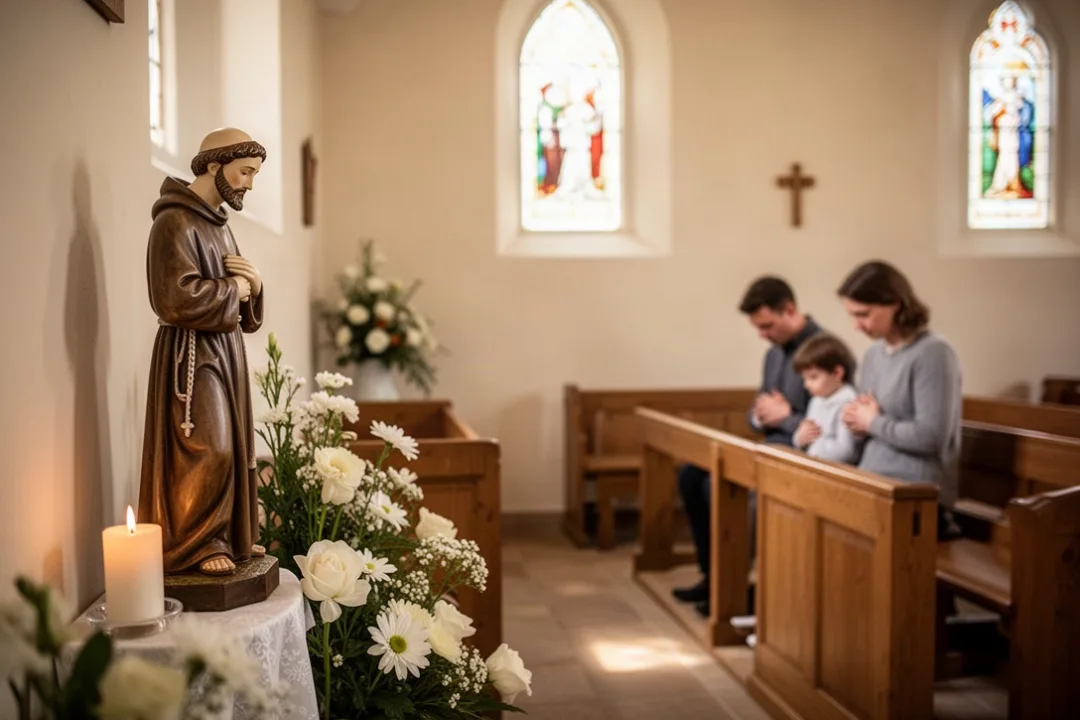
For example, Saint Francis of Assisi is widely associated with animals and the environment because of his love of creation and his simple way of life. Saint Cecilia is traditionally connected with music, while Saint Luke is associated with physicians and artists. These associations help Christians remember the saints and ask for their prayers in circumstances that resemble the saints’ lives or virtues.
Patronage does not usually mean that the saint controls a particular subject. A patron saint is not a magical specialist who guarantees a result. The saint’s role is understood as one of intercession and companionship: the saint prays with and for people, while God remains the source of grace and the answer to prayer.
Different Christian communities use the idea of patron saints in different ways. It is especially developed in the Catholic Church, Eastern Orthodox churches, and some Anglican traditions. Other Christians may honor saints as faithful examples but may not ask them to intercede, preferring to pray directly to God.
Core distinction: Christians who ask a patron saint for help are asking the saint to pray for them. They are not worshiping the saint, because worship belongs to God alone.
The practice rests on the belief that death does not destroy the unity of the Church. In Catholic and Orthodox understanding, the saints are alive with God and remain part of the spiritual family of believers. Asking for a saint’s intercession is similar in purpose to asking a trusted Christian friend to pray for you, although the saint is believed to be with God in heaven.
How patron saints differ from God, Jesus, and guardian angels
Questions about patron saints often begin with a concern about worship. Christianity makes a clear distinction between adoration given to God and the honor shown to holy people. A saint may be respected for faith, courage, charity, or perseverance, but the saint is still a created human being rather than divine.
In Catholic language, devotion to saints is sometimes described as veneration, while worship is reserved for God. The distinction matters because prayers directed to a saint are requests for intercession. A person might say, in effect, “Saint Monica, pray for my family,” rather than treating Saint Monica as the source of divine power.
Jesus has a different place in Christian belief. Christians worship Jesus Christ as Lord, while saints are honored as disciples whose lives point toward God. Even when a saint is called a patron of something, that title does not make the saint equal to Christ or give the saint independent authority over the world.
A guardian angel is also different from a patron saint. Many Christians believe that God gives angels a protective and guiding role, while a patron saint is a human saint associated with a person, group, place, or concern. The two ideas may appear together in a person’s devotional life, but they are not interchangeable.
Patronage also differs from superstition. A medal, prayer card, statue, or feast-day tradition can serve as a reminder of faith, but the object itself is not thought to possess automatic power. Treating a religious object as a charm that forces a desired outcome changes a devotional practice into something Christianity does not intend.
God: worshiped as the divine source of creation and salvation.
Jesus Christ: worshiped by Christians and understood as central to Christian faith.
Saints: honored as holy people and asked to intercede.
Guardian angels: understood by many Christians as spiritual beings with a protective role.
Religious objects: used as reminders or signs of faith, not as automatic sources of power.
Why particular people and causes have patron saints
A saint’s patronage often develops from a recognizable connection between the saint’s story and the people who seek the saint’s prayers. The connection may be historical, symbolic, geographical, or based on the circumstances of the saint’s death. Some patronages are formally recognized; others grew through long-standing local devotion.
Occupations are a common category. Workers may look to saints whose lives involved similar work, whose virtues fit the profession, or whose traditions became connected with it over time. Saint Joseph is associated with workers and carpenters because the Gospels describe him as a carpenter, while Saint Luke is linked with physicians because Christian tradition identifies him as a physician.
Places also have patron saints. A parish, town, country, diocese, or religious institution may choose a saint as a special protector and celebrate that saint’s feast day. The relationship can reflect the area’s founding, a local miracle tradition, a missionary connection, or a long history of public devotion.
Life situations and needs provide another common reason. Christians may ask Saint Monica to pray for family members, Saint Peregrine for those facing cancer, or Saint Jude for difficult and seemingly hopeless situations. These associations do not promise a particular medical or personal outcome. They give people a spiritual language for asking for help, strength, wisdom, and faithful endurance.
Some patronages are connected with a saint’s personality or defining virtue. Saint Martin de Porres is associated with charity and service to the poor. Saint Thérèse of Lisieux is remembered for her “little way,” a spirituality centered on love expressed through ordinary acts. People may choose such saints because their examples speak to a particular season of life.
There are also saints connected with specific historical events. Saint Florian is associated with firefighters, for example, while Saint Barbara has traditionally been associated with those who face danger from explosions or sudden death. Historical explanations for individual patronages can vary, so a parish, diocese, or reliable saint reference may provide the clearest local account.
Common categories of patron saints
Professions: doctors, teachers, farmers, sailors, artists, firefighters, and workers in other fields.
Places: towns, nations, churches, schools, dioceses, and religious communities.
Family and relationships: marriage, parenting, children, and family life.
Illness and hardship: particular diseases, addiction recovery, grief, danger, or difficult circumstances.
Interests and activities: music, animals, travel, study, sports, and creative work.
Virtues and spiritual needs: courage, patience, conversion, forgiveness, humility, and hope.
One person may have more than one patron saint. A Catholic may have a baptismal patron, a confirmation saint, a patron connected with a profession, and a saint chosen for a particular need. Some people also feel a strong connection with a saint whose life resembles their own, even when there is no official patronage.
How someone becomes recognized as a patron saint
There is no single process for every patronage. Some relationships are formally established by church authorities, especially when a saint is named the patron of a diocese, country, profession, or institution. Others arise organically as people pray to a saint, tell the saint’s story, and preserve the association across generations.
The first step in formal recognition is usually the Church’s recognition of the person as a canonized saint. In the Catholic Church, canonization follows an investigation of the person’s life, writings when relevant, reputation for holiness, and claims of miracles associated with intercession. The exact procedures and requirements have developed over time and can vary according to the case.
Canonization does not automatically assign every saint a specific patronage. A saint may become associated with a profession or need through historical evidence, popular devotion, theological reflection, or the saint’s known work. Church authorities may later confirm or officially designate that role.
Some patronages are connected with the saint’s life in an obvious way. A saint who served as a physician may be linked with doctors. A saint who defended children or founded schools may become associated with young people or education. Other connections are less direct and may come from legends, a particular image, a place where the saint was honored, or a story about an answered prayer.
Local custom can be significant. A parish may celebrate a saint for centuries even if the association is mainly regional. In that setting, tradition and community memory help shape the saint’s role. A patron saint can therefore be important to a group without being equally familiar to Christians elsewhere.
Churches may also revise or clarify lists of patron saints. Historical research can distinguish reliable evidence from later stories, and official calendars may change over time. That does not necessarily erase personal devotion, but it can affect how a church describes a saint’s feast or patronage.
Use reliable context: If a saint’s patronage seems unusual, check a parish, diocesan, or established Catholic reference. Popular lists sometimes repeat traditions without explaining whether they are official, local, or simply customary.
How to choose and pray with a patron saint
You do not have to choose a patron saint because of a dramatic personal experience. Many people begin with the saint whose name they received at baptism or confirmation. Others choose a saint whose virtues, struggles, work, or ministry connect with their own life.
Learning the saint’s biography is a useful starting point. Pay attention not only to legends but also to the saint’s historical setting, decisions, relationships, and response to suffering. Ask what quality you want to imitate: patience, courage, compassion, intellectual honesty, service, or trust in God.
If you are choosing a confirmation saint, consider selecting someone whose life can continue to challenge you. The best choice is not necessarily the saint with the most familiar name. It may be a person whose example gives you a practical model for the responsibilities and questions you are likely to face.
List the concerns or virtues that matter most in your current season of life.
Read brief biographies of several saints connected with those concerns.
Check the historical basis for each saint’s patronage through a trustworthy church source.
Notice the example you most want to imitate, not only the problem you want solved.
Pray simply for the saint’s intercession and ask God for the grace you need.
Keep learning through the saint’s feast day, writings, prayers, or charitable works.
Prayer to a patron saint can be very simple. You might ask, “Saint Joseph, pray for me as I care for my family and work faithfully.” The purpose is not to use a special formula but to turn your attention toward God, the saint’s example, and the needs of other people.
Many people honor a patron saint by practicing the virtue associated with that person. Someone devoted to Saint Vincent de Paul might serve people who are poor. Someone inspired by Saint Cecilia might use music to support worship or community. The most meaningful devotion usually includes action shaped by the saint’s example, not only words.
Feast days can provide a regular rhythm for this devotion. On the saint’s feast, you might attend worship, read the saint’s life, prepare a traditional food, visit a church named for the saint, give to charity, or pray for people connected with the saint’s mission. Customs differ widely by culture and denomination.
What patron saints can and cannot do for you
A patron saint can serve as a spiritual companion and model. The saint’s story may help you see how faith can be lived amid work, family responsibilities, illness, injustice, temptation, or grief. Asking for intercession can also remind you that prayer is not meant to be lived in isolation.
Patron saints do not remove the need for practical help. If you are sick, prayer can accompany appropriate medical care. If you are in danger, contact emergency services or trusted people. If you are facing abuse, addiction, severe depression, or financial crisis, seek qualified professional and community support alongside spiritual care.
A saint’s intercession should not be treated as a guarantee that your preferred outcome will occur. Christians may pray for healing, protection, employment, reconciliation, or a successful decision, while recognizing that prayer is not a contract. The hoped-for answer may involve strength, guidance, changed circumstances, or faithful support rather than a direct resolution.
Patron saints also cannot replace conscience, responsibility, or discernment. A person should not use a saint’s name to justify harming another person, avoiding necessary work, or making a reckless choice. Devotion is healthiest when it encourages love of neighbor, honesty, mercy, and wise action.
Stories about saints sometimes contain miraculous or legendary elements. You can appreciate the spiritual meaning of a tradition while asking sensible questions about its historical evidence. A mature devotion does not require every story to be read in exactly the same way; it seeks truth while preserving respect for the people and communities who handed down the tradition.
For many believers, the central point is that a patron saint turns attention toward a life of holiness. The saint is remembered not as a substitute for God, but as someone who followed Christ with particular courage and whose example can encourage others to do the same.
Examples of widely known patron saints and their associations
The following examples are common in Catholic practice, although the exact titles and traditions may differ by country or community. A saint can have several patronages, and some associations are more formal than others.
Saint Joseph: workers, carpenters, fathers, and family life.
Saint Francis of Assisi: animals, ecology, and care for creation.
Saint Cecilia: music and musicians.
Saint Luke: physicians and artists, especially painters.
Saint Anthony of Padua: lost items and several other needs in popular devotion.
Saint Jude: difficult or seemingly hopeless situations.
Saint Christopher: travelers and transportation in longstanding devotional tradition.
Saint Monica: mothers and family members praying for loved ones.
Saint Isidore the Farmer: farmers and agricultural work.
Saint Thomas Aquinas: students, scholars, and Catholic education.
These associations are invitations to prayer and remembrance, not rigid labels. You may ask a saint outside a commonly listed category to pray for you, particularly when the saint’s life speaks to your circumstances. The relationship can be personal while remaining connected to the wider tradition of Christian devotion.
If you want to learn about a particular patron saint, begin with the saint’s feast day, biography, patronage, and historical setting. Then ask how the saint treated other people and what practices expressed the saint’s faith. Those questions often reveal more than a short list of specialties.
A patron saint, then, is best understood as a holy person remembered by the Church and associated with a particular person, place, profession, or need. Christians who practice this devotion honor the saint, ask for intercession, and seek to imitate the saint’s faith while directing worship to God.
Frequently asked questions
Can a person have more than one patron saint?
Yes. Someone may have a baptismal or confirmation patron, a saint associated with a profession, and another connected with a personal concern. A person can also develop a devotion to several saints over time. Having multiple patron saints does not create competing spiritual loyalties; each saint is honored as an intercessor and example within the Christian tradition.
Is a patron saint assigned to you at birth?
Not necessarily. Some people receive a saint’s name at baptism, while others choose a confirmation saint or adopt a devotion later. Families, parishes, schools, and countries may also have patron saints. If no saint has been formally connected with you, you can learn about several saints and choose one whose life and virtues speak meaningfully to your faith.
Do patron saints protect people from specific dangers?
Christians may ask a patron saint to pray for protection in a particular danger, but patronage is not a guarantee or magical shield. The saint’s role is intercession, not control over events. Prayer should be combined with sensible action, such as seeking medical care, leaving an unsafe situation, or contacting emergency services when necessary.
How should someone begin praying to a patron saint?
Start by learning about the saint’s life and identifying the virtue or concern that connects with you. Then speak plainly, asking the saint to pray for you and others while addressing your worship to God. You might also honor the saint by practicing a related virtue, helping someone in need, or observing the saint’s feast day.














Leave a Reply