Saint Luke is commonly recognized as the patron saint of doctors and physicians. Christian tradition identifies Luke, the companion of Paul and author of one Gospel, as a physician; his feast day is celebrated on October 18.
He is not the only saint associated with medicine. Saints Cosmas and Damian are especially connected with physicians and surgeons, Saint Pantaleon is honored as a physician and martyr, and Saint Camillus de Lellis is closely associated with hospitals, nurses, and care for the sick. The best choice depends on the kind of prayer, ceremony, or medical ministry you have in mind.
Saint Luke’s connection with medicine comes primarily from the New Testament. In Colossians 4:14, Paul refers to a companion named Luke as a “beloved physician.” Christian tradition has long identified this Luke with the Gospel writer and with the author of Acts.
The biblical description is brief, but it gives Luke a direct connection to the medical profession. He is remembered not only as someone trained to treat physical illness, but also as a careful observer, a companion to people in distress, and a witness to the healing ministry of Jesus.
Luke’s Gospel gives particular attention to healing, mercy, and care for people who are vulnerable. It includes stories of people restored in body, mind, community, or dignity. These accounts do not turn Luke’s Gospel into a medical manual, but they help explain why physicians have seen him as a fitting spiritual patron.
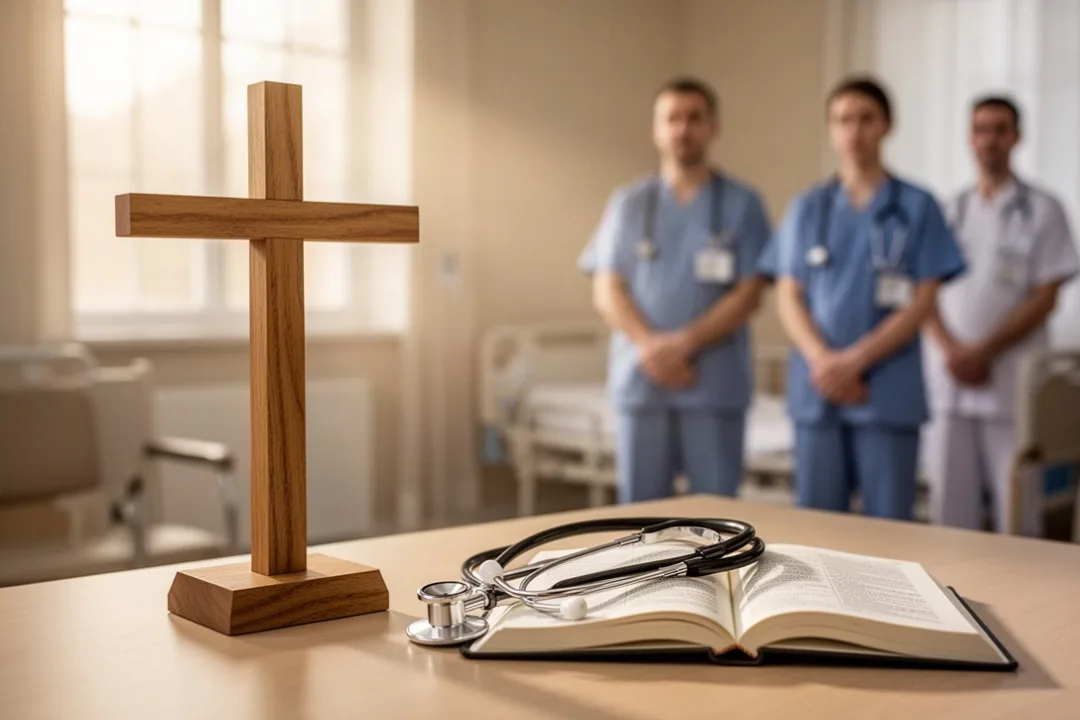
A patron saint is not believed to replace medical knowledge or treatment. Instead, a patron offers a model of service and a person to whom people may turn in prayer. For doctors, Luke can represent the union of professional skill, compassion, humility, and respect for every patient.
Short answer: If you need one name for the patron saint of doctors, choose Saint Luke the Evangelist. Other saints may be more appropriate for surgeons, hospitals, nurses, pharmacists, or people facing serious illness.
What Saint Luke’s story says about medical care
Very little is known about Luke’s personal life beyond the references and traditions connected with the early Christian community. He appears in Acts as a companion of Paul, and some readers see the use of “we” in parts of Acts as evidence that Luke traveled with him. That interpretation is traditional, although the text does not provide a full biography.
Luke’s profession matters because it places him close to human suffering. A physician encounters fear, uncertainty, pain, disability, aging, and death as well as recovery. The image of Luke therefore speaks to the daily emotional and ethical demands of medicine, not merely to technical expertise.
His example can be understood through several qualities:
Attentive observation: Good care requires listening carefully and noticing details that may be easy to overlook.
Compassion: Patients need to be treated as people rather than reduced to symptoms, scans, or diagnoses.
Steadiness: Doctors often serve during frightening or uncertain circumstances, when calm presence matters.
Truthfulness: Patients and families deserve clear communication delivered with sensitivity.
Humility: Medicine has limits, and wise practitioners know when to seek another opinion or ask for help.
These qualities do not belong to one religion or one profession. They are practical virtues that can guide anyone working in health care. For a Christian physician, praying with Saint Luke may provide a way to place clinical work within a broader commitment to service.
When Saint Luke’s feast day is celebrated
The feast of Saint Luke the Evangelist is observed on October 18 in the Catholic Church and in several other Christian traditions. Medical associations, hospitals, parishes, and professional groups may mark the day with a prayer service, Mass, educational event, or recognition of health care workers.
Some communities use the occasion to pray for doctors, medical students, patients, families, and everyone affected by illness. Others focus on the relationship between faith and medicine, ethical decision-making, or the need for humane care in hospitals and clinics.
A feast day does not require a large public event. A doctor might observe it by taking a quiet moment before a shift, attending worship, reading a passage from Luke’s Gospel, or offering a prayer for the people entrusted to their care. A patient or family member might use the day to request prayers for a physician or to give thanks for compassionate treatment.
The date can also be useful for institutions planning a St. Luke medal, blessing, lecture, or service of thanksgiving. There is no single universal format, so local customs and the individual’s Christian tradition should guide the observance.
How Saint Luke differs from other medical patron saints
Saint Luke is the most widely recognized answer to the general question, but different medical roles have their own traditional patrons. These associations developed through particular stories, professions, places of devotion, or forms of service.
Saints Cosmas and Damian: physicians and surgeons
Saints Cosmas and Damian were brothers remembered in Christian tradition as physicians who treated people without charging them. They are traditionally associated with healing and are honored as martyrs. Their story emphasizes generous care, especially the idea that medical knowledge should be used for the good of others rather than personal profit alone.
Because of this tradition, Cosmas and Damian are often named patrons of physicians, surgeons, pharmacists, and medical workers. Their feast is observed on September 26 in the Roman Catholic calendar. Eastern Christian communities also honor them, though calendars and local customs may differ.
They may be a particularly meaningful choice for a medical practice, surgical team, pharmacy, or health care ministry that wants to highlight service without exploitation. Images of the two brothers often show them with medical instruments, although artistic details vary by period and region.
Saint Pantaleon: a physician and martyr
Saint Pantaleon, also called Panteleimon in Eastern Christian traditions, is remembered as a physician and martyr. His story connects medical skill with Christian faith and courage under persecution. He is venerated especially in Eastern Christianity, though devotion to him also appears in other Christian communities.
Pantaleon is often invoked by doctors and by people seeking healing. His traditional association is helpful when a person wants a patron specifically remembered as a medical practitioner who remained committed to his beliefs during hardship.
Accounts of his life include miraculous elements and vary across traditions. They should be understood as part of devotional history rather than as clinical evidence. Praying through his intercession does not remove the need for diagnosis, medication, surgery, rehabilitation, or other appropriate care.
Saint Camillus de Lellis: hospitals and care for the sick
Saint Camillus de Lellis is strongly associated with the care of sick people, hospitals, and health care workers. After personal struggles and a change in direction, he devoted his life to serving the ill and founded the Order of Clerks Regular, Ministers to the Sick, commonly known as the Camillians.
Camillus is often named patron of the sick, hospitals, nurses, and health care workers. His ministry emphasized practical compassion: attending to patients, respecting their dignity, and providing care during epidemics and other dangerous conditions.
He may be a better fit than Saint Luke for a hospital chapel, nursing ministry, hospice setting, or prayer focused on bedside care. His example also speaks to people who provide emotional and spiritual support alongside medical treatment.
Saint John of God: hospitals and people experiencing illness
Saint John of God is another important figure in the history of Christian health care. He dedicated himself to serving poor and sick people and became associated with hospital care. The Brothers Hospitallers, a religious order connected with his legacy, continue this tradition in different parts of the world.
John of God is commonly invoked by hospitals, patients, and people who care for those who are sick or marginalized. His example highlights hospitality, practical assistance, and concern for people without adequate resources.
These saints do not compete for a single official title. “Patron saint” can be used in different ways, and local communities may favor one figure over another. Saint Luke remains the clearest general answer for doctors, while other patrons may better express a specific vocation or need.
What doctors can learn from Saint Luke’s example
Saint Luke’s importance for medicine is not limited to asking for protection before a difficult procedure. His example can shape how a physician approaches patients, colleagues, and the limits of professional responsibility.
A doctor inspired by Luke might begin by treating each patient as a complete person. That means asking about symptoms while also recognizing fear, family responsibilities, cultural background, financial pressure, and the patient’s ability to follow a treatment plan.
Luke’s association with careful observation also has a practical meaning. A physician must gather information, evaluate competing explanations, and remain willing to revise an initial impression. Good clinical judgment includes attention and openness, not just confidence.
His example can also encourage doctors to communicate with compassion. A technically accurate explanation may still fail if it is rushed, confusing, or delivered without regard for the patient’s emotional state. Clear language, time for questions, and honest discussion of uncertainty are forms of care.
Finally, Saint Luke can remind physicians that medicine is a vocation of service even when it is also a demanding career. That does not mean accepting unsafe workloads or ignoring professional boundaries. Sustainable care requires rest, teamwork, supervision, and support for the doctor as well as the patient.
How to pray to Saint Luke for a doctor or patient
People pray to a patron saint by asking for intercession, meaning that they ask the saint to pray with them and for them before God. In Christian practice, Saint Luke is not treated as a substitute for God, and prayer does not replace professional medical advice.
A prayer can be formal or personal. You might mention the doctor by name, describe the patient’s circumstances, and ask for wisdom, steadiness, skill, comfort, and a good outcome. You can also pray for strength when the outcome is uncertain or when treatment cannot provide a cure.
A simple prayer might say:
Saint Luke, physician and faithful servant, pray for doctors, patients, and families facing illness. Ask God to give caregivers wisdom, compassion, and courage, and to bring comfort and healing to those who suffer.
The wording may be adapted to a particular tradition. Some people use a novena or a prayer service over several days; others offer a brief prayer before an appointment. A person who is not Catholic or does not pray to saints can still appreciate Luke as a historical Christian model of compassionate medical service.
When praying for a doctor, it can be helpful to include the entire care team. Nurses, technicians, pharmacists, therapists, aides, interpreters, reception staff, and family caregivers all affect a patient’s experience and outcome.
Common mistakes when choosing a patron saint for doctors
Several misunderstandings can make it harder to choose an appropriate patron. The following distinctions keep the tradition accurate and the practical purpose clear.
Assuming there is only one medical patron: Saint Luke is the general patron of doctors, but Cosmas and Damian, Pantaleon, Camillus, and John of God have distinct associations.
Confusing a patron with a guarantee: A saint’s intercession is a spiritual practice, not a promise that illness will disappear or that a procedure will succeed.
Replacing treatment with prayer: Prayer can accompany medical care, but it should not be used as a reason to avoid urgent evaluation, medication, surgery, or follow-up.
Treating every legend as documented biography: Saints’ lives often include devotional accounts that differ in historical certainty and detail.
Ignoring the person’s tradition: Catholic, Orthodox, Anglican, and other Christian communities may observe different saints, feast days, or forms of prayer.
Choosing a saint only for a decorative image: A patron is more meaningful when the person’s virtues and service connect with the work being honored.
Practical reminder: If someone has severe symptoms, a medical emergency, or a rapidly worsening condition, seek appropriate professional help immediately. A prayer to Saint Luke can accompany care, but it should never delay it.
Ways hospitals and medical practices can honor Saint Luke
A hospital, clinic, medical school, or private practice can honor Saint Luke in ways that are both religious and professionally meaningful. The form should respect patients and staff who hold different beliefs, particularly in a public or multi-faith setting.
A chapel or parish may hold a service on October 18 for patients, physicians, nurses, and families. A medical school may offer a reflection on compassion, ethics, or the responsibilities that come with clinical authority. A practice might use the day to recognize staff members whose work is often overlooked.
Offering a blessing for doctors, students, and the wider care team.
Praying for patients by first name only when privacy rules and personal consent allow it.
Supporting a free clinic, medical mission, patient transportation program, or health-related charity.
Hosting a discussion about respectful communication, informed consent, or care for people with limited resources.
Displaying an image of Saint Luke in a worship space or private staff area, without implying that every patient shares the devotion.
Providing a quiet reflection period for staff members who have experienced a difficult case or patient loss.
The strongest observances connect devotion with action. Honoring Saint Luke can mean improving how people are welcomed, making information easier to understand, protecting confidentiality, or ensuring that vulnerable patients are not forgotten.
How Saint Luke relates to healing in the Gospel
Luke’s Gospel contains many accounts of Jesus healing people, including individuals affected by physical illness, disability, social exclusion, and mental or spiritual distress. These narratives place healing within a wider concern for restoration and human dignity.
The stories should not be read as instructions that every illness will be cured through faith or prayer. They also should not be used to blame people for their suffering. Their central themes include mercy, attention to overlooked people, and the restoration of relationships and belonging.
For doctors, that perspective can broaden the meaning of healing. Cure is one possible outcome, but care may also involve pain control, rehabilitation, honest prognosis, emotional support, and helping someone live as fully as possible with a chronic condition.
Luke’s Gospel also includes the parable commonly known as the Good Samaritan, in which a wounded traveler receives practical assistance from a stranger. The passage, referenced at Luke 10:25-37, is often associated with compassionate care across social boundaries. Its lesson can apply to medicine through attention to suffering, willingness to help, and responsibility toward a vulnerable neighbor.
Choosing the right patron for a medical occasion
For a general physician’s office, medical graduation, or prayer for doctors as a profession, Saint Luke is usually the most recognizable and appropriate choice. His connection to medicine is direct, and his feast day provides a natural occasion for recognition.
For a surgical department or pharmacy, Saints Cosmas and Damian may be especially suitable. For a hospital, nursing community, hospice, or bedside ministry, Saint Camillus de Lellis or Saint John of God may express the work more precisely.
For a prayer focused on a doctor who is facing persecution, moral pressure, or severe danger, Saint Pantaleon may hold particular meaning. For a patient or family, the most important consideration may be the saint whose story best reflects the kind of care, courage, or comfort they are seeking.
You do not need to choose only one. A medical community could honor Saint Luke as its primary patron while also remembering Camillus for hospital service, Cosmas and Damian for clinical skill, and Pantaleon for physicians who practice under difficult conditions.
The central answer remains simple: Saint Luke is the patron saint most commonly associated with doctors. His legacy joins medical knowledge with compassion, careful attention, and service to people who are suffering. Those qualities continue to give the tradition meaning for physicians, patients, and health care teams.
Frequently asked questions
Is Saint Luke the patron saint of all medical professionals?
Saint Luke is most commonly associated with doctors and physicians, but many medical professionals have other traditional patrons. Saint Camillus de Lellis is linked with nurses, hospitals, and health care workers, while Saints Cosmas and Damian are associated with physicians, surgeons, and pharmacists. Local customs may assign more than one patron to a profession or institution.
What is Saint Luke’s feast day?
Saint Luke’s feast day is October 18. Churches and medical communities may mark it with worship, prayer, professional recognition, or service projects. Some hospitals also use the date to acknowledge physicians and other caregivers. Observances vary by denomination, country, and institution, so local calendars may provide the most relevant details.
Can I pray to Saint Luke for healing?
Yes. Many Christians ask Saint Luke to intercede for patients, doctors, families, and care teams. Prayer can express hope, gratitude, fear, or a request for wisdom and comfort. It should accompany, not replace, appropriate medical evaluation and treatment, especially when symptoms are severe or urgent.
Why are Saints Cosmas and Damian connected with medicine?
Christian tradition remembers Cosmas and Damian as physician brothers who treated people without charging them and later died as martyrs. Their story emphasizes generosity, medical service, and concern for people who could not afford care. They are therefore especially associated with physicians, surgeons, pharmacists, and charitable health care.














Leave a Reply