Saint Alexander: Which saint does the name refer to?
Saint Alexander: Which saint does the name refer to?
Saint Alexander may refer to several different Christian saints, so the name alone does not identify one person.
Alexander is an ancient Christian name, and churches in both the Western and Eastern traditions honor multiple saints who carried it. Some were bishops and teachers, some were martyrs, and one is especially remembered as a medieval ruler and defender of Orthodox Christianity. Their feast days, symbols, and historical settings are different.
The best way to identify the right Saint Alexander is to look at the surrounding details: a feast date, a country or city, a religious tradition, an image, or the reason someone is seeking his intercession. A Catholic calendar may point to Pope Alexander I, while an Orthodox calendar may refer to Alexander Nevsky, Alexander of Constantinople, or another saint with the same name.
Quick answer: If a general Catholic reference says “Saint Alexander,” it often means Pope Saint Alexander I, whose traditional feast is May 3. Other traditions may use the name for a different saint.
Alexander comes from the Greek name Alexandros, commonly understood as “defender of the people.” It was already a familiar name in the ancient Mediterranean world before Christianity, and Christians continued using it during the Roman era and in later centuries.
Because the name was common, it appears in the lives of many holy people. A saint named Alexander might have been a Roman bishop, a bishop of an important eastern city, a desert monk, a soldier-martyr, or a Christian ruler. These individuals should not be combined into one biography.
Church calendars also differ. The Roman Catholic Church, Eastern Orthodox churches, Oriental Orthodox churches, and other Christian communities may remember the same saint on different dates, use different titles, or preserve different details about his life. Some dates also commemorate the translation of relics rather than the saint’s death.
Historical evidence is stronger for some Alexanders than for others. Saints from the early centuries are sometimes known through church histories, martyr lists, inscriptions, or later accounts. A traditional story may preserve an old memory while still containing details that historians cannot independently confirm.
Pope Alexander I is associated with the early Roman Church and traditional martyrdom.
Alexander of Jerusalem was a bishop, teacher, and supporter of Christian learning.
Alexander of Constantinople is remembered for defending orthodox teaching during the Arian controversy.
Alexander of Alexandria was a major fourth-century bishop who opposed Arius.
Alexander Nevsky was a medieval prince honored as a saint in the Russian Orthodox tradition.
Alexander of Bergamo is honored as an early Christian martyr and patron of Bergamo.
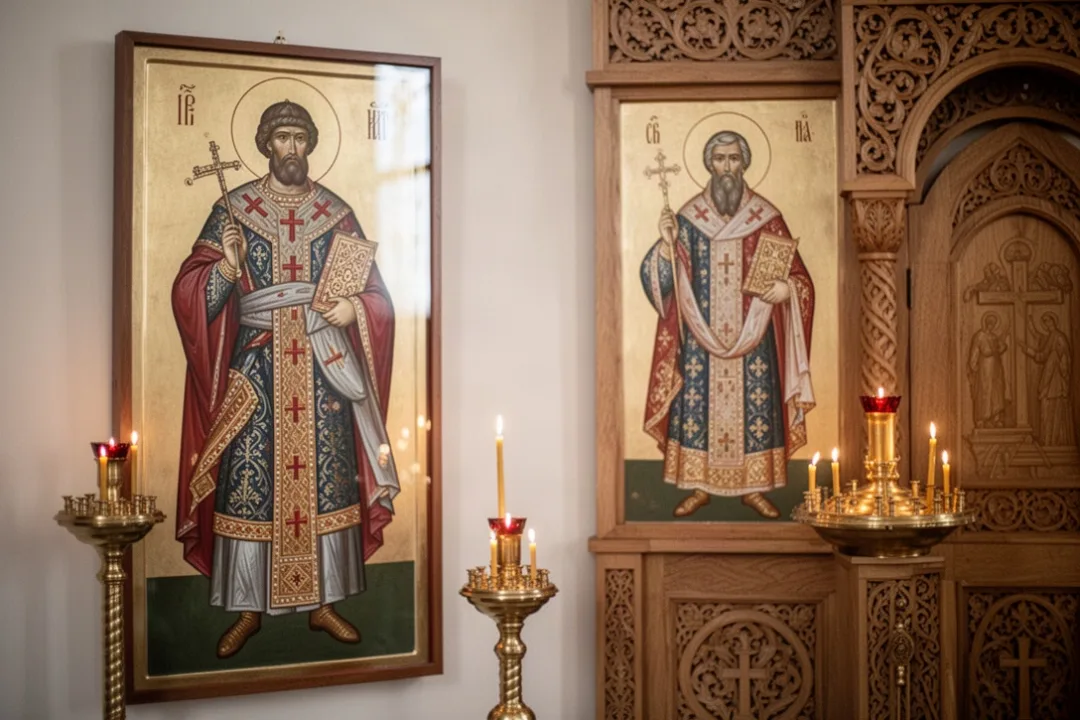
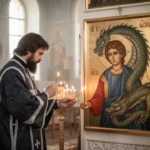
That variety explains why an image labeled simply “Saint Alexander” can be difficult to identify. Clothing, objects, inscriptions, and the source where the image appears usually provide the missing clue.
Pope Saint Alexander I and his traditional history
Pope Saint Alexander I is traditionally counted as one of the earliest bishops of Rome. Church lists place his pontificate in the early second century, commonly around the years 105 to 115, although the chronology of the earliest popes is not completely certain.
Later Christian tradition describes Alexander as a leader of the Roman Church during a period when Christians lived under the authority of the Roman Empire. He is often identified as a martyr, meaning that he was believed to have died because of his Christian faith. The details of his death are not equally secure in all historical sources.
Some accounts connect his martyrdom with the reign of the emperor Trajan. Traditional stories also associate him with Christian practices and with the conversion of members of a Roman household. These narratives have been repeated in devotional literature, but readers should distinguish between longstanding tradition and details established by contemporary evidence.
Pope Alexander I is sometimes credited in older sources with introducing or regulating elements of Christian worship. Such claims should be treated carefully because early church customs developed over time, and later writers sometimes attributed established practices to prominent early leaders.
His importance does not depend on every detail of those later accounts. He represents the endurance of the early Roman Christian community, the authority of the bishop of Rome, and the willingness of believers to remain faithful under pressure.
Saint Alexander I is best understood through the early Roman Church: a traditional bishop-martyr whose biography is partly historical and partly preserved through later Christian memory.
In the Roman Catholic calendar, Pope Saint Alexander I is traditionally remembered on May 3. This date can be confused with other celebrations, especially because calendars may place several saints together or revise older arrangements. A parish calendar, missal, or diocesan resource can confirm how the feast is observed in a particular place.
Alexander of Jerusalem as bishop and teacher
Alexander of Jerusalem was a different figure from Pope Alexander I. He lived during the third century and became known as a bishop, a teacher, and a supporter of Christian scholarship. His life is connected with the intellectual centers of early Christianity in the eastern Mediterranean.
Alexander was associated with Clement of Alexandria and Origen, two influential Christian thinkers. He supported Origen and helped create an environment in which Christians could study Scripture, theology, and the writings of earlier teachers. Accounts of his work connect him with the development of a library at Jerusalem, though the precise history of that collection is shaped by later sources.
As bishop of Jerusalem, Alexander served the Christian community during a turbulent period. The church faced internal disagreements as well as periods of official hostility. His ministry combined pastoral leadership with the preservation and explanation of Christian teaching.
According to ancient church histories, Alexander was arrested during the persecution under Emperor Decius. He was taken to Caesarea and died in prison rather than being released. This is why he is remembered both as a bishop and as a martyr.
His story is especially meaningful for people who associate holiness with teaching and learning. Alexander did not become known only for suffering; he also helped sustain Christian education and encouraged the work of theologians. His example joins intellectual discipline with pastoral responsibility.
In Catholic usage, Alexander of Jerusalem is generally commemorated on March 18. Other Christian traditions may observe him on another date or remember him together with related bishops and martyrs. When a calendar lists “Alexander of Jerusalem,” the location is the clearest way to distinguish him from the other saints.
Identification tip: An image of Alexander of Jerusalem may show a bishop’s vestments, a book, or a teaching setting. A bishop associated with Constantinople or Alexandria belongs to a different saint’s story.
Alexander of Constantinople and Alexander of Alexandria
Two important fourth-century church leaders also bore the name Alexander: Alexander of Constantinople and Alexander of Alexandria. Their ministries took place during the major theological disputes that followed the legalization of Christianity in the Roman Empire.
Alexander of Constantinople
Alexander of Constantinople was an elderly bishop who became known for defending the church’s teaching about Christ during the Arian controversy. Arius, a priest from Alexandria, taught a view of Christ’s nature that bishops at the Council of Nicaea rejected. The dispute affected churches across the eastern Roman Empire.
Alexander is traditionally associated with opposition to Arius and with the acceptance of the Nicene faith. Stories about his prayer before Arius’s expected return to communion are part of the saint’s traditional biography. They should be read as devotional accounts rather than as independently verified reports of every event.
He died in the fourth century, around the time of the emperor Constantine’s death. In Eastern Orthodox tradition, Alexander of Constantinople is remembered as a hierarch, or senior bishop, and as a defender of orthodox Christian belief.
Alexander of Alexandria was a leading bishop in the same controversy. He took action against Arius when Arius’s teaching was judged inconsistent with the church’s faith. Alexander also supported the young deacon Athanasius, who later became one of the most prominent defenders of Nicene Christianity.
Alexander’s role was both administrative and theological. As bishop of Alexandria, he represented a major Christian center and corresponded with other bishops about the dispute. His leadership helped prepare the way for the Council of Nicaea, which met in 325 and produced the Nicene Creed in its original form.
These two Alexanders are easy to confuse because both opposed Arian teaching and lived during the same broad period. The city is the essential distinction: Constantinople identifies one, while Alexandria identifies the other.
Constantinople: remembered as a bishop who defended Nicene teaching in the imperial capital.
Alexandria: remembered as the bishop who confronted Arius and supported Athanasius.
Both: associated with the church’s effort to express orthodox teaching about Christ.
Neither: should be confused with Pope Alexander I, who lived more than a century earlier.
If a prayer card, icon, or church history mentions the Council of Nicaea, Arius, Athanasius, or the fourth-century imperial church, it is probably referring to Alexander of Alexandria or Alexander of Constantinople rather than the early Roman pope.
Alexander Nevsky and other widely honored saints
Saint Alexander Nevsky was a medieval prince of Novgorod and Vladimir in the thirteenth century. He is one of the best-known Alexanders in Russian history and Eastern Orthodox devotion. Unlike the early bishops and martyrs, he was a political ruler who is honored for defending his people and supporting the Christian life of his realm.
Alexander lived during a period when Russian lands faced military pressure from several directions. He became associated with victories over western armies and with diplomacy toward the Mongol Golden Horde. His political decisions were shaped by the need to preserve his territories and their religious and cultural institutions.
He received the title “Nevsky” because of his association with a victory on the Neva River. The title is not his family name in the modern sense. Orthodox tradition honors him as a right-believing prince, a designation for a ruler remembered for using authority in service of the church and his people.
Alexander Nevsky entered monastic life near the end of his life and died in 1263. His relics and memory became important in Russian religious history. He is often shown in princely or military clothing, which helps distinguish him from the robed bishops named Alexander.
His feast dates vary by calendar and tradition. Orthodox observances may include dates connected with his death and the translation or public veneration of his relics. An Orthodox parish calendar is the most reliable guide for local practice.
Other saints named Alexander include Alexander of Bergamo, traditionally honored as an early martyr and patron of the city of Bergamo, and Alexander Svirsky, a Russian monastic saint associated with the Svir Monastery. Their stories belong to different regions and centuries.
Alexander of Bergamo is commonly depicted as a soldier or martyr, reflecting traditions about his service and death. Alexander Svirsky is depicted as a monk or abbot and is especially important in Russian Orthodox spirituality. Images, locations, and feast-day information are essential for telling these figures apart.
How Saint Alexander is depicted and honored
The visual symbols used for Saint Alexander depend on which saint an image represents. A bishop’s vestment usually points toward Alexander of Jerusalem, Alexander of Alexandria, or Alexander of Constantinople. A papal or early Roman setting may suggest Pope Alexander I, although artistic conventions are not always historically precise.
Alexander Nevsky is often shown wearing a princely crown, armor, or a richly decorated robe. A monk’s habit may indicate Alexander Svirsky. A soldier’s clothing or a martyr’s palm may point toward Alexander of Bergamo or another martyr named Alexander.
These symbols are clues, not proof. Artists sometimes use general Christian imagery, and local traditions may portray a saint differently. Look for an inscription, a city name, a feast date, or the institution that commissioned the image.
People may seek Saint Alexander’s intercession for different reasons depending on the saint they mean:
For steadfast faith: early martyrs such as Pope Alexander I or Alexander of Bergamo provide examples of courage.
For Christian education: Alexander of Jerusalem is associated with teaching, study, and the preservation of learning.
For doctrinal faithfulness: Alexander of Alexandria and Alexander of Constantinople are remembered for defending Nicene Christianity.
For responsible leadership: Alexander Nevsky is honored as a ruler who faced political and military pressures.
For monastic devotion: Alexander Svirsky is an important example in the Russian Orthodox tradition.
A short prayer can name the saint directly: “Saint Alexander of Jerusalem, pray for me,” or “Saint Alexander Nevsky, pray for us.” Naming the city, title, or role prevents confusion and makes the devotion more personal.
Churches, monasteries, schools, and charitable organizations may also be named for Saint Alexander. Their patron may be connected to a founding community, an immigrant tradition, a local miracle, or the founder’s personal devotion. The organization’s website, parish records, or feast-day celebration often identifies which Alexander is intended.
How to identify the right Saint Alexander
Start with the source where the name appears. A Catholic parish bulletin, an Orthodox icon, a historical book, and a family baptismal record may use “Saint Alexander” in different ways. The surrounding context usually answers the question faster than a general search for the name.
Check the Christian tradition. Determine whether the source is Roman Catholic, Eastern Orthodox, or connected with another church.
Look for a place name. Jerusalem, Alexandria, Constantinople, Bergamo, and Novgorod identify different Alexanders.
Check the date. Feast days can narrow the possibilities, though calendars may differ.
Examine the clothing and symbols. A prince, monk, bishop, or soldier suggests a different biography.
Read the title carefully. “Pope,” “bishop,” “hierarch,” “prince,” and “martyr” are useful distinctions.
Confirm with a church calendar. A local calendar is more reliable than an undated image caption.
If you are choosing a patron saint named Alexander, you do not have to choose based only on the name. Consider the qualities that speak to your circumstances: courage under persecution, love of learning, defense of Christian teaching, service in public life, or monastic prayer.
A person named Alexander may also be named for a family member rather than a particular saint. In that case, ask which church calendar the family follows and whether a baptismal record identifies the patron. The answer may differ between family members who share the same first name.
The central point remains simple: Saint Alexander is a shared name, not a single biography. Identifying the saint requires one additional detail, such as his city, century, title, feast day, or tradition. Once that detail is known, his life and form of devotion become much clearer.
Frequently asked questions
Is Saint Alexander the same person as Alexander Nevsky?
No. Alexander Nevsky was a thirteenth-century Russian prince honored as a saint in the Eastern Orthodox tradition. Other saints named Alexander include Pope Alexander I, Alexander of Jerusalem, and Alexander of Alexandria. The title “Nevsky,” the Russian setting, and the image of a prince or military ruler distinguish him from the early bishops and martyrs.
What is Saint Alexander the patron saint of?
There is no single patronage shared by every Saint Alexander. Different Alexanders are associated with different examples: teaching and Christian learning for Alexander of Jerusalem, defense of orthodox doctrine for the Alexandrian and Constantinopolitan bishops, and responsible leadership for Alexander Nevsky. Local churches may also have their own patronage traditions.
When is Saint Alexander’s feast day?
The date depends on which saint and which church calendar you mean. Pope Alexander I is traditionally commemorated by Catholics on May 3, while Alexander of Jerusalem is generally remembered on March 18 in the Catholic calendar. Orthodox calendars may use different dates for these and other Alexanders.
How can I tell which Saint Alexander is shown in an icon?
Look for the saint’s clothing, objects, inscription, and setting. A prince or warrior may be Alexander Nevsky, while a monk may be Alexander Svirsky. A bishop connected with a named city may be Alexander of Jerusalem, Alexandria, or Constantinople. The parish or icon’s accompanying text can provide the most dependable identification.













Leave a Reply