All Saints Day has a fixed date, so it occurs on November 1 regardless of the day of the week. In the United States, the date is commonly written as November 1. When November 1 falls on a Sunday, Monday, or another weekday, the calendar date remains the same, although church services and local observances may be scheduled differently.
The holiday is also called All Saints’ Day, with an apostrophe, or the Feast of All Saints. In older Christian terminology, it may be called All Hallows’ Day. “Hallow” is an old word meaning holy person or saint, which explains why October 31 is known as All Hallows’ Eve, or Halloween.
In many churches, All Saints Day begins a brief period of remembrance that continues into November 2. The three dates are often connected, but they do not mean the same thing:
October 31: Halloween, historically the evening before All Saints Day.
November 1: All Saints Day, honoring all saints, known and unknown.
November 2: All Souls Day, traditionally remembering all faithful departed Christians.
Quick answer: If you are checking a calendar, All Saints Day is November 1. In 2026, it falls on a Sunday.
Although the date is fixed, the day may not be treated as a public holiday in the United States. Government offices, schools, and businesses generally remain open unless a local institution chooses to observe it. The religious importance of the date is therefore separate from its status as a legal or workplace holiday.
What All Saints Day honors
All Saints Day honors all the saints, not only those whose names appear in a church calendar. In Christian use, a saint is a person recognized for exceptional holiness, faithfulness, or closeness to God. Depending on the tradition, the word can refer specifically to officially canonized figures or more broadly to all people who belong to God.
The feast includes well-known figures such as the apostles, martyrs, missionaries, teachers, monastics, and charitable workers whose lives shaped Christian communities. It also includes unnamed saints whose names and stories were never preserved. The day gives churches a way to honor this larger group together.
Many Christian communities emphasize that sainthood is not limited to famous people. All Saints Day can recognize ordinary believers whose lives reflected courage, compassion, prayer, service, and perseverance. A person may think of a faithful relative, a community volunteer, a teacher, or someone who quietly cared for others over many years.
All Saints Day directs attention not only to famous saints, but also to the faithful people whose holiness is known only to God.
The observance also reflects the Christian idea of the communion of saints. This phrase describes the spiritual fellowship shared by Christians across time and place. It connects the worshiping community with earlier generations of believers and with those regarded as living in God’s presence.
For Catholics, the feast is part of the church’s liturgical calendar and is a holy day of obligation in many places, including the United States. The exact obligation can depend on the weekday and on decisions by the local bishops. In the Episcopal Church and some Lutheran, Anglican, Methodist, and other Protestant communities, the day may also be observed, although its name, emphasis, and level of importance can differ.
Some Protestants are cautious about asking saints to intercede or about giving certain figures a special devotional role. Even so, many Protestant churches use the day to give thanks for faithful Christians, remember the example of holy people, and reflect on the hope of resurrection. The same date can therefore support different practices within Christianity.
How All Saints Day differs from Halloween and All Souls Day
All Saints Day and Halloween
Halloween takes place on October 31, the night before All Saints Day. Its name comes from “All Hallows’ Eve,” meaning the evening before All Hallows’ Day. The historical relationship between the dates is real, but modern Halloween customs—costumes, candy, parties, and decorations—are not the same as the church’s observance on November 1.
Some Halloween traditions developed from a mixture of Christian customs, older seasonal practices, folklore, and modern popular culture. Churches and families may treat Halloween as a secular celebration, a community event, or a religious eve connected with All Saints Day. There is no single Christian rule that determines how every household must observe October 31.
A church may hold a saints-themed service, a prayer gathering, a children’s event, or a festival on Halloween evening. Other congregations avoid Halloween activities altogether. The choice often reflects local customs, denominational teaching, and the preferences of individual families.
All Saints Day and All Souls Day
All Saints Day and All Souls Day are adjacent but distinct. November 1 focuses on the saints, especially the whole company of holy people. November 2 traditionally focuses on the faithful departed, including loved ones and other Christians who have died.
The distinction is clearest in Catholic practice, where the two days have separate liturgical themes. A parish may celebrate Mass for All Saints on November 1 and offer prayers for the dead on All Souls Day. Some churches also hold a memorial service that includes the names of people who died during the previous year.
In everyday speech, people sometimes combine the observances or use “All Saints” as a general term for early-November remembrance. That is understandable, especially in communities where services and family customs overlap. If you need the precise religious meaning, however, November 1 honors saints and November 2 remembers the departed.
How churches observe All Saints Day
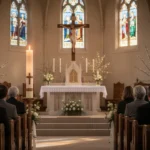
Church observance varies widely, but worship is usually at the center. Services may include readings about holiness, remembrance of Christian witnesses, prayers of thanksgiving, music, and a sermon about faithful living. In traditions that celebrate the Eucharist or Communion, the service may place special emphasis on the unity of the living church with the saints.
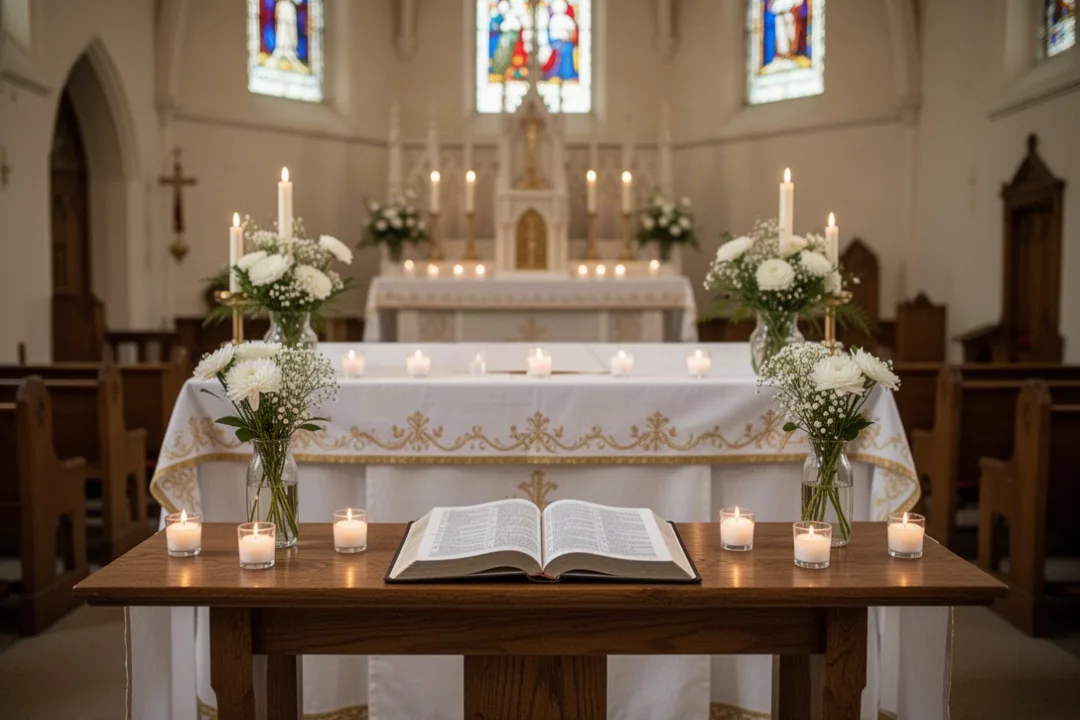
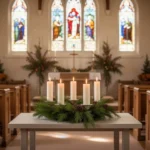
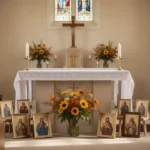
Many congregations decorate the sanctuary with white or gold cloth, candles, flowers, or images of saints. These colors often express celebration, light, and the hope of eternal life. Other churches use simpler settings and focus on spoken prayers, hymns, or personal testimony.
A service may remember specific saints associated with the congregation, region, or denomination. It may also name local members who died during the past year, although that practice is more directly associated with All Souls Day or memorial services. Churches sometimes invite families to bring photographs or write names on cards for a communal display.
Common elements of an All Saints Day service include:
Readings about the lives or witness of saints.
Prayers giving thanks for earlier generations of Christians.
Music connected with faith, hope, resurrection, or pilgrimage.
A sermon about the meaning of holiness in ordinary life.
Lighting candles or naming people remembered by the congregation.
Communion or Eucharist in traditions that include it in worship.
Some churches celebrate with a procession, especially when the congregation has a strong connection to a patron saint. Others organize educational programs in which children learn about saints through stories, artwork, dramatic presentations, or service projects. These activities are intended to make the day more concrete without reducing the observance to a history lesson.
Acts of service are another common choice. A congregation might prepare meals, collect winter clothing, visit nursing home residents, support a food pantry, or raise funds for a charitable organization. Such projects connect the memory of the saints with practical care for neighbors.
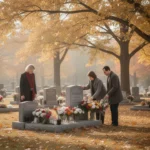
Families can observe All Saints Day without attending a large public event. Options include reading about a saint, visiting a cemetery, displaying a candle, attending worship, or talking with children about relatives whose kindness and faith influenced the family. The practice should fit the family’s religious tradition and comfort level.
For families: A simple remembrance can be meaningful: choose one person to honor, learn one fact about that person’s life, and identify one quality—such as patience or generosity—that the family wants to practice.
Why All Saints Day is celebrated on November 1
The history of All Saints Day developed over several centuries rather than beginning with one universally recorded event. Early Christians remembered martyrs on the dates of their deaths, which were viewed as their entrance into eternal life. As the number of recognized martyrs grew, churches began holding broader celebrations for groups of saints.
Different regions originally used different dates. In the early medieval period, a major observance for all saints became associated with November 1 in Western Christianity. The date was eventually adopted across the Western church and became one of its established annual feasts.
Historical accounts connect the November 1 observance with the dedication of a chapel in Rome during the eighth century and with later efforts to extend the feast more broadly throughout the Western church. The details of its development are tied to changes in the medieval liturgical calendar, so the modern observance reflects a long process rather than a single founding moment.
The timing also places the feast at the start of November, a period that has long been associated in many cultures with the approach of winter and with remembering the dead. Cultural associations may have influenced how people experienced the season, but the Christian meaning of All Saints Day centers on holiness, remembrance, and hope.
The word “saint” itself has a broad history in Christianity. In the New Testament, early Christian communities sometimes used language about saints to refer to believers as a group. Over time, churches also developed formal processes for recognizing particular individuals as saints. All Saints Day allows both ideas to remain visible: the celebration of officially recognized saints and the remembrance of a much larger community of faithful people.
The Western date should not be assumed to apply to every Christian church worldwide. Eastern Christian traditions have their own calendars and practices. In many Eastern Orthodox communities, the Sunday after Pentecost is observed as All Saints Sunday. Some Eastern Catholic churches follow calendars connected to the Byzantine tradition, while others may use the November 1 date in particular settings.
If you are checking the date for a specific church, the safest approach is to consult that congregation’s calendar. Denomination, local diocese, and liturgical calendar can affect the service date even when November 1 remains the standard Western date.
What to expect if you attend an All Saints Day service
A typical service may look much like a Sunday service, with additional references to saints and people who have died. Depending on the church, you may hear readings about Christian faithfulness, sing traditional hymns, see candles lit, or hear names read aloud. A communion service may include prayers that connect the congregation with Christians across generations.
If the service includes formal recognition of a canonized saint, the church may explain that person’s life and significance. If it is a broader Protestant or interdenominational observance, the focus may be on the examples of faithful believers rather than on asking saints for help or intercession.
Visitors do not need specialized knowledge to participate respectfully. You can follow the printed order of worship, remain seated when unsure, and participate in spoken responses only if you wish. If communion is offered, the congregation’s bulletin or an usher can explain who is invited to receive it and whether visitors may come forward for a blessing.
People who are grieving may find the season especially meaningful, but the service is not always a funeral or a formal grief program. Some churches make space for mourning, while others emphasize celebration. Either approach can reflect the day’s purpose: honoring holy lives and expressing Christian hope beyond death.
When planning a visit, check four details in advance:
The service date and time: Some churches observe the feast on November 1, while others transfer a celebration to the nearest Sunday.
The tradition’s emphasis: Catholic, Orthodox, Anglican, Lutheran, and other churches may use different prayers and customs.
Memorial practices: Ask whether the congregation will read names, light candles, or invite members to bring photographs.
Communion guidance: Policies differ, so read the bulletin or ask a church leader discreetly.
For schools and community groups, the day can be approached as a lesson in religious history, biography, and cultural traditions. A respectful activity might compare how different Christian communities honor saints, rather than presenting one practice as universal. Students can also study the difference between religious observance and the secular customs associated with Halloween.
For a personal observance at home, choose an activity that matches your beliefs. You might read a short biography, make a charitable donation, visit a cemetery, attend worship, or share stories about someone whose life shaped your family. The central purpose is not to create an elaborate ceremony; it is to remember faithful lives and consider what their example means now.
All Saints Day therefore answers more than a calendar question. On November 1, Christians in many traditions honor the broad community of saints—both famous and unknown—and reflect on the lives of people whose faith, love, and service continue to influence others.
Frequently asked questions
Is All Saints Day always on November 1?
In Western Christianity, yes: All Saints Day has a fixed date of November 1. A church may transfer its public service to the nearest Sunday for practical reasons, but the feast itself remains associated with November 1. Eastern Christian communities may use a different calendar or observe All Saints on another date, so local church schedules can vary.
Is All Saints Day a federal holiday in the United States?
No. All Saints Day is a religious feast, not a U.S. federal holiday. Schools, businesses, and government offices usually operate normally unless a local institution decides otherwise. Some Christian denominations treat November 1 as a major observance, and Catholic attendance requirements may depend on the calendar and decisions of local bishops.
Should you say “All Saints Day” or “All Saints’ Day”?
Both forms are widely used and understood. “All Saints’ Day” follows the traditional possessive form, while “All Saints Day” is also common in calendars, church names, and general writing. The alternative name “All Hallows’ Day” comes from the older word “hallow,” meaning a holy person or thing.
Can people who are not Christian participate in All Saints Day events?
Public church services follow the beliefs and practices of the hosting congregation, but visitors are often welcome to attend respectfully. Community programs, historical talks, concerts, and service projects may be open to everyone. If you are unsure about prayer, communion, or memorial customs, ask the church beforehand or simply observe quietly.









Leave a Reply