St. Joseph’s Day is celebrated every year on March 19. The Christian feast honors St. Joseph, the husband of Mary and foster father of Jesus, who is remembered for his humility, faith, work, and care for his family. In the United States, people observe the day through Mass, prayer, Italian-American food traditions, parish events, and acts of generosity.
The celebration can be as simple as attending church and sharing a meal, or as elaborate as creating a decorated St. Joseph’s Table for the community. Its central message is consistent: quiet service, trust in God, family responsibility, and care for people in need.
St. Joseph’s Day falls on March 19 each year. It is known in the Catholic calendar as the Solemnity of St. Joseph, Spouse of the Blessed Virgin Mary. The date is observed in many Catholic communities around the world, although local customs and the way the liturgy is scheduled can vary.
March 19 is separate from St. Joseph the Worker, another Catholic observance held on May 1. The March feast focuses especially on Joseph as Mary’s husband and Jesus’ guardian. The May observance highlights Joseph’s example as a worker and the dignity of labor.
Quick answer: If you are planning a meal, church visit, or family activity for St. Joseph’s Day, use March 19 as the calendar date. Check your local parish for Mass times because schedules may change when the feast coincides with another important day.
Why Christians honor St. Joseph
The Gospels of Matthew and Luke present Joseph as a descendant of David who was engaged to Mary. After learning that Mary was expecting a child through the Holy Spirit, Joseph accepted his responsibility and protected her rather than abandoning her. The Gospel accounts then describe his care for Jesus and Mary during the family’s early years.
Joseph does not speak in any recorded Gospel passage. His significance comes through his actions: he listens, responds, works, protects, and provides. For many Christians, this makes him a powerful example of faith expressed through dependable daily decisions, not public recognition.
Joseph is traditionally called the foster father or earthly father of Jesus, while Christian teaching holds that Jesus is the Son of God. He is also known as the husband of Mary, the patron of workers, and a protector of families. Different communities emphasize different aspects of his life, but all center on his faithful care.
What St. Joseph’s Day means in Catholic tradition
The feast invites believers to reflect on several qualities associated with Joseph. These themes can shape both religious observance and ordinary family life.
Faith: Joseph responds to difficult circumstances with trust and obedience.
Protection: He safeguards Mary and Jesus during periods of danger and uncertainty.
Work: His trade as a carpenter has made him an enduring symbol of honest labor.
Humility: He serves without seeking attention or status.
Family responsibility: He accepts the practical duties of caring for the people entrusted to him.
Compassion: His feast is often connected with feeding others and helping those who are poor.
These ideas explain why St. Joseph’s Day is more than a name day or a seasonal festival. The traditions point back to a model of steady, protective, and generous service.
How to celebrate St. Joseph’s Day step by step
You do not need a large gathering or elaborate decorations to mark the feast. A meaningful celebration can follow a few simple steps and be adapted to your religious background, family customs, and available time.
Learn about Joseph’s role. Read the Gospel passages about Joseph in Matthew 1–2 and Luke 1–2, or discuss what his actions show about courage and responsibility.
Attend Mass or pray at home. If you are Catholic, look for a parish celebration on or near March 19. If attending church is not possible, set aside quiet time for a prayer asking for Joseph’s guidance and protection.
Choose a service or charity project. Donate food, support a family experiencing hardship, help a worker, or prepare a meal for someone who is ill or alone.
Share a traditional food. Make zeppole, pasta, bread, or another dish associated with your family or local community.
Include children in the meaning. Let them create a small altar, write a thank-you note to a caregiver, or help prepare food for neighbors.
End with gratitude. Talk about the people whose quiet work protects and supports your household.
The most fitting activity is often one that combines prayer and practical kindness. A beautifully decorated table has meaning when it also leads to hospitality, charity, or attention to someone who might otherwise be overlooked.
What a St. Joseph’s Table is and how it works
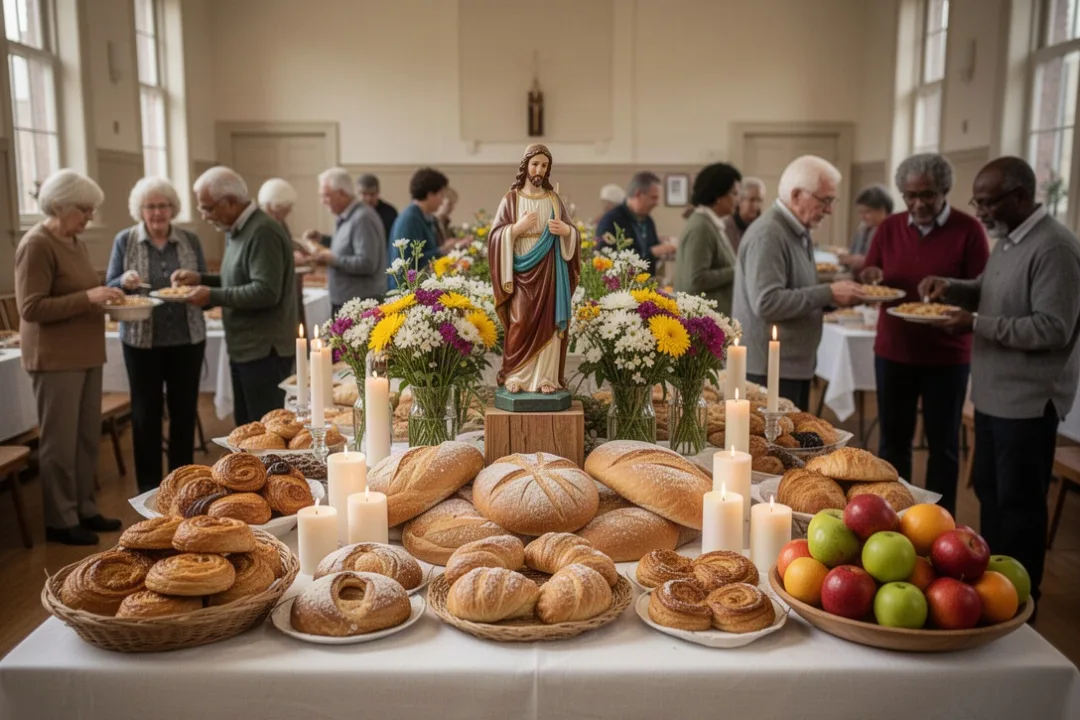
A St. Joseph’s Table is a display of food, flowers, candles, religious images, and other objects created in honor of the saint. It is especially associated with Italian and Italian-American communities. Families, churches, civic groups, and cultural organizations may build tables for public viewing and invite people to share the food.
According to a widely held tradition, St. Joseph’s Tables developed in Sicily after prayers for relief from severe famine were answered with rain. The exact historical details of the origin story vary by community, but the practice has long been linked with gratitude, hospitality, and feeding people in need.
Many tables use three levels to represent Jesus, Mary, and Joseph. A statue or image of St. Joseph often stands at the center, while lilies, candles, bread, fruit, pastries, and other foods surround it. Some tables also include a cross, a Bible, or images of saints.
Customs differ significantly. Some tables are private family displays, while others are community events. In some places, guests are asked to make a donation, and the food is distributed to the poor or to a local charity. The table is not meant to be treated as an altar for worship; Catholics worship God, while the table honors Joseph and expresses gratitude through service.
How to create a simple St. Joseph’s Table at home
A home table can be modest. Use a clean table or shelf, a small statue or printed image of Joseph, a candle, flowers, and foods that your family can share. If you use a candle, place it securely and never leave it burning unattended.
Choose a safe, visible location for the display.
Place the image or statue of Joseph at the center or highest point.
Add bread, fruit, pastries, or a family dish.
Include a written intention, such as prayers for workers, families, or people without food.
Invite household members to contribute one act of kindness.
Share the food with guests or donate an equivalent amount to a food pantry.
The display does not need expensive materials. The generosity connected to the table matters more than its appearance.
Traditional St. Joseph’s Day foods
Food is one of the best-known parts of the celebration, particularly in Italian, Sicilian, and Italian-American communities. Recipes vary by region and family, but many include simple ingredients such as bread, pasta, beans, vegetables, citrus, and breadcrumbs.
Zeppole are among the most recognizable St. Joseph’s Day foods. These pastries may be fried or baked and are often filled or topped with sweetened ricotta, pastry cream, powdered sugar, or a cherry. Names and recipes differ across regions, so there is no single version that defines every celebration.
Other common dishes include pasta with breadcrumbs, which can symbolize sawdust from Joseph’s carpentry work, and meatless meals. Some families prepare bean dishes, seafood, vegetable soups, or baked pasta. The choice of food may reflect older religious practices, local ingredients, or the family’s heritage.
Why meatless foods appear in some celebrations
St. Joseph’s Day occurs during Lent, the Christian season leading to Easter. Because many Catholics traditionally abstain from meat on certain Lenten days, meatless dishes became part of some St. Joseph’s Day meals. However, the exact rules depend on the day of the week, local church practice, and the person’s religious tradition.
Do not assume that every St. Joseph’s Day meal is meatless. Some families follow a strictly fish-and-vegetable menu, while others serve regional dishes that include meat. The shared meal is more important than enforcing one universal menu.
Practical tip: When visiting someone else’s St. Joseph’s Day table, ask about dietary customs and donation arrangements. A dish that is traditional in one family may be unfamiliar or prepared differently in another.
St. Joseph’s Day traditions in Sicily and Italy
St. Joseph’s Day has deep roots in Italy, especially Sicily, where the feast is associated with family, public devotion, and charitable meals. Communities may hold processions, decorate churches, prepare large tables, and serve traditional foods to visitors.
In some Sicilian towns, residents create elaborate structures for the saint and organize public ceremonies. Bread may be shaped into religious symbols or placed in prominent positions. The food can be blessed and then distributed, reinforcing the connection between prayer and care for the hungry.
Italy also has regional observances that include fires, processions, music, pastries, and special breads. These customs are not identical from one town to another. A family from one part of Italy may celebrate very differently from a family with roots in another region.
The tradition traveled to the United States with Italian immigrants. Over time, it became especially visible in neighborhoods and parishes with Sicilian or southern Italian heritage. Many Italian-American communities continue to host St. Joseph’s altars, parish dinners, pastry sales, and charity events.
St. Joseph’s Day in the United States
In the United States, St. Joseph’s Day is observed most visibly by Catholic parishes and communities with Italian, Sicilian, Spanish, Portuguese, or other Catholic cultural traditions. It is not a federal holiday, so schools, banks, and most workplaces generally remain open on March 19.
A parish may celebrate with a special Mass, a blessing of bread, a St. Joseph’s Table, or a community dinner. Some organizations use the occasion to support a food pantry, shelter, parish outreach program, or scholarship fund. In New Orleans and other places with strong Italian-American history, public observances may combine religious ceremonies with local food and cultural events.
For people outside those communities, the day can still be observed in a respectful and personal way. You might attend a public parish event, prepare a traditional recipe, learn about Joseph’s role in the Gospels, or make a donation in honor of a father, grandfather, caregiver, or worker who has shaped your life.
Prayers and devotions associated with St. Joseph
Catholics pray to God through the intercession of St. Joseph, asking him to pray for families, workers, fathers, the dying, travelers, and people facing uncertainty. Common devotions include a novena, a litany, the Rosary, or a short prayer before a meal.
A simple prayer can mention the needs that matter most in your household: employment, housing, safety, health, family unity, or the ability to care for someone else. You can also pray for people who work in difficult conditions and for those who cannot find work.
The Novena to St. Joseph is a nine-day prayer practice that may begin before March 19 or be used at another time of year. Different versions exist, so a parish, prayer book, or Catholic organization may provide its own form. A novena is not a magical formula; it is a structured period of prayer, reflection, and trust.
People and causes traditionally placed under Joseph’s care
Fathers, stepfathers, foster parents, and caregivers
Carpenters, builders, artisans, and other workers
People seeking employment or facing financial hardship
Families experiencing conflict, displacement, or loss
Children and people who need protection
Those who are sick, dying, or grieving
People who are homeless, hungry, or separated from their families
You can connect the prayer with a concrete action. For example, pray for unemployed neighbors and then contribute to a job-training program, or pray for families without food and then bring groceries to a local pantry.
Symbols connected with St. Joseph’s Day
Several symbols appear in images, decorations, and church celebrations. Lilies are commonly associated with Joseph’s purity and integrity. A carpenter’s square, tools, or wood may represent his trade and his role as a provider.
A staff with lilies is another familiar image. Bread represents nourishment and hospitality, while candles can symbolize faith and prayer. The colors used in church may follow the liturgical celebration rather than a universal St. Joseph’s Day decorating rule.
Some people wear red on the feast, particularly in Italian-American communities, while others use white, brown, or green in decorations. These color customs are cultural and local, not requirements for celebrating the day.
Children often understand St. Joseph best through practical examples. Explain that Joseph cared for Mary and Jesus, worked to support his household, and made brave choices when the family faced danger. Keep the focus on qualities children can recognize: helping, listening, protecting, and doing necessary work well.
Cooking provides a natural activity. Children can shape bread, arrange fruit, decorate a pastry, or help set a table. While they work, talk about why the food will be shared and who might need help in the community.
Read a child-friendly account of Joseph’s life from Matthew or Luke.
Make a small paper lily or carpenter’s square for the family display.
Write thank-you notes to parents, grandparents, teachers, or caregivers.
Collect canned goods for a food pantry.
Prepare a plate of food for a neighbor who lives alone.
Ask each child to name one person whose work helps the family or community.
The goal is not to turn the feast into a craft project without meaning. Each activity should connect to Joseph’s example of service and responsibility.
Common questions about St. Joseph’s Day customs
Is St. Joseph’s Day a holy day of obligation?
For Catholics in the United States, March 19 is generally not one of the U.S. holy days of obligation. That does not make the feast unimportant, and some countries or local communities may observe it differently. Mass attendance, fasting, and abstinence requirements can depend on local church rules, so ask your parish if you need guidance about a specific year.
Can anyone attend a St. Joseph’s Table?
Many public St. Joseph’s Tables welcome visitors, especially when a parish or community group organizes the event. Some are private family devotions or require reservations for a meal. Check the host’s instructions before bringing food, taking photographs, or assuming that items on display are available to eat.
What should you give someone on St. Joseph’s Day?
There is no required gift. A pastry, loaf of bread, small religious image, flowers, or donation made in someone’s name can be appropriate. If the recipient has Italian or Sicilian heritage, a traditional food may be especially meaningful, but a thoughtful note or practical act of help also fits the spirit of the feast.
How is St. Joseph connected with workers?
Christian tradition identifies Joseph as a carpenter or craftsman, and his work has made him a patron of workers and tradespeople. His example emphasizes the dignity of honest labor and the responsibility of using work to care for others. The separate feast of St. Joseph the Worker on May 1 focuses particularly on these themes.
Frequently asked questions
Why is St. Joseph’s Day celebrated on March 19?
March 19 is the traditional feast date assigned to Joseph in the Catholic liturgical calendar. The date honors him as Mary’s husband and Jesus’ foster father. It is distinct from the May 1 observance of St. Joseph the Worker. Parish schedules can shift when another major liturgical celebration affects the calendar, so local announcements are the best source for Mass times.
What is traditionally served on St. Joseph’s Day?
Popular foods include zeppole, breads, pasta with breadcrumbs, beans, vegetables, seafood, and other regional dishes. Many families serve meatless food because the feast occurs during Lent, although practices differ. The menu usually reflects local heritage and family custom rather than one required recipe.
What does a St. Joseph’s Table represent?
A St. Joseph’s Table represents gratitude, hospitality, and charitable care. Food and religious symbols are arranged in Joseph’s honor, then shared with guests or donated to people in need. Tables may be private or public, and their design varies. The charitable purpose is usually more significant than the decoration.
Can non-Catholics celebrate St. Joseph’s Day?
Anyone can learn about Joseph, share a meal, support a charity, or honor the people whose quiet work sustains a family. Those attending a Catholic service or public table should respect the host community’s religious practices. A personal celebration can focus on generosity, family care, protection, and gratitude without adopting customs inaccurately.
















Leave a Reply