You may have seen a parish bulletin announce a feast day and wondered what it means, whether you are expected to attend Mass, or how it differs from a saint’s memorial. In the Catholic Church, a feast day is a date set aside to celebrate a person or event central to the faith, especially the life of Jesus Christ, the Virgin Mary, or a saint.
Not every feast day carries the same importance. The Church organizes celebrations into solemnities, feasts, and memorials, with solemnities receiving the highest rank. Some days are celebrated by Catholics throughout the world, while others belong only to a country, diocese, religious order, or parish.
A feast day is therefore more than a name printed on a calendar. It shapes the Church’s public worship and gives Catholics a particular mystery, saint, or example of holiness to remember in prayer.
A Catholic feast day directs attention to a person or event that reveals something about God’s work of salvation. The focus may be one of the major events in Christ’s life, a privilege of Mary, the witness of an apostle, or the faithful service of a saint.
Celebrating a saint does not mean worshiping the saint. Catholics give worship to God alone, while honoring the saints as people who cooperated with grace and now share in heavenly life. Their feast days invite believers to learn from their example and ask for their intercession.
The word “feast” can sound as though the day always involves a large meal or a public festival. A parish may certainly organize food, music, a procession, or another community event, but the central celebration is the liturgy, especially the Eucharistic celebration of Mass.
Core idea: A Catholic feast day is a liturgical celebration, not simply a secular holiday or a saint’s birthday. Its purpose is to praise God and recall the faith associated with the day.
How feast days fit into the Catholic liturgical calendar
The liturgical calendar organizes the Church’s worship year around the life, death, resurrection, and promised return of Christ. It is different from the ordinary calendar because its dates and seasons are determined by the Church’s cycle of worship.
The year includes seasons such as Advent, Christmas, Lent, the Triduum, Easter, and Ordinary Time. Feast days appear throughout these seasons, although the character of a celebration can change depending on the season in which it occurs.
For example, a feast connected with Christ’s birth belongs to the Christmas season, while a celebration of an apostle may fall during Ordinary Time. A Marian celebration during Advent may highlight Mary’s role in preparing for the coming of Christ rather than standing apart from the season’s themes.
Some dates remain fixed each year, such as December 25 for Christmas. Others depend on the date of Easter and therefore move from year to year. The liturgical calendar for your country or diocese is the best source for the exact date and rank of a particular celebration.
The three main ranks of Catholic celebrations
The Church uses three principal ranks to show the relative importance of celebrations: solemnities, feasts, and memorials. These ranks affect the prayers, Scripture readings, music, and sometimes the obligation to attend Mass.
Solemnities: The highest-ranking celebrations, honoring central mysteries of the faith or especially significant saints and events. They generally include special prayers and readings and may be observed with greater ceremony.
Feasts: Celebrations of the Lord, Mary, or saints that are important but rank below solemnities. Feasts usually have their own proper readings and prayers when the liturgical rules permit.
Memorials: Commemorations of saints or sacred events that rank below feasts. Some are obligatory, while others are optional, meaning the celebrant or parish may choose whether to observe them.
The everyday phrase “feast day” is often used broadly for all three types. In formal liturgical language, however, a feast is one specific rank. A parish announcement might call the patron saint’s celebration a feast day even when the official calendar classifies it as a solemnity or memorial.
Why solemnities receive special treatment
Solemnities celebrate the most significant mysteries and people in Catholic worship. Examples include Christmas, Easter Sunday, Pentecost, the Immaculate Conception, and the Assumption of the Blessed Virgin Mary. The exact list also includes celebrations of major events and titles connected with Christ.
A solemnity may begin with evening prayer on the preceding day, especially when it is a major celebration. Its Mass has proper prayers and readings, and the Gloria is generally included when the liturgical norms call for it. The Creed is also used at solemnities.
Some solemnities are holy days of obligation, but not all solemnities carry that obligation in every place. Episcopal conferences and local bishops determine how certain universal celebrations are observed in a particular country, including whether an obligation is transferred or dispensed from.
A feast generally has a stronger liturgical rank than a memorial. Feasts of the Lord may be celebrated even on certain Sundays in Ordinary Time, and feasts of apostles and evangelists have their own distinctive place in the calendar.
Memorials are more flexible. An obligatory memorial is normally observed when no higher-ranking celebration takes precedence. An optional memorial may be observed or omitted according to the liturgical calendar, pastoral circumstances, or the priest’s judgment.
These distinctions are mainly about the Church’s official worship. They do not measure how holy one saint was or how valuable a saint’s witness is. A saint remembered with an optional memorial can still be deeply important to a local community or to an individual Catholic.
How to observe a Catholic feast day step by step
You do not need elaborate preparations to observe a feast day faithfully. The appropriate response depends on the day’s rank, your parish schedule, and the traditions of your family or community.
Find the day’s rank and meaning. Check a Catholic calendar, parish bulletin, or diocesan resource to learn whether it is a solemnity, feast, obligatory memorial, or optional memorial.
Read the assigned Scripture passages. The readings often explain why the Church selected the day and connect the saint or mystery with the Gospel.
Attend Mass when appropriate. Go to Mass when the day is a Sunday or a holy day of obligation, and consider attending on other important feast days if your schedule permits.
Pray with the saint or mystery. You might use a traditional prayer, the Rosary, the Liturgy of the Hours, or a quiet prayer asking how the celebration should shape your life.
Learn one concrete lesson. Read a reliable biography of the saint or study the teaching associated with the feast. Choose one virtue to practice during the day.
Share the celebration. A meal, parish gathering, charitable act, or family prayer can help connect the liturgy with ordinary life.
The goal is not to complete a checklist. The practices above are ways to let the celebration move from the church calendar into your prayer, relationships, and choices.
What happens at Mass on a feast day
A feast day Mass normally uses the proper prayers and readings assigned to that celebration, unless a higher-ranking day takes precedence. The priest may preach about the saint, the biblical event, or the Christian mystery being celebrated.
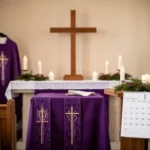
The liturgical color can also change. White or gold is commonly used for celebrations of the Lord, Mary, and saints who were not martyrs. Red is used for celebrations associated with the Holy Spirit, the Passion of Christ, or martyrs. Violet, green, and other colors appear according to the liturgical season and celebration.
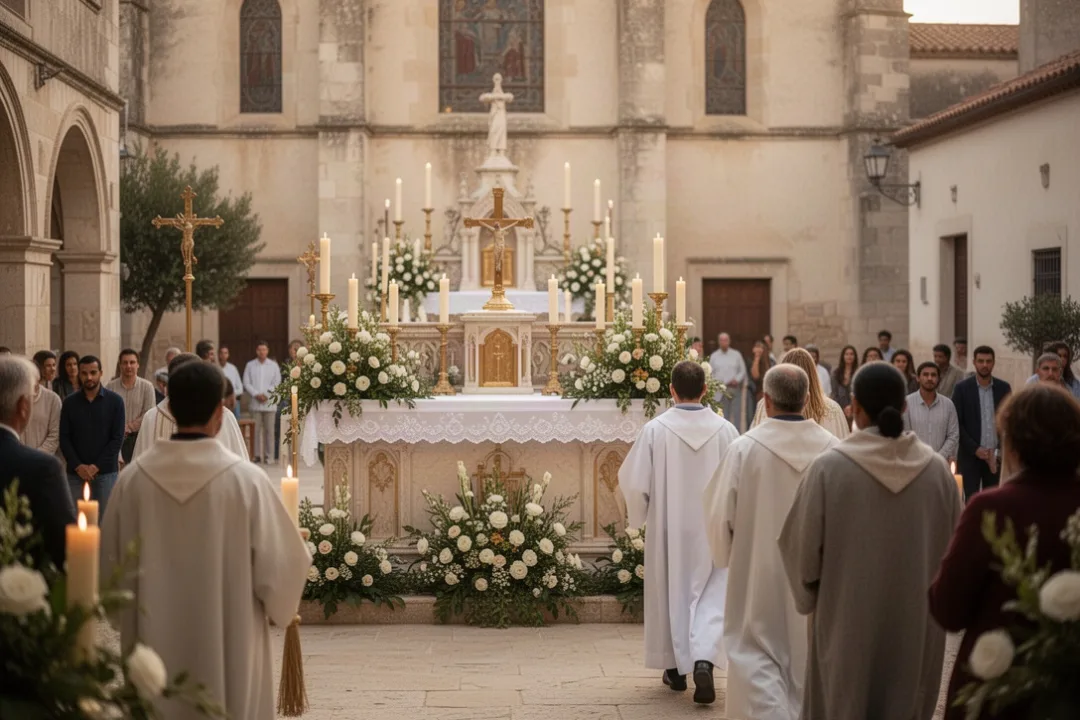
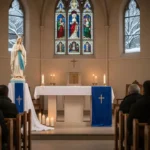
Parishes may add a procession, incense, special music, a blessing, or a display of a relic. These customs can make the celebration more visible, but they are not required for a day to be a genuine Catholic feast day.
When the celebration honors a martyr, the liturgy may emphasize faithfulness under persecution. When it honors a missionary, the readings or homily may focus on evangelization. A celebration of a religious founder may draw attention to prayer, poverty, service, or the founder’s particular spiritual charism.
Do Catholics have to attend Mass on every feast day?
No. Catholics are not required to attend Mass on every feast or memorial. Catholics are generally obliged to participate in Mass on Sundays and on holy days of obligation established for their particular country or diocese.
The number and observance of holy days can differ by location. A solemnity may be a holy day of obligation in one country but not in another, or the obligation may be transferred to a Sunday. Local church authorities publish the applicable calendar and rules.
If you are unsure, check your parish bulletin, diocesan website, or ask a priest. A feast day may be spiritually significant even when attendance at Mass is not obligatory. You can observe it through prayer, Scripture, acts of charity, or participation in a parish celebration.
Practical check: Do not assume that every solemnity is a holy day of obligation where you live. The local diocesan calendar determines how the universal calendar is applied.
Universal, national, diocesan, and parish feast days
Not every Catholic feast day appears with the same status everywhere. The Church has a universal calendar, but each country, diocese, and religious community may have additional celebrations that reflect its own history and patrons.
A universal celebration is included in the calendar for Catholics throughout the Latin Church or, in some cases, across the wider Catholic Church. Celebrations of major events in Christ’s life and important apostles commonly have broad observance.
A national calendar may add a saint who has special significance for a country. A diocese may celebrate its patron saint or the anniversary of its cathedral’s dedication. Religious orders often observe founders, teachers, and saints associated with their spiritual tradition.
A parish may also hold a patronal feast. If a parish is named for Saint Joseph, Saint Patrick, or a title of Mary, its community may give that celebration special attention with Mass, fellowship, catechesis, or a procession.
Universal celebration: Observed broadly throughout the Church according to the approved universal calendar.
National celebration: Added to the calendar of a particular country or bishops’ conference.
Diocesan celebration: Connected with a diocese, cathedral, bishop, or local patron.
Religious-order celebration: Associated with a congregation’s founder, spirituality, or important members.
Parish celebration: Centered on the church’s patron, dedication, or longstanding local devotion.
Because calendars differ, an online list of Catholic feast days may not match the calendar used at your parish. The parish’s missal, bulletin, or diocesan schedule usually provides the most relevant information.
How saints’ feast days relate to the saints’ deaths
For many saints, the feast day is connected with the date of death, understood as the saint’s entrance into eternal life. This date is sometimes called the saint’s heavenly birthday. The Church may choose another date when the anniversary is already occupied by a more important celebration or when historical information is uncertain.
Some saints share a feast day because they were associated with the same event, community, or witness. Others are celebrated together because their individual dates are unknown or because the Church wishes to emphasize their united testimony.
The date is not meant to turn a saint into a distant historical figure. The liturgy presents the saint as a living member of the Church in heaven, whose example points beyond personal achievement to the grace of God.
Why Catholic families celebrate feast days at home
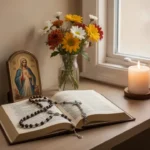
Home observance can make the liturgical calendar part of family life. A simple practice might include lighting a candle near a holy image, reading a saint’s biography, preparing a traditional food, or praying for people connected with the saint’s mission.
Parents can adapt the celebration to a child’s age. Young children may enjoy a picture book and a craft, while older children can study the historical setting, discuss a moral decision made by the saint, or research a charitable cause related to the day.
Family customs should support the liturgy rather than replace it. A special meal is meaningful when it helps the household remember the person or mystery being celebrated, not when it becomes the entire focus of the day.
Useful home practices include:
Reading the day’s Gospel and discussing one sentence in your own words.
Praying for the saint’s particular concerns, such as the poor, missionaries, families, or the sick.
Giving to a charity connected with the feast’s theme.
Displaying an image of the saint or a symbol associated with the celebration.
Calling a family member who shares the saint’s name.
Choosing one act of patience, generosity, courage, or service inspired by the saint.
Common Catholic feast day traditions
Traditions differ widely across cultures, regions, and parishes. In some communities, a feast day includes a procession through the neighborhood. In others, the main expression is a solemn Mass followed by a meal or a service project.
Many Catholic cultures have traditional foods associated with particular saints or seasons. These customs can preserve family memory and connect faith with place. They do not have to be universal or officially required to be valuable.
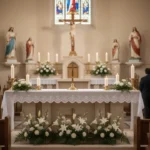
Some parishes display a statue or icon, use music from a cultural tradition, or invite parishioners to bring flowers. Others hold a novena leading up to the feast, especially for a patron saint or a significant Marian celebration.
The Church encourages legitimate customs that express the faith, while the Mass remains the center of the celebration. A cultural tradition is strongest when it leads people toward prayer, community, charity, and a deeper understanding of the Gospel.
How to choose a saint’s feast day for personal prayer
You do not need to wait for a saint’s feast day to ask for that saint’s intercession, but the annual celebration can provide a useful point of focus. You might choose a saint connected with your name, profession, family history, parish, or a virtue you hope to develop.
Begin by learning the basic facts that are reliably known. Read an approved biography or a reputable Catholic reference, and distinguish established history from later legends. Consider what the saint actually did, whom the saint served, and how the saint responded to hardship or responsibility.
Then select a modest practice for the day. Pray for the saint’s intercession, read the assigned Scripture, make a donation, visit someone who is isolated, or spend time examining how the saint’s example challenges your habits.
A saint’s feast day is not a promise that a particular request will be granted. Catholic devotion asks for intercession and guidance while trusting God’s will. The saint points the believer toward Christ rather than taking Christ’s place.
How feast days can deepen Catholic understanding
The calendar teaches through repetition. Each year, feast days return with familiar prayers and readings, allowing the meaning of a mystery or a saint’s witness to develop as your life changes.
A feast day honoring a martyr may speak differently to someone facing pressure at work than it did during a previous year. A celebration of a parent, teacher, or missionary may take on new meaning after you begin caring for children, serving others, or facing a difficult decision.
The calendar also keeps Catholic faith from becoming only a set of abstract ideas. The Church remembers real people who prayed, worked, suffered, served, and made choices. Their lives show how Christian belief can take practical form in different circumstances.
At the same time, feast days keep the focus on God’s action. Catholics do not celebrate saints because they were flawless or self-sufficient. They celebrate the way divine grace worked through ordinary human lives and invited those people into holiness.
Where to find the correct Catholic feast day information
Use a current parish or diocesan calendar for dates, ranks, Mass times, and holy day obligations. The Roman Missal and the official liturgical calendar provide the authoritative framework for the Roman Catholic Church, while Eastern Catholic Churches follow their own liturgical traditions and calendars.
A saint’s name may also appear on different dates in different calendars. Historical revisions, local patronage, and differences between Catholic rites can affect the date or rank. If a website does not identify its country, rite, or calendar year, treat its information cautiously.
For a meaningful celebration, look for three kinds of information:
Liturgical status: Is the day a solemnity, feast, obligatory memorial, or optional memorial?
Local observance: Is it celebrated by your country, diocese, parish, or religious community?
Pastoral schedule: What Masses, prayers, processions, or educational events are actually available?
With those details, you can observe the day appropriately without confusing a local devotion with a universal requirement. The heart of the celebration remains consistent: prayer, worship, remembrance, and a renewed desire to live the Christian faith.
Frequently asked questions
Is every Catholic feast day a holy day of obligation?
No. Holy days of obligation are designated by the Church for a particular country or region, and the list can differ. Some solemnities are obligations, while many feasts and memorials are not. Your diocesan calendar or parish bulletin will show whether Mass attendance is required on a specific day and whether the obligation has been transferred to Sunday.
Can a Catholic celebrate a feast day without attending Mass?
Yes, when the day is not a holy day of obligation or when attending is not possible. You can read the assigned Scripture, pray with the saint’s example, join a family devotion, perform an act of charity, or participate in another parish prayer service. These practices do not replace Sunday or required Mass attendance when that obligation applies.
What is the difference between a Catholic feast day and a saint’s feast day?
“Feast day” is a broad expression for a liturgical celebration, while a saint’s feast day specifically honors a canonized saint or group of saints. Catholic calendars also use “feast” as one formal rank among solemnities, feasts, and memorials. As a result, a saint’s celebration may technically be a solemnity, feast, obligatory memorial, or optional memorial.
Why do Catholic feast day dates sometimes differ between calendars?
Calendars can differ because of country, diocese, liturgical rite, religious order, or changes in the year’s movable celebrations. A local patron may have a prominent celebration in one diocese but not appear on another calendar. For the most accurate date and rank, consult the current calendar used by your parish or diocese rather than relying on a general list.









Leave a Reply