A novena is a Catholic prayer practice that lasts for nine consecutive days, usually for a specific intention, spiritual need, or devotion. A person may pray a novena alone, with family, or as part of a parish community, asking God for help through the intercession of a saint or the Virgin Mary.
The word comes from the Latin novem, meaning nine. Novenas are not magical formulas or guarantees that a request will be granted. They are a structured way to practice persistent prayer, deepen faith, and place a concern in God’s hands.
A novena gives prayer a clear time frame and a repeated pattern. For nine days, the person usually prays the same or similar prayers, reflects on a spiritual theme, and presents an intention to God. Some novenas are addressed directly to God; others ask for the prayers of Mary or a saint.
The nine-day period is traditional, but the central point is not simply counting days. A novena encourages faithful attention to one concern over time. Instead of mentioning an intention once and immediately moving on, you return to it deliberately, allowing your understanding and desires to mature through prayer.
A typical novena may include several elements:
An opening prayer addressed to God, Jesus, the Holy Spirit, Mary, or a saint
A short reading, meditation, or reflection for that day
A particular prayer connected with the devotion
The Our Father, Hail Mary, Glory Be, or another familiar Catholic prayer
A personal intention, such as healing, guidance, peace, or conversion
A closing prayer or sign of trust in God’s will
There is no single required format for every novena. Some are very brief and take only a few minutes. Others include Scripture, a litany, a Rosary, Mass, Eucharistic adoration, or a more extended meditation. What makes the practice a novena is generally the nine-day structure and the focused intention.
Key idea: A novena is not a contract with God. It is a disciplined form of prayer that expresses trust, persistence, and openness to God’s response.
Catholic teaching does not treat a novena as a promise that a desired outcome will happen. Prayer can ask boldly, but it also includes submission to God’s wisdom. The answer may come as the requested help, a different kind of grace, greater clarity, strength to endure, or a changed heart.
Why Catholics pray novenas for nine days
The nine-day pattern has roots in the New Testament. After Jesus’ Ascension, the Acts of the Apostles describes the disciples gathering in prayer with Mary and other believers while awaiting the Holy Spirit. Catholic tradition has often connected this period of prayer with the origin of the novena, although the modern devotional forms developed over time.
The number nine also has a place in Christian prayer before important celebrations. A novena can prepare a person for a feast day, mark a time of waiting, or help a community ask for a particular grace. Some novenas begin nine days before a feast; others begin on the feast and continue afterward.
The length gives the practice a rhythm. Nine days is long enough to encourage perseverance but short enough to make a specific commitment. Each day offers another opportunity to return to prayer, even when emotions change or the original intention becomes harder to express.
Persistent prayer does not mean trying to pressure God into acting. In Catholic spirituality, repeated prayer can transform the person who prays. It may expose fear, impatience, grief, or attachment to a particular result. Over time, the person can bring those feelings honestly before God and ask for the grace to respond faithfully.
Jesus teaches persistence in prayer through several passages in the Gospels, including Luke 11 and Luke 18. These passages emphasize continued trust and the goodness of turning to God. They should not be understood as instructions to repeat words mechanically until God gives in.
A novena can also create a small daily pause for silence and reflection. When life feels unsettled, a set prayer provides a dependable place to bring worries. The repeated practice may help you notice what you are truly asking for and whether your intention needs to be widened or clarified.
What people pray for in a novena
People pray novenas for many kinds of intentions. A person might ask for help during illness, wisdom before a decision, comfort after a loss, healing in a relationship, employment, protection, or strength during a difficult responsibility. Others pray in thanksgiving rather than asking for something specific.
Some intentions concern another person. You may pray for a family member, friend, coworker, or someone experiencing hardship. Catholic prayer allows you to present that person to God while respecting that person’s dignity and freedom. The purpose is not to control another person’s choices.
Common novena intentions include:
Healing: asking for physical, emotional, or spiritual help
Discernment: seeking wisdom about work, vocation, relationships, or a major decision
Conversion: praying for renewed faith or a return to Christian life
Peace: asking for reconciliation, patience, or freedom from anxiety
Protection: entrusting a person, family, journey, or community to God
Thanksgiving: recognizing a blessing or grace already received
Preparation: getting ready spiritually for a sacrament or feast
A prayer intention does not need to be dramatic to be appropriate. You can pray for patience with your children, courage for an ordinary responsibility, faith during uncertainty, or the ability to forgive. A novena may be especially useful when a concern is important but cannot be solved through immediate action.
The most faithful intention is often broader than a single predicted outcome. For example, you might pray not only for a specific job but also for honesty, wisdom, and peace while searching. You might ask not only for a loved one’s recovery but also for comfort, competent care, and grace for everyone involved.
Many Catholics also pray novenas for the souls of the dead. These prayers express love and hope in God’s mercy. They may be offered around the anniversary of a death, before All Souls’ Day, or whenever a person wishes to remember someone who has died.
Different types of Catholic novenas
Catholic novenas take several forms. Some are associated with a particular saint, while others focus directly on Jesus, the Holy Spirit, the Sacred Heart, the Virgin Mary, or a major mystery of Christian faith. The name of the novena usually indicates its focus and the kind of prayer it contains.
Novenas to saints and Mary
When Catholics pray a novena to a saint, they are asking that saint to intercede with God. Intercession means asking someone to pray on your behalf. Catholics do not worship saints; worship belongs to God alone. Saints are honored as faithful witnesses whose prayers can join those of the Church.
Marian novenas ask Mary to pray for a particular intention or to help the person follow Christ more faithfully. The prayers may focus on a title associated with Mary, such as Our Lady of Perpetual Help, Our Lady of Lourdes, or Our Lady of Guadalupe. The title reflects a devotional tradition rather than a different person.
Saints’ novenas often reflect the concerns associated with a saint’s life. A person may pray to Saint Joseph for family, work, or practical needs; to Saint Jude for difficult situations; to Saint Monica for a loved one; or to Saint Anthony when seeking help with something lost. These associations guide devotion, but they do not limit what a Catholic may bring to prayer.
Novenas to the Holy Spirit and the Trinity
The Church’s first novena is traditionally associated with prayer for the Holy Spirit. A novena to the Holy Spirit may be prayed before Pentecost or at another time when a person wants guidance, courage, wisdom, or a renewed awareness of God’s presence.
Other novenas are addressed to God the Father, Jesus Christ, or the Trinity. These prayers may focus on divine mercy, the Sacred Heart of Jesus, the Precious Blood, or another aspect of Catholic spirituality. The language differs, but the purpose remains prayerful dependence on God.
A feast-day novena helps a person prepare for a celebration on the Church calendar. The daily prayers may explore the life of the saint, the meaning of the feast, or a particular Christian virtue. A parish may pray the novena together before its patronal feast or a major devotional celebration.
Some people pray novenas before receiving a sacrament or during a significant season of life. A person preparing for marriage, baptism, confirmation, or ordination may use prayer as part of that preparation, although a novena does not replace the formal requirements of the sacrament or the guidance of the Church.
Special-purpose and community novenas
Some novenas are created for a specific pastoral need, such as peace, healing, vocations, or the protection of human life. Religious communities, parishes, and Catholic organizations may invite people to pray the same novena at the same time. Shared prayer can strengthen a sense of belonging to the wider Church.
Private and communal novenas are both legitimate. A private novena can be quiet and personal, while a communal novena may include a church service, a Rosary, a Mass, or daily messages sent to participants. The setting changes the experience, but neither form is automatically more powerful than the other.
How to pray a novena faithfully
You can begin a novena by choosing a sound Catholic prayer resource and identifying the intention you want to bring to God. A parish, diocese, Catholic publisher, religious community, or recognized devotional tradition may provide the text. If the wording is unfamiliar or makes a promise that seems guaranteed, ask a priest or knowledgeable Catholic leader for guidance.
Before the first day, decide when and where you are most likely to pray. A regular time can help you keep the commitment. You might pray after waking, during a lunch break, before bed, or after attending daily Mass. The best time is one you can approach with enough attention to pray rather than rush through the words.
A simple approach looks like this:
Name the intention. Tell God honestly what you are asking for and why it matters.
Pray the day’s text. Read slowly and notice a phrase or idea that speaks to your situation.
Allow a brief silence. Remain quiet long enough to listen, reflect, or acknowledge your feelings.
Add personal prayer. Speak in your own words, including fears, hopes, gratitude, and uncertainty.
Entrust the outcome to God. Ask for the grace to accept God’s will and act responsibly.
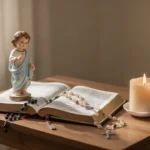
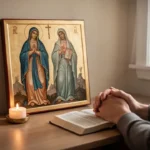
The practice does not require a special object, location, or posture. You may pray at home, in a church, outdoors, or while traveling. A candle, prayer card, statue, or image may help you focus, but these items are devotional aids, not sources of supernatural power.
Many Catholics connect a novena with the sacraments and the ordinary life of the Church. You might attend Mass, receive the Eucharist when properly prepared, go to confession, read the day’s Scripture passage, or perform an act of charity. These practices can give the prayer a concrete expression, but none is automatically required unless the particular novena says so.
If you miss a day: Do not assume the novena is ruined or that you must start over. Continue the prayer when you can, or ask a priest or the group leading it how they recommend proceeding.
Some novenas include promises of spiritual benefits or special favors. Read such claims carefully. A Catholic may approach a devotion with hope, but no approved prayer changes God into a vending machine, and no novena removes the need for medical care, wise counsel, legal responsibility, or practical action.
Prayer and action belong together. If you are praying for reconciliation, you may need to apologize or seek a conversation. If you are praying for healing, you should also pursue appropriate medical or mental health care. If you are praying for employment, prayer can accompany applications, training, networking, and honest evaluation.
Personal sincerity matters more than emotional intensity. You may feel peaceful on one day and distracted or discouraged on another. A novena is an act of steady faith, not a test of whether you can create a particular feeling during prayer.
Choose a novena that fits your actual spiritual need. If you are grieving, a prayer centered on consolation may be more appropriate than one focused on success. If you need guidance, choose a devotion that leaves room for wisdom and surrender rather than promising a predetermined answer.
Consider these questions before beginning:
What am I asking God to do, and what grace do I need while waiting?
Does the prayer reflect Catholic faith and direct attention toward God?
Is the devotion connected with a saint, feast, or spiritual theme that speaks to me?
Can I realistically pray it for nine days without treating it as a superstition?
What responsible action should accompany this prayer?
You do not have to pray a novena only when facing a crisis. Some Catholics use one before a birthday, a move, a new job, an examination, a pilgrimage, or a significant feast. Others pray as an annual custom, such as a novena before Christmas or Pentecost.
A novena may be prayed for someone without telling that person. It may also be offered publicly, with the person’s consent and appropriate discretion. Avoid treating another person’s private hardship as a spiritual project or sharing personal details that belong to them.
The answer to a novena is not always immediately recognizable. You may receive the specific help requested, but you may instead gain courage to make a hard decision, patience with a long process, or a deeper ability to love someone difficult. Catholic prayer understands grace as God’s help for living faithfully, not merely as the removal of every problem.
Discern the fruits of the practice over time. A healthy novena should encourage trust, humility, charity, honesty, and hope. If a devotion makes you fearful, superstitious, contemptuous of people who pray differently, or convinced that missing a day will cause disaster, it is being approached in an unhealthy way.
Novenas work best when they become part of a broader Christian life. Scripture, Sunday Mass, service to others, repentance, and conversation with a trusted priest can help place the devotion in context. The nine days are not an isolated spiritual transaction; they are an opportunity to turn more fully toward God.
For many Catholics, the lasting value of a novena is the habit of bringing a concern to prayer with patience and trust. It gives shape to hope, creates space for reflection, and reminds the person praying that faith includes both asking and listening.
Frequently asked questions
Must a novena be prayed exactly nine days in a row?
Nine consecutive days is the traditional form, but Catholic devotional practice varies. If you miss a day, you have not committed a spiritual offense or invalidated your prayer. Continue when possible, make up the day if that helps you, or follow the instructions of the parish or group leading the novena. The purpose is faithful prayer, not perfect performance.
Is praying to a saint the same as worshiping the saint?
No. Catholics worship God alone. Asking a saint to pray is understood as requesting the intercession of a member of the heavenly Church, much as you might ask a Christian friend to pray for you. A novena to a saint should ultimately direct your attention toward God and toward living with greater faith, charity, and trust.
Can Catholics make up their own novena?
Yes. You can pray a simple nine-day devotion using your own words, a Scripture reflection, and familiar prayers. It can help to use an established Catholic prayer when you want guidance or a connection with a wider tradition. Whatever form you choose, avoid treating the novena as a guaranteed formula or as a substitute for practical responsibilities.
Does a novena guarantee that God will grant a request?
No. A novena is an act of prayer, not a guarantee or bargain. Catholics may ask confidently for a particular grace while remaining open to God’s will. The response may involve the requested outcome, a different form of help, or a change in the person praying. Medical, professional, and practical assistance should still be pursued when needed.











Leave a Reply