Novena to the Sacred Heart of Jesus: prayers and guide
Novena to the Sacred Heart of Jesus: prayers and guide
The novena to the Sacred Heart of Jesus is prayed over nine consecutive days to ask Christ for mercy, guidance, healing, and a deeper love for God. Each day usually includes a personal intention, a short reflection, a prayer of trust, and the traditional petitions associated with the Sacred Heart.
You can begin on any day of the year, although many people pray it before the Solemnity of the Most Sacred Heart of Jesus. The prayer does not guarantee a particular result; instead, it places your needs before Christ while helping you grow in faith, patience, and charity.
How to pray the novena to the Sacred Heart of Jesus
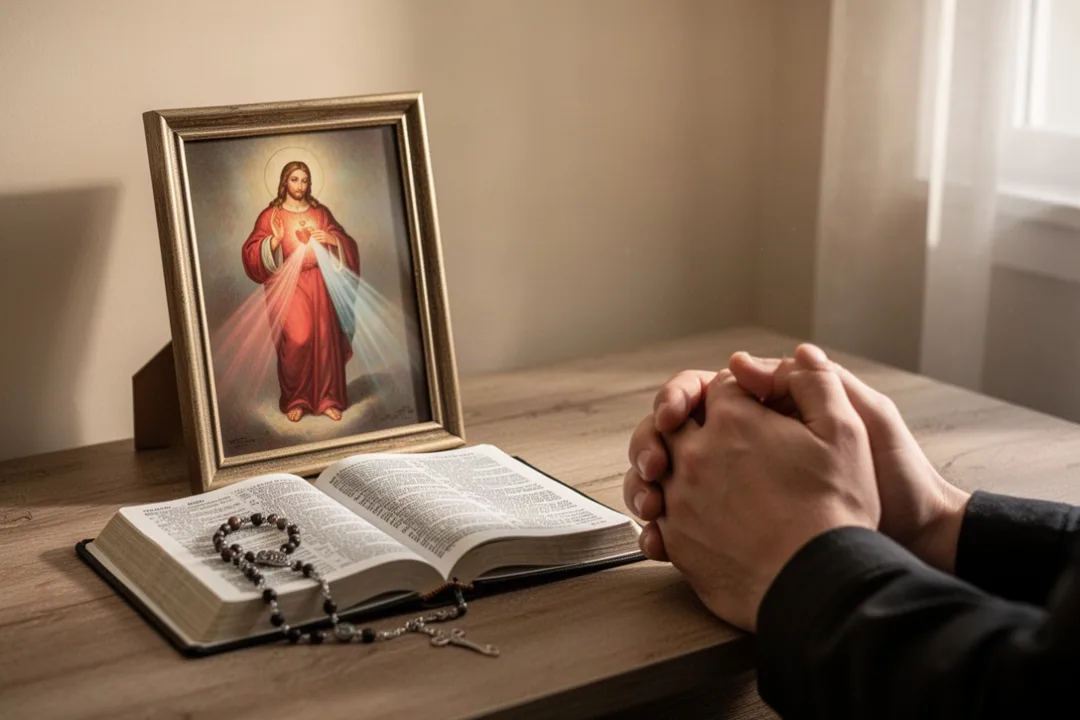
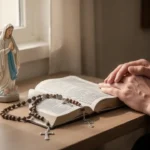
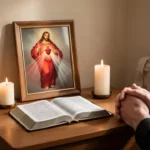
Set aside a quiet time each day and keep the format simple. You may pray alone, with your family, or with a parish group. A candle, crucifix, Bible, or image of the Sacred Heart can help you focus, but no special object is required.
Begin each day by making the Sign of the Cross, then name the intention you are carrying. It may involve illness, family conflict, grief, work, a decision, spiritual renewal, or another person’s needs. Speak plainly to Jesus rather than trying to find perfect words.
Make the Sign of the Cross and become still for a moment.
State your intention, either silently or aloud.
Read the day’s reflection and consider how it relates to your life.
Pray the daily prayer, followed by the Our Father, Hail Mary, and Glory Be if that is your custom.
End with an act of trust, asking for the grace to accept God’s answer and follow Christ faithfully.
Some people pray the novena at the same time every day. That habit can make the prayer easier to sustain, but missing a day does not mean you must abandon it. Continue the novena when you remember, or begin again if restarting helps you pray with greater attention.
A helpful intention: Ask not only for the result you want, but also for wisdom, courage, forgiveness, and the ability to recognize how God may be working through the situation.
The meaning of devotion to the Sacred Heart
In Catholic devotion, the Heart of Jesus represents Christ’s whole person: his human love, divine love, compassion, sacrifice, and desire to draw people into communion with God. The devotion is not worship of a symbol detached from Jesus. It is a way of contemplating Jesus Christ, especially his merciful love revealed through his life, death, and resurrection.
The image of the Sacred Heart commonly shows a heart surrounded by light, sometimes encircled by thorns and topped with a cross. These details point to different aspects of Christian belief: Christ’s love is self-giving, human beings often respond to that love with indifference, and Jesus remains faithful despite rejection and suffering.
The devotion also encourages a response from the person praying. You are invited to receive Christ’s mercy, repair what is damaged by sin, forgive others, practice compassion, and offer your daily responsibilities to God. A novena therefore involves more than asking for favors; it is a prayer of conversion and trust.
Several Gospel scenes support this spiritual focus. The Gospel of John describes blood and water flowing from Jesus’ side at the crucifixion, a passage associated with the life-giving meaning of Christ’s sacrifice. John also presents Jesus as one who welcomes the weary and gives himself for his friends. These passages can guide meditation without requiring you to treat the Sacred Heart as a separate object of devotion.
The Church’s prayer tradition also connects the Sacred Heart with the Eucharist, reconciliation, and service to others. Someone praying this novena might therefore pair it with regular Mass, a thoughtful examination of conscience, confession when appropriate, or a concrete act of mercy. The outward action should reflect the inward prayer.
A complete nine-day novena to the Sacred Heart of Jesus
The following format gives each day a distinct theme. Read the reflection slowly, bring your specific request to Jesus, and pray the daily prayer afterward. You may use the same closing prayers each day or adapt them to your tradition.
Day 1: Trusting the merciful Heart of Jesus
Begin by placing your life before Christ without hiding your fears or failures. The mercy of Jesus is not based on your ability to earn it. It is offered to people who turn toward him honestly, including those who feel ashamed, discouraged, or spiritually distant.
Ask for the grace to trust God’s mercy and to extend that mercy to someone who has hurt you. If you need forgiveness yourself, name the burden clearly and take one practical step toward reconciliation or healing.
Prayer: Sacred Heart of Jesus, I place my confidence in your mercy. See the needs I carry and the weaknesses I cannot overcome alone. Forgive my sins, teach me to forgive, and lead me closer to your compassionate heart. Give me the grace to trust you today and to accept your help with humility. Amen.
Day 2: Receiving Christ’s love
Many people find it easier to serve others than to receive love. This day invites you to consider that Christ does not merely tolerate you. He calls you into friendship and offers a love that is faithful when your feelings change or your circumstances become uncertain.
Ask for freedom from the belief that you must become perfect before approaching God. Let the prayer move you toward gratitude rather than self-criticism, and consider one way to treat another person with the same patience you hope to receive.
Prayer: Loving Heart of Jesus, help me receive your love with a sincere and grateful heart. Heal the places where fear, shame, or disappointment have made me distant from you. Teach me to see my worth as your beloved child and to share your patient love with the people around me. Amen.
Day 3: Making reparation through faithful living
In Sacred Heart devotion, reparation means responding to sin and indifference through love, repentance, worship, and a renewed commitment to goodness. It does not mean trying to purchase God’s forgiveness. Christ’s mercy comes first; your response is an act of gratitude and restoration.
Examine one habit, attitude, or relationship that needs to change. Instead of making a vague promise, choose a specific action: tell the truth, apologize without excuses, avoid a recurring temptation, return what is not yours, or give time to someone who needs care.
Prayer: Holy Heart of Jesus, I am sorry for the ways I have rejected love in thought, word, and action. Give me honest repentance and the strength to repair the harm I have caused. Help me honor you through faithful choices, patient service, and a life shaped by charity. Amen.
Day 4: Bringing suffering to Christ
The Sacred Heart does not make suffering disappear, but it assures Christians that pain can be brought into the presence of a Savior who knows human sorrow. Jesus experienced rejection, grief, exhaustion, injustice, and physical suffering. Your distress is not unknown to him.
Bring your pain without comparing it to anyone else’s. Ask for relief when relief is needed, wise help from other people, and the grace to remain open to love. If your suffering involves serious illness, trauma, abuse, or mental health concerns, prayer should accompany professional and pastoral support rather than replace it.
Prayer: Compassionate Heart of Jesus, stay near me in suffering and teach me to place my pain in your hands. Give strength to those who are ill, comfort to those who grieve, and protection to those who are vulnerable. Guide me toward the help I need and keep my heart open to hope. Amen.
Day 5: Asking for healing and peace
Healing may involve the body, emotions, relationships, memory, or faith. Sometimes it comes through treatment, honest conversation, time, forgiveness, or a change in circumstances. Sometimes the prayer for healing leads to peace and endurance even while a problem remains.
Ask Christ to heal what can be healed and sustain what cannot yet be changed. Pray for the humility to accept support, the wisdom to set healthy boundaries, and the courage to stop returning to patterns that deepen your wounds.
Prayer: Healing Heart of Jesus, touch every wounded part of my life with your mercy. Bring peace to my mind, strength to my body, and wisdom to my relationships. Show me the steps I should take, bless those who care for me, and help me trust your presence through every stage of healing. Amen.
Humility is not self-contempt. It is the truth that you are dependent on God and responsible for the gifts entrusted to you. The Heart of Jesus teaches humility through service, attentive listening, and obedience to the Father’s will.
Consider where pride, control, or resentment may be keeping you from peace. Ask for the grace to listen before reacting, accept correction without defensiveness, and do an ordinary duty with care even when no one notices.
Prayer: Gentle and obedient Heart of Jesus, free me from pride and the need to control every outcome. Help me listen carefully, accept wise correction, and serve without seeking praise. May my choices reflect your goodness, especially when obedience is difficult or the right path is not immediately clear. Amen.
Day 7: Entrusting family and relationships to Christ
Family prayer often includes concerns that cannot be solved quickly: conflict between relatives, a child who has grown distant, a difficult marriage, loneliness, or grief after a death. Place each person before Jesus without trying to control that person’s response.
Pray for the grace to speak truthfully and kindly. You may also need to forgive, seek counseling, ask for pastoral guidance, or establish boundaries where a relationship is unsafe. Entrusting someone to Christ does not require you to ignore abuse or remain in danger.
Prayer: Heart of Jesus, bless my family and the people I love. Bring reconciliation where it is possible, protection where it is needed, and wisdom for every difficult conversation. Help me love without controlling, forgive without excusing wrongdoing, and act with patience, truth, and courage. Amen.
Day 8: Offering work, decisions, and responsibilities
Christ can be honored through work that is paid or unpaid, public or private, physically demanding or intellectually focused. Offer him your duties, decisions, financial concerns, and hopes for the future. Ask for integrity rather than success at any cost.
If you face an important choice, list the facts, seek trustworthy advice, and pray for freedom from fear or vanity. The Sacred Heart devotion supports responsible discernment; it does not turn prayer into a way of avoiding practical thought.
Prayer: Faithful Heart of Jesus, guide my work, decisions, and responsibilities. Give me honesty, diligence, sound judgment, and the courage to choose what is right. Provide what my household needs, protect me from selfish ambition, and help me use my abilities for the good of others. Amen.
Day 9: Surrendering the intention to God
On the final day, return to your original intention and notice what has changed in you. The circumstances may be different, or they may look much the same. Either way, prayer can deepen your trust, clarify your next step, and make you more attentive to the needs of other people.
Surrender does not mean giving up responsibility. It means placing the outcome in God’s hands while continuing to do what love and wisdom require. Thank Jesus for hearing you, ask for perseverance, and remain open to an answer that arrives gradually or in an unexpected form.
Prayer: Sacred Heart of Jesus, I place this intention completely in your hands. Give me what is truly good, according to your wisdom and love. If your answer requires patience, sustain me; if it requires action, guide me; if it requires surrender, give me peace. Keep me faithful to you in every outcome. Amen.
Prayers commonly added to each day
Many versions of this novena conclude with the Our Father, Hail Mary, and Glory Be. These prayers connect the request to the wider life of the Church: the Our Father expresses dependence on God, the Hail Mary asks for Mary’s intercession, and the Glory Be praises the Trinity.
You may also add a short prayer to the Sacred Heart after the daily reflection. The following wording is suitable for personal prayer and can be adapted to your circumstances:
Heart of Jesus, source of mercy and love, receive my prayer and shape my heart according to yours. Give me faith when I am uncertain, hope when I am discouraged, and charity in every relationship. May my life honor you through truth, forgiveness, and service. Amen.
If you belong to a particular Catholic parish or prayer group, its version may include a different litany or daily formula. That is not a problem. Novena traditions vary, and the essential elements are faithful prayer, honest intention, and openness to God’s will.
Pray the novena privately or with others.
Use a written intention if strong emotions make it difficult to concentrate.
Read a short Gospel passage connected with Jesus’ mercy and compassion.
Attend Mass or spend time in Eucharistic adoration if that is available and appropriate.
Pair the prayer with a concrete act of mercy, such as a visit, donation, apology, or practical service.
Remember the purpose: A novena is not a bargain with God and should not be treated as a guarantee that a specific request will be granted. It is a disciplined period of prayer that draws your attention to Christ and forms your response to life.
When to pray this novena and what to do afterward
You can pray the novena whenever a particular need arises or whenever you want to renew your relationship with Christ. Some people begin nine days before the Solemnity of the Sacred Heart. Others choose the first Friday of a month, a time of family difficulty, or a period of preparation for a major decision.
The Solemnity of the Most Sacred Heart of Jesus is observed on a movable date in the Roman Catholic calendar, generally on the Friday after the celebration of the Body and Blood of Christ. Because the date changes each year, check a current parish or diocesan calendar when planning a novena around the feast.
After the ninth day, continue with the next faithful step rather than repeatedly searching for signs. If you asked for reconciliation, make a respectful approach. If you prayed for health, follow medical advice. If you asked for guidance, act on the wisdom you have received and review the decision with someone trustworthy.
Keep the intention in prayer if the situation remains unresolved, but do not assume that a repeated novena is required to make God listen. God’s attention is not earned through repetition. Repeated prayer can still be valuable because it changes your perspective, strengthens perseverance, and keeps you close to Christ while events unfold.
The devotion is fruitful when it leads beyond private comfort. Look for greater patience at home, honesty at work, compassion toward people in need, and a willingness to forgive. The visible sign of prayer is not always a dramatic answer; often it is a heart becoming more faithful in ordinary choices.
Frequently asked questions
Can I pray the novena to the Sacred Heart of Jesus for someone else?
Yes. You can offer the novena for a family member, friend, colleague, or anyone facing a particular need. Name the person respectfully and ask for whatever will truly support their good, such as healing, wisdom, protection, reconciliation, or peace. Avoid treating the prayer as a way to control another person’s choices or force a specific outcome.
What if I miss one of the nine days?
Simply continue when you remember. A missed day does not invalidate your prayer or mean that God has stopped listening. You can also restart if doing so helps you pray with more attention. The value of the novena comes from sincere trust and a willingness to live faithfully, not from completing a perfect uninterrupted sequence.
Is the Sacred Heart novena only for Catholics?
The devotion comes from Catholic spiritual tradition, so Catholics may find its prayers and practices especially familiar. Christians from other traditions may still use its themes of Christ’s mercy, sacrificial love, repentance, and compassion, adapting the prayers to their own beliefs and worship practices.
Should I make a promise or offer something if my request is granted?
You do not need to bargain with God or make a promise in exchange for an answer. Instead, you might respond with gratitude through worship, generosity, reconciliation, or service. If you consider a significant religious promise, discuss it with a priest or spiritual adviser so it is realistic and spiritually sound.











Leave a Reply