St. Mary Alacoque: her life and Sacred Heart devotion
St. Mary Alacoque: her life and Sacred Heart devotion
If you have heard someone mention St. Mary Alacoque and wondered who she was, the name usually refers to Saint Margaret Mary Alacoque. She was a seventeenth-century French nun whose reported visions of Christ helped spread devotion to the Sacred Heart of Jesus, a Catholic devotion centered on Christ’s love, mercy, and sacrifice.
Her story combines personal suffering, contemplative prayer, opposition from some people around her, and eventual Church recognition. Catholics often connect her with First Friday Communion, the Holy Hour, and the annual feast of the Sacred Heart. Understanding her life also requires care: her visions belong to Catholic devotional history, while the Church’s approval of a devotion does not mean every detail of a visionary’s private experience is treated as a new article of faith.
Margaret Mary Alacoque was born in 1647 in L’Hautecour, in Burgundy, France. Her family was Catholic, and she described an early attraction to prayer and religious life. After her father died, the family experienced financial and household difficulties, circumstances that shaped her character and contributed to the hardships she later recalled.
As a young woman, Margaret entered the Order of the Visitation of Holy Mary at Paray-le-Monial. The Visitation order had been founded by Saint Francis de Sales and Saint Jane Frances de Chantal. Its members sought a life marked by prayer, humility, community, and service rather than an austere public identity.
Margaret made her religious profession in the late 1670s and spent the rest of her life at the Visitation monastery in Paray-le-Monial. She died there in 1690, at about forty-three years of age. The Catholic Church canonized her in 1920, recognizing her holiness and the enduring influence of the devotion associated with her witness.
Why people sometimes call her St. Mary Alacoque
The saint’s full religious name was Margaret Mary Alacoque, not simply Mary Alacoque. “Mary” was part of her religious name and reflects her devotion to the Virgin Mary. In casual speech and online searches, some people shorten the name to St. Mary Alacoque, but “Saint Margaret Mary Alacoque” is the clearer and more accurate form.
She should also not be confused with another saint named Margaret Mary or with a saint known only as Mary. When searching for prayers, biographies, feast-day information, or Sacred Heart materials, using her full name will usually produce the most relevant results.
Name clarification: The person connected with the Sacred Heart devotion is Saint Margaret Mary Alacoque, a French Visitation nun who lived from 1647 to 1690.
What Margaret Mary reported about the Sacred Heart
Margaret Mary reported a series of extraordinary experiences involving Christ, especially between 1673 and 1675. She understood these experiences as invitations to make the Sacred Heart of Jesus more widely honored. In Catholic symbolism, the heart represents the center of a person’s love and will, so the Sacred Heart points to Christ’s loving human heart united to his divine person.
These reported visions were not presented as a new replacement for the Gospel. Rather, they emphasized themes already present in Christian faith: Christ’s self-giving love, his compassion for sinners, the Cross, the Eucharist, repentance, and the call to respond with love. Margaret’s message placed particular emphasis on the pain caused by indifference and rejection of that love.
One of the most important reported experiences took place in June 1675, when Margaret described Christ showing her his heart and asking that a special feast be established in its honor. The request was connected with receiving Communion, making acts of reparation, and honoring Christ’s love. The precise wording found in devotional accounts can vary, so the central themes matter more than memorizing a single version.
The main themes associated with her message
Love: The Sacred Heart represents Christ’s deep and personal love for humanity.
Reparation: Prayer and sacrifice can be offered in response to sin, neglect, and suffering.
The Eucharist: Communion occupies a central place in the devotion.
Mercy: The devotion invites trust in Christ rather than despair over personal weakness.
Conversion: Devotion is meant to shape a person’s conduct, not remain a private emotional practice.
Margaret also described a request for an hour of prayer before the Eucharist, especially in connection with Christ’s suffering. This became known as the Holy Hour. The practice is commonly associated with Thursday night prayer, although the essential point is to spend dedicated time in prayerful remembrance of Christ’s Passion.
How the Sacred Heart devotion developed through her life
Margaret Mary was not the first Christian to speak about Christ’s heart or to encourage devotion to it. Medieval Christian writers and mystics had already used the heart as an image of Christ’s love. Her importance lies in the way her experiences, her community, and later supporters helped give the devotion a more defined liturgical and devotional form.
At first, not everyone accepted her accounts. Some members of her religious community questioned whether her experiences were genuine or whether they reflected an unhealthy spiritual enthusiasm. This caution was understandable in a religious setting where humility, obedience, and discernment mattered deeply.
A major support came from Saint Claude de la Colombière, a Jesuit priest who served as a spiritual director to the Visitation community for a period. He took Margaret’s experiences seriously and encouraged devotion to the Sacred Heart. His support did not instantly settle every question, but it helped her communicate the spiritual meaning of what she believed she had received.
Over time, the devotion spread beyond Paray-le-Monial. Religious communities, priests, and lay Catholics adopted prayers and practices associated with it. Church authorities gradually permitted and supported the devotion, and the liturgical celebration of the Sacred Heart eventually received broader recognition in the Catholic Church.
A useful distinction: Catholic approval of the Sacred Heart devotion means the Church found it compatible with Christian faith and suitable for Catholic worship. It does not require every Catholic to accept every private detail of Margaret Mary’s visions as revealed doctrine.
What the Sacred Heart devotion means in Catholic practice
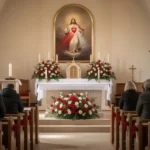
The Sacred Heart is often shown as a heart surrounded by light, topped with a cross, encircled by a crown of thorns, and marked by a wound. These symbols communicate several connected ideas. The cross recalls Christ’s sacrifice, the thorns suggest rejection and suffering, and the light points to divine love and truth.
The image is not meant to encourage worship of a body part separated from Christ. Catholic devotion is directed to Jesus Christ himself, with his divine and human nature. The heart serves as a visible sign of his love, especially the love revealed through his life, death, Resurrection, and continued presence in the Church.
For many Catholics, the devotion provides a concrete way to examine how they respond to love. It can lead to gratitude, confession, Eucharistic prayer, acts of mercy, and a renewed effort to treat other people with patience and compassion. A devotion that remains only an image or a promise detached from daily conduct misses its deeper purpose.
Common practices connected with the devotion
Attend Mass and receive Communion in a reverent spirit, observing the Church’s ordinary requirements for receiving Communion.
Spend time in Eucharistic prayer, either before the tabernacle or during adoration when that opportunity is available.
Make an act of reparation by offering prayer, sacrifice, or service for the sake of love neglected or rejected.
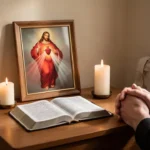
Pray with a Sacred Heart image as a reminder of Christ’s mercy and a prompt toward faithful action.
Practice works of charity, since love of Christ should become visible in care for neighbors and people in need.
These practices are not magical procedures. The promises associated with popular devotional materials should not be interpreted as a guarantee that a person will avoid every hardship or receive a particular earthly outcome. The purpose is faithful relationship with Christ, not a transaction.
What First Friday devotion means
One of the best-known customs linked with Saint Margaret Mary is receiving Holy Communion on the First Friday of the month. This practice is connected with the reported request to honor Christ’s Sacred Heart, especially through Communion, prayer, and an attitude of repentance and love.
Many people speak of completing a series of nine consecutive First Fridays. The practice is popular, but it should not be treated as a mechanical guarantee of salvation. Participation should be rooted in sincere faith and should follow the Catholic Church’s guidance concerning Mass, the Eucharist, and the sacrament of reconciliation.
If you want to observe First Friday devotion, a simple approach can help:
Check the parish Mass schedule for the first Friday of the month.
Prepare for Mass with a short period of quiet prayer.
Receive Communion only when properly disposed according to Catholic practice.
Offer the day for deeper love of Christ and more faithful care for others.
Make time for confession when needed rather than postponing it indefinitely.
Continue the devotion as a pattern of Christian growth, not merely as a numbered requirement.
The exact arrangements vary by parish. Some churches offer adoration, a communal prayer service, or a devotional litany. Others simply encourage parishioners to attend Mass and pray privately. The heart of the practice is conversion and loving union with Christ.
What the Holy Hour associated with Margaret Mary involves
The Holy Hour is a period of intentional prayer focused on Christ’s Passion and his love. It can be made in a church before the Blessed Sacrament, during Eucharistic adoration, or in another suitable place when access to a church is not possible. A full hour is traditional, but the quality of prayer matters more than a performance of endurance.
You might divide the time into several movements:
Settle into silence: Put aside distractions and become aware of God’s presence.
Read a Passion account: Use a Gospel passage as a basis for quiet reflection rather than reproducing the text mechanically.
Offer gratitude: Thank Christ for his life, mercy, and self-giving love.
Pray for reparation: Bring personal sin, injustice, and the suffering of others before God.
Make a practical response: Identify one act of forgiveness, service, or honesty to carry into ordinary life.
For someone new to the practice, ten or fifteen minutes of attentive prayer can be a sound beginning. The Holy Hour is not intended to create anxiety about doing devotion perfectly. Its purpose is to help you remain with Christ and let contemplation influence your choices.
How Margaret Mary’s religious life shaped her witness
Margaret Mary’s reported visions are often the most discussed part of her story, but her daily religious life is just as important. She lived within a community, followed a rule, performed ordinary duties, and accepted correction. Her spirituality was tested not only by extraordinary experiences but also by patience, obedience, and perseverance.
Accounts of her life describe physical illness and personal trials, along with periods when her claims were questioned. These difficulties helped shape the way Catholic readers understood her holiness. The saint was not honored simply because she reported visions; she was also remembered for the manner in which she sought to live according to the Gospel.
Her example can be especially relevant when private prayer feels dry or when other people do not understand your religious commitments. Margaret’s story does not suggest that spiritual seriousness eliminates conflict. Instead, it presents holiness as a steady response to God amid uncertainty, suffering, and ordinary responsibilities.
How the Church discerned her visions and devotion
The Catholic Church approaches reported private revelations with discernment. Such experiences are not placed on the same level as the central revelation of Christ contained in Scripture and handed on through the Church. A private revelation may help people live the Gospel, but it cannot add a new doctrine that Christians must believe as part of the faith.
Discernment considers factors such as the person’s character, the content of the message, consistency with Christian teaching, spiritual fruits, and the effects of the devotion over time. Approval of a devotion indicates that it can be practiced safely within Catholic faith. It does not mean the Church has made every mystical experience scientifically demonstrable.
In Margaret Mary’s case, the Sacred Heart devotion developed gradually. Her life, the testimony of supporters, the spread of the devotion, and ecclesial judgment all played a role. This gradual process is one reason it is more accurate to speak of the devotion’s historical development rather than suggesting that one vision immediately created a worldwide practice.
When Catholics celebrate the Sacred Heart
The Feast of the Sacred Heart of Jesus is celebrated on a Friday after the traditional octave of the feast of Corpus Christi, so its calendar date changes each year. It is connected with the Eucharist, Christ’s sacrifice, and the love symbolized by his heart.
Parishes may mark the feast with Mass, Eucharistic adoration, processions, litanies, or opportunities for confession. Some Catholic families display a Sacred Heart image in their homes. The feast can also be observed quietly through prayer and a deliberate act of mercy.
The date of the feast should not be confused with Margaret Mary’s own feast day. The Church’s liturgical calendar commemorates the saint separately, while the Sacred Heart feast focuses directly on Christ. Both celebrations are connected historically but have different liturgical purposes.
How to learn from Saint Margaret Mary without exaggerating her story
Popular devotional accounts sometimes present saints in a way that removes all complexity. Margaret Mary’s life is better understood when you hold together several truths: she was a serious religious woman, her experiences were extraordinary and personally demanding, some contemporaries questioned them, and the devotion associated with her eventually received ecclesial recognition.
You can approach her story thoughtfully by following a few principles:
Read reliable biographies that distinguish historical evidence from later devotional embellishment.
Focus on the Gospel themes of love, mercy, repentance, and service.
Avoid treating private revelation as a prediction or as a substitute for Scripture and Church teaching.
Respect the role of discernment when evaluating extraordinary spiritual claims.
Connect prayer with action, especially forgiveness, compassion, and care for people who are suffering.
Margaret Mary’s central contribution was not a secret formula. It was a renewed invitation to contemplate the love of Christ made visible in his humanity and to answer that love with worship and a changed life. Her name remains closely linked with the Sacred Heart because generations of Catholics found this symbolism a direct and meaningful way to pray.
Prayers and devotional resources associated with her
People who wish to pray with Saint Margaret Mary may use a Sacred Heart litany, a prayer of consecration, an act of reparation, or a short prayer asking for her intercession. These can be prayed alone, with family, or in a parish setting. The wording varies among approved prayer books and Catholic communities.
A simple prayer does not need to reproduce a historic formula. You might thank Jesus for his mercy, ask for a heart more capable of love, confess where you have acted selfishly, and request Saint Margaret Mary’s intercession. You can then name a concrete person or situation that needs patience, justice, healing, or practical help.
Those who are not Catholic can still find historical or spiritual interest in Margaret’s life, while Catholics should remember that devotion is meant to lead to Christ, the sacraments, and Christian charity. Her example is strongest when it turns attention away from fascination with visions and toward a more faithful love of God and neighbor.
Why Saint Margaret Mary Alacoque still matters
Saint Margaret Mary Alacoque matters because she gave enduring expression to a question many people continue to ask: how can faith in Christ’s love become personal, prayerful, and practical? Through the Sacred Heart, she emphasized that Christian devotion involves both receiving mercy and learning to offer mercy.
Her life also shows why spiritual experiences require patience and discernment. A message may attract attention, but its lasting value is measured by whether it produces humility, fidelity, prayer, and service. For Catholics who practice First Friday Communion, make a Holy Hour, or simply pray before a Sacred Heart image, Margaret’s witness remains an invitation to meet Christ’s love with a more generous life.
Frequently asked questions
Was Saint Margaret Mary Alacoque the same person as Saint Mary?
No. Her full name was Saint Margaret Mary Alacoque. “St. Mary Alacoque” is a shortened form sometimes used in conversation or online searches. She was a French Visitation nun associated with the spread of devotion to the Sacred Heart of Jesus, while “Saint Mary” by itself may refer to several different saints.
Did Saint Margaret Mary create devotion to the Sacred Heart?
She did not invent the idea of honoring Christ’s heart. Earlier Christian writers had used the heart as a symbol of Christ’s love. Margaret Mary’s reported visions helped promote a more organized devotion, including a feast, First Friday practices, Eucharistic prayer, and acts of reparation.
What is the promise connected with the nine First Fridays?
Catholic tradition associates nine consecutive First Friday Communions with promises described in accounts of Margaret Mary’s revelations. Catholics should not treat the practice as a mechanical guarantee of salvation or a substitute for sincere faith. It is best understood as a devotional pattern involving Communion, repentance, prayer, and growing love for Christ.
Where did Saint Margaret Mary Alacoque live as a nun?
She lived at the Visitation monastery in Paray-le-Monial, France. This community became strongly associated with the early spread of Sacred Heart devotion because Margaret Mary lived and prayed there, and because supporters such as Saint Claude de la Colombière helped communicate the importance of her spiritual message.













Leave a Reply