Consecration to the Sacred Heart: meaning and prayer
Consecration to the Sacred Heart: meaning and prayer
Consecration to the Sacred Heart is a personal act of entrusting yourself, your family, or your household to Jesus Christ and committing yourself to live in friendship with him. It is not a sacrament or a magical formula. It is a deliberate response to Christ’s love, especially his merciful love represented by the Sacred Heart of Jesus.
You can make this consecration privately or with others, using a traditional prayer or words of your own. The essential parts are faith, repentance, trust, and a sincere intention to let Christ shape your choices, relationships, suffering, and daily duties.
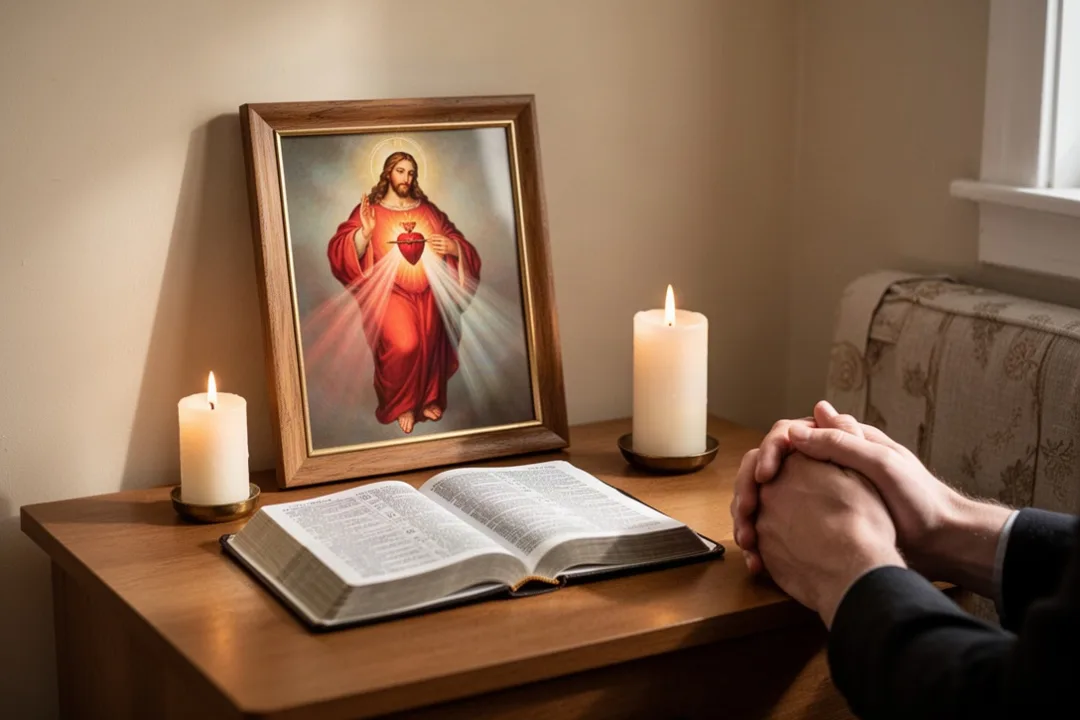
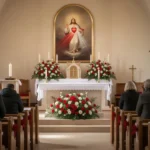
In Catholic devotion, the heart represents the center of a person: love, desire, intention, and the inner life. The Sacred Heart refers to the loving heart of Jesus Christ, united to his divine person. Images of the Sacred Heart often show a heart surrounded by light, encircled by thorns, and marked by a cross. These symbols point to Christ’s love, human sin, suffering, sacrifice, and resurrection.
To consecrate yourself to the Sacred Heart is to place your whole life under Christ’s loving care. You are not giving Jesus something he does not already know or possess. Rather, you are recognizing his lordship and making your own commitment more conscious. The act can include your body, mind, work, possessions, friendships, family responsibilities, hopes, fears, and failures.
This devotion also includes reparation, meaning a desire to respond to Christ’s love and to make amends for sin and indifference. Reparation does not mean trying to earn God’s forgiveness. Catholics believe forgiveness comes from God’s grace; reparation is a loving response that seeks healing, conversion, and renewed faithfulness.
Keep the purpose clear: consecration is a promise of relationship and fidelity, not a guarantee that every problem will disappear. It places ordinary life in Christ’s hands and asks for grace to meet both joy and suffering with faith.
Where the devotion comes from
Devotion to the Sacred Heart developed within the broader Christian meditation on Jesus’ love shown in the Gospels, particularly his compassion, sacrifice, mercy, and self-giving. The devotion received strong encouragement through the visions and spiritual experience associated with Saint Margaret Mary Alacoque, a French Visitation nun. Her message emphasized Christ’s love and invited Christians to respond through prayer, Communion, repentance, and reparation.
The devotion later spread widely through Catholic teaching, religious communities, parish practices, images, and prayers. Its symbols are not meant to replace the person of Jesus. They help believers focus on the reality that God’s love is personal, sacrificial, and offered to humanity.
The Sacred Heart is closely connected with the Eucharist, confession, Scripture, and the works of mercy. A person who makes a consecration but refuses forgiveness, neglects prayer, or treats others harshly has missed the devotion’s central purpose. Love for the Heart of Jesus should gradually become visible in the way you live.
How to make a personal consecration step by step
There is no single required ceremony for a private consecration. You may choose a meaningful date, prepare through prayer, and use a trusted formula. The following steps provide a simple framework that can be adapted to your circumstances.
Choose a date and setting. Select a day when you can pray without unnecessary distractions. You might choose a Sunday, a feast connected with the Sacred Heart, the anniversary of your baptism, or another date that has personal meaning.
Learn what you are undertaking. Read about the devotion and consider what it means to give Christ authority over your decisions, habits, relationships, and use of time. Consecration should be made freely, not because of pressure or superstition.
Examine your life. Ask where you need conversion. Consider resentments, dishonesty, neglect of prayer, unhealthy attachments, misuse of money, or patterns that harm other people. Bring these honestly to God.
Receive the sacraments when possible. Many Catholics prepare through confession and the Eucharist. These are not mechanical requirements for making a private prayer, but they fit the devotion’s emphasis on reconciliation and communion with Christ.
Pray for grace. Ask Jesus to help you make the consecration with humility and freedom. You can also ask the Holy Spirit for a deeper understanding of Christ’s love and the courage to change.
Make the act of consecration. Use a traditional prayer or speak to Jesus in your own words. Offer yourself and your household, name specific intentions, and express your desire to remain faithful.
Mark the commitment with a practical decision. Choose one concrete way to live the consecration, such as daily Scripture reading, regular confession, a weekly hour of prayer, reconciliation with someone, or a renewed practice of charity.
Continue the devotion. Set a regular time to renew your offering. Consecration becomes meaningful through perseverance, not through the emotion of one ceremony.
A priest may bless an image of the Sacred Heart or lead a parish service, but a priest is not required for every personal act of consecration. If you are making a commitment involving a family or religious group, asking a priest for guidance can help everyone understand the purpose and make the day prayerful rather than merely ceremonial.
A simple prayer for consecration to the Sacred Heart
You may use the following original prayer as a starting point. Speak it slowly, and adapt the wording so that it reflects your real circumstances. The value of the prayer lies in a sincere act of faith, not in saying a particular set of words perfectly.
Jesus, I place myself and my whole life in the care of your Sacred Heart. I give you my thoughts, choices, work, relationships, joys, wounds, and fears. Forgive my sins and teach me to receive your mercy. Help me to love you faithfully, to serve others with patience, and to accept your will each day. May my home and all that I have belong to you. Keep me close to your Heart and make my life a response to your love. Amen.
You can add specific intentions after the prayer. For example, mention a marriage, a child, a difficult decision, an illness, a strained relationship, or a responsibility that feels beyond your strength. Personal details often make the act more honest and help you remember that consecration concerns real life rather than an abstract religious idea.
A traditional formula may use older language about offering the body, soul, powers, possessions, and future to Christ. That language expresses a complete gift of self. If the wording is unfamiliar, you can read it beforehand and use a contemporary version that you understand. Understanding and freely consenting to the prayer matter more than using a formula you cannot explain.
How to prepare during the days before consecration
Some people prepare over several days or weeks, while others make the act after a shorter period of prayer. A longer preparation can be helpful because it gives you time to identify habits that need healing and to build a realistic plan for continuing the devotion.
Read a Gospel passage each day. Choose accounts that show Jesus’ compassion, forgiveness, prayer, suffering, or service. Paraphrase the passage in your own words and ask how it speaks to your life.
Spend a few minutes in quiet prayer. Tell Christ what you fear, desire, regret, and hope for. Silence can reveal motives that are easy to avoid when life is crowded.
Practice an examination of conscience. Look at your relationship with God and with other people. Include speech, work, sexuality, money, anger, online behavior, and responsibilities.
Make one act of mercy. Visit someone who is lonely, offer practical help, forgive a small offense, give discreetly, or serve without seeking recognition.
Reduce distractions. You do not need an elaborate retreat, but turning down unnecessary entertainment or screen use can create room for prayer.
Plan for the next month. Decide when you will pray, attend Mass, seek confession, or renew the consecration. A specific plan is easier to follow than a general intention.
Preparation should lead to trust rather than anxiety. You do not need to become spiritually perfect before consecrating yourself. The act is itself a request for grace and a decision to keep turning toward Christ when you fail.
What to include when consecrating your family or home
A family consecration is not a way for one person to control the faith of everyone else. Each member should be invited to participate according to age and freedom. Parents can lead young children in simple words, while older children and adults can express their own intentions.
Before the prayer, explain that the Sacred Heart represents Jesus’ faithful love. An image can be placed in a respectful location, but the image is a reminder, not an object with independent power. The family might gather around it, read a Gospel passage, name reasons for gratitude, ask forgiveness, and pray the consecration together.
A family ceremony might include these elements:
Gathering in a quiet room with an image or cross.
Lighting a candle safely as a sign of prayer and remembrance.
Reading or paraphrasing a Gospel account of Christ’s mercy.
Allowing each person to name one intention or blessing.
Praying for forgiveness and for the grace to forgive one another.
Reciting a consecration prayer together.
Choosing one family practice, such as a weekly meal prayer or regular service to someone in need.
If family members do not share your Catholic faith, do not force them to make a religious promise. You may consecrate your own responsibilities and pray respectfully for the household. A peaceful, patient witness will usually communicate the devotion better than pressure.
How the Sacred Heart devotion changes ordinary life
Consecration should influence decisions that may appear unrelated to religious practice. If you have placed your work under Christ’s care, you may need to reject dishonesty even when it costs you. If you have entrusted your relationships to the Sacred Heart, you may need to apologize, set a healthy boundary, or stop using another person’s weakness against them.
The devotion does not require dramatic feelings. Some days prayer may feel warm and consoling; other days it may feel dry or difficult. Faithfulness means continuing to pray and act with love when there is no strong emotional experience. Steady obedience is often a more reliable sign of growth than intense religious emotion.
Consider how the consecration can shape several areas of life:
Prayer: Make time to speak with Christ and listen through Scripture, even when the time available is brief.
Work: Complete responsibilities honestly and treat coworkers, clients, and employees with dignity.
Family: Practice patience, truthful communication, and forgiveness without excusing serious harm.
Suffering: Bring pain to Christ rather than assuming that suffering means abandonment by God.
Possessions: Use money and material goods responsibly, with generosity toward people in need.
Church life: Participate in the Eucharist and confession according to Catholic practice and your circumstances.
Service: Let devotion move outward into practical care for the sick, poor, lonely, overlooked, or discouraged.
The Sacred Heart also teaches a balanced view of human weakness. You should take sin seriously, but you should not treat yourself as beyond mercy. Conversion includes naming what is wrong, accepting responsibility, seeking forgiveness, making restitution when needed, and beginning again with God’s help.
Consecration, the First Friday practice, and the Eucharist
Consecration and the First Friday devotion are related but distinct. Consecration is an act of offering yourself to Christ. First Friday observance generally involves attending Mass and receiving Communion on designated Fridays, often alongside prayer and reparation connected with the Sacred Heart. A person may practice both, but one does not automatically equal the other.
The Eucharist has a central place in Catholic devotion because it directs attention to Christ’s self-giving love. If you attend Mass, receive Communion, and pray in accord with Catholic teaching, these practices can strengthen your consecration. They are not transactions intended to force a favor from God.
Likewise, promises associated with Sacred Heart devotion should be approached with trust and sound judgment. They are not permission to ignore moral responsibility, ordinary prudence, medical care, or the needs of other people. A devotion is healthy when it draws you toward Christ, the Church, charity, humility, and responsible action.
Do not treat the prayer as a guarantee: placing a Sacred Heart image in your home or completing a devotion does not protect you from every hardship. Christian trust includes asking for help while accepting that God’s response may involve patience, growth, wise action, or support from others.
Ways to renew the consecration throughout the year
Renewal can be brief. In the morning, you might say, “Jesus, I give you this day and ask me to live it with your Heart.” Before a difficult conversation, ask for gentleness and truth. At night, thank Christ for one grace, acknowledge one failure, and entrust tomorrow to him.
You can also establish a weekly or monthly pattern. Attend Mass, spend time before the Blessed Sacrament when available, read a short Gospel passage, or pray before an image of the Sacred Heart. The goal is not to accumulate religious activities but to keep your original offering connected to daily choices.
When you fail after making the consecration, do not assume that the act has been canceled. Examine what happened, seek forgiveness, repair harm, and renew your intention. If serious sin or a painful situation is involved, a priest or qualified pastoral counselor can offer appropriate guidance.
Several misunderstandings can weaken the practice. Some people treat consecration as a superstition, as though a prayer or image automatically produces protection. Others make a solemn promise without considering what they can realistically sustain, then become discouraged when their prayer life changes slowly.
Do not confuse devotion with worship of an object. The image points to Jesus and his love; it is not a substitute for him.
Do not make promises under pressure. A consecration should be free, informed, and made with a sincere will.
Do not use devotion to avoid repentance. Love for Christ includes honesty about sin and a willingness to change.
Do not judge your spiritual life by feelings alone. Perseverance, charity, and humility matter.
Do not impose a family ceremony on unwilling people. Invite participation and respect conscience.
Do not neglect practical help. Prayer can accompany medical treatment, counseling, financial advice, reconciliation, and other responsible steps.
The best question after consecration is not, “What benefit will I receive?” It is, “How can I respond more faithfully to the love of Christ today?” That question keeps the devotion focused on relationship, conversion, and service.
Signs that the consecration is bearing fruit
Spiritual growth is usually gradual and cannot be measured by a single experience. Still, certain changes can show that the devotion is becoming part of your life. You may become quicker to ask forgiveness, more patient with weakness, more faithful in prayer, or more willing to serve without praise.
You may also notice a deeper ability to hold together truth and mercy. Consecration does not mean avoiding difficult truths or allowing abuse. It means seeking justice and protection without surrendering to hatred, revenge, or contempt. In serious situations, love may require distance, professional assistance, or firm boundaries.
Another sign is a growing trust that remains grounded in reality. You bring worries to Christ, but you also take responsible action. You ask for grace, consult wise people, fulfill your duties, and accept that holiness often develops through small acts repeated over time.
Made sincerely, consecration to the Sacred Heart becomes more than a ceremony or a framed prayer. It is a continuing orientation of the whole person toward Jesus Christ: receiving his mercy, returning his love, and allowing that love to guide the way you pray, work, suffer, forgive, and serve.
Frequently asked questions
Do I need a priest to make a consecration to the Sacred Heart?
No. You may make a personal consecration privately using a trusted prayer and a sincere intention. A priest can lead a ceremony, bless an image, or offer spiritual guidance, but those services are not required for a private act. If you are organizing a parish or family observance, pastoral guidance can help participants understand the meaning of the commitment.
Can I consecrate my children or spouse without their permission?
You can pray for your family and dedicate your responsibilities as a parent or spouse to Christ, but you should not make another person promise something against their will. Invite family members to participate freely and explain the devotion in age-appropriate language. Respect for conscience is consistent with the Sacred Heart’s emphasis on love rather than coercion.
Is consecration to the Sacred Heart the same as enthronement?
They are closely related but not identical. Personal consecration focuses on offering yourself to Christ. Enthronement usually refers to formally placing an image of the Sacred Heart in a home or institution and recognizing Christ’s spiritual place there, often through a communal ceremony. Local Catholic communities may use the terms somewhat differently.
How often should I renew my consecration?
There is no universal schedule that applies to everyone. You may renew it annually, on a meaningful feast day, monthly, or briefly each morning. A short daily offering can keep the commitment active, while an annual prayer provides a fuller time for reflection. Choose a pattern that encourages faithfulness rather than creating anxiety or a sense of obligation without prayer.













Leave a Reply