Act of consecration: meaning, prayers, and how to begin
Act of consecration: meaning, prayers, and how to begin
An act of consecration is a deliberate prayer in which you offer yourself, a relationship, a household, or another part of your life to God. It expresses a desire to belong more completely to God, accept his guidance, and live according to his purposes. In many Christian traditions, consecration also includes asking for grace, protection, faithfulness, and a deeper relationship with Christ.
The act may be as short as a few sincere sentences or as structured as a formal prayer used by a church. What gives it meaning is not a special formula or emotional intensity, but the free and conscious offering behind the words. Consecration is a commitment of the heart that should gradually shape your choices, habits, relationships, and worship.
What an act of consecration means in Christian practice
The word consecration means setting something apart for a sacred purpose. In Christian use, an act of consecration usually means placing yourself or something entrusted to you under God’s authority. You are not making yourself divine, and you are not trying to control future events through a prayer. You are recognizing that your life belongs to God and asking for help to live that truth faithfully.
Consecration has both a personal and a practical dimension. Personally, it is an act of worship, surrender, trust, and renewed commitment. Practically, it can lead you to forgive someone, change a harmful habit, serve another person, care for your family more patiently, or make decisions that reflect Christian convictions rather than convenience alone.
Different churches use the term in somewhat different ways. Some speak of consecrating oneself to God or to the Sacred Heart of Jesus. Others use it in connection with baptismal promises, religious vocations, the Virgin Mary, a home, a congregation, or a specific spiritual mission. The language and customs vary, but the central movement remains an offering of life to God.
Core idea: An act of consecration is not a way to bargain with God. It is a prayer of belonging: you offer yourself honestly and ask for grace to live in faithful relationship with God.
In the Bible, people, places, objects, and times are sometimes set apart for worship and service. Christian consecration draws on that broad biblical idea while applying it to a believer’s daily life. The New Testament emphasizes presenting your whole self to God, growing in holiness, and allowing faith to affect how you think and act. Those themes are more important than memorizing one particular prayer.
How consecration differs from dedication, commitment, and a vow
These words overlap, so confusion is common. A dedication often means setting a person, child, home, or project apart for God’s care and purposes. A commitment emphasizes your decision to follow through. A vow is a serious promise made before God, often with formal religious or legal significance in a particular tradition.
Consecration can include dedication and commitment, but it usually carries a stronger sense of belonging and sacred purpose. When you consecrate yourself, you are not simply asking God to bless your plans. You are offering your plans, abilities, body, time, and relationships to God and accepting that they may need to change.
Dedication: setting a person, place, or purpose apart for God.
Commitment: deciding to practice a particular way of life or service.
Vow: making a solemn promise that may carry formal obligations.
Consecration: offering yourself or something entrusted to you to God for sacred use and faithful living.
A consecration prayer should therefore be approached with sincerity rather than pressure. You do not need to use dramatic language or promise more than you can responsibly understand. If a formal consecration involves a lasting promise, a rule of life, or membership in a religious community, speak with a trusted pastor, priest, or spiritual director before making it.
Consecration also differs from a request for protection. You may ask God to protect you, your family, or your home, but protection is not the entire meaning of consecration. The central question is not only, “What do I want God to preserve?” It is also, “How am I offering this life to God, and how will that offering influence the way I live?”
There is no single wording required for every Christian. A useful act of consecration normally includes several elements that make the prayer clear and grounded. You can use a traditional prayer from your church, write your own, or combine a familiar form with personal words.
Begin by addressing God with reverence
Start by turning your attention toward God. You might address God as Father, Lord, Creator, or Holy God, depending on the language of your tradition and your own prayer life. Naming whom you are addressing helps prevent the prayer from becoming a vague statement of self-improvement.
Offer yourself honestly
State what you are placing before God. This may include your body, mind, work, family, possessions, fears, gifts, failures, future, or vocation. Specific language is often more meaningful than general promises. For example, you might offer your use of time, the way you speak to your spouse, your responsibilities at work, or your desire to serve people who need help.
Acknowledge dependence on grace
Christian consecration is not a declaration that you can become holy through willpower alone. Ask for grace, wisdom, courage, humility, and perseverance. Recognize the areas where you are weak or divided. A sincere prayer can include a request for forgiveness and the strength to make amends where necessary.
Express the purpose of the offering
Explain why you are making the act. You may wish to live more faithfully, follow Christ more closely, grow in love, serve your family, recover from a destructive pattern, or place a major decision before God. This purpose gives the consecration a direction that can be remembered after the prayer ends.
End with trust and a practical response
Conclude by entrusting yourself to God. Then identify one concrete response: regular prayer, reconciliation, generosity, worship, Scripture reading, service, or a conversation that you have been avoiding. A practical response keeps consecration from remaining only an emotional moment.
A simple structure can look like this:
Address God and recognize his holiness.
Offer yourself or the particular concern you are consecrating.
Confess your need for mercy and grace.
State your desire to live according to God’s will.
Ask for strength and entrust the future to God.
Choose one faithful action that follows from the prayer.
How to make an act of consecration in daily life
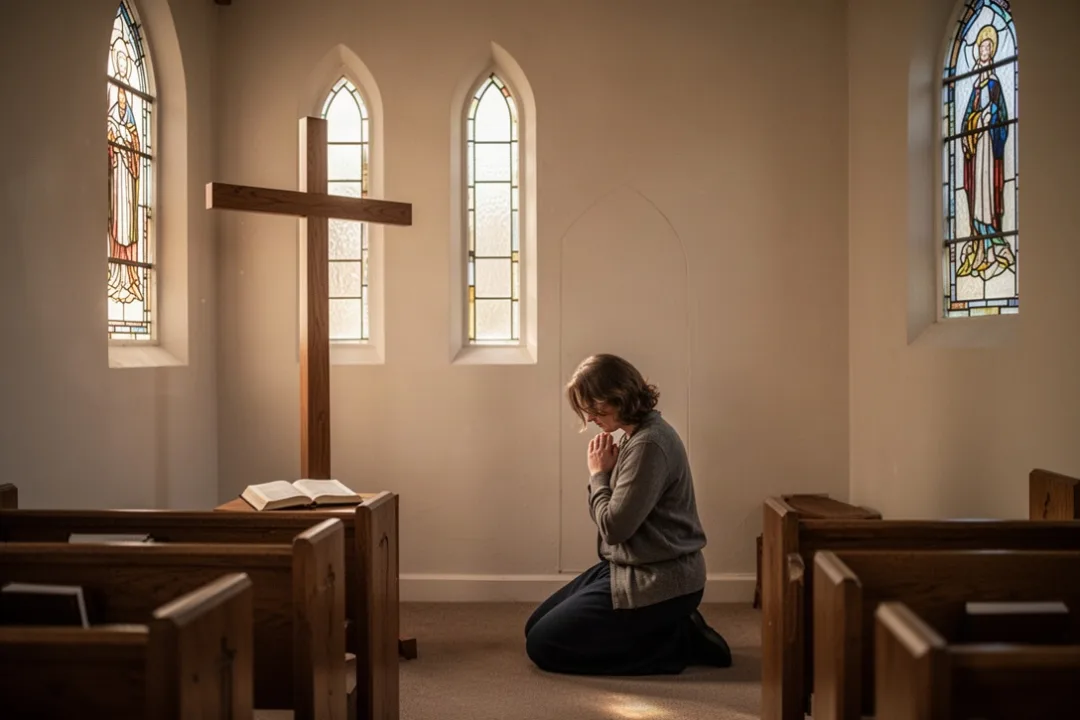
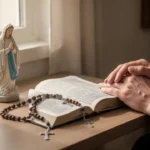
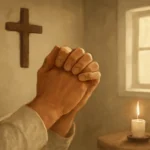
You can make an act of consecration in a church, during private prayer, with your household, or at the beginning of a significant season. The setting can support the prayer, but it does not create the consecration by itself. A quiet room, a Bible, a cross, or a candle may help you focus, yet the essential act is your sincere offering to God.
Before praying, take a few minutes to identify what you are actually offering. If you are consecrating yourself, consider the whole shape of your life rather than only one concern. If you are consecrating your home, think about the way people speak, rest, welcome guests, handle conflict, and practice faith there. If you are consecrating a ministry, consider the people it serves and the responsibilities that come with it.
It can help to write down a few honest sentences before you begin. Avoid trying to sound impressive. A prayer that says, “I give you my fear about this decision and ask for the courage to do what is right,” may be more truthful than a long prayer filled with promises you do not understand.
Practical tip: Read the prayer slowly, pause after each major section, and ask how the words apply to your actual choices. Consecration becomes durable when it is revisited through ordinary actions.
An original act of consecration might use language such as this:
God of mercy, I offer you my whole life: my thoughts, choices, work, relationships, strengths, and weaknesses. Teach me to receive each day as a gift and to use it in love. Forgive what is sinful, heal what is wounded, and guide what is uncertain. I place myself in your care and ask for the grace to follow Christ faithfully, serve others honestly, and return to you when I fail. Amen.
This sample is not a replacement for an approved prayer required by a specific church or devotion. It is a model of the basic movement: recognition, offering, repentance, request, and trust. You can adapt it to your circumstances without making promises that conflict with your responsibilities or beliefs.
After praying, write down the date and the main intention if that helps you remember it. Some people renew an act of consecration daily, weekly, monthly, or on a meaningful feast day. Renewal is not necessary because God forgets the first prayer. It is useful because people forget their own commitments and need repeated opportunities to return to them.
Common forms of consecration and what they involve
Christian communities have developed many forms of consecration. The same word may refer to a short personal prayer in one setting and a formal rite in another. Understanding the differences can help you choose an approach that fits your faith tradition.
Personal consecration to God
This is the broadest form. You offer your entire life to God and ask to live as a faithful disciple. It may be connected with baptism, conversion, a renewed commitment, or a desire to begin a more intentional spiritual practice. Personal consecration does not require a special status; any Christian may pray it with sincerity.
Consecration to Jesus Christ
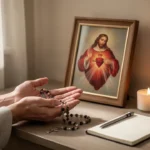
Some Christians use a prayer of consecration specifically directed to Jesus. These prayers often focus on belonging to Christ, accepting his teaching, trusting his mercy, and allowing his example to shape daily conduct. Devotions connected with the Sacred Heart of Jesus commonly emphasize Christ’s love, compassion, and call to respond with love in return.
Consecration connected with Mary
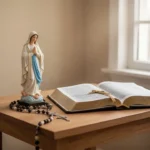
In Catholic and some other Christian devotional settings, people speak of consecration to Mary or of entrusting themselves to Mary. This language is understood as a way of asking Mary to help lead the believer to Christ and to imitate her faithfulness. It is not intended to treat Mary as equal to God. Because the theology and recommended practices differ, use the explanation and prayer approved by your own church or spiritual guide.
Consecration of a home or household
A household may be consecrated through a prayer that places the family’s life under God’s care. The prayer can mention hospitality, marriage, parenting, forgiveness, work, suffering, and the household’s responsibility to serve others. A home blessing or formal church service may accompany this act, but the blessing should support a real effort to make the home more truthful, peaceful, prayerful, and welcoming.
Consecration to a vocation or work of service
A person may consecrate a vocation, ministry, profession, or season of service. This does not make every decision automatically correct or remove the need for training, accountability, and wise counsel. It means asking God to govern the purpose and practice of that work, especially the way power, time, money, and relationships are handled.
Personal prayer: appropriate for daily or periodic renewal.
Household prayer: focused on shared life, relationships, and the home.
Church rite: conducted according to a denomination’s approved order of worship.
Devotional consecration: connected with Jesus, Mary, a saint, or a particular spiritual tradition.
Vocational consecration: directed toward a calling, ministry, or lifelong service.
These forms should not be mixed carelessly. If your church uses “consecration” as a formal rite, follow its guidance about preparation, promises, public worship, and renewal. Personal prayer can be deeply meaningful, but it should not be presented as an official church ceremony unless the church has recognized it as one.
How to live out an act of consecration after praying
The prayer matters, but its fruit appears in the life that follows. An act of consecration does not guarantee that every decision will be easy or that hardship will disappear. It gives you a framework for returning to God when you face temptation, disappointment, uncertainty, or success.
Begin by examining whether your priorities match your offering. If you consecrated your work, consider how you treat coworkers and whether ambition has replaced integrity. If you consecrated your family, consider whether your schedule leaves room for patience and attention. If you consecrated your home, consider whether the people who enter it experience safety, honesty, and hospitality.
Regular practices can help translate the prayer into behavior:
Set aside a consistent time for prayer, even if it is brief.
Review one decision each day in light of the values you offered to God.
Confess failures rather than hiding them behind religious language.
Seek advice from mature Christians when a serious decision affects others.
Serve someone without using the service to gain admiration or control.
Renew the prayer during seasons of change, grief, temptation, or gratitude.
Consecration also requires boundaries. Offering yourself to God does not mean allowing another person to manipulate, abuse, or exploit you. It does not require ignoring medical care, abandoning legitimate responsibilities, or refusing wise professional help. Christian surrender is directed toward God’s will and love of neighbor, not toward passivity in the face of harm.
Be cautious of any teaching that promises guaranteed wealth, immunity from suffering, or automatic success because you have made a consecration. The prayer is not a spiritual transaction. It is a way of placing your life before God while remaining willing to obey, learn, repent, and persevere when the outcome is not what you hoped.
You may also find that the meaning of the prayer changes over time. At first, you may be offering a particular fear or decision. Later, you may recognize deeper attachments, habits, or resentments that also need to be placed before God. That growing honesty is not evidence that the original prayer failed. It can be a sign that your faith is becoming more attentive and mature.
A faithful act of consecration is therefore both a moment and a pattern. The moment is the prayer in which you offer yourself. The pattern is the repeated practice of letting that offering influence how you worship, speak, decide, forgive, work, rest, and care for other people.
Frequently asked questions
Do I need a priest or pastor to make an act of consecration?
Not usually. You can make a personal act of consecration privately in prayer. A priest, pastor, or spiritual director can be helpful when the consecration is part of a formal church rite, a religious vocation, a lasting vow, or a specific devotional program. Your church may also have particular preparation or wording for public consecrations.
Can I consecrate another person without their permission?
You can pray for another person and entrust their care to God, but you should not claim to make a personal consecration on that person’s behalf without consent. Adults have their own freedom and spiritual responsibility. For children or households, use language of blessing, dedication, and care while respecting the beliefs and choices of everyone involved.
How often should I renew my act of consecration?
There is no universal schedule. Some people renew it daily, weekly, monthly, or on a significant anniversary or feast day. Choose a rhythm that supports sincere living rather than mechanical repetition. A brief renewal can be especially useful during major transitions, temptation, grief, or a season when you recognize a need to return to your original commitment.
What should I do if I fail after making a consecration?
Failure does not automatically cancel the prayer or prove that it was insincere. Acknowledge what happened, ask God for forgiveness, make appropriate amends, and identify the next faithful step. If the failure involves serious harm, seek pastoral and professional support. Consecration includes returning to God honestly, not pretending that you never struggle.









Leave a Reply