Oil of chrism: Meaning, uses, and church symbolism
Oil of chrism: Meaning, uses, and church symbolism
Oil of chrism is a sacred, fragrant oil used in several Christian traditions for anointing during important rites. In the Catholic Church, sacred chrism is generally made from olive oil blended with balsam and consecrated by a bishop, usually during Holy Week.
Chrism is used at baptism, confirmation, ordination, and the dedication of churches and altars. The anointing symbolizes being marked for God, strengthened by the Holy Spirit, and incorporated into the life and mission of the church. The exact preparation and ceremonies vary among denominations, but the meaning centers on consecration and belonging.
The primary ingredient in traditional chrism is olive oil. Olive oil has long been associated with nourishment, healing, light, abundance, and royal anointing in the biblical world. Its use also makes the oil practical for applying a small amount to the forehead, hands, head, or another part of the body during a rite.
Chrism usually includes perfume or balsam, which gives it a distinctive fragrance. In some settings, the scent may come from natural balsam or another approved aromatic substance. The fragrance is not merely decorative: it represents the visible and lasting effect of a life dedicated to God.
The oil becomes sacred chrism through a liturgical consecration, not simply because of the ingredients. In Catholic practice, the bishop consecrates it in a special diocesan celebration known as the Chrism Mass. The oil is then distributed to parishes for use during the coming year.
Important distinction: Chrism is not simply scented olive oil. Its religious use depends on the church’s prescribed preparation, blessing or consecration, and authorized liturgical context.
The term chrism comes from a word related to anointing. It is also connected linguistically with Christ, meaning “anointed one.” That relationship helps explain why chrism carries such strong associations with Jesus, the Holy Spirit, and the calling of Christians to live as people dedicated to God.
How chrism differs from other church oils
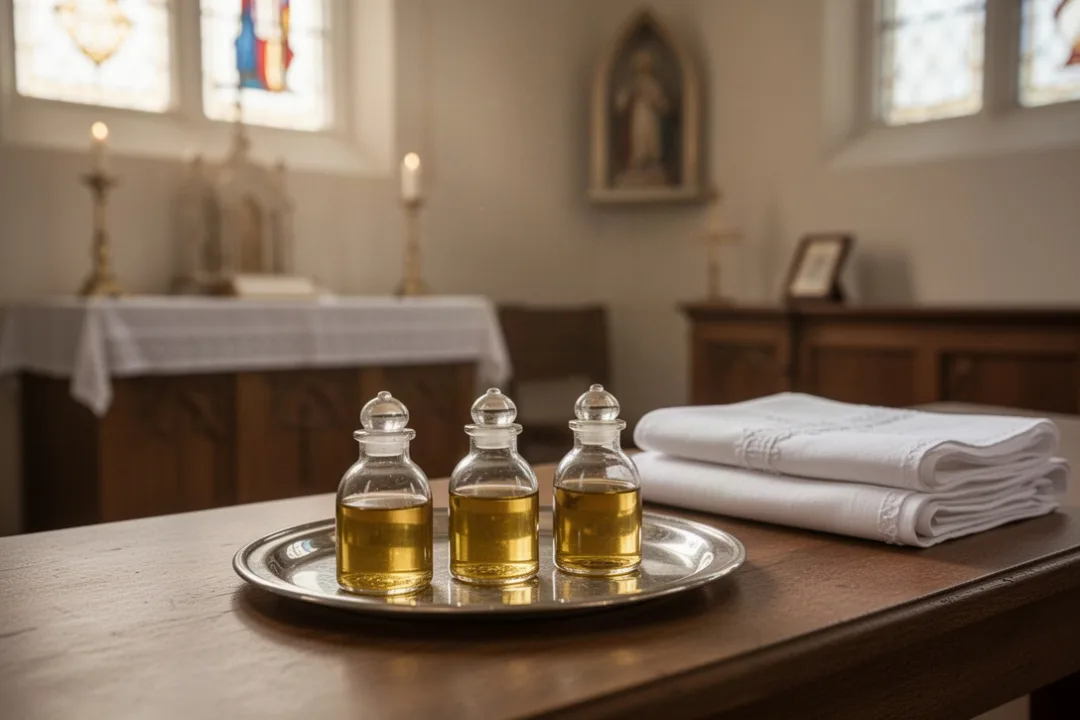
Many churches that use sacred oils keep several types for different purposes. The most common source of confusion is the difference between sacred chrism, the oil of catechumens, and the oil of the sick. All may be blessed or consecrated for worship, but they do not serve the same ritual function.
Sacred chrism: A fragrant oil used to mark people or sacred objects as consecrated to God.
Oil of catechumens: An oil associated with preparation for baptism and the strength to resist evil and live faithfully.
Oil of the sick: An oil used in prayers for healing, especially in the sacrament commonly called Anointing of the Sick.
The oils may be stored in separate containers and identified by labels or symbols. Their appearance can vary, so color alone is not a reliable way to tell them apart. The rite in which an oil is used and the words of the church’s liturgy provide the clearest distinction.
Chrism is generally the most visibly fragrant of the three. The scent can remain on the skin or hair after anointing, which gives the ritual a tangible quality. The lasting fragrance can also serve as a reminder that a sacramental celebration is meant to shape a person’s life beyond the ceremony itself.
Chrism and the oil of catechumens
The oil of catechumens is connected with a person’s preparation for baptism. In traditions that use it, the anointing expresses strength, protection, and readiness to reject sin and follow the teachings of Christ. It is not interchangeable with chrism, even though both may be used during a baptismal celebration.
A baptism may therefore include more than one anointing. The oil of catechumens can be used before baptism as part of preparation, while chrism can be used after baptism to signify the newly baptized person’s incorporation into the Christian community.
The oil of the sick serves a different pastoral purpose. It is used in prayer for a person who is seriously ill, elderly, undergoing significant medical treatment, or facing another serious physical or emotional burden, depending on the church’s practice. The emphasis is healing, comfort, forgiveness, and spiritual strength, not initiation or consecration.
Using chrism for healing outside its intended rite can blur meanings that churches have carefully preserved. A person who wants an anointing should ask a priest, pastor, or other authorized minister which oil and prayer are appropriate.
When churches use the oil of chrism
Chrism appears in several major Christian rites because anointing communicates a public and lasting change. The person or object being anointed is set apart for a particular relationship with God and a particular place within the church.
Baptism
In many Catholic and Eastern Christian ceremonies, a newly baptized person is anointed with chrism. This action follows the water of baptism and signifies that the baptized person has become part of the Christian body. The anointing also points to a share in Christ’s identity as priest, prophet, and king, understood as a call to worship, witness, service, and responsible leadership.
The chrism anointing does not mean that the baptized person has become clergy. Instead, it expresses the common dignity and vocation of all baptized Christians. Every baptized person is called to participate in the church’s worship and mission according to that person’s circumstances and gifts.
In infant baptism, the ritual speaks about a child’s place within the community and the promises made by parents and sponsors. In adult baptism, the same anointing accompanies a personal profession of faith and entry into the church. The symbolism remains related, although the surrounding preparation may differ.
Confirmation and chrismation
Confirmation in Western Christianity and chrismation in Eastern Christianity use chrism to express a deeper strengthening by the Holy Spirit. The minister anoints the forehead, commonly with a gesture associated with the cross, and prays that the person will receive or be strengthened in the gifts of the Spirit.
The rite connects baptism with a more mature participation in Christian life. It does not mean that a baptized person was previously outside God’s care. Rather, it emphasizes strengthened commitment, public witness, and fuller participation in the church’s mission.
Eastern Christian churches often administer chrismation shortly after baptism, including for infants, while many Western churches normally celebrate confirmation at a later age. These practices differ in timing and pastoral tradition, but both use anointing to express the work of the Holy Spirit.
Ordination
Chrism may be used in the ordination of bishops and priests in some traditions. During this rite, anointing can signify that the person is entrusted with a particular ministry of service, teaching, worship, and pastoral care. The oil does not function as a magical substance or create personal power independent of the church’s prayer.
The meaning rests in the complete celebration: the laying on of hands, the prayers, the promises, and the church’s recognition of a vocation. Chrism gives the ordination a physical sign of consecration for ministry.
Churches, altars, and sacred objects
Some churches use chrism when a new church building or altar is dedicated. The bishop or another authorized minister may anoint the altar and selected areas of the building, marking them as places set apart for Christian worship. An altar may be treated especially as a symbol of Christ and the community’s celebration of the Eucharist.
This use shows that anointing is not limited to people. Objects and spaces can also be dedicated to a particular sacred purpose. The fragrance of chrism, the visible application of oil, and the prayers together create a sign that the building is not being treated as an ordinary gathering place.
What the anointing with chrism symbolizes
The meaning of chrism comes from several related images rather than one single definition. It can express identity, consecration, healing, mission, and the presence of the Holy Spirit, depending on the rite.
To be anointed is to be marked. In many ceremonies, the minister makes the sign of the cross with the oil. This identifies the person with Christ and communicates that Christian faith is not only a private belief but also a publicly received identity.
Chrism also symbolizes being set apart for God. This does not necessarily mean separation from ordinary life. For most Christians, it means carrying a sacred vocation into ordinary responsibilities: family life, work, citizenship, care for neighbors, and participation in the worshiping community.
The fragrance adds another layer of meaning. A pleasant scent spreads beyond the place where it was applied, so it can represent the way a Christian’s actions should make faith recognizable through compassion, integrity, patience, and service. The symbolism is about lived conduct rather than perfume itself.
Anointing can also point to the Holy Spirit. Scripture frequently uses oil as an image of blessing and appointment. Accounts of kings being anointed, references to oil in worship, and Christian teachings about Jesus as the Anointed One all contribute to the way churches understand chrism today.
Chrism makes a visible sign of an invisible calling: belonging to Christ and serving others in the strength of the Holy Spirit.
The gesture is usually brief, but the meaning is intended to endure. A person may feel the oil for only a moment, while the rite asks that the person remember a lifelong commitment. For this reason, churches often treat chrism as more than a ceremonial decoration.
How the Chrism Mass and storage of chrism work
In the Catholic Church, the Chrism Mass is normally celebrated by the bishop with priests and representatives of the diocese. It is associated with the days before Easter and includes the blessing or consecration of the oils that parishes will use in the coming year.
The celebration also highlights the relationship between the bishop, priests, and the wider church. Priests may renew their ministerial promises, while the oils are prepared for baptism, confirmation, anointing of the sick, ordination, and other authorized rites.
The three oils are then taken to local parishes. A parish normally stores them in a secure, dignified place near the baptismal area or another suitable location. Containers are kept clean and closed so that the oils remain in good condition and are not confused with ordinary products.
Churches may replace old oil according to their liturgical rules. They may also dispose of it reverently rather than pouring it into a drain or treating it as household oil. Local practice governs the details, so questions about storage or disposal should be directed to the parish or denomination responsible for the oils.
For personal use: Do not purchase or apply church chrism for a private ritual unless your church specifically gives permission and guidance. Sacred oils belong to the worship and sacramental life of the community that authorized them.
How different Christian traditions understand chrism
The word chrism is used most strongly in Catholic, Eastern Orthodox, Oriental Orthodox, Anglican, and some other sacramental Christian settings. Practices differ, so the same term may refer to oils prepared through different ceremonies or used in slightly different rites.
Eastern Orthodox and related churches commonly speak of myron or holy myron for the fragrant oil used in chrismation and other consecrations. Its preparation may involve a more elaborate mixture of aromatic substances and a distinctive ecclesial process. It should not be assumed that every tradition prepares or distributes it in the same way.
Anglican and other churches may use chrism during baptism, confirmation, ordination, or the dedication of a church, but local prayer books and diocesan customs determine the details. Some Protestant churches use anointing with oil in prayer while not treating chrism as a sacramentally consecrated substance.
These differences matter when you are trying to identify a bottle, understand a ceremony, or ask whether an anointing is valid in a particular church. The most reliable answer comes from the specific denomination and local minister, not from the oil’s color, fragrance, or label alone.
Ask which Christian tradition prepared the oil.
Find out whether the oil was blessed, consecrated, or simply set aside for prayer.
Identify the rite in which it was intended to be used.
Speak with an authorized minister before using it outside that rite.
For visitors, converts, and families preparing for a baptism or confirmation, it is reasonable to ask about the meaning of the anointing. Ministers can explain where the oil comes from, why it is used, and how the ceremony reflects that church’s understanding of Christian life.
Across these traditions, the central idea remains recognizable: oil of chrism is a sign of consecration and Christian identity. Its ingredients, preparation, and ritual placement may vary, but its purpose is to connect a visible act of anointing with an enduring spiritual vocation.
Frequently asked questions
Can anyone buy oil of chrism?
Fragranced oils sold under the name “chrism” may be available online or in religious stores, but commercial products are not automatically sacred chrism. In churches that consecrate chrism, its status comes from the authorized liturgical blessing or consecration. Ask your priest, pastor, or church office before purchasing or using it for a religious ceremony.
Why is balsam added to chrism?
Balsam gives chrism its characteristic fragrance and reinforces the symbolism of a faith that should be recognizable through a person’s life. The exact aromatic ingredient can vary by tradition and approved practice. The scent is meaningful, but it is the church’s ritual preparation and consecration—not the fragrance alone—that makes the oil sacred.
Is chrism used in every Christian baptism?
No. Chrism is used in many Catholic, Orthodox, Anglican, and other sacramental baptisms, but not every Christian denomination anoints people with chrism. Some churches use water alone in baptism, while others may use ordinary oil in a prayer. The practice depends on the denomination’s theology and worship tradition.
What should you do if chrism gets on clothing?
Follow the instructions of the church that supplied it. Because chrism may contain oil and aromatic ingredients, treat the mark promptly and avoid spreading it with heat. For a garment used in worship, ask the church whether it should be cleaned, retained, or handled reverently rather than relying only on ordinary laundry advice.
















Leave a Reply