Are you preparing for Confirmation and wondering why the ceremony includes oil, hands, fire, a dove, or a special sign of peace? These symbols in Confirmation are not decorations added to make the liturgy more memorable. Each one points to a specific part of Christian belief: the Holy Spirit strengthens baptized Christians, deepens their relationship with Christ, and sends them to live their faith publicly.
The most important visible signs are the laying on of hands and the anointing with sacred chrism. Other images, including fire, wind, a dove, light, and a seal, help explain what the Holy Spirit does. Some are used directly in the rite; others come from Scripture and Christian tradition and help people understand the sacrament.
Confirmation is one of the three sacraments of Christian initiation, alongside Baptism and the Eucharist. Baptism begins a person’s life in Christ, while Confirmation strengthens and completes baptismal grace. The Eucharist continually nourishes that life through participation in Christ’s worship and community.
Confirmation does not mean that a person has finally learned everything about Christianity or reached spiritual perfection. It celebrates a deeper gift of the Holy Spirit and a stronger responsibility to live as a disciple. The confirmed person is called to grow in faith, speak about it with charity, and take part more fully in the Church’s mission.
The sacrament is ordinarily celebrated during Mass, although the exact setting differs among parishes and dioceses. In the Latin Catholic Church, a bishop is the ordinary minister of Confirmation, though a priest may confirm in certain circumstances or with the proper authority. In Eastern Catholic Churches, Confirmation, often called Chrismation, is commonly celebrated by a priest together with Baptism.
Central idea: The symbols of Confirmation point to the Holy Spirit’s presence, strength, holiness, and mission. The oil and the words of the minister belong to the sacramental rite itself; many other images explain its meaning.
The main symbols in Confirmation at a glance
Each symbol answers a different question about the sacrament. Together, they present Confirmation as both a gift received and a mission accepted.
Laying on of hands: shows prayer, blessing, calling down the Holy Spirit, and setting someone apart for service.
Chrism oil: represents consecration, healing, strength, and belonging to Christ.
Anointing: shows that the Holy Spirit marks and strengthens the person from within.
The sign of the cross: identifies the confirmed person with Jesus Christ and his saving death and resurrection.
The seal: represents a lasting spiritual mark and a permanent belonging to Christ.
Fire: expresses the Spirit’s power to purify, warm, enlighten, and inspire courage.
Wind or breath: points to the Spirit as the giver of life and movement.
The dove: recalls the Holy Spirit and God’s loving presence, especially at Jesus’ baptism.
Light: represents truth, guidance, holiness, and the call to reflect Christ to others.
Red: often recalls the fire of the Holy Spirit, courage, and the blood of Christian martyrs.
The sponsor: represents the Church’s support and the responsibility to accompany the confirmed person.
Not all of these appear as physical objects in every Confirmation ceremony. The chrism and anointing are central to the rite, while fire, wind, light, and the dove are often used in teaching, prayer, music, decorations, or parish preparation.
How the Confirmation rite unfolds symbolically
Following the ceremony step by step makes the symbols easier to understand. The words, gestures, and objects form a connected pattern rather than a collection of unrelated signs.
The candidates are presented. The parish community recognizes them as baptized members who are preparing to receive the sacrament.
The readings and homily proclaim the faith. Scripture provides the setting for understanding the Holy Spirit and the Christian vocation.
The candidates renew their baptismal promises. They reject sin, profess faith, and publicly connect Confirmation with Baptism.
The bishop or priest extends hands over the candidates. This prayer invokes the Holy Spirit and asks for the gifts needed for Christian life.
The minister anoints each person with chrism. He makes the sign of the cross with the oil while proclaiming the sacramental words.
The newly confirmed person responds. A response such as “Amen” expresses faith in the gift being received.
The minister offers a sign of peace. This points to fellowship with Christ and full participation in the Church’s life.
The community continues in the Eucharist. Confirmation leads toward deeper participation in the worship and mission of the whole Church.
The exact arrangement and wording can vary according to the approved liturgical rite. The meaning remains centered on the gift of the Holy Spirit, the strengthening of baptismal grace, and the person’s call to witness to Christ.
Why chrism oil is the central physical symbol
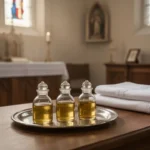
Chrism is a fragrant oil, traditionally made with olive oil and perfume such as balsam. It is blessed or consecrated by a bishop during the diocesan Chrism Mass or according to the Church’s approved practice. The fragrance makes the oil especially meaningful: it suggests a faith that should spread visibly through a Christian’s words and actions.
Oil has a long history in the Bible and in human life. It was used for healing, anointing leaders, honoring guests, and preparing people for special service. In Confirmation, chrism brings these meanings together. The person is strengthened, consecrated, and sent to serve God and neighbor.
The anointing is made on the forehead in the form of a cross. The forehead is visible, so the gesture can suggest a faith that is not meant to be hidden. The cross also shows that the Christian’s identity is inseparable from Jesus’ death and resurrection.
Chrism is not ordinary scented oil and it is not a magical substance. Its sacramental meaning comes from the Church’s prayer, the minister’s action, the words spoken, and God’s grace. The material sign gives the invisible gift a form that the senses can receive.
What the anointing with chrism means
Anointing communicates belonging. In the Old Testament, anointing could identify kings, priests, and prophets as people given a particular responsibility. Christians understand Jesus as the Anointed One, and those who receive Confirmation share in his mission in their own state of life.
Anointing also communicates strength. The sacrament does not promise that confirmed Christians will never feel fear, doubt, grief, or temptation. It gives grace to face those realities with a deeper reliance on God and a willingness to choose what is good.
Finally, the oil communicates healing and holiness. Christian growth involves ongoing conversion. Confirmation is not a reward for being perfect; it is a sacramental strengthening for a life that still requires prayer, repentance, learning, and service.
The laying on of hands and the invocation of the Holy Spirit
The laying on of hands is one of the oldest Christian gestures of blessing and prayer. In the Bible and early Christian practice, hands may be placed over someone to bless, heal, commission, or ask God to give the Holy Spirit. During Confirmation, the gesture shows that the candidate receives the sacrament within the prayer of the Church.
In the rite, the minister extends hands over those to be confirmed while asking God to send the Holy Spirit. The prayer refers to the Spirit’s gifts and asks that the candidates be strengthened for faithful Christian living. This is a communal action: the candidates do not confirm themselves, and they do not receive the sacrament as an isolated private experience.
The gesture can also be understood as a sign of continuity with the apostles. The Church sees Confirmation as connected to the apostolic laying on of hands described in the Acts of the Apostles. The same Holy Spirit who empowered the first disciples continues to strengthen the Church.
In some forms of the rite, the minister extends his hands over all the candidates during the invocation and then lays a hand on each person while anointing. The two actions work together: the prayer calls upon the Spirit, and the anointing gives the sacrament its visible, personal sign.
The sign of the cross and the meaning of the seal
The cross traced with chrism is a public sign of identity. It says that the confirmed person belongs to Christ and is willing to live under the pattern of his self-giving love. The cross is not a symbol of defeat alone; it points to the resurrection and to the hope of new life.
Confirmation is also described as giving a spiritual seal. A seal in ordinary life identifies ownership, authenticity, or authority. In sacramental language, the seal means that the Holy Spirit marks a person in a lasting way. It is not a physical mark that can be seen or removed.
This permanent character explains why Confirmation, like Baptism and Holy Orders, is not repeated. A person may need forgiveness, renewed faith, and continued formation many times, but the sacramental seal is understood as an enduring gift. The person can grow into that gift more fully throughout life.
Do not confuse the seal with a guarantee of automatic behavior. Confirmation does not make someone incapable of sin or remove the need for prayer and moral choices. It gives lasting grace and a deeper capacity to live as a witness to Christ.
Fire as a symbol of the Holy Spirit
Fire is one of the most familiar images associated with Confirmation. At Pentecost, the Acts of the Apostles describes the Holy Spirit coming upon the disciples with an experience represented by tongues as of fire. That image connects Confirmation with the apostles’ transformation from fearful followers into courageous witnesses.
Fire has several related meanings. It gives warmth, so it can represent God’s love and the warmth of Christian fellowship. It gives light, so it can represent truth and guidance. It also purifies and changes what it touches, suggesting the Spirit’s work of renewing the heart.
Fire can also suggest courage. The confirmed person is sent to live the Gospel in ordinary settings such as family life, school, work, friendships, civic responsibilities, and parish service. Courage in this context does not mean being aggressive or forcing beliefs on others. It means acting with honesty, mercy, patience, and conviction when faith calls for it.
A candle or flame may appear in a Confirmation retreat or parish celebration, but it is not the central material sign of the sacrament. The flame helps people visualize the Spirit’s action; the chrism and sacramental words remain essential to the rite.
Wind, breath, and the living movement of the Spirit
The biblical languages connect the word for spirit with meanings related to breath or wind. A person cannot see wind itself, but can see leaves move, feel air on the skin, or observe the effects of a storm. This makes wind a useful image for the Holy Spirit’s invisible but real action.
Wind suggests life because breathing is necessary for human existence. It also suggests movement. Confirmation does not merely encourage a person to keep faith private and comfortable. The Spirit moves Christians toward prayer, service, witness, justice, forgiveness, and care for those who are vulnerable.
Wind can be gentle or powerful. In the same way, the Spirit may work through a quiet realization, a patient conversation, a difficult act of forgiveness, or a bold public stand for what is right. The symbol leaves room for different personalities and different forms of Christian service.
The dove and what it recalls about the Holy Spirit
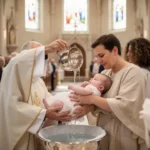
The dove is widely used as a visual symbol of the Holy Spirit. It recalls the account of Jesus’ Baptism, where the Spirit is represented as descending like a dove. Because Confirmation is connected closely with Baptism, the image helps show that the same Spirit received at Christian initiation continues to strengthen the believer.
The dove may also suggest peace, gentleness, and purity. These qualities matter because Christian witness is not measured by volume or force. A confirmed person is called to speak truth while treating other people with dignity, including those who disagree.
The dove is a helpful teaching symbol, but it should not be treated as a literal picture of the Holy Spirit. Christian symbols use visible images to point beyond themselves. The Spirit is personal and divine, not an animal or a physical force.
Light, red, and other colors used in Confirmation
Light commonly represents Christ’s truth and the Christian call to reflect that truth. A candle used during preparation may remind candidates that faith is meant to guide choices. It can also connect Confirmation with Baptism, where light traditionally symbolizes the new life received in Christ.
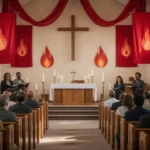
Red is often associated with the Holy Spirit because of the fire imagery at Pentecost. It may also recall the courage of martyrs who gave faithful witness at great personal cost. Some churches use red vestments or decorations for celebrations related to the Holy Spirit, though local liturgical customs can vary.
White may appear because Confirmation is linked with Baptism and the new life of Christ. It can point to joy, holiness, and the dignity of the baptized person. Green, gold, or other colors may appear in the wider liturgical setting depending on the season and the celebration.
Colors support the meaning of the liturgy, but they do not replace the sacramental signs. A parish may use a red banner, a flame-shaped decoration, or a dove in its teaching materials without claiming that each object is required for Confirmation.
The sponsor as a living symbol of Christian support
A Confirmation sponsor is not a substitute for the Holy Spirit, and the sponsor does not confer the sacrament. Instead, the sponsor represents the Church’s promise to accompany the candidate. The sponsor is expected to offer encouragement, prayer, example, and practical support as the person continues growing in faith.
The sponsor’s presence shows that Christian life is personal but never isolated. Faith is handed on through families, parishes, friendships, teachers, mentors, and the wider Christian community. A good sponsor does more than attend the ceremony or give a gift; the sponsor remains available after the celebration.
Requirements for sponsors are set by Church law and local diocesan practice. They commonly involve being a Catholic who has received the sacraments of initiation and is living consistently with the faith. Anyone choosing a sponsor should check the parish’s current requirements rather than relying on assumptions.
The community, the sign of peace, and Christian mission
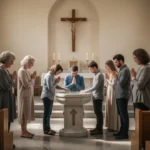
Confirmation takes place in the presence of the Church because the sacrament strengthens a person for life within the Christian community. The congregation prays for the candidates, listens to the profession of faith, and welcomes them more fully into the Church’s worship and mission.
The sign of peace after the anointing points toward communion. It is not simply a polite greeting. It expresses reconciliation, fellowship, and a commitment to build relationships shaped by Christ’s peace. The confirmed person is not sent out as a solitary religious representative but as a member of a people.
Mission is the practical meaning behind many Confirmation symbols. The Spirit’s gifts are given for service, not personal status. A person may serve through teaching, caring for relatives, defending human dignity, helping at a parish, supporting a neighbor, practicing honesty at work, or responding to suffering with compassion.
Wisdom helps you see life from God’s perspective.
Understanding helps you grasp the meaning of faith more deeply.
Counsel helps you choose a faithful course of action.
Fortitude gives courage to remain faithful under pressure.
Knowledge helps you recognize God’s presence and your responsibilities.
Piety deepens loving reverence toward God.
Fear of the Lord means awe, humility, and respect before God rather than panic.
These gifts are not personality types or instant abilities. They are graces that can mature through prayer, Scripture, worship, moral reflection, study, and service. The symbols of Confirmation invite the person to keep cooperating with that growth.
How to explain the symbols to a child or teenager
A young person usually understands the symbols better when each one is connected to a concrete experience. Instead of presenting a long list of definitions, ask what the person sees, feels, and does during the rite.
Oil: “The chrism shows that God strengthens and sets you apart for a purpose.”
Hands: “The bishop or priest prays over you and asks the Holy Spirit to be with you.”
Cross: “You belong to Jesus and are called to live his way.”
Fire: “The Spirit gives light, warmth, and courage.”
Wind: “You cannot see the Spirit directly, but you can see what the Spirit does.”
Dove: “The dove recalls the Holy Spirit at Jesus’ Baptism and the peace God gives.”
Sponsor: “A sponsor promises to support you as you continue living your faith.”
It also helps to explain what Confirmation does not mean. It is not a graduation from religious education, a ceremony for receiving gifts, or a declaration that the person no longer needs the Church. It is a beginning of more deliberate participation in Christian life.
How to prepare spiritually for the symbols of Confirmation
Preparation becomes more meaningful when candidates connect the visible signs with their own choices. Before the ceremony, spend time considering where you need the Spirit’s strength and how you might serve other people after receiving the sacrament.
Read the Scripture passages chosen for the celebration and notice what they reveal about the Holy Spirit.
Learn the rite’s gestures so you can participate attentively rather than treating them as a performance.
Pray with the symbols. Ask what the oil, fire, cross, or laying on of hands says about your relationship with God.
Examine your baptismal promises. Consider how faith shapes your treatment of family, friends, strangers, and people in need.
Speak with your sponsor. Discuss one practical way you can remain involved in prayer, worship, or service.
Continue after the ceremony. Join the Eucharist, seek reconciliation when needed, study the faith, and take part in parish life.
The symbols are most meaningful when they lead to action. If the chrism represents consecration, look for a way to serve. If fire represents courage, consider where you need to tell the truth with kindness. If the sign of peace represents communion, take a step toward forgiveness or reconciliation.
What Confirmation symbols mean beyond the ceremony
The ceremony ends, but the symbols continue to interpret everyday Christian life. The cross can shape how you respond to sacrifice. The oil can remind you that your identity is received as a gift rather than earned through status. The seal can encourage perseverance when faith feels difficult or unnoticed.
Fire can prompt you to bring warmth to someone who feels excluded. Wind can remind you to remain open to God’s direction. Light can guide decisions about honesty and responsibility. The sponsor and parish community can remind you that Christian growth depends on relationships, accountability, and shared worship.
Confirmation therefore has both a sacramental moment and a lifelong dimension. The visible signs point to an invisible grace, and that grace is meant to become visible again through the confirmed person’s choices. The clearest evidence of the Spirit’s work is not a decoration or an emotional experience but a life increasingly marked by faith, hope, love, courage, and service.
Frequently asked questions
Is the oil used in Confirmation the same as ordinary anointing oil?
No. Chrism is a special sacred oil used in the sacraments and blessed or consecrated according to the Church’s liturgical practice. It is traditionally olive oil mixed with fragrance. Its sacramental meaning comes from the Church’s rite, prayer, minister, and words, not merely from the oil’s ingredients or scent.
Why does the bishop or priest make a cross on the forehead?
The cross identifies the person with Jesus Christ and recalls his death and resurrection. Placing it on the forehead also suggests a faith that should be lived openly and thoughtfully. The gesture does not mean the confirmed person will never struggle; it expresses a lasting call to belong to Christ and witness to him.
Is a dove required at every Confirmation ceremony?
No. The dove is a traditional image of the Holy Spirit, especially connected with Jesus’ Baptism, but it is not an essential object in the sacramental rite. A parish may use a dove in artwork, lessons, or decorations, while another parish may use different images. The anointing with chrism and the sacramental words are central.
What should a Confirmation sponsor do after the ceremony?
A sponsor should continue offering prayer, encouragement, and a credible example of Christian living. Practical support might include attending Mass together, discussing faith questions, helping the person find service opportunities, or remembering important milestones. The sponsor’s role is accompaniment, not supervision or control, and it should respect the confirmed person’s growing responsibility.











Leave a Reply