Catholic baptism: Meaning, traditions, and what to expect
Catholic baptism: Meaning, traditions, and what to expect
Catholic baptism is the sacrament that begins a person’s life in the Church by water and the Holy Spirit, incorporating the baptized into Christ and the Christian community.
For Catholics, baptism is more than a naming ceremony or family tradition. It is a sacrament of initiation that brings forgiveness of sins, gives new life in Christ, and marks a person permanently as belonging to God. Catholic churches baptize infants, children, teenagers, and adults, although the preparation and ceremony differ by age.
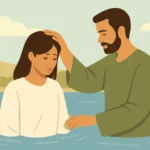
The sacrament usually takes place in a parish church during a scheduled baptismal service or, in some communities, during Mass. Water is poured over the person’s head, or the person is immersed, while the minister baptizes in the name of the Father, Son, and Holy Spirit. These actions are simple, but Catholics understand them as carrying profound spiritual meaning.
Catholic teaching connects baptism with Jesus’ command to make disciples and baptize them in the name of the Father, Son, and Holy Spirit, found in Matthew 28:19. The sacrament is also associated with Jesus’ conversation about being born of water and the Spirit in John 3:5. These passages help explain why water and the Trinitarian formula are central to Catholic baptism.
Baptism unites a person with the death and resurrection of Jesus. Going into the water represents dying to sin; coming out of it represents rising to a new life. The Church does not treat this merely as a symbol. It teaches that God acts through the sacrament, giving grace to the person who receives it.
Through baptism, a person receives several connected gifts:
Forgiveness of sin: original sin is forgiven, and adults also receive forgiveness for personal sins when they are properly prepared and sincerely turn toward God.
New life in Christ: the baptized person becomes a child of God by grace and begins a new relationship with the Trinity.
Membership in the Church: baptism joins a person to the Catholic community, the Body of Christ.
A permanent spiritual mark: baptism is received only once because it creates an enduring identity as a Christian.
A call to holiness: the baptized person is called to live according to the Gospel and participate in the Church’s worship and mission.
Original sin is not a personal act committed by a baby. In Catholic theology, it describes the wounded human condition inherited from humanity’s first sin, including separation from the fullness of communion with God. Infant baptism expresses the Church’s belief that God’s grace is offered before a child can earn or understand it.
Adults who are baptized generally receive baptism together with Confirmation and the Eucharist through the process known as the Order of Christian Initiation of Adults, often called OCIA. The process gives them time to learn Catholic beliefs, pray, examine their readiness, and make a conscious profession of faith.
One baptism: Catholic baptism is not repeated. If there is serious doubt about whether someone was baptized validly, a priest may discuss a conditional baptism rather than simply performing the sacrament again.
Who can receive Catholic baptism
People of every age can receive Catholic baptism if they have not already been validly baptized with water in the name of the Father, Son, and Holy Spirit. The Church recognizes that baptism may be celebrated for infants, older children, and adults, while expecting different forms of preparation from each group.
Infant baptism
Infant baptism is common in Catholic families. Because babies cannot make a personal profession of faith, their parents and godparents profess faith on their behalf and promise to help the child grow as a Catholic. The parents also express their intention to raise the child in the practice of the faith.
A parish may ask parents to attend a baptism preparation session before the ceremony. This meeting can cover the meaning of the sacrament, the promises made during the rite, the responsibilities of godparents, and practical details such as scheduling and church policies. Requirements differ among parishes, so families should contact their parish office early.
The Church encourages parents to arrange baptism without unnecessary delay, but the exact timing is usually shaped by family circumstances, parish schedules, and local practice. A parish should not treat baptism as a reward for a family that already has perfect religious practice. At the same time, parents are normally asked to show a reasonable hope that the child will be raised in the Catholic faith.
Baptism for older children
Children who are old enough to understand basic ideas about faith usually receive age-appropriate preparation. They may attend religious education, meet with parish leaders, and take part in a rite designed for children. Their parents remain important witnesses and guides, but the child also begins to express personal belief and desire for baptism.
The preparation period may include learning about Jesus, prayer, the Church, sin and forgiveness, the sacraments, and Christian responsibilities. The child’s readiness is considered in light of age and understanding rather than adult theological knowledge.
Baptism for adults
Adults who seek baptism normally participate in OCIA, formerly known in many places as RCIA. The process may last several months or longer, depending on the person’s background and readiness. It often includes instruction, prayer, reflection on the Sunday readings, participation in parish life, and conversations with clergy or trained parish members.
An unbaptized adult who completes the preparation may be baptized, confirmed, and receive the Eucharist at the Easter Vigil or another approved celebration. Someone already baptized in another Christian tradition usually is not baptized again. Instead, the parish investigates whether the earlier baptism used water and the Trinitarian formula, then discusses the appropriate path into full communion with the Catholic Church.
What happens during a Catholic baptism
The Catholic baptismal rite has a clear sequence, although the wording and placement of some parts may vary. An infant baptism outside Mass is often brief, while an adult baptism may be part of a longer liturgy with several stages of preparation. The central sacramental action remains the same.
Welcoming the child or candidate: The priest or deacon asks the parents and godparents what they seek for the child, or asks the adult candidate about the desire for baptism.
Making the sign of the cross: The minister and sometimes the parents and godparents trace the cross on the person’s forehead as a sign of belonging to Christ.
Hearing God’s word: Scripture readings and a homily explain baptism and the Christian life.
Praying for protection and grace: The community offers prayers for the candidate, family, and Church.
Renouncing sin and professing faith: Parents and godparents, or the adult candidate, reject sin and profess belief in the Father, Son, and Holy Spirit.
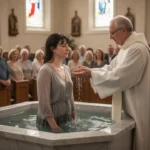
Celebrating the baptism: Water is poured over the head or the person is immersed while the minister says the baptismal formula.
Anointing with chrism: Sacred oil signifies that the newly baptized person shares in Christ’s priestly, prophetic, and royal mission.
Receiving the white garment: The white clothing represents a new dignity and the call to live in the purity and freedom of Christ.
Receiving the baptismal candle: A candle lit from the Easter candle represents Christ’s light and the responsibility to keep faith alive.
Praying the Lord’s Prayer and blessing the family: The celebration ends with prayer for the baptized person and those who will support their faith.
The essential form of baptism is the use of water together with the words naming the Father, Son, and Holy Spirit. In the Catholic Church, the ordinary minister is a bishop, priest, or deacon, though any person can baptize validly in an emergency if the required conditions are present.
Water may be used by immersion, by pouring it over the head, or by sprinkling in some circumstances. For a valid baptism, the water must actually touch the person, and the minister must intend to do what the Church does in baptism. The person being baptized, or the parents and godparents acting for an infant, should not place an obstacle of deliberate rejection in the way of the sacrament.
In an emergency, anyone—even someone who is not Catholic—may baptize a person who has not been baptized, provided that the person uses water, says the Trinitarian formula, and intends to perform Christian baptism. The emergency should be reported to a priest afterward so the parish can record the baptism and complete any rites that were not possible at the time.
For families planning the ceremony: Ask the parish about its required preparation, godparent qualifications, approved clothing, photography rules, and documentation before choosing a date.
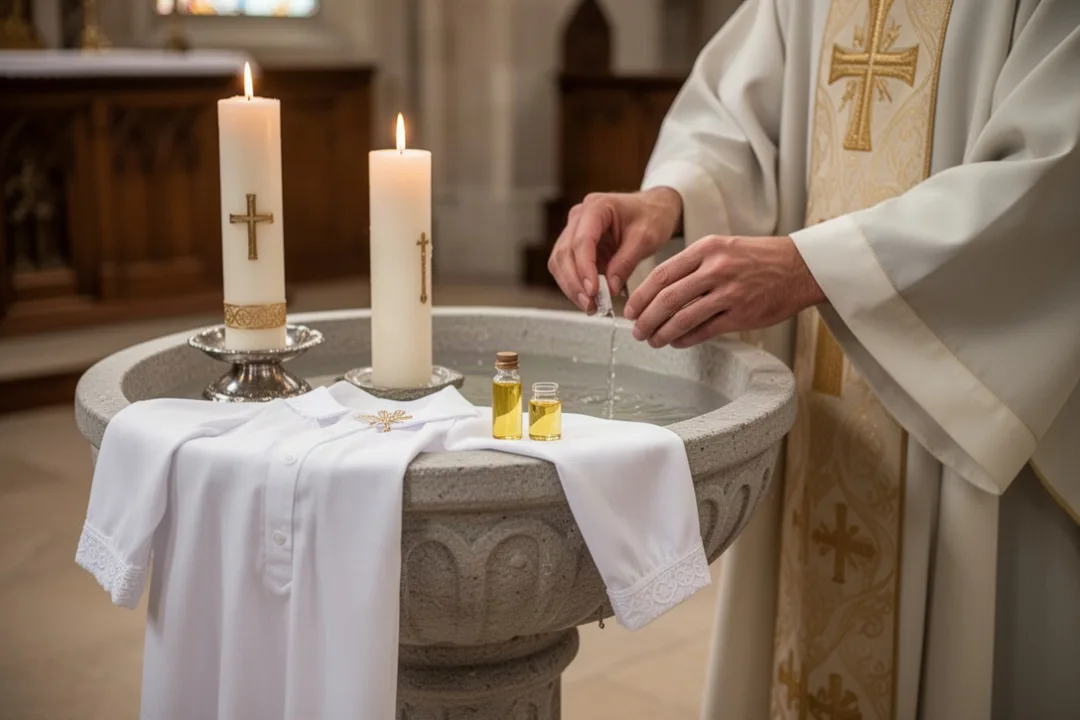
Why water, oil, candles, and white clothing matter
Catholic baptism uses physical signs to communicate spiritual realities. These signs are not decorative additions; they help the congregation see and hear what the sacrament means. Each one points to a particular part of Christian identity.
Water cleans, gives life, and can also represent death and rebirth. In baptism, it signifies cleansing from sin and entrance into new life with Christ. The water also recalls important biblical events, including creation, the flood, Israel’s passage through the sea, and Jesus’ baptism in the Jordan.
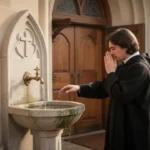
The baptismal font often stands near the entrance of a church because baptism is the doorway into sacramental life. Some churches use a large font that allows immersion, while others use a smaller basin for pouring. The design may differ, but the meaning remains centered on God’s life-giving grace.
Sacred oils
The priest or deacon may anoint the candidate with the oil of catechumens before baptism. This oil represents strength for turning away from sin and living as a disciple. After baptism, the person is anointed with sacred chrism, a fragrant oil consecrated by the bishop.
Chrism signifies being joined to Christ and sharing in his mission. The baptized person is called to worship God, serve others, speak truth, and contribute to the life of the Church. The anointing is especially meaningful because the word “Christ” is connected with being anointed.
White garment
The white garment represents the new creation received in baptism. It also points toward the person’s future and the hope of eternal life. For infants, families may choose a baptismal gown; for adults, the parish may provide or specify a simple white garment.
Baptismal candle
The baptismal candle is lit from the parish’s Easter candle, which represents the risen Christ. Parents and godparents may be asked to keep the candle and light it on anniversaries or other meaningful occasions. Its practical value is modest, but its message is lasting: Christian faith is meant to illuminate ordinary life.
Choosing godparents and preparing your family
Godparents are not simply ceremonial witnesses or honorary relatives. Their role is to support the baptized person’s Christian formation and to encourage the family in practicing the faith. For an infant, they make promises during the baptism and help the parents fulfill their commitment to raise the child as a Catholic.
Church law generally calls for at least one godparent, who must be a confirmed Catholic, have received the Eucharist, and live a life consistent with the faith. A godparent is normally at least 16 years old, although the local bishop or parish may apply particular rules. A Catholic who does not meet the requirements may not serve as a godparent, but may sometimes participate as a Christian witness alongside a qualified Catholic godparent.
Because parish policies can differ, ask the parish before making formal invitations. Common documents or steps may include:
a recent copy of the child’s birth certificate or other required identity record;
proof of the godparent’s baptism and, in some cases, Confirmation and First Communion;
a letter or form from the godparent’s parish;
attendance at a baptism preparation class;
confirmation of the parents’ parish registration or permission from another parish.
Parents can prepare spiritually by reading the baptismal promises, praying for their child, and discussing how faith will be practiced at home. Regular Sunday Mass, simple prayers, Scripture stories, acts of service, and participation in parish life give a child a consistent experience of Christian faith.
Practical preparation matters too. Families should confirm the date, arrive early, dress the child comfortably, bring any required candle or garment, and tell guests where to sit. The child may cry, sleep, or need to be fed during the ceremony; these ordinary interruptions do not diminish the sacrament.
Baptism gives a person a new identity in Christ, but it does not remove every struggle or guarantee a life without sin. Catholics understand grace as the beginning of a lifelong relationship that must be nurtured through prayer, worship, moral choices, service, and the other sacraments.
For a baptized infant, the family and parish gradually introduce the child to the Christian life. As the child grows, religious education helps develop an understanding of the Gospel and Catholic teaching. Later sacraments, especially Confirmation and the Eucharist, deepen and strengthen the grace of initiation.
When baptized people commit serious sins after baptism, they can seek reconciliation through the Sacrament of Penance. Baptism itself is not repeated, because its spiritual mark remains. The Sacrament of Reconciliation restores a person to the full friendship with God and communion with the Church that sin has damaged.
Baptism also creates responsibilities toward others. The baptized are called to care for the vulnerable, forgive, pursue justice, reject hatred, and participate in the Church’s mission. These responsibilities apply whether baptism occurred as an infant or after years of personal preparation.
The baptismal anniversary can become a meaningful family tradition. Parents may display the certificate, light the baptismal candle, pray for the child’s godparents, or tell the child the story of the ceremony. Such practices help connect a one-day celebration with the continuing reality of living as a baptized Christian.
If you are considering Catholic baptism for yourself or your child, the parish office is the best first contact. A priest, deacon, or parish coordinator can explain local preparation, review previous baptism records, answer questions about godparents, and help you choose a celebration that reflects both the sacrament’s dignity and your family’s circumstances.
Frequently asked questions
Can a baby be baptized if the parents are not married in the Catholic Church?
Yes, parents’ marital status does not automatically prevent a child from receiving baptism. The parish will usually discuss the parents’ intention to raise the child in the Catholic faith and may offer pastoral guidance about family life. Baptism is not limited to families that already meet every Catholic expectation, but the Church does ask for a credible plan for the child’s ongoing Christian formation.
Can someone be baptized Catholic if they were baptized in another Christian church?
Usually, no second baptism is performed if the earlier baptism was valid. Catholic leaders generally recognize baptism with water in the name of the Father, Son, and Holy Spirit. The person may instead enter full communion with the Catholic Church through instruction, a profession of faith, Confirmation, and the Eucharist, depending on personal circumstances and prior Christian formation.
Does Catholic baptism have to take place during Mass?
No. Infant and child baptisms are often celebrated in a separate parish service, while adult baptisms commonly occur during the Easter Vigil. A baptism during Mass can highlight the community’s role and may be encouraged by local practice, but the parish determines available celebrations and the preparation required.
What if a person is in danger of death and has not been baptized?
Anyone may baptize in an emergency using water, the Trinitarian formula, and the intention to perform Christian baptism. If the person cannot respond, the minister should follow the Church’s emergency guidance and contact clergy as soon as possible. The parish should be informed afterward so the baptism can be documented and any omitted rites considered.











Leave a Reply