Daily Catholic Mass: times, readings, and what to expect
Daily Catholic Mass: times, readings, and what to expect
To attend daily Catholic Mass, check the parish website, call the parish office, or use a diocesan church directory for the current schedule. Most parishes offer Mass on some weekdays, often in the morning, at lunchtime, or in the evening, but times vary widely and may change for holidays, funerals, clergy availability, or parish events.
Daily Mass is usually shorter and less formal than Sunday Mass, often lasting about 30 to 45 minutes. You can attend quietly, follow the readings and prayers in a missal or worship aid, and participate at the level that feels appropriate. Catholics are generally welcome to receive Communion when properly prepared; visitors who are not receiving may remain seated or come forward for a blessing according to local practice.
The most reliable source is the parish’s own schedule. Search for nearby Catholic churches, then look for a page labeled “Mass times,” “Daily Mass,” “Liturgy,” or “Calendar.” A church may list weekday Masses separately from Saturday vigil and Sunday Masses, so check the complete schedule rather than relying on a search-engine result.
If the schedule is unclear, call during office hours and ask two practical questions: “What time is daily Mass today?” and “Is the Mass in the church or another chapel?” Some parishes use a small weekday chapel, while others move Mass to the main church for larger gatherings or special celebrations.
Check the date carefully: weekday times may change for holy days, civic holidays, school events, or parish meetings.
Confirm before driving: a scheduled Mass can occasionally be canceled or moved because of a funeral, priest’s absence, or emergency.
Allow extra time: arrive 10 to 15 minutes early if you need to find parking, locate the chapel, or learn the parish’s customs.
Look for confession separately: confession times may occur before or after Mass, but they are not automatically offered whenever Mass is celebrated.
Diocesan websites and Catholic church directories can help you identify parishes, but their information may not be updated immediately. A parish bulletin, office phone message, or current social media notice may contain the latest change. When traveling, search for the diocese and city together, then verify the parish schedule directly.
Best practice: Treat online listings as a starting point, not a guarantee. A quick call to the parish can prevent a wasted trip, especially on weekdays and around major Catholic holidays.
Some churches offer daily Mass in Spanish, Latin, or another language, depending on the community. The language does not prevent you from participating: the basic order of the Mass remains familiar, and printed worship aids may provide translations or responses.
What happens during a weekday Catholic Mass
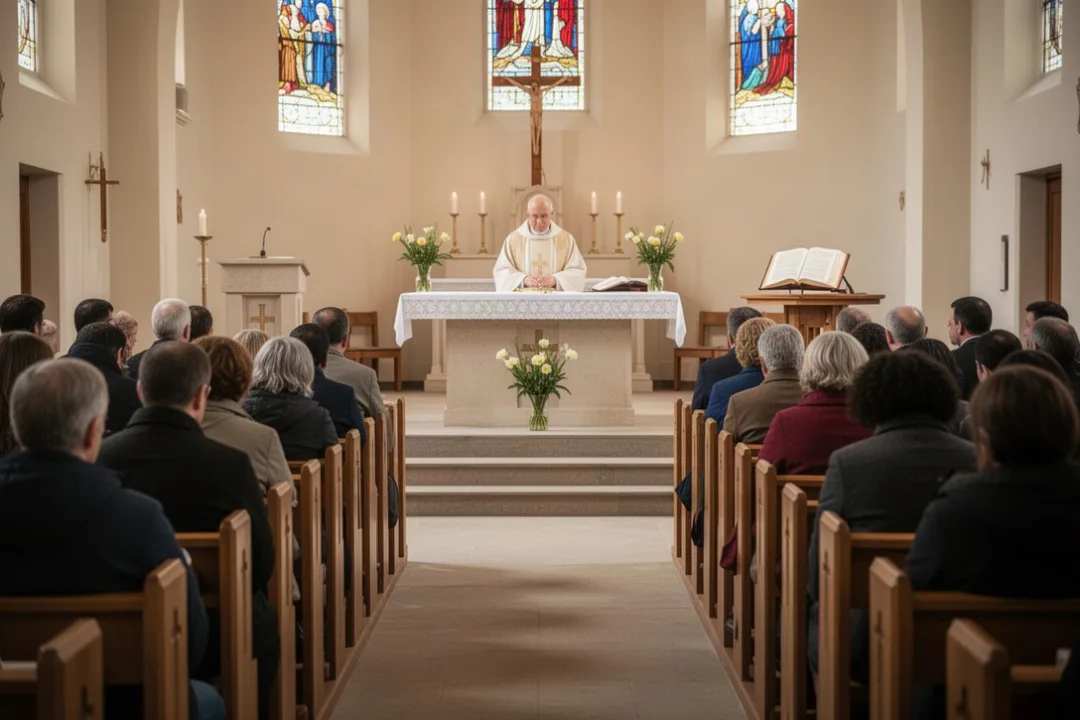
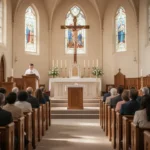
Daily Mass follows the same essential structure as Sunday Mass, although weekday celebrations are commonly simpler. The congregation gathers, listens to Scripture, joins in the prayers of the Church, receives the Eucharist when eligible, and is sent out with a blessing. Music, incense, a choir, and a homily may be limited or absent, depending on the parish and the day.
The opening rites and Scripture readings
Mass begins with an entrance, a greeting, and the Penitential Act, in which the congregation acknowledges the need for God’s mercy. On some days, the Gloria is included; on others, such as many weekdays during Advent and Lent, it is omitted. The priest then offers the opening prayer.
The Liturgy of the Word usually includes a first reading, a responsorial psalm, an Alleluia or another Gospel acclamation, and a Gospel reading. On many weekdays, the readings follow a two-year cycle, commonly identified as Year I and Year II. Sunday readings follow a separate three-year cycle, so a weekday Mass can offer passages you may not hear at the Sunday liturgy.
A brief homily may follow the Gospel. It often connects the readings with Christian discipleship, prayer, current pastoral concerns, or the feast being celebrated. At a weekday Mass, the homily may be shorter, but the congregation is still invited to hear the Scriptures as part of the Church’s shared prayer.
The Eucharistic Prayer and Communion
After the prayers of the faithful, the Mass moves to the Liturgy of the Eucharist. Bread and wine are brought to the altar, and the priest leads the Eucharistic Prayer. Catholics believe that, through the consecration, Christ becomes truly present in the Eucharist. The congregation responds with acclamations, joins in the Lord’s Prayer, and offers a sign of peace according to local custom.
The priest then breaks the consecrated bread and presents Communion. If you are Catholic and properly disposed to receive, follow the parish’s usual line and minister’s instructions. You may receive the host in the hand or on the tongue according to approved practice and local direction; respond “Amen” after the minister says “The Body of Christ.”
After Communion, the congregation observes a period of prayer, followed by a prayer after Communion and the final blessing. A weekday Mass may end quietly, without announcements or a procession. People often remain for a few minutes of personal thanksgiving before leaving.
Enter quietly and silence your phone before the opening procession.
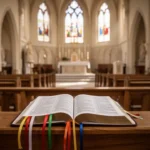
Use the missal, worship aid, or parish leaflet to follow the readings and responses.
Stand, sit, and kneel with the congregation when you can, while remembering that local customs differ.
Join the Communion procession only if you plan to receive or if the parish invites non-communicating visitors forward.
Remain after Mass for prayer if you wish, but leave quietly if the church is being prepared for another service.
How daily Mass readings and Catholic seasons work
The readings at daily Mass are part of the liturgical calendar, which organizes the Church’s worship around the life, death, and resurrection of Jesus Christ. The calendar includes seasons such as Advent, Christmas, Lent, the Easter season, and Ordinary Time. The readings, prayers, colors, and feast days change with the season.
Weekday Mass may celebrate a saint, a memorial, a feast, a solemnity, or the day’s ordinary liturgy. A memorial honors a saint but may allow some flexibility in the readings and prayers. A feast or solemnity has its own liturgical significance and may include different readings, the Gloria, or other elements not found on an ordinary weekday.
During Advent and Lent, the Church uses distinctive prayers and readings to prepare for Christmas and Easter. The Gloria is generally not used during these seasons, while the Alleluia is omitted during Lent. During the Easter season, the first reading at daily Mass commonly comes from the Acts of the Apostles rather than the Old Testament.
Many parishes provide a daily missal or printed worship aid. You can also use a Catholic Bible, a parish bulletin, or an approved Catholic daily reading resource. If the readings seem different from those used at another church, the reason may be a different calendar, a special feast, or a local celebration.
Daily Mass can make the liturgical year easier to recognize because you encounter its themes repeatedly. Advent emphasizes watchful hope, Lent calls for repentance and renewal, Easter celebrates Christ’s resurrection, and Ordinary Time focuses on growth in Christian life through the Gospel.
Reading tip: You do not need to understand every passage immediately. Listen for a repeated word, a command, a promise, or a connection between the first reading and the Gospel, then carry that one idea into prayer.
How to prepare for daily Mass and Communion
Preparation does not need to be elaborate. Arrive with enough time to settle down, review the day’s readings if available, and become aware of why you are attending. Some people offer a specific intention, such as praying for a family member, a person who is ill, a difficult decision, or the needs of the wider community.
Catholics who intend to receive Communion should consider their spiritual preparation. Catholic practice calls for avoiding grave sin and observing the Eucharistic fast, normally refraining from food and drink for at least one hour before receiving Communion, with exceptions for water and medicine. The elderly, sick, and those caring for them have particular allowances under Church discipline.
If you are conscious of grave sin, the appropriate preparation is to receive the Sacrament of Reconciliation before receiving Communion. You may still attend Mass and participate in the prayers without receiving. Sitting quietly during the Communion procession is a normal option, not a public announcement about your personal circumstances.
Parishes differ in how they handle visitors who do not receive Communion. Some invite everyone to come forward with arms crossed for a blessing; others ask non-communicating people to remain in the pew. Follow the local announcement or watch what the parish does. You can always remain seated and pray.
Before Mass: silence your phone, gather the readings, and choose a prayer intention.
During the readings: listen for how the words speak to faith, repentance, mercy, or service.
Before Communion: make a sincere act of faith and consider whether you are prepared to receive.
After Communion: pray in silence rather than rushing immediately into conversation.
Clothing for daily Mass is generally modest and respectful, but it is usually less formal than clothing for a wedding or Sunday celebration. Bring a sweater if the church is cool, and dress in a way that allows you to sit, stand, and kneel comfortably. Turn off notifications, avoid unnecessary conversation in the worship space, and be considerate of people who are praying.
Why Catholics attend Mass on weekdays
Sunday Mass is the central weekly celebration for Catholics, while daily Mass is an additional opportunity for worship and spiritual growth. Attending on a weekday can create a quiet rhythm of prayer without the larger crowds and fuller music often associated with Sunday. Some people attend once a week; others go whenever their schedule permits.
The Eucharist gives daily worship a distinct character. Catholics gather not simply to hear a talk or spend private time in a church, but to participate in the Church’s liturgy and receive Christ in Holy Communion when prepared. The prayers unite the congregation with Catholics around the world who are celebrating Mass in different languages and time zones.
Daily Mass can also help you notice small changes in the Gospel and liturgical season. A short weekday homily, a saint’s memorial, or a single line from the psalm may remain with you throughout the day. The practice is less about completing a personal target and more about making room for worship, listening, and conversion.
to pray for family, friends, the deceased, or a particular need;
to receive the Eucharist when properly disposed;
to listen to Scripture in the Church’s daily cycle;
to mark a feast day or remember a saint;
to find a quiet, structured time for prayer during a demanding week.
Attendance at daily Mass is ordinarily not required in the same way as attendance on Sundays and designated holy days of obligation. Catholic obligations can vary with the calendar and local church law, so consult your parish or diocese for specific holy-day requirements. A weekday Mass remains a voluntary practice for most Catholics, and missing it is not the same as missing an obligatory celebration.
Common questions about attending weekday Mass
If you have never attended a daily Catholic Mass, you do not need to memorize every response before going. Sit where you can observe the congregation, use the printed guide, and participate as you are comfortable. Visitors are welcome to pray respectfully, even when they do not know the customs.
You may stand, sit, or kneel a little differently from the people around you because parishes have local habits. Follow the priest and congregation when possible, but do not feel embarrassed if you need to remain seated. The purpose of the gestures is to support prayer, not to test your familiarity with Catholic customs.
Daily Mass may be especially suitable when you want a shorter service, a peaceful setting, or a chance to pray before work or after school. It can also be a useful way to visit a parish before attending on Sunday. If you have questions about Communion, confession, accessibility, or the language of the liturgy, ask a priest, deacon, usher, or parish staff member.
Frequently asked questions
Does daily Catholic Mass count instead of Sunday Mass?
A weekday Mass normally does not fulfill the Catholic obligation to attend Mass on Sunday or on a designated holy day of obligation. Sunday celebrations include Saturday evening vigils in the usual circumstances. Daily Mass is a separate devotional practice. If illness, caregiving, travel, or another serious circumstance affects your attendance, ask your pastor for guidance rather than assuming a weekday service changes the obligation.
Can non-Catholics attend daily Catholic Mass?
Yes. Visitors may attend respectfully, listen to the readings, join responses if comfortable, or remain quiet during the prayers. Non-Catholics should not receive Holy Communion because Catholic Communion expresses full unity in faith and sacramental life. Local parishes may invite visitors to come forward for a blessing, but remaining seated is always acceptable.
How long does a daily Catholic Mass usually last?
Many weekday Masses last about 30 to 45 minutes, although the length depends on the readings, homily, music, Communion arrangements, and whether the day is a special feast. A Mass with a larger congregation or additional ceremonies may take longer. Check the parish schedule and allow extra time if you need parking or directions.
What should I bring to daily Mass?
You can attend with nothing more than yourself. A parish may provide a worship aid, but bringing a Catholic missal, Bible, or approved reading app can help you follow the service. Consider bringing a prayer intention and arriving early enough to settle in. Dress modestly, silence your phone, and avoid bringing food or drinks into the worship space.











Leave a Reply