The Catholic Church follows an organized cycle of biblical readings so that Sunday worship presents a broad range of Scripture over time. The readings are not selected randomly from week to week; they follow the Lectionary, the book or collection used to proclaim Scripture during Mass.
On most Sundays, the first reading comes from the Old Testament. During the Easter season, it usually comes from the Acts of the Apostles, which describes the growth of the early Christian community. The responsorial psalm responds to the first reading through prayer and song.
The second reading generally comes from one of the New Testament letters or another apostolic writing. Unlike the Gospel sequence, it often follows a semi-continuous reading of a particular letter for several weeks. The Gospel is the high point of the Liturgy of the Word and focuses on the life, teaching, death, and resurrection of Jesus.
Sunday readings are arranged in a three-year cycle:
Year A: The Gospel readings feature Matthew most often.
Year B: Mark receives primary attention, with passages from John used at important seasons and on certain Sundays.
Year C: Luke is the main Gospel.
The cycle gives each Sunday a particular character, but the readings also change according to the liturgical season. Advent, Christmas, Lent, Easter, and Ordinary Time each use Scripture in ways that fit the Church’s prayer and celebration.
Helpful distinction: The Sunday readings assigned to a date can vary by country, diocese, liturgical calendar, or Catholic rite. Use a source that identifies your location and the exact Sunday or feast.
What you hear during the Liturgy of the Word
The readings form a connected movement rather than four unrelated selections. The first reading introduces a biblical theme, image, promise, or human situation. The psalm answers that reading in prayer. The second reading adds an apostolic perspective, and the Gospel brings the assembly to Jesus’ words and actions.
The usual sequence is:
First reading: A passage from the Old Testament, or from Acts during the Easter season.
Responsorial psalm: A sung or recited response drawn from the Book of Psalms.
Second reading: A selection from a New Testament letter or related apostolic text.
Gospel acclamation: A brief musical response before the Gospel, except during certain penitential seasons.
Gospel: A passage from Matthew, Mark, Luke, or John proclaimed by a deacon or priest.
The congregation’s responses are also part of the structure. After the first and second readings, the reader announces the end of the reading and the people respond with a profession that the passage is the word of the Lord. The Gospel receives a distinct response because Christians understand it as the central proclamation of Christ’s ministry.
Where to find the correct Sunday Mass readings
You can find the readings in a parish bulletin, a missal, a Catholic prayer book, or a reputable Catholic website. Many parishes print the Sunday readings so that worshipers can read them before Mass or follow along during the Liturgy of the Word.
For the most reliable result, begin with the date and liturgical celebration, not only the calendar date. A Sunday may also be a solemnity, a feast, or part of a special season. Christmas, Easter, Palm Sunday, Pentecost, and other major celebrations can have readings different from an ordinary Sunday in the same month.
When searching online, use a phrase such as “Catholic Sunday Mass readings” together with the date and country. Official diocesan resources and recognized Catholic publishers are generally better choices than unsourced pages that may combine readings from different calendars.
Check these details before preparing:
The Sunday date or name of the feast.
The liturgical year: A, B, or C.
The country or diocese using the calendar.
Whether the parish is celebrating a special ritual, dedication, or local observance.
Whether you need the readings for a vigil Mass, a Sunday Mass, or a weekday celebration.
The readings at a Saturday evening vigil can be the same as the Sunday readings, but special celebrations or local arrangements may affect the selection. If you are serving as a lector, cantor, or commentator, confirm the readings with the parish rather than relying only on a general search result.
How to prepare with Sunday Mass readings
Reading the passages ahead of time can make the proclamation easier to hear. You do not need to understand every historical detail before Mass. A focused, prayerful reading often reveals the main movement of the texts.
1. Read all four parts together
Start by reading the first reading, psalm, second reading, and Gospel in order. Notice repeated words and ideas. For example, the readings may connect through themes such as mercy, covenant, listening, service, faith, or the care of the poor.
Do not assume that every passage will explain every other passage directly. Sometimes the connection is a shared image or concern rather than a simple continuation of the same story. The readings may also offer tension: one passage can describe human failure while another points toward restoration.
2. Identify the setting of each passage
Ask basic questions about the text. Who is speaking? Who is listening? What problem, promise, conflict, or prayer appears? Is the passage narrative, poetry, wisdom teaching, prophecy, a letter, or a Gospel account?
Genre matters. A psalm uses poetic language, while a letter may address a concrete issue in a Christian community. A prophetic passage may use symbolic images, and a Gospel narrative may leave a detail open so that listeners consider their own response.
3. Read the Gospel in its larger context
A short Gospel passage may omit events that appear immediately before or after it. Read a few surrounding paragraphs when possible. This helps you see why Jesus is speaking, who is present, and how the passage fits the Gospel writer’s larger presentation.
For example, a parable about forgiveness may follow a dispute about relationships, or a healing may be placed beside teaching about faith. Context does not eliminate the need for personal reflection; it protects the passage from being reduced to one isolated sentence.
4. Choose one word or phrase to carry into prayer
After reading, select one word, image, or invitation that stays with you. It might be “remain,” “mercy,” “watch,” “peace,” or “serve.” Bring that phrase into quiet prayer without forcing a dramatic interpretation.
You can ask:
What does this passage reveal about God?
What does it show about Jesus or the community of believers?
What attitude or action does it invite?
Where does it challenge my assumptions?
What person or situation comes to mind as I pray?
This method keeps preparation practical. You are not trying to solve every theological question in one sitting; you are preparing to listen more attentively when the readings are proclaimed.
How the three-year Gospel cycle works
The three-year arrangement helps the Church hear the major Gospel traditions without treating them as interchangeable biographies. Each evangelist presents Jesus with distinctive emphases, structure, vocabulary, and theological concerns.
Year A and the Gospel of Matthew
Matthew frequently presents Jesus as a teacher who fulfills Israel’s Scriptures and forms a people committed to faithful living. The year includes substantial attention to the Sermon on the Mount, parables, conflict with religious leaders, and Jesus’ commissioning of his disciples.
When preparing for a Year A Sunday, pay attention to how Matthew connects Jesus’ teaching with the life of the community. Questions about forgiveness, prayer, reconciliation, hidden acts of goodness, and responsibility often appear in this Gospel cycle.
Year B and the Gospel of Mark
Mark is the shortest of the four Gospels and often moves quickly from one event to another. Its portrait of the disciples includes both genuine faith and repeated misunderstanding. The Gospel also gives strong attention to Jesus’ suffering, the cost of discipleship, and the meaning of the cross.
Mark’s direct style can make a short passage feel urgent. Notice who recognizes Jesus, who fails to understand him, and how Jesus responds to fear, illness, exclusion, or opposition.
Year C and the Gospel of Luke
Luke often highlights God’s mercy, prayer, the Holy Spirit, concern for people on the margins, and the reversal of social expectations. Stories such as the Good Samaritan and the Prodigal Son are associated especially with Luke, although the exact Sunday selection depends on the calendar.
Luke also gives a prominent place to women, the poor, outsiders, sinners, and people whose lives are transformed through an encounter with Jesus. Preparing for a Year C Sunday can involve asking who is welcomed, who is overlooked, and what repentance or restoration looks like in the passage.
John’s Gospel during the liturgical year
John is used throughout the cycle, especially during Christmas, Lent, Holy Week, and the Easter season. John’s Gospel frequently uses extended conversations and symbolic language involving light, bread, water, life, shepherding, and abiding in love.
John’s style can feel different from the shorter narratives in the other Gospels. Instead of focusing only on what happened, read for the meaning given to the event and for the way a conversation gradually reveals Jesus’ identity.
The responsorial psalm is not a musical pause between readings. It is a biblical prayer that allows the congregation to respond to what has been proclaimed. The response may express praise, trust, sorrow, repentance, thanksgiving, or hope.
Because psalms use poetry, they often communicate through images rather than direct explanation. A shepherd, a rock, a path, a shelter, or a thirsty land can express a relationship with God more powerfully than an abstract definition.
When preparing the psalm, read the response several times and consider how it relates to the first reading. Sometimes the connection is obvious. At other times, the psalm gives the emotional or spiritual response that the first reading leaves unstated.
The psalms give the assembly words with which to answer the word of God.
Pay attention to the musical setting at Mass as well. Singing the response helps the congregation participate rather than remain a group of listeners. If the psalm is recited, say the response slowly enough to let its meaning register.
How to understand the second reading
The second reading can seem less connected than the first reading and Gospel because it often comes from a letter being read over several Sundays. Its purpose is not always to repeat the Gospel theme. It may address Christian conduct, community divisions, worship, suffering, hope, resurrection, or the relationship between faith and daily life.
Look for the letter’s audience and circumstances. Paul’s letters, for example, respond to real communities with particular disputes and questions. Other New Testament writings emphasize perseverance, holiness, the identity of Jesus, or the life of the Church.
Try reading the passage as part of a longer argument. Identify what comes before and after it, then ask what the author wants the community to believe or do. This prevents isolated phrases from being treated as universal slogans without regard for their context.
For careful reading: A difficult passage should be interpreted in its literary and biblical context, alongside the Church’s broader teaching, rather than by relying on one sentence alone.
How to listen to a Sunday reading at Mass
The spoken proclamation has a different effect from private reading. The lector’s pace, pauses, emphasis, and pronunciation help the assembly receive the passage as a living proclamation. Even if you have read the text earlier, listen for what sounds new when it is spoken aloud.
Keep your attention on the passage rather than judging the reader’s performance. If a word is mispronounced or a pause feels unusual, return to the main movement of the reading. The purpose of proclamation is communal prayer, not a presentation for its own sake.
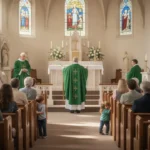
During the Gospel, the congregation traditionally stands. This posture expresses special reverence for the Gospel proclamation. The responses and gestures used by your parish are part of its common worship, so follow the local practice if you are visiting another church.
After the homily, allow the readings to remain present as you pray the Creed and the Prayers of the Faithful. The homily may explain one central theme, but the other readings can continue to shape the assembly’s response.
Ways to use Sunday Mass readings during the week
The Sunday readings can provide a simple pattern for prayer beyond the church building. You might read them before Mass, return to one passage on Monday, and use the psalm later in the week when you need words for gratitude or distress.
A manageable weekly practice looks like this:
Before Sunday: Read the passages once without taking notes.
On a second reading: Mark repeated words, surprising details, and questions.
Before Mass: Choose one phrase for prayer.
During Mass: Listen for the passage’s meaning in proclamation and preaching.
After Mass: Identify one concrete way to respond to the message.
Later in the week: Revisit the psalm or Gospel and notice what has changed in your understanding.
Families and small groups can read the Gospel aloud and ask each person what image or question stood out. A parish ministry may use the readings for faith formation, lector practice, Bible study, or preparation for the Prayers of the Faithful.
A lector’s preparation includes both spiritual reflection and practical rehearsal. Read the assigned text several times, determine its main sentence or movement, and practice difficult names and places. Mark pauses according to meaning rather than punctuation alone.
Consider the congregation’s listening experience. Long sentences need a steady pace, while a dramatic change in speaker or scene may need a deliberate pause. Speak clearly without turning the reading into an acting performance.
Before Mass, check the Lectionary volume and page, the microphone, lighting, and any local instructions. The printed text may differ slightly from an online version, so rehearse from the version that will actually be proclaimed.
Most of all, understand what you are proclaiming. A reader who has prayed with the text is more likely to communicate its purpose, even through a calm and understated delivery.
Why Sunday readings can differ from one parish to another
Not every Catholic community uses exactly the same liturgical calendar. Differences can arise from national editions of the Lectionary, local feasts, diocesan celebrations, religious communities, Eastern Catholic traditions, or the selection of a particular ritual Mass.
Two parishes in different countries may therefore have different readings on the same civil date. A parish may also celebrate a patronal feast or dedication that changes the readings from those assigned to an ordinary Sunday.
If the readings you found online do not match what you hear at Mass, that does not automatically mean one source is wrong. Compare the date, liturgical year, country, rite, and celebration before drawing a conclusion.
Questions to ask when a reading is difficult
Some Sunday passages involve violence, judgment, suffering, cultural customs, or language that can feel distant from modern life. A quick reaction may not be enough to understand them fairly. Start by naming what troubles you rather than ignoring it.
What kind of writing is this passage?
What historical or literary setting does it have?
Who is speaking, and to whom?
What does the passage emphasize, and what does it leave unsaid?
How does it relate to the rest of Scripture?
What do trusted Catholic commentaries or teachers say about it?
Some questions remain open after one reading. Bring them to a priest, deacon, catechist, Bible study, or knowledgeable Catholic teacher. A serious question is not a failure of faith; it can be the beginning of more careful reading and prayer.
How Sunday Mass readings connect worship and daily life
The readings are proclaimed in worship, but they are not limited to the church service. They address how people forgive, make decisions, treat neighbors, endure suffering, use authority, care for the vulnerable, and live as members of a community.
After Mass, consider one specific response rather than a vague promise to “do better.” You might call someone who needs encouragement, repair a strained relationship, set aside time for prayer, examine an unfair habit, or offer practical help. The appropriate response depends on the reading and on the circumstances of your life.
The Sunday Lectionary creates a shared rhythm for the Church. People in many places hear the same central proclamation, even though each assembly receives it through a particular community, language, preacher, and local situation. Reading ahead helps you recognize that rhythm and take part in it more attentively.
Frequently asked questions
Are Sunday Mass readings the same every year?
No. The Catholic Sunday Lectionary follows a three-year cycle identified as Years A, B, and C. Matthew is emphasized in Year A, Mark in Year B, and Luke in Year C, while John appears prominently during particular seasons and celebrations. The first and second readings also change, and local calendars can alter the selection for a feast or special observance.
Can I read the Sunday readings before Mass?
Yes. Reading them beforehand is a common way to prepare for worship. You can use a parish bulletin, a Roman Catholic missal, an approved prayer resource, or a trustworthy diocesan or Catholic publisher’s website. Check the date, liturgical year, country, and celebration so that you are reading the correct set of passages.
Why does the priest or deacon read the Gospel differently from the other readings?
The Gospel has a distinctive place in the Liturgy of the Word because it proclaims the ministry and teaching of Jesus. The congregation normally stands, and the Gospel is proclaimed by an ordained minister in the Roman Catholic tradition. The special posture, responses, and gestures express reverence for this central part of the Sunday proclamation.
What should I do if I do not understand a Sunday reading?
Begin by reading the surrounding verses and identifying the passage’s genre, speakers, audience, and main concern. A Catholic study Bible or reliable commentary can provide context. You can also discuss the passage with a priest, deacon, catechist, or Bible study group. Understanding often develops gradually through repeated reading, prayer, preaching, and conversation.











Leave a Reply