You arrive at Mass, open the missalette, and wonder why the readings change or where the congregation is supposed to respond. A daily missal puts the order of Mass, Scripture readings, prayers, and liturgical calendar in one place, so you can follow the celebration with greater confidence.
Most daily missals are designed for personal prayer and participation at Mass. Depending on the edition, one volume may contain the complete Order of Mass, readings for weekdays and Sundays, feast-day texts, saints’ memorials, seasonal prayers, and devotional material. The right choice depends on how you pray, how often you attend weekday Mass, and whether you prefer a compact book or a more comprehensive reference.
What a daily missal contains and how it is organized
A missal is a liturgical book connected with the celebration of the Eucharist. The priest uses the Roman Missal at the altar, while a personal daily missal is arranged for the congregation. It usually gives you the texts and references needed to follow the Mass and understand the day’s celebration.
Although publishers arrange their books differently, the main sections commonly include:
The Order of Mass: the fixed structure of the liturgy, including the responses, prayers, Creed, Eucharistic Prayer options, and Communion rites.
Sunday and weekday readings: Scripture passages assigned to the liturgical calendar, often with readings for the full year or a multi-year cycle.
Proper texts: prayers and readings for particular Sundays, solemnities, feasts, memorials, and saints’ days.
Commons: reusable texts for categories such as apostles, martyrs, pastors, virgins, and the Blessed Virgin Mary.
Seasonal material: prayers and readings for Advent, Christmas, Lent, the Triduum, Easter, and Ordinary Time.
Devotions: prayers before and after Mass, examinations of conscience, litanies, and sometimes selections for Eucharistic adoration or morning and evening prayer.
The word proper means a text assigned specifically to a certain day or celebration. The ordinary refers to the parts of Mass that remain broadly consistent from celebration to celebration. Learning this distinction makes the book easier to use because you can move between the fixed Mass structure and the changing texts for the calendar.
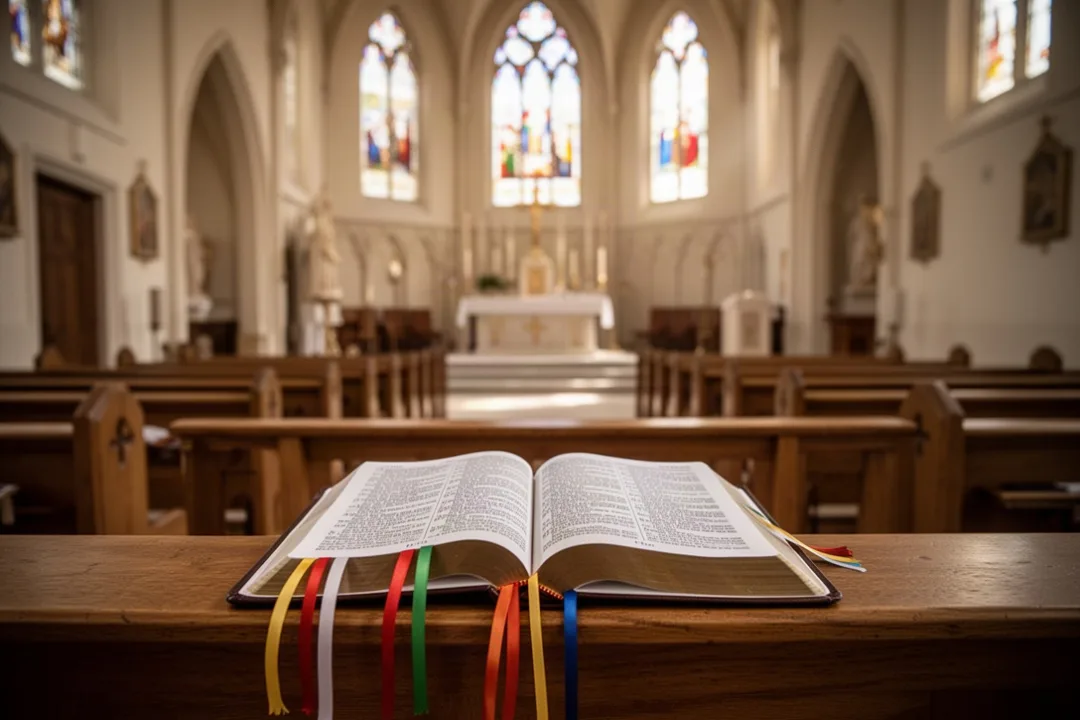
Page references are often essential. A missal may direct you to the Order of Mass first, then to the day’s proper texts, and finally to a seasonal preface or Eucharistic Prayer. Some editions use ribbons, color-coded sections, or an index to make these transitions faster. A thick book may feel complicated at first, but its layout usually becomes familiar after a few weeks of regular use.
Useful habit: Before Mass begins, find the date in the calendar or table of contents, mark the day’s readings, and locate the Order of Mass. This prevents page-turning during the opening rites.
How to use a daily missal during Mass
You do not need to read every word in your missal from beginning to end. Its purpose is to help you participate attentively, not to make you manage several pages at once. At Mass, listen to the proclamation and use the book as a guide when you want to follow a prayer, response, or reading more closely.
Prepare before the liturgy begins
Look up the liturgical date before the entrance procession. The date in a civil calendar is not always enough because the Church’s calendar includes movable celebrations, solemnities, memorials, and local observances. Your parish bulletin, website, or worship aid can confirm which celebration is being observed.
Place a ribbon or bookmark at the day’s proper texts and another at the Order of Mass. If the readings are printed in a separate part of the volume, mark those pages as well. A few minutes of preparation allows you to pray quietly instead of searching while the liturgy is underway.
Follow the fixed parts of Mass
The Order of Mass normally guides you through the entrance rites, Liturgy of the Word, Liturgy of the Eucharist, and concluding rites. It includes the congregation’s responses and the priest’s prayers, although the priest’s words may be printed in a different format or column.
During the people’s responses, you can use the missal to pray the words rather than relying only on memory. The Creed, penitential act, Sanctus, Memorial Acclamation, and Lamb of God are examples of familiar sections that appear in many personal missals. Some parishes use approved musical settings, so the sung wording or arrangement may differ from the printed text.
Readings in a daily missal can help you prepare before Mass and reflect afterward. Before the liturgy, read the Gospel and notice a word or theme that you want to hear carefully. During the proclamation, listen rather than trying to keep pace with every line on the page.
After Mass, return to one reading and consider what it reveals about Christ, the Church, conversion, mercy, or Christian discipleship. Scripture references are also useful for continued study. If a reading raises a question, write down the citation and consult a Bible, study edition, or reliable Catholic resource later.
Know when to close the book
A missal should support prayer, not distract from it. During moments such as the elevation of the Eucharist, the Lord’s Prayer, or silent prayer after Communion, you may find it more helpful to close the book and attend to the liturgy. The congregation’s posture, gestures, silence, and sung responses also express participation.
There is no requirement to track every line visually. Listening, responding, singing, standing, kneeling, and praying silently are all meaningful ways to take part. Let the missal answer practical questions without allowing page navigation to become the main focus of the celebration.
How a daily missal supports prayer outside Mass
A daily missal can become a simple structure for daily Scripture prayer, even if you attend Mass only on Sundays. The assigned readings connect personal prayer with the worldwide Catholic community, which hears the same liturgical texts on the corresponding day, subject to the calendar and approved local variations.
One practical routine takes 10 to 20 minutes:
Find the day’s Gospel and read it slowly once.
Read the other assigned passages if your time allows.
Notice a word, image, command, or question that stays with you.
Speak to God in response, using your own words.
End with a short period of silence or a prayer from the missal.
You can adapt this routine to your schedule. On a busy morning, read only the Gospel. In the evening, read the full set of passages and review the prayer of the day. The goal is not to complete a large amount of text; it is to create a dependable time for attention to Scripture and the liturgical season.
Seasonal awareness is one of the strongest benefits of using a missal throughout the year. Advent emphasizes watchfulness and preparation, Christmas celebrates the mystery of the Incarnation, Lent calls for repentance and renewal, and Easter focuses on the Resurrection and new life. Ordinary Time continues the Church’s sustained reflection on Christ’s ministry and the life of discipleship.
The prayers can also teach you how the Church speaks about faith. Collects and other liturgical prayers are concise, theologically focused, and connected to the celebration of the day. Reading them outside Mass may help you understand why a particular feast matters and how its themes relate to your own life.
Many editions include additional devotions, but these should be treated as aids rather than requirements. You might use a prayer before Mass when preparing for the Eucharist, a prayer of thanksgiving afterward, or an examination of conscience at night. If your missal contains a rosary, novenas, or litanies, use them when they genuinely support your prayer rather than trying to complete every section.
Keep the routine manageable: A missal is useful when it leads you to prayer. Choose one short practice you can repeat consistently instead of treating the book as a checklist of devotions.
How to choose the right daily missal
Daily missals vary considerably in size, scope, translation, print quality, and binding. A book that works well for weekday Mass may be inconvenient for someone who wants a small volume for travel. Before buying, decide what you need the book to do most often.
Choose based on the readings you need
Some missals contain the complete Sunday and weekday readings. Others provide Sunday readings plus selected weekday material, or use a multi-volume arrangement. Check the contents page and publication description carefully rather than assuming that “daily” means every reading for every day.
If you attend weekday Mass regularly, look for an edition that includes the full weekday lectionary cycle used in your region. If you mainly attend Sunday Mass and want a lighter book for home prayer, a Sunday missal may be sufficient. A daily missal is usually the better choice when you want one volume for both routine Mass attendance and weekday Scripture reflection.
Check the approved liturgical text
The wording of the Mass is governed by the approved Roman Missal used in the relevant country or region. For readers in the United States, confirm that the edition is intended for use with the English-language Roman Missal approved for the United States. Older books may contain wording that is no longer current, even if they remain valuable for historical or devotional reasons.
Also check whether the readings follow the lectionary used in your parish. Catholic liturgical books can differ by country, and local calendars may include celebrations that are not observed elsewhere. The publisher’s description should identify the intended country or conference of bishops.
Consider size, print, and binding
A compact missal is easy to carry but may use small type and thin paper. A larger edition is often easier to read and may offer more complete notes, indexes, and devotional material. If you have vision concerns, prioritize clear typography, generous spacing, and strong contrast over a smaller physical size.
Binding affects how comfortably the book lies open. A sewn binding generally handles repeated use better than a cheaply glued binding, while a flexible cover may be easier to hold at Mass. Ribbons are helpful when several sections must remain marked. If possible, examine sample pages before purchasing or read detailed product information about dimensions and type size.
Think about the environment in which you will use it:
For parish Mass: choose a manageable size with durable binding and easy page navigation.
For home study: choose larger print, explanatory notes, indexes, and room for annotations.
For travel: choose a lighter volume, accepting that it may contain fewer supplementary texts.
For someone new to the Mass: choose an edition with clear instructions, responses, and explanatory headings.
For long-term use: verify the edition date, liturgical approval information, and replacement availability.
Decide whether notes and explanations will help
Some missals are primarily prayer books, while others include introductions, commentary, saint biographies, maps, or explanations of the liturgical year. Notes can be valuable when they clarify a reading or explain a feast, but they also add weight and may interrupt the flow of prayer.
Choose the amount of explanation that matches your purpose. A reader who already knows the structure of Mass may prefer a clean page with minimal commentary. Someone learning Catholic worship may benefit from brief instructions about posture, responses, seasons, and the relationship between the readings and the Eucharistic liturgy.
How a daily missal differs from other Catholic prayer books
The terms used for Catholic books can overlap, so it helps to distinguish a daily missal from similar resources. The differences usually concern scope, intended user, and frequency of use.
A personal daily missal is meant to help a layperson follow Mass and pray with the day’s liturgical texts. It generally includes the Order of Mass and a substantial selection of readings and prayers. A Sunday missal focuses on the Sunday and holy day celebrations, often in a smaller and lighter format.
A Roman Missal is the official liturgical book used by the priest. It contains the prayers and instructions for celebrating Mass, but it is not normally arranged as a convenient personal guide with all the readings and devotional aids a layperson might want. It is also much larger and follows the needs of the presider.
A lectionary contains the Scripture readings proclaimed at Mass. It may be arranged by the liturgical cycle and season rather than as a portable prayer book. A breviary or Liturgy of the Hours book serves a different purpose: it provides the Church’s official daily prayer, including psalms, readings, intercessions, and other elements assigned to various hours.
A Bible contains the complete biblical text, while a missal selects readings according to the Church’s liturgical calendar. The two books work well together. Use the missal to identify the day’s readings and the Bible for broader context, cross-references, and sustained study.
Digital apps can provide readings, calendars, and Mass texts, but a printed missal offers a different experience. It does not require a charged battery, notifications are absent, and the physical act of opening a marked page can create a clear boundary for prayer. A phone may be more convenient for travel, while a printed book may be less distracting during worship.
How to build a lasting habit with your missal
Start by keeping the missal where you already pray or prepare for Mass. Mark the current season and the coming Sunday, then use the same short routine each day. Consistency matters more than reading every optional section.
At the beginning of each week, look ahead to the Sunday celebration. Read the Gospel, notice the central theme, and check whether a solemnity or special feast will affect the usual calendar. Before a weekday Mass, identify the readings and the proper prayers so the liturgy feels familiar when you arrive.
Take care of the physical book as well. Keep it dry, avoid forcing it flat, and use removable bookmarks instead of thick objects that strain the binding. If you write in it, use light pencil marks or archival-safe materials, especially in a volume you hope to keep for many years.
When you miss a day, simply begin again with the current date. The liturgical year is not a personal assignment that must be completed without interruption. Its recurring seasons and celebrations offer repeated opportunities to return to Christ’s life, the Church’s prayer, and the discipline of attentive worship.
A well-chosen daily missal can serve as a bridge between Sunday worship, weekday Mass, and private prayer. It gives you a reliable place to find the Church’s texts while leaving room for listening, silence, and personal response. The best edition is the one you can read comfortably, carry when needed, and use regularly without unnecessary complication.
Frequently asked questions
Do I need a daily missal to attend Catholic Mass?
No. You can participate through the parish missalette, worship aid, or your own familiarity with the Mass. A daily missal is optional, but it can be especially helpful for weekday readings, unfamiliar feast days, personal preparation, and prayer after Mass. Many people use one at home even when their parish provides all the necessary texts.
Is a daily missal the same as a Bible?
No. A Bible contains the full collection of biblical books, while a daily missal presents selected passages assigned to particular liturgical days along with Mass prayers and responses. A missal is organized around worship and the Church calendar. A Bible is better for reading an entire book of Scripture or studying passages in their wider context.
Can I use an old daily missal?
You can use an older missal for private prayer, historical interest, or devotional reading. However, its Mass wording, calendar, or Scripture translation may no longer match what your parish uses. For following Mass, check the publication date and make sure the edition corresponds to the current approved texts and the liturgical calendar of your country.
How should I use a daily missal if I am new to Catholic Mass?
Begin with the Order of Mass rather than trying to follow every page at once. Mark the day’s readings before the liturgy, follow the congregation’s responses, and observe the parish’s posture and cues. A regular attendee, priest, or parish staff member can also show you how that particular edition is arranged.















Leave a Reply