Trinity Sunday 2026 falls on Sunday, May 31. In most Western Christian traditions, it is celebrated on the first Sunday after Pentecost, which falls on May 24 in 2026. The day focuses on the Christian belief in one God in three persons: Father, Son, and Holy Spirit.
Trinity Sunday does not mark a separate event in the life of Jesus, such as Christmas, Easter, or Pentecost. Instead, it gives churches a dedicated time to reflect on the identity of God and on how the Father, Son, and Holy Spirit are revealed through Scripture and Christian worship.
Trinity Sunday is May 31, 2026. Its date changes each year because it is connected to Easter and Pentecost rather than fixed to a day of the month. Easter Sunday in 2026 is April 5, and Pentecost Sunday is May 24.
Easter Sunday: April 5, 2026
Ascension Day: May 14, 2026, in traditions that observe it 40 days after Easter
Pentecost Sunday: May 24, 2026
Trinity Sunday: May 31, 2026
Some churches transfer Ascension observances to the following Sunday, but that local change does not alter the usual date of Trinity Sunday. In the Roman Catholic Church, Anglican churches, and many Protestant denominations that follow a Western lectionary, Trinity Sunday is observed on May 31.
Date at a glance: If you are planning worship, a church visit, a sermon, or a school lesson, use Sunday, May 31, 2026, for Trinity Sunday in the Western Christian calendar.
What Trinity Sunday celebrates
Trinity Sunday celebrates the central Christian confession that God is one, while the Father, the Son, and the Holy Spirit are each fully and truly God. Christians do not mean that there are three separate gods. They mean that the one God exists eternally as three distinct persons who share one divine being.
The doctrine is often expressed as one God in three persons. “Person” in this phrase does not mean three independent human individuals with separate origins, bodies, or wills. It is a theological term used to describe real distinctions within the one divine life.
The Father is associated with creation and the source of all things. The Son, Jesus Christ, is understood as God made known in human life, death, and resurrection. The Holy Spirit is God’s living presence and power, active in the world, in the church, and in the lives of believers.
These descriptions are useful, but they should not be treated as a division of labor in which each person of the Trinity handles a separate task. Christian teaching holds that the three persons act together. The Father creates through the Son and in the Spirit; the Son saves in obedience to the Father and through the Spirit; and the Spirit makes the life of Christ present to believers.
Why Trinity Sunday comes after Pentecost
The placement of Trinity Sunday after Pentecost gives the church a deliberate sequence. The early part of the Christian year tells the story of Christ’s birth, ministry, death, resurrection, ascension, and the coming of the Holy Spirit. Trinity Sunday then invites worshipers to consider what these events reveal about God.
Christmas centers on the incarnation, when the Son takes human nature. Easter centers on the resurrection of Jesus. Pentecost centers on the Holy Spirit’s coming upon the disciples and the church. Trinity Sunday gathers these themes together rather than adding another historical event to the calendar.
The sequence also helps explain why the Trinity is not based on a single isolated verse. Christians encounter the Father, Son, and Holy Spirit across the biblical story. The doctrine develops as the church reflects on the relationship among these biblical witnesses and seeks language faithful to them.
After Trinity Sunday, many Western churches enter a long season known as Ordinary Time, or use another name for the period after Pentecost. This season often emphasizes Christian discipleship, the teachings of Jesus, the mission of the church, and the practical shape of faith in daily life.
What the Christian doctrine of the Trinity means
Trinitarian theology tries to hold together two convictions. First, there is only one God. Second, the Father, Son, and Holy Spirit are not merely three temporary appearances or titles used by one person. They are genuinely distinct in relationship with one another.
Christians therefore avoid two opposite errors. One error is imagining three gods who cooperate with one another. The other is treating the Father, Son, and Spirit as nothing more than three masks worn by one person at different times. Historic Christian teaching rejects both ideas.
The Trinity is also not the claim that one God is one-third Father, one-third Son, and one-third Spirit. Each person is fully divine, not a partial piece of God. At the same time, the persons are not interchangeable. Jesus prays to the Father, and the Spirit is sent by the Father and the Son in the biblical account of Christian faith.
The doctrine is a statement about God’s eternal life and relationships, not a mathematical puzzle. It recognizes that Christian faith speaks about God as creator, redeemer, and sanctifier while insisting that these actions belong to the one God. The language is precise, but it also acknowledges that God exceeds human comprehension.
The Christian confession is not three gods, but one God known as Father, Son, and Holy Spirit.
Trinity Sunday can therefore be observed without pretending that the doctrine is easy to explain completely. A faithful explanation should be clear about what Christians affirm while remaining humble about the limits of human language.
What the Bible teaches about the Trinity
The word Trinity does not appear as a technical term in the Bible. The doctrine was developed by Christians as they read the whole biblical witness, especially passages that speak of the Father, Jesus Christ, and the Holy Spirit in ways that support both divine unity and personal distinction.
The Hebrew Scriptures strongly emphasize the oneness of God. They describe God as creator, covenant maker, deliverer, judge, and source of life. Christians read these texts as the foundation for the later doctrine, while recognizing that the full language of the Trinity arises through the New Testament’s testimony about Jesus and the Spirit.
The New Testament presents Jesus in uniquely exalted terms and describes him as participating in God’s work of creation, salvation, judgment, and worship. It also presents the Holy Spirit not simply as an impersonal force, but as one who teaches, guides, intercedes, gives gifts, and can be resisted or grieved.
Several passages place the Father, Son, and Holy Spirit together. Matthew 28:19 describes baptism in the singular name of the Father, Son, and Holy Spirit. Second Corinthians 13:13 gives a blessing that joins the grace of Jesus Christ, the love of God, and the fellowship of the Holy Spirit.
Other passages provide related themes rather than a complete formula. John 1:1-18 presents the Word as active with God and identified with God before becoming flesh. John 14–16 describes Jesus speaking about the Father and promising the Holy Spirit. Acts 5:1-4 treats deception directed toward the Holy Spirit as deception directed toward God.
These passages do not offer a short definition that settles every theological question. They provide the biblical material from which Christians came to confess the unity of God and the divinity of the Son and Spirit.
The main Trinity Sunday readings for 2026
Churches choose readings according to their lectionary, so the exact selection can differ. In the Roman Catholic and Revised Common Lectionary traditions, Trinity Sunday 2026 uses a set of readings associated with Year A.
Exodus 34:4-6, 8-9: Moses encounters God after Israel’s sin with the golden calf. The passage emphasizes God’s mercy, patience, steadfast love, and faithfulness.
Psalm 8: The psalm reflects on God’s majesty in creation and the remarkable dignity given to human beings.
Second Corinthians 13:11-13: Paul closes the letter with encouragement toward reconciliation and a blessing that names Jesus Christ, God, and the Holy Spirit together.
John 3:16-18: Jesus’ conversation with Nicodemus presents God’s love, the sending of the Son, and the call to respond in faith.
The Gospel reading from John is frequently associated with Trinity Sunday because it connects God’s love with the sending of the Son. The point is not that the Trinity is a detached theory. God’s identity is revealed through action: loving the world, sending the Son, and bringing life through faith.
The Exodus reading adds an important balance. It shows that talk about the Trinity should never eclipse the biblical description of God as compassionate, gracious, slow to anger, and steadfast in love. Christian reflection on God’s inner life remains connected to God’s character and dealings with people.
Paul’s closing blessing is brief but significant. It does not function as a full theological definition, yet it brings together the three names in a prayerful pattern of grace, love, and fellowship. Many churches use this blessing at the end of worship throughout the year.
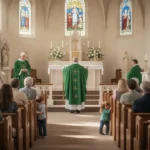
Trinity Sunday is observed primarily through preaching, prayer, music, and the language of worship. Clergy may preach on the biblical readings, explain the doctrine, or focus on the way Christians encounter God through creation, salvation, and the life of the church.
Many churches use a creed on this Sunday. The Nicene Creed is especially relevant because it names the Father, Son, and Holy Spirit while describing their relationship to creation, incarnation, resurrection, and the church. The Apostles’ Creed also follows a three-part structure, though it is shorter and less detailed about Trinitarian doctrine.
Hymns and songs may refer to the Trinity directly or praise God as Father, Son, and Holy Spirit. Traditional worship can include a Trinitarian blessing, such as a closing blessing based on Second Corinthians 13:13. The exact words vary by denomination and translation.
Some congregations use visual symbols, such as interlocking circles, a trefoil, or a triangle. These images can support teaching, but no symbol explains the Trinity perfectly. A symbol should point toward the doctrine rather than replace careful language about God.
Churches may also connect Trinity Sunday with baptism, confirmation, or missionary work. Baptism is closely related because many Christian traditions baptize in the name of the Father, Son, and Holy Spirit. The day can remind the congregation that Christian identity is shaped by belonging to the triune God.
Practical tips and common mistakes for Trinity Sunday
Planning for Trinity Sunday works best when the doctrine is connected to Scripture and worship rather than presented as an abstract diagram. These practical guidelines can help with a sermon, Sunday school lesson, family discussion, or church bulletin.
Start with the biblical text. Explain what the assigned readings actually say before introducing theological vocabulary.
Define “person” carefully. Tell listeners that the word describes a real distinction in God, not three separate human beings.
State both parts of the confession. Say clearly that Christians affirm one God and also affirm the Father, Son, and Spirit as distinct and fully divine.
Connect doctrine with God’s actions. Discuss creation, salvation, prayer, baptism, worship, and the Spirit’s work rather than treating the Trinity as a classroom puzzle.
Avoid claiming that one analogy explains everything. Examples such as water, an egg, or a person with three roles can create misleading ideas about division, change, or masks.
Do not imply that the Father, Son, and Spirit are unequal. Traditional Christian teaching distinguishes their relationships without ranking one as more divine than another.
Allow room for mystery. Mystery does not mean the doctrine has no meaning; it means God cannot be reduced to a complete human explanation.
Check the local lectionary. Denominations and congregations may use different readings, names for the season, or observance practices.
Teaching tip: A useful starting sentence is, “Christians worship one God, known in the Bible as Father, Son, and Holy Spirit.” Add explanations from the readings instead of relying on a single comparison.
A common mistake is to make Trinity Sunday sound like a test of intellectual ability. The doctrine is challenging, but worshipers do not need to solve it before they can pray, praise God, or understand the central Christian claim. A strong explanation gives people language for faith while accepting that some questions remain beyond full comprehension.
Another mistake is to separate the three persons too sharply. Saying that the Father only creates, the Son only saves, and the Spirit only inspires can suggest three independent divine beings. Christians may associate these persons with particular works, but the traditional view is that the one God acts inseparably.
How to explain the Trinity to children
Children can learn the basic confession without being given an analogy that distorts it. Use simple language: God is one, and Christians speak of God as Father, Son, and Holy Spirit. Then connect each name to familiar parts of Christian worship, such as creation, Jesus’ life and resurrection, prayer, baptism, and the Spirit’s presence.
It can help to distinguish what Christians are saying from what they are not saying. They are not saying that three gods exist, and they are not saying that one person merely changes costumes. They are saying that the one God is known through three distinct persons.
Children may ask which person is the oldest, which one is strongest, or how the three can be one. Those questions can be answered honestly: Christians believe the Father, Son, and Spirit are eternal and fully divine, but human explanations cannot capture everything about God.
A short activity can connect the doctrine to worship. Invite children to listen for references to the Father, Son, and Holy Spirit in the service, then discuss how those references point to one God. This approach keeps the focus on prayer and Scripture rather than on an imperfect object lesson.
Trinity Sunday prayers and worship themes
A Trinity Sunday prayer may praise God as creator, thank God for the saving work of Jesus Christ, and ask for the Holy Spirit’s guidance. It may also pray for the church to reflect God’s love through unity, service, reconciliation, and care for neighbors.
God’s holiness and mercy: Exodus 34 presents a God who is both majestic and compassionate.
Human dignity: Psalm 8 invites worshipers to consider humanity’s place within creation.
God’s self-giving love: John 3 connects the sending of the Son with God’s love for the world.
Reconciliation and fellowship: Second Corinthians 13 links Christian conduct with grace, love, and shared life in the Spirit.
Mission and baptism: Matthew 28:19 connects the triune name with making disciples and baptizing.
A prayer does not need to use complicated theological language. It can ask God to make the church more faithful, more united, and more attentive to the needs of others. The doctrine becomes meaningful when worship leads to love of God and love of neighbor.
How Trinity Sunday differs among Christian traditions
Most Western churches observe Trinity Sunday on the first Sunday after Pentecost, but the day may look different across denominations. Roman Catholic, Anglican, Lutheran, Methodist, Presbyterian, and many other churches include it in their liturgical calendars, though their readings, prayers, vestments, and sermon traditions vary.
Some Protestant congregations follow the Revised Common Lectionary, while others choose a thematic series or readings selected by the pastor. A church may observe the doctrine without using the name “Trinity Sunday” prominently in its bulletin.
Eastern Orthodox practice follows a different calendar and liturgical pattern. Pentecost itself is often closely associated with the Trinity, and the Sunday after Pentecost is commonly connected with All Saints. Orthodox Christians affirm Trinitarian doctrine, but the timing and emphasis of the observance are not identical to those in Western churches.
These differences mean that May 31, 2026, is the standard date for Western observance, not a universal date for every Christian community. If you are attending a particular church, check its calendar for the local readings and service schedule.
What Trinity Sunday can mean for daily Christian life
Trinity Sunday can shape Christian life in several practical ways. It reminds believers that Christian faith is not centered on an isolated divine principle but on relationship, love, and communion. The Father, Son, and Holy Spirit are understood as eternally related, and the church is called to live in reconciled relationship with God and other people.
The day also connects worship with mission. Christians who are baptized in the triune name are sent to serve, teach, forgive, and care for others. The doctrine therefore has ethical consequences: people who worship the God of grace should practice grace in families, congregations, workplaces, and communities.
Trinity Sunday can also encourage a balanced view of Christian prayer. Believers may pray to the Father, through the Son, in the Holy Spirit, while also addressing Jesus directly or asking the Spirit to guide them. These patterns are not competing formulas; they express the rich variety of Christian communion with God.
Finally, the day offers a way to speak about mystery without abandoning clarity. Christians can know something real about God through Scripture, Jesus Christ, worship, and the Spirit’s work, while recognizing that no explanation can contain the fullness of God.
Frequently asked questions
Is Trinity Sunday always the Sunday after Pentecost?
In most Western Christian traditions, yes. Trinity Sunday is scheduled for the first Sunday after Pentecost, so its date changes with Easter. In 2026, Pentecost is May 24 and Trinity Sunday is May 31. Some Eastern Christian traditions organize the season differently, so their observance may not follow the Western calendar.
What color is used for Trinity Sunday?
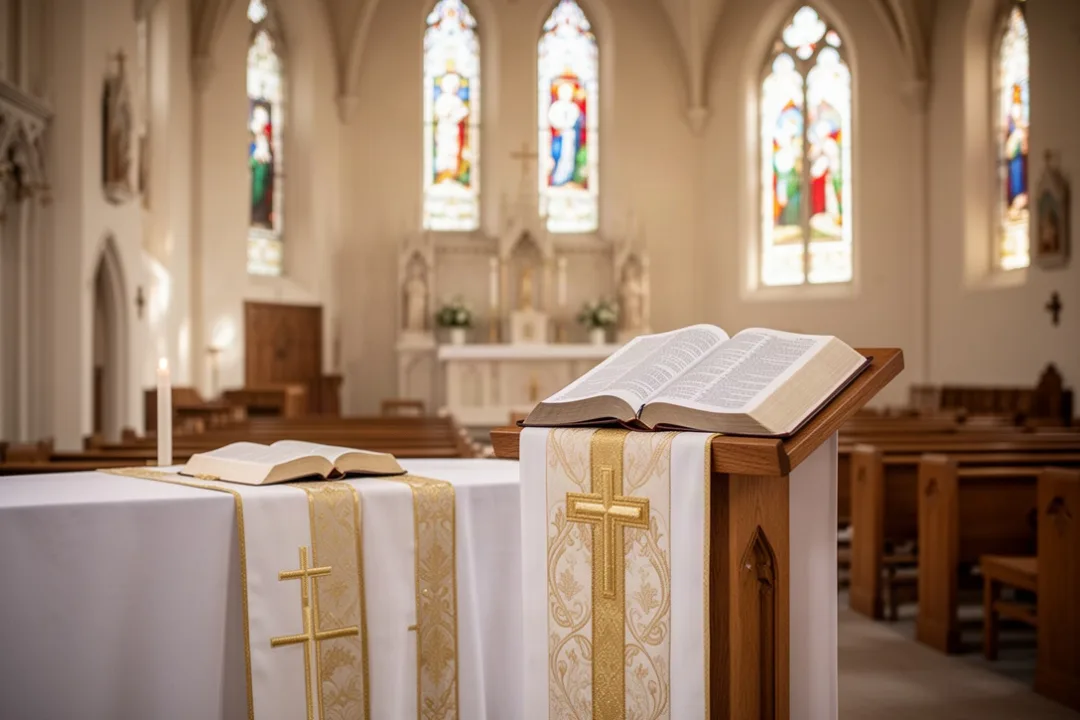
Many Western liturgical churches use white or gold for Trinity Sunday because the day celebrates God’s glory and majesty. Local customs differ, and some churches may use another color or no special color at all. The choice depends on the denomination, congregation, and worship calendar being followed.
Is Trinity Sunday a holy day of obligation?
Trinity Sunday is a major feast or observance in many Christian traditions, but it is not generally a separate holy day of obligation in the Roman Catholic Church. Sunday worship obligations are governed by the church’s broader rules. Local calendars and denominational practices should be checked for specific requirements.
What is a simple way to explain the Trinity?
A concise explanation is that Christians worship one God who is known as Father, Son, and Holy Spirit. The three persons are distinct, but they are not three gods. They share one divine being. This explanation is a starting point rather than a complete description of the mystery of God.









Leave a Reply