If you are trying to plan around Ascension Thursday, the short answer is this: it falls on the Thursday 40 days after Easter Sunday. Because Easter changes dates each year, Ascension Thursday does too. In 2026, it will be observed on May 14.
The name can be slightly confusing because many Catholic dioceses and other Christian communities now celebrate the Ascension on the following Sunday. That means the traditional Thursday date and the date printed on a local church calendar may not match. Your parish, diocese, or denomination will have the most useful answer for worship schedules and any holy day requirements.
Ascension Thursday is linked directly to Easter. Easter Sunday is counted as the first day, and Ascension Thursday occurs on the 40th day of the Easter season’s traditional count. In ordinary calendar terms, that is 39 days after Easter Sunday, landing on a Thursday.
For a quick calculation, find the date of Easter Sunday and add 39 days. You can also count forward five full weeks and four days from Easter Sunday. Since Easter always falls on a Sunday, the result will always be a Thursday.
Find Easter Sunday for the year you need.
Count forward 39 calendar days, including the day after Easter as the first day after Easter.
Check the local church calendar to see whether the celebration remains on Thursday or has moved to Sunday.
The date can occur as early as April 30 or as late as June 3 in the Gregorian calendar. That range changes because Easter may fall anywhere from March 22 through April 25. Ascension Thursday therefore moves through the calendar rather than belonging to one fixed month.
For 2026: Easter Sunday is April 5, so Ascension Thursday is May 14. Churches that transfer the observance will celebrate it on Sunday, May 17.
Here are several nearby dates to make the pattern easier to see:
2024: May 9
2025: May 29
2026: May 14
2027: May 6
2028: May 25
These dates refer to the traditional Thursday observance. A parish may list a different date if its denomination or diocese celebrates the Ascension on the following Sunday. That change does not alter the underlying connection with Easter or the meaning of the feast.
What Ascension Thursday commemorates
Ascension Thursday commemorates the Ascension of Jesus Christ, the Christian belief that Jesus was taken into heaven after his resurrection. The event is described near the end of the Gospel of Luke and at the beginning of the Acts of the Apostles, where the disciples are presented as witnesses to Jesus’ departure and instructed to await the Holy Spirit.
Christian tradition places the Ascension 40 days after the Resurrection. The number connects the event with a recurring biblical pattern of preparation and transition, including the 40 days associated with Jesus’ time in the wilderness. It also marks a movement in the Easter season: the disciples’ encounters with the risen Christ give way to the Church’s public mission.
The Ascension does not mean, in Christian teaching, that Jesus simply traveled upward to a physical location in the sky. It expresses the belief that the risen Christ entered fully into the glory of God and no longer appeared to the disciples in the same way. The feast therefore focuses on Christ’s exaltation, continuing presence, and reign.
The readings used for the feast commonly emphasize several ideas:
Jesus’ resurrection is affirmed as the foundation of the disciples’ witness.
The disciples receive a mission to carry the Christian message beyond their immediate community.
The Holy Spirit is anticipated, linking the Ascension with Pentecost.
Christ’s presence continues, even though his visible appearances to the disciples end.
The accounts do not all present the event with identical details. Luke’s Gospel and Acts provide the clearest chronological connection between the Resurrection and Ascension, while other New Testament passages emphasize Jesus’ authority, heavenly glory, and continuing relationship with the Church rather than giving a day-by-day account.
Ascension celebrations point beyond Jesus’ departure to the disciples’ responsibility to continue his work.
That emphasis explains why Ascension Thursday is not treated simply as a memorial of something that happened in the past. It is also a feast about Christian vocation. Worshipers are reminded that faith involves witness, service, prayer, and attention to the world around them.
Why some churches celebrate the Ascension on Sunday
Many churches historically observed the Ascension on Thursday because that date follows the traditional 40-day count. In practice, some communities found that a weekday celebration made it difficult for people to attend worship. Churches therefore began transferring the observance to the following Sunday, when more members could gather.
This is especially common in parts of the United States. In the Roman Catholic Church, the authority to determine how certain holy days are observed can involve the local bishops’ conference and individual dioceses. Some dioceses retain Ascension Thursday, while others celebrate the feast on the Seventh Sunday of Easter.
Other Christian traditions may have their own calendars and customs. Episcopal, Anglican, Lutheran, Orthodox, and Protestant congregations do not necessarily follow the same rules, and even congregations within one broad tradition may make different practical choices. A church bulletin, official parish website, or denominational calendar can clarify the local practice.
The transfer to Sunday is not a second Ascension or a different feast. It is a calendar adjustment that allows the community to celebrate the same event on a day when attendance may be greater. The liturgy, prayers, hymns, and readings may be arranged for either Thursday or Sunday depending on the church’s calendar.
Do not assume the date from the name alone: a church that calls the feast “Ascension Sunday” may be observing the same traditional celebration that another church keeps on Thursday.
If you need the date for work, school, travel, or a family gathering, check these sources in order:
Your local parish calendar, which should show the actual service date and time.
Your diocese or denomination’s calendar, especially if a holy day obligation may apply.
A national or general church calendar, useful for the traditional date but not always decisive locally.
Online date calculators can also help, but they may list the traditional Ascension Thursday without mentioning a transferred Sunday observance. The calculation and the local celebration are related but not always identical.
Whether Ascension Thursday is a holy day of obligation
For many Catholics, the question is not only “When is Ascension Thursday?” but also “Do I need to attend Mass?” The answer depends on local church law and practice. Ascension is recognized as a major solemnity, but the day on which the obligation applies can differ by country, region, or diocese.
In some places, Catholics are expected to attend Mass on the Thursday itself. In other places, the celebration has been transferred to Sunday, and attendance is connected with the regular Sunday obligation instead. Some regions may have additional arrangements or pastoral guidance.
Because rules can change and exceptions may apply, rely on the current instructions from your diocese or parish rather than a general internet calendar. A parish office can tell you whether a Thursday Mass is required, recommended, or simply offered as a special celebration.
For Catholics who are traveling, the local rule may be especially relevant. A holy day observed in one diocese may be treated differently in another. If you will be away from home, check the destination parish or diocesan website before making plans.
Other Christian denominations generally do not use the same universal system of holy days of obligation. A congregation may still hold a special service, encourage attendance, or treat Ascension as one of the major feasts of the church year without imposing a formal requirement.
The practical distinction is simple:
Traditional date: Thursday, 40 days after Easter Sunday.
Transferred observance: often the next Sunday, depending on the local calendar.
Attendance requirement: determined by the applicable church authority, not by the date alone.
How Ascension Thursday fits between Easter and Pentecost
Ascension Thursday comes near the end of the Easter season, but it is not the last major event in the sequence. It is followed by Pentecost Sunday, which is celebrated 50 days after Easter and commemorates the coming of the Holy Spirit upon the disciples.
That makes the period between Ascension and Pentecost a time of waiting and prayer. In Acts, the disciples remain together after Jesus’ departure and await the promised Spirit. Christian communities often connect this interval with prayer for guidance, renewal, courage, and a deeper sense of mission.
The relationship among the three celebrations can be understood this way:
Easter: celebrates Jesus’ resurrection.
Ascension: celebrates Christ’s return to the glory of the Father and the disciples’ call to witness.
Pentecost: celebrates the Holy Spirit’s coming and the public beginning of the Church’s mission.
In many churches, Ascension marks a change in the mood of worship. Easter joy remains, but the focus begins to move from the risen Jesus’ appearances to the disciples’ responsibility. Themes such as mission, hope, prayer, and faithful action become especially prominent.
Some congregations hold prayer services during the days between Ascension and Pentecost. Others use the period to support charitable work, evangelism, community outreach, or personal prayer. The specific customs vary, but they reflect the same idea: the disciples are not left without purpose after the Ascension.
Ways to observe Ascension Thursday at home or church
You do not need an elaborate ceremony to observe the feast meaningfully. Attending a service is the most direct option, but personal prayer, reading, and reflection can also connect the day with its central themes. The best practice will depend on your church tradition and household schedule.
Consider one or more of these approaches:
Attend a worship service on Thursday or on the transferred Sunday.
Read the relevant passages from Luke 24 and Acts 1, using your preferred Bible translation and reflecting on their meaning.
Pray for the people you are responsible for, including family members, coworkers, neighbors, and community leaders.
Take one practical step of service, such as helping someone who is isolated or contributing time to a local ministry.
Prepare for Pentecost by setting aside regular time for prayer during the days that follow Ascension.
Families with children can explain the feast in straightforward language: Christians believe Jesus rose from the dead, appeared to his followers, and then returned to the Father while giving them work to do. A simple calendar activity can show the relationship among Easter, Ascension, and Pentecost without reducing the meaning to dates alone.
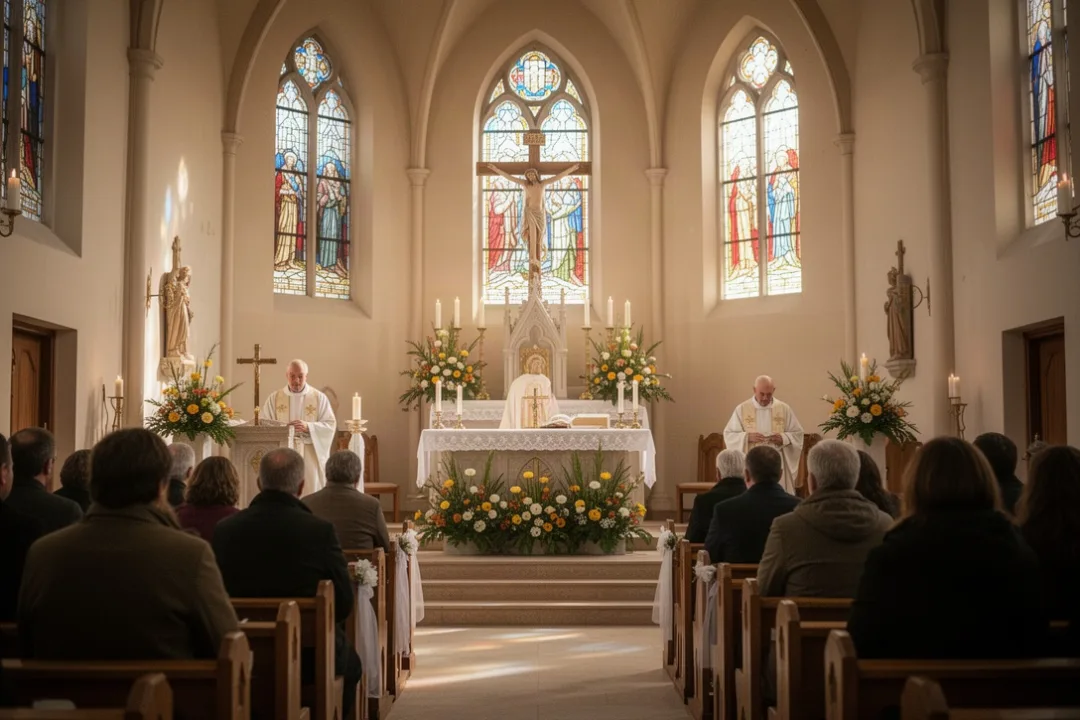
Churches may mark Ascension with special hymns, processions, bells, Scripture readings, or prayers. Some traditions use white or gold vestments during the feast, while others follow different colors and customs. Local practice matters more than any single universal style.
If you cannot attend on the traditional Thursday, do not assume that the feast has been missed. Your church may have deliberately moved its principal celebration to Sunday. Confirm the schedule, then participate in the service or observance your local community provides.
Ascension Thursday is therefore both a date and a theological marker. It is calculated from Easter, traditionally kept on a Thursday, and often transferred to Sunday for pastoral reasons. The most reliable answer for any particular year comes from combining the calendar calculation with your local church’s current schedule.
Frequently asked questions
Is Ascension Thursday always on a Thursday?
The traditional observance is always on a Thursday because it is tied to the 40th-day count after Easter Sunday. However, many churches transfer the celebration to the following Sunday so more people can attend worship. In those communities, the event may be listed as Ascension Sunday even though its traditional calendar date remains Thursday.
What date is Ascension Thursday in 2026?
Ascension Thursday falls on May 14, 2026. Easter Sunday occurs on April 5 that year, and counting 39 days after Easter produces the Thursday date. Churches that transfer the feast to Sunday will generally celebrate it on May 17, but confirm the date with your local parish.
Is Ascension Thursday the same as Ascension Day?
Yes. “Ascension Thursday” and “Ascension Day” commonly refer to the same Christian feast commemorating Jesus’ ascension into heaven. “Ascension Day” is the broader name and can still be used by churches that celebrate the feast on Sunday after transferring it from its traditional Thursday date.
Why does Ascension Thursday fall on different dates each year?
Its date is based on Easter, which is a movable feast rather than a fixed calendar date. Ascension Thursday occurs 39 days after Easter Sunday, so it moves through late April and May, and occasionally reaches early June. The exact worship date may also differ when a church transfers the feast to Sunday.















Leave a Reply