The ascension of Jesus: What happened and why it matters
The ascension of Jesus: What happened and why it matters
The ascension of Jesus is the Christian belief that, after rising from the dead, Jesus was taken up from earth into heaven and entered the presence of God the Father. According to the New Testament, this happened after a period in which the risen Jesus appeared to his disciples, taught them, and commissioned them to continue his work.
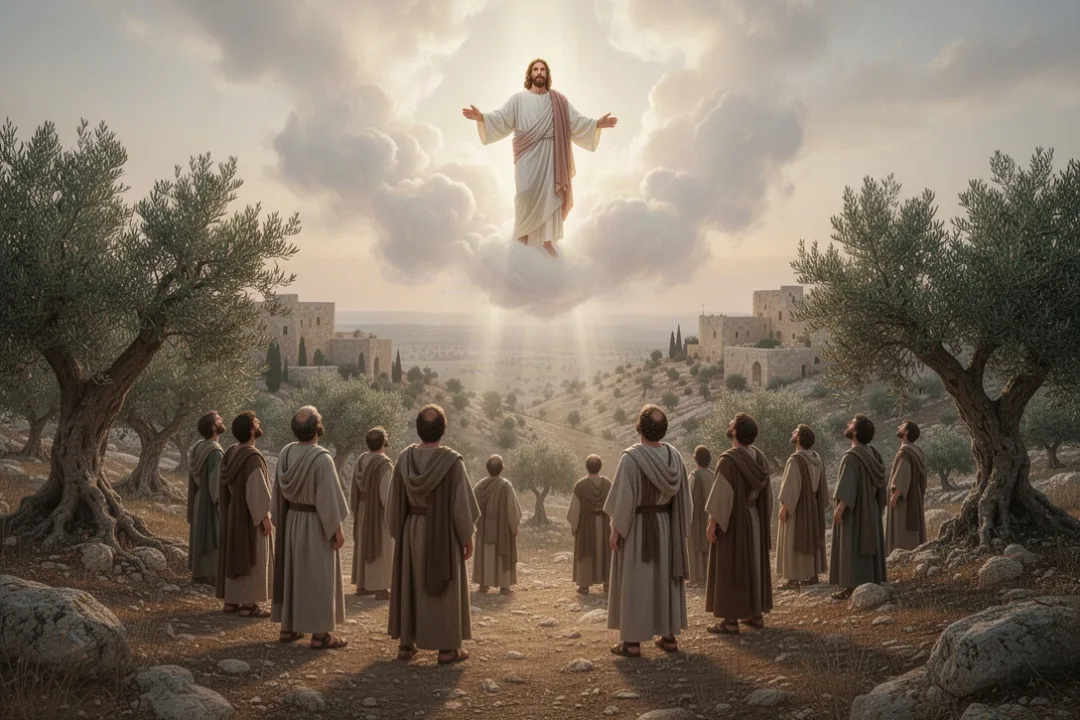
The event is described most directly in Acts 1, where Jesus blesses his followers and is lifted up from the Mount of Olives until a cloud takes him from their sight. The ascension is not presented as Jesus simply disappearing; it marks his transition from an earthly, visibly present ministry to his heavenly reign and continuing work through the Holy Spirit and the church.
After the resurrection, Jesus spent a period of time appearing to his disciples and other followers. The Gospel accounts describe him speaking with them, showing that he was truly alive, explaining the significance of the Scriptures, and preparing them for their mission. Acts 1 places these appearances over forty days, during which Jesus taught about the kingdom of God.
The disciples asked whether Jesus was about to restore the kingdom to Israel. Rather than giving them a timetable for political restoration, Jesus directed their attention toward the coming work of the Holy Spirit. They would become witnesses in Jerusalem, throughout Judea and Samaria, and to the ends of the earth. This instruction connects the ascension with the worldwide mission of Christianity.
Jesus then led his followers to the area near Bethany, on the eastern side of the Mount of Olives. Luke 24 says that he blessed them and was carried up into heaven. Acts 1 describes him being lifted up while the disciples watched, followed by a cloud that hid him from their sight.
In the biblical setting, a cloud can signify God’s presence and glory. The cloud should not be treated merely as a weather detail or as an attempt to describe the mechanics of movement through the sky. The account communicates that Jesus entered the divine presence and that his ministry took on a new form.
After Jesus was taken from their sight, two men in white clothing told the disciples that he would return in the same way they had seen him go. This statement links the ascension with the Christian expectation of the second coming. It also tells the disciples not to remain frozen in grief or speculation; they are to return to Jerusalem and await the promised Spirit.
The central point: The ascension does not mean that Jesus stopped acting or became absent from Christian life. It means that he entered heavenly glory and continues his work as the risen Lord through the Holy Spirit.
Where the Bible describes the ascension
The clearest narrative account appears in Acts 1:1–11. Luke, the author of both the Gospel of Luke and Acts, presents the ascension as the bridge between Jesus’ earthly ministry and the beginning of the church’s public witness. The scene includes Jesus’ final instructions, the promise of the Holy Spirit, his departure, and the angels’ message about his future return.
Luke 24:50–53 gives a shorter account. Jesus leads the disciples near Bethany, blesses them, and is carried up into heaven. The disciples respond with worship and return to Jerusalem with joy, where they remain connected to the temple and continue praising God.
The ending of Mark 16 also refers to Jesus being taken up into heaven and then describes the disciples going out to preach. Some ancient manuscripts do not include the longer ending of Mark, so readers and teachers often discuss that textual question separately. The references in Luke and Acts remain the most detailed narrative foundation for the ascension.
Several other New Testament passages do not narrate the event but explain its meaning. Ephesians 1 describes Christ as raised and seated at God’s right hand, above every authority and power. Hebrews presents Jesus as the great high priest who has passed through the heavens and represents his people before God. First Peter also connects Jesus’ resurrection and exaltation with his authority over heavenly powers.
The Gospels of Matthew and John do not include a separate scene describing Jesus rising from the earth. That does not mean they reject the belief. Their accounts emphasize different aspects of Jesus’ resurrection, authority, commission, relationship with the Father, and promise to remain with his followers.
Readers can trace the biblical teaching through several kinds of passages:
Narrative accounts: Luke 24 and Acts 1 describe the event itself.
Teaching about exaltation: Ephesians 1, Philippians 2, and Hebrews explain Jesus’ heavenly authority.
Teaching about intercession: Romans 8 and Hebrews describe Christ’s continuing representation of believers before God.
Teaching about future hope: Acts 1 and other New Testament passages connect Jesus’ departure with his promised return.
These passages should be read together rather than forced into one detailed physical diagram. The New Testament uses narrative, worship, prophecy, and theological explanation to show that the ascension is both a historical claim about Jesus and a statement about his present identity.
Why the ascension matters to Christian belief
The ascension confirms that the resurrection was not the end of Jesus’ work. Jesus is not described as returning to ordinary human life and eventually dying again. He is presented as the living, exalted Christ, sharing in the glory of the Father and exercising authority over creation.
One major meaning of the ascension is Jesus’ kingship. In biblical language, being seated at the right hand of God represents honor, authority, and participation in divine rule. The phrase does not require readers to imagine a literal chair positioned beside God. It expresses the belief that Jesus has been publicly vindicated and enthroned as Lord.
This authority is central to the Christian message. Jesus’ death was not the defeat of a failed teacher, and his resurrection was not an isolated miracle with no continuing consequence. The ascension presents the crucified and risen Jesus as the one through whom God’s reign is being announced and extended.
The ascension also supports the Christian teaching that Jesus is the high priest and intercessor for his people. Hebrews describes him as entering the heavenly sanctuary and appearing before God on behalf of believers. Romans 8 teaches that the risen Christ is at God’s right hand and intercedes for those who belong to him.
In practical terms, this means Christians do not understand prayer as an attempt to persuade a distant or reluctant God to care. They pray through Christ, trusting that the risen Jesus represents them and that access to God is grounded in his work rather than their personal worthiness.
Another meaning concerns the Holy Spirit. Before his ascension, Jesus told the disciples to wait for the Father’s promise. Acts 2 describes the Spirit coming upon the gathered believers at Pentecost. The ascension therefore prepares for a new stage in God’s relationship with the church: Jesus is no longer physically present in one location, while his Spirit empowers believers in many places.
This change should not be reduced to a simple exchange in which Jesus leaves and the Spirit takes over. Christian teaching presents the Spirit as the continuing presence of God among Jesus’ followers. Through the Spirit, believers receive power to witness, guidance for their communal life, conviction about sin, and strength to serve.
The ascension also gives Christian hope a specific shape. Believers hope not merely for the survival of the soul or escape from the physical world. Because Jesus ascended bodily, the event is connected with the future resurrection of the body and the renewal of creation. The risen body of Jesus is understood as the first sign of the future God promises to his people.
How the ascension connects to Jesus’ mission and return
The ascension does not interrupt Jesus’ mission; it expands its reach through his disciples. During his earthly ministry, Jesus taught and healed in particular towns and regions. After the ascension, his witnesses are sent outward, beginning in Jerusalem and moving across cultural, geographic, and religious boundaries.
The command in Acts 1 gives the church a pattern for its witness. It begins locally but does not remain local. The disciples are called to speak about Jesus’ life, death, resurrection, and lordship, relying on the Spirit rather than on their own confidence or organizational strength.
That mission includes both proclamation and visible community life. The early chapters of Acts describe believers gathering for teaching, prayer, shared meals, and mutual care. The ascension therefore points toward a community that announces Christ while also embodying a different way of living.
The angels’ message in Acts 1 also connects the ascension with the return of Jesus. Christian belief holds that the same Jesus who was raised and taken into heaven will come again. The text does not provide a schedule or encourage believers to calculate a date. Instead, it establishes a promise that history is moving toward Christ’s appearing and God’s final renewal.
Jesus’ departure creates a tension that shapes Christian life. He is proclaimed as reigning, yet the world still contains suffering, injustice, death, and rebellion against God. Christians therefore live between the present reality of Christ’s rule and the future completion of that rule.
This tension helps explain why the ascension is both comforting and demanding. It offers confidence that Jesus has authority, but it also sends believers into difficult circumstances as witnesses. The disciples are not told to build their lives around speculation about the timing of the return. They are told to receive power from the Spirit and carry the message outward.
Several practical implications follow from this connection between ascension and mission:
Prayer: Christians pray with confidence that Christ is alive and represents his people before God.
Witness: Followers of Jesus are called to speak and live as witnesses to his resurrection.
Patience: The promise of Christ’s return does not authorize date-setting or panic.
Hope: Present suffering does not have the final word because Jesus’ reign will be fully revealed.
Service: The church continues Jesus’ mission through acts of mercy, teaching, worship, and justice.
When Christians celebrate the ascension
Many Christian churches observe the Feast of the Ascension, also called Ascension Day. It is traditionally celebrated forty days after Easter, counting the resurrection day as the first day in the period described by Acts 1. Because Easter falls on a different calendar date each year, Ascension Day also changes from year to year.
In churches that observe it on a Thursday, Ascension Day falls ten days before Pentecost Sunday. Some denominations transfer the celebration to the following Sunday so that more people can participate in worship. Local calendars differ, but the purpose remains the same: to honor Christ’s exaltation and remember the church’s calling before Pentecost.
Worship services may include readings from Luke 24, Acts 1, Ephesians 1, or other passages about Christ’s reign. Hymns and prayers often focus on heavenly glory, Christ’s kingship, the promise of the Spirit, Christian mission, and hope in the second coming.
Some congregations use white or gold vestments and decorations, colors traditionally associated with celebration and glory. In certain historic practices, a candle or image associated with the risen Christ is removed from view during the service. These customs vary widely and are not required for Christians to understand or honor the event.
A meaningful observance can also include reading Acts 1 and reflecting on the transition from Jesus’ visible ministry to the church’s Spirit-empowered witness. Families or small groups might discuss how the ascension shapes prayer, service, and hope rather than treating the day as a minor detail between Easter and Pentecost.
A helpful way to remember the sequence: Easter celebrates Jesus’ resurrection, Ascension Day celebrates his exaltation and return to the Father, and Pentecost celebrates the coming of the Holy Spirit to empower the church.
Common misunderstandings about the ascension
One misunderstanding is that the ascension means Jesus went to a distant place somewhere beyond the visible universe. The Bible uses spatial language because human beings speak about movement and location in concrete terms, but the central claim is theological: Jesus entered God’s heavenly glory and received authority.
A second misunderstanding is that Jesus became unavailable to his followers. The New Testament holds together two truths that can seem opposite: Jesus is no longer physically present in the same way, yet he remains with his people through the Spirit. Matthew 28 records his promise to be with his disciples as they carry out his commission.
A third misunderstanding is that the ascension is only an ending. It is also a beginning. The disciples’ public witness, the coming of the Spirit, and the spread of the gospel are all presented as consequences of the ascension. Jesus’ departure establishes the setting for the church’s mission.
A fourth misunderstanding is that the ascension permits Christians to ignore the physical world. Christian teaching about Jesus’ bodily resurrection and ascension points in the opposite direction. The body matters, creation matters, and acts of mercy matter. Hope for heaven does not cancel responsibility on earth.
Finally, the ascension should not be separated from the cross and resurrection. The event has meaning because the one who ascends is the one who was crucified and raised. It declares that God has vindicated Jesus, that death has been defeated, and that the risen Lord now reigns while his people await the fulfillment of his kingdom.
Frequently asked questions
Did Jesus ascend to heaven immediately after his resurrection?
No. The New Testament describes a period between the resurrection and the ascension. Acts 1 says Jesus appeared to his disciples over forty days, teaching them about God’s kingdom and preparing them for the coming of the Holy Spirit. The ascension occurred after these appearances, when Jesus gave final instructions near the Mount of Olives.
Where did the ascension of Jesus take place?
The accounts place it near Bethany and the Mount of Olives, close to Jerusalem. Luke describes Jesus leading his followers toward Bethany, while Acts says the disciples were gathered on the Mount of Olives. These locations are nearby and fit the traditional understanding that the ascension occurred east of Jerusalem.
Why did Jesus ascend instead of remaining visibly on earth?
The New Testament connects his departure with his heavenly reign and the coming of the Holy Spirit. Jesus’ visible ministry in one location gave way to a worldwide mission carried out by Spirit-empowered witnesses. The ascension also presents him as intercessor and king while Christians await his promised return.
Is Ascension Day observed by all Christians?
No. Many Catholic, Orthodox, Anglican, Lutheran, and other historic churches observe Ascension Day as a formal feast. Other Protestant communities may mention the ascension in worship without setting aside a separate day. The date usually falls forty days after Easter, although some churches celebrate it on the following Sunday.
















Leave a Reply