Paul and Silas in jail: What happened and why it matters
Paul and Silas in jail: What happened and why it matters
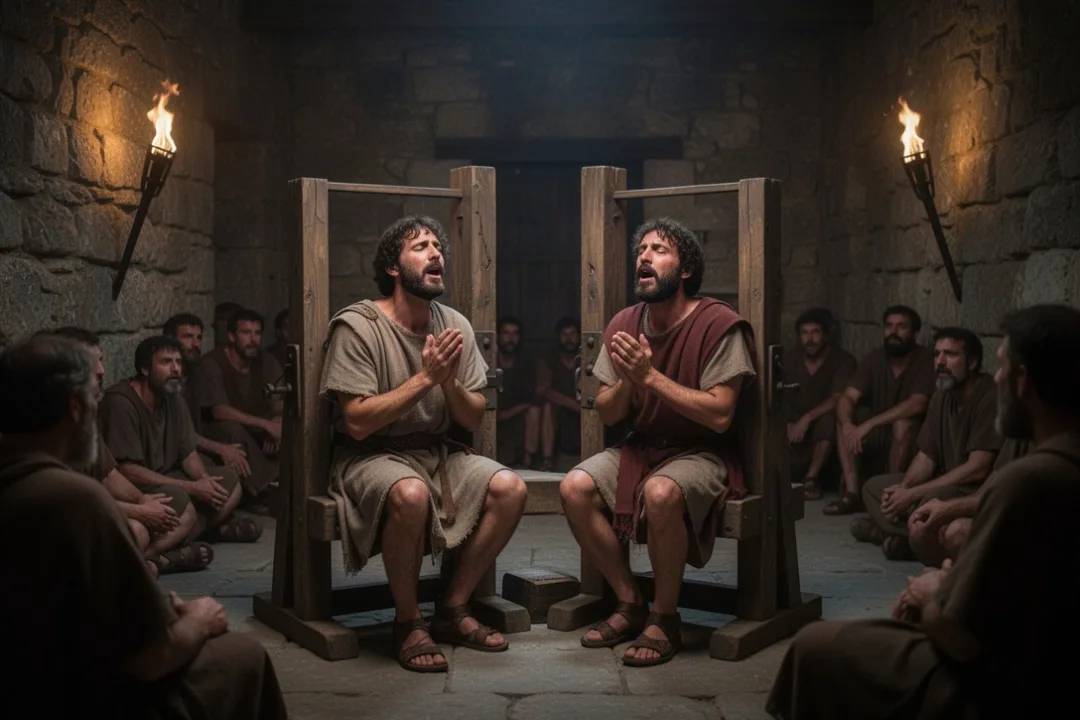
Have you ever done what you believed was right and still ended up blamed, punished, or misunderstood? The story of Paul and Silas in jail speaks directly to that experience. In Acts 16, the two missionaries are beaten and imprisoned in Philippi after freeing a slave girl from a spirit of fortune-telling. Instead of responding with despair or revenge, they pray and sing during the night. An earthquake opens the prison doors, but the most important change happens in the heart of the jailer who is watching them.
The account is more than a story about a dramatic escape. It explores faith under injustice, courage in suffering, concern for another person, and the spread of the gospel through an unexpected crisis. Paul and Silas do not pretend that their pain is insignificant. They endure real violence and humiliation, yet they continue to act with compassion and integrity.
Where Paul and Silas were jailed and what led to their arrest
The events take place in Philippi, a Roman colony in Macedonia. Paul had received a vision directing him and his companions toward Macedonia, and Philippi became one of the first places in that region where they preached. They met Lydia, a woman who responded to their message and welcomed the missionaries into her home. This gave the new Christian community a place to gather.
As Paul and his companions continued visiting the place of prayer, a slave girl followed them for many days. She had a spirit associated with fortune-telling and earned money for her owners. The girl repeatedly identified Paul and Silas as servants of the Most High God. Although the statement sounded religiously accurate, Paul became distressed by the ongoing disruption and commanded the spirit to leave her in the name of Jesus Christ.
The girl was freed, but her owners immediately saw that their income had disappeared. They seized Paul and Silas and dragged them before the city authorities. Their accusation did not honestly describe the financial motive. Instead, they claimed that the missionaries were promoting customs that Romans could not accept. The crowd joined the attack, and the magistrates ordered the two men to be beaten with rods and imprisoned.
Context matters: Paul and Silas were not jailed because a court carefully examined the facts. They were publicly attacked after powerful people lost a source of profit, and the authorities acted under pressure rather than pursuing justice.
What happened to Paul and Silas in jail step by step
Acts 16 presents the night in a sequence that makes the tension easy to follow. Each stage reveals something about the situation and the choices made by the people involved.
They were beaten before being imprisoned. The magistrates ordered the jailer to guard them securely after they had been struck with rods. Their suffering began before they reached the prison.
They were placed in the inner prison. The jailer put them in the most secure part of the facility and fastened their feet in stocks. This was not a comfortable holding area but a place designed to prevent escape.
They prayed and sang hymns at midnight. The other prisoners listened as Paul and Silas worshiped despite their wounds, restraints, and uncertainty about what would happen next.
An earthquake shook the prison. The foundations moved, the doors opened, and the prisoners’ chains came loose. The event appeared to offer an immediate path to freedom.
Paul stopped the jailer from taking his own life. When the jailer saw the open doors, he assumed the prisoners had escaped. Since a Roman guard could face severe consequences for losing prisoners, he drew his sword. Paul shouted that everyone was still present.
The jailer asked how to be saved. Trembling, he brought Paul and Silas out and asked what he needed to do. They directed him to believe in the Lord Jesus, then explained the message to him and his household.
The jailer cared for their wounds. He washed them, and he and his household were baptized. He then brought them into his home, prepared food, and celebrated their new faith.
Paul challenged the unlawful treatment. The next morning, the magistrates sent word to release the missionaries. Paul revealed that he and Silas were Roman citizens who had been publicly beaten and jailed without a proper hearing.
The authorities personally escorted them out. The magistrates became afraid when they learned of the citizenship issue. They came to ask Paul and Silas to leave the city, and the missionaries visited Lydia and the believers before departing.
Why Paul and Silas prayed and sang in prison
The text does not suggest that Paul and Silas enjoyed being imprisoned or denied that injustice had occurred. Their prayer and singing show that suffering had not taken away their relationship with God. Worship became an act of trust, not a denial of pain. They could acknowledge their physical condition while still believing that God was present and worthy of praise.
The other prisoners were listening, which means their response had a public dimension. Paul and Silas were not alone in the prison, and their behavior gave everyone around them a different picture of what people do when their freedom is removed. They did not curse their captors, threaten the jailer, or use the night to stir a riot.
Prayer also kept their attention from narrowing to personal survival. Their mission had been interrupted, but their purpose had not disappeared. Even in the inner prison, they could still speak to God and bear witness through their conduct. Their example suggests that faithfulness is possible in an unwanted place, although it may look different from success, comfort, or immediate rescue.
That does not mean every believer must force cheerful words during trauma. Genuine prayer can include grief, questions, anger, and requests for justice. The distinctive feature of Paul and Silas is not emotional denial; it is that suffering did not control their entire response. They continued to recognize God, to care about others, and to act wisely.
What the earthquake in Philippi accomplished
The earthquake was a turning point, but its significance goes beyond opening doors. It released the prisoners and created a possible escape route, yet the miracle also exposed the condition of the jailer’s heart. When he woke and saw the doors open, he assumed the prisoners had fled. His fear was so great that he prepared to kill himself rather than face the authorities.
Paul immediately intervened. His words assured the jailer that all the prisoners remained inside. This response is striking because Paul and Silas had suffered under the jailer’s authority. They could have viewed his panic as deserved, or they could have escaped while he was distracted. Instead, they protected the life of the man responsible for guarding them.
The earthquake therefore produced freedom without abandonment. The doors opened, but Paul did not treat the event as permission to ignore another person’s desperate situation. The miracle made room for a conversation, and that conversation led the jailer to ask about salvation.
Acts does not teach that every faithful person will receive a miraculous release from prison, illness, persecution, or hardship. Many people pray sincerely and remain in difficult circumstances. The earthquake belongs to this particular account. Its larger lesson is that God can work through a crisis in ways that affect more than the person who first experiences it.
Why the jailer asked, “What must I do to be saved?”
The jailer’s question came after a series of shocks. He had seen the prison doors open, discovered that no one had escaped, and realized that Paul and Silas had protected him. Their conduct challenged his assumptions about power, punishment, and survival. He recognized that they possessed an answer to a deeper need than physical safety.
Paul and Silas answered by directing him to faith in Jesus Christ. The answer was not a list of payments, achievements, or religious credentials. It pointed the jailer toward trust in Jesus and the message Paul and Silas explained to him and everyone in his household.
In this setting, belief was not merely agreeing with an idea. The jailer welcomed the message, cared for the wounded missionaries, and was baptized with his household. These actions do not mean that good deeds purchased salvation. They show that his response involved trust expressed through a changed life.
The phrase “you and your household” also needs careful reading. It does not mean that one person’s faith automatically saves every relative without their own response. The next part of the account says that the message was spoken to all who were in the jailer’s house. The household heard the gospel and joined in the response.
How the jailer’s response changed his household
Before the earthquake, the jailer treated Paul and Silas as prisoners who needed strict control. He put them in the inner prison and fastened their feet in stocks. After hearing the gospel, he brought them out, washed their wounds, and offered them food. The change was visible in the way he treated people under his authority.
His home became a place of hospitality rather than an extension of the prison. He welcomed the missionaries, listened to their teaching, and shared a meal with them. Acts describes his joy, connecting it with the fact that he and his household had come to believe in God.
He moved from fear to joy. His terror over the open prison doors gave way to gladness rooted in faith.
He moved from control to care. Instead of merely guarding Paul and Silas, he tended their injuries.
He moved from isolation to fellowship. He brought the missionaries into his home and shared food with them.
He moved from hearing to responding. He received the message, was baptized, and reordered his behavior around what he had learned.
This transformation is one of the story’s clearest themes. Conversion is not presented as a private feeling with no practical results. The jailer’s new faith affected his treatment of the people in front of him. He could not undo the beating or the imprisonment, but he could act differently once he understood the truth.
Why Paul invoked Roman citizenship the next morning
After the magistrates ordered Paul and Silas released quietly, Paul objected. He stated that they had been publicly beaten and jailed even though they were Roman citizens and had not received a proper public hearing. He insisted that the magistrates come themselves to escort them out.
Paul’s response shows that seeking legal protection is not automatically inconsistent with Christian faith. Earlier, he and Silas had endured the night without demanding immediate release. The next morning, Paul used a lawful challenge to expose the authorities’ misconduct and protect the growing Christian community in Philippi.
His concern was not only personal pride. A quiet release might have left the impression that Paul and Silas were criminals. It could also have made the local believers more vulnerable to future accusations. By requiring the magistrates to acknowledge their error publicly, Paul helped establish that the missionaries had been mistreated.
There is a useful distinction between retaliation and accountability. Retaliation seeks to hurt those who caused harm. Accountability seeks to establish the truth, protect others, and restrain future abuse. Paul did not call for revenge against the officials, but he did not pretend that an unlawful beating was acceptable.
Practical lesson: Faith may lead you to endure hardship patiently, but patience does not require silence about wrongdoing. You can seek safety, legal help, or fair treatment while refusing hatred and revenge.
What Paul and Silas teach about suffering and injustice
The story holds together several truths that people sometimes separate. Paul and Silas trusted God, yet they were beaten. They prayed, yet they remained in stocks for hours. They experienced a miracle, yet Paul still addressed the injustice through ordinary legal means.
This balance prevents two common misunderstandings. First, faith does not guarantee that good people will avoid mistreatment. Paul and Silas were serving their mission when the conflict began. Their suffering was not proof that God had abandoned them or that their work had failed.
Second, spiritual trust does not require passivity. Paul acted decisively when the situation called for it. He protected the jailer, spoke to the authorities, and returned to encourage the believers at Lydia’s home. His faith shaped active choices rather than replacing them.
The account also reminds readers that the person who causes harm may still be reached with mercy. The jailer was part of the system that confined Paul and Silas, but Paul did not reduce him to his role. When the man faced death, Paul saw a human being in danger. That compassion opened a door for truth.
How to apply the story of Paul and Silas in jail today
The passage can guide your response when circumstances feel unfair or frightening. Its lessons are not formulas for forcing a miracle. They are practices that help you remain truthful, compassionate, and grounded when you cannot control the outcome.
Name the injustice honestly. Paul and Silas did not pretend that the beating was harmless. A faithful response begins by telling the truth about what happened.
Stay connected to God. Prayer and worship can keep suffering from becoming the only voice shaping your thoughts.
Notice who is listening. Your response to hardship affects family members, coworkers, friends, and others who may be watching.
Protect vulnerable people. When an opportunity appears, use your strength to prevent further harm rather than to settle a score.
Use appropriate help. Trusted leaders, counselors, advocates, medical professionals, and legal authorities can provide necessary support.
Look for the next faithful action. You may not be able to solve everything at once, but you can tell the truth, ask for help, care for someone, or refuse a harmful response.
For someone facing abuse or immediate danger, “sing in prison” should never be used to pressure you to remain in an unsafe situation. The passage does not command a victim to tolerate ongoing violence. Seeking protection and reporting a crime can be wise and morally responsible.
For someone dealing with humiliation or unfair treatment at work, school, or in a community, Paul’s example offers a careful path. Keep records, seek counsel, use established processes, and speak clearly without allowing anger to determine every decision. Truth and self-control can exist together.
What the story says about worship during hardship
Worship in Acts 16 is not presented as a technique for manipulating God. Paul and Silas did not sing in order to force the earthquake to happen. The text places their prayer and singing before the earthquake, but it does not say they knew what would happen next.
That detail matters because hardship often includes uncertainty. You may pray without knowing whether the situation will change, when it will change, or what form help will take. Worship can express trust without making a promise about a particular result.
Their worship also had a communal effect. Other prisoners heard them, and the jailer witnessed their conduct. A person under pressure may have little control over events but still have some influence over the atmosphere around them. Calm speech, honest prayer, and compassion can become a form of witness.
Still, worship should not be used to shame people who are grieving or emotionally exhausted. The story does not require a performance of happiness. It shows two people turning toward God while suffering, and that may include quiet prayer, tears, questions, or help from others.
Why the Philippian church matters in the wider story
The imprisonment was one episode in the beginning of the Christian community at Philippi. Lydia had already opened her home to the missionaries, and the jailer’s household became another household touched by the gospel. After the authorities escorted Paul and Silas out, they returned to the believers and encouraged them before leaving.
This ending shows that the church was not built only through public preaching or peaceful gatherings. It grew through relationships formed in homes, conversations in crisis, courageous responses to injustice, and people who treated one another with hospitality. The prison incident became part of the community’s origin story.
Paul later wrote a letter to the Philippians, but Acts 16 itself is the source for the jail account. The chapter presents a community formed through different experiences: Lydia’s welcome, the slave girl’s deliverance, the missionaries’ suffering, and the jailer’s conversion. Their backgrounds and circumstances differed, yet they became connected through faith in Christ.
That pattern still matters. A church or Christian community may include people who first encountered the gospel through hospitality, hardship, personal crisis, careful teaching, or an unexpected act of mercy. The story of Paul and Silas in jail shows that God’s work can continue through circumstances that appear to interrupt it.
What to remember when you feel trapped
The prison scene does not offer a simple promise that every locked door will open. It offers a picture of people who remained faithful before they knew the outcome. Paul and Silas prayed, sang, protected a frightened man, explained their hope, accepted care, and pursued justice.
The most powerful movement in the story is not from a locked door to an open door. It is from fear to faith, violence to compassion, and isolation to fellowship. The earthquake changed the prison, but the gospel changed the jailer and brought a new household into the community of believers.
When you feel trapped, you can ask several grounded questions: What truth needs to be acknowledged? Who may be affected by my response? What help is available? How can I protect someone vulnerable? What is the next faithful action I can take today?
Those questions do not remove pain, but they can keep pain from dictating your character. The example of Paul and Silas points toward a faith that remains honest about injustice, open to God, attentive to other people, and willing to pursue both mercy and accountability.
Frequently asked questions
Where in the Bible is the story of Paul and Silas in jail?
The account appears in Acts 16:16-40. It begins after Paul frees a slave girl from a spirit associated with fortune-telling and ends with Paul and Silas leaving Philippi after encouraging the believers. The chapter also describes Lydia’s conversion, the earthquake, the jailer’s response, and Paul’s appeal to his Roman citizenship.
Did Paul and Silas escape when the prison doors opened?
No. When the earthquake opened the doors and loosened the chains, Paul and Silas stayed inside. Their decision prevented the jailer from killing himself and created an opportunity to speak with him. The passage emphasizes their concern for his life rather than presenting the miracle simply as a way to secure their own immediate freedom.
What does the jailer’s question about salvation mean?
The jailer asked after witnessing the earthquake and learning that Paul and Silas had not escaped. Their answer directed him to faith in Jesus Christ. He then heard further teaching, cared for their wounds, shared a meal, and was baptized with his household. His actions show a personal and practical response to the message.
Why did Paul object after the authorities ordered his release?
Paul objected because he and Silas had been publicly beaten and imprisoned without a proper hearing, despite being Roman citizens. He required the magistrates to acknowledge the wrongful treatment publicly. This protected the missionaries’ reputation and the new believers in Philippi while demonstrating that seeking legal accountability can be consistent with Christian faith.

















Leave a Reply