If you have heard the name St Barnaby and wondered who it refers to, the answer is usually Saint Barnabas, an important Christian leader in the first century. “Barnaby” is a familiar form of the name, but the biblical and traditional name is Barnabas.
Barnabas appears in the Acts of the Apostles as a trusted companion of Paul and a generous member of the early Jerusalem church. He helped welcome new believers, supported the church in Antioch, traveled on missionary journeys, and encouraged people who were still finding their place in the Christian community.
The short answer: St Barnaby means Saint Barnabas, a first-century missionary known for generosity, wise judgment, and the gift of encouraging others. His principal feast day in many Western Christian traditions is June 11.
Why is he called St Barnaby instead of Saint Barnabas?
The name most often found in the New Testament is Barnabas. “Barnaby” is a variant used in some English-speaking settings, in local church names, and in ordinary conversation. It does not usually indicate a different saint.
Acts 4:36 explains that Barnabas was a nickname or title given to Joseph, a Levite from Cyprus. The text connects the name with encouragement or consolation. Scholars discuss the exact linguistic background of the name, but the biblical portrait clearly presents him as someone who strengthened other people.
His original name, Joseph, is also significant. Barnabas was not remembered primarily for family status, wealth, or political influence. He became known by a name that reflected the way he served the church: he encouraged people and helped communities grow.
Who was Saint Barnabas in the Bible?
Barnabas was a Jewish man from Cyprus who belonged to the tribe of Levi. He was associated with the earliest Christian community in Jerusalem, where the apostles and other believers shared life after the resurrection of Jesus.
Acts 4:36–37 describes Barnabas selling a field and placing the money at the apostles’ disposal. The passage does not present this as a general requirement for every believer. Instead, it highlights his personal generosity and willingness to use his resources for the needs of the community.
That action helps explain why Barnabas became a respected figure. He had credibility not only because he spoke well, but because his choices showed practical care for other people. He appears as a bridge between individuals and groups that might otherwise have remained cautious or divided.
His role in welcoming Paul
One of Barnabas’s most important actions came after Paul became a follower of Jesus. Before his conversion, Paul had persecuted Christians. When he later tried to join the disciples in Jerusalem, many believers were afraid of him and did not immediately trust his story.
Acts 9:26–27 says that Barnabas took Paul to the apostles and explained what had happened to him. In effect, Barnabas vouched for Paul when others were uncertain. His advocacy helped Paul be heard by the Christian leaders.
This was a risky act of discernment. Barnabas did not ignore Paul’s past, but he also did not assume that a person’s former identity made change impossible. His example shows that encouragement can include careful listening, responsible advocacy, and the courage to recognize genuine transformation.
How did St Barnabas help the church in Antioch?
As the Christian movement expanded beyond its original Jerusalem setting, believers in Antioch began forming a significant community. Acts 11:19–26 describes how the apostles sent Barnabas to Antioch to assess what was happening there.
Barnabas responded positively. The passage describes him as a good man, full of faith and the Holy Spirit, who encouraged the believers to remain devoted to the Lord. His role was not to control the new community from a distance. He arrived, listened, recognized God’s work, and strengthened the people already serving there.
Barnabas then went to Tarsus to look for Paul. He brought Paul to Antioch, and the two taught the church together for an extended period. Acts says that the disciples were first called Christians in Antioch, although the exact social meaning of that label in the period is not fully clear.
Several aspects of this episode stand out:
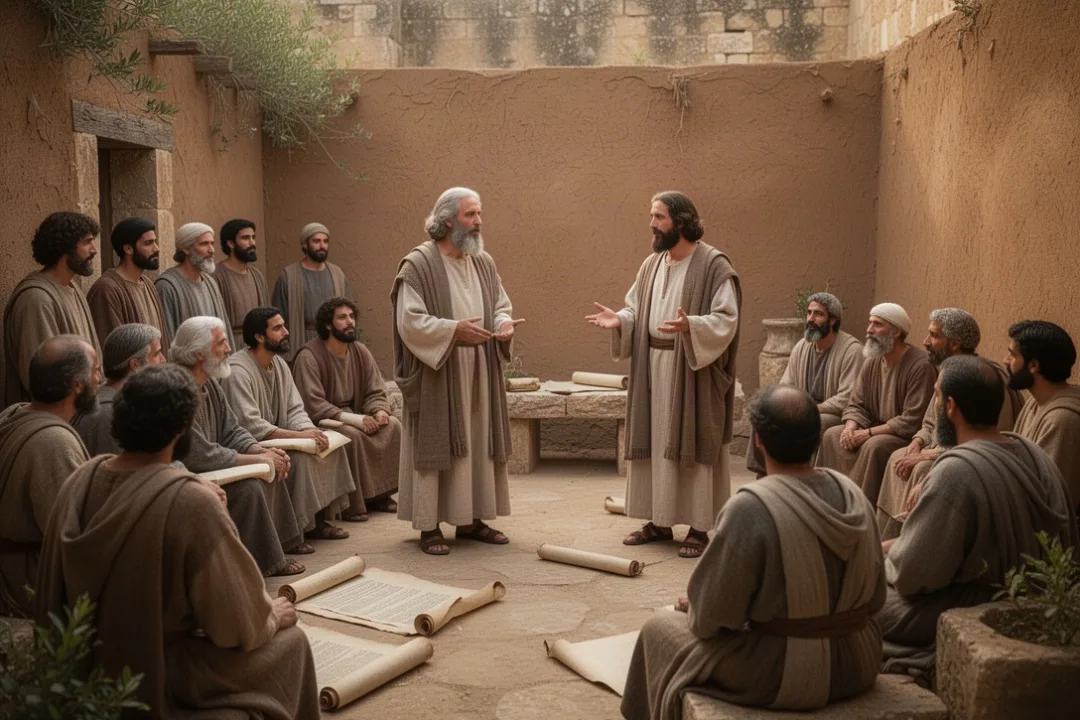
Barnabas recognized potential: he saw that Paul’s gifts could serve a growing congregation.
He shared responsibility: he did not treat leadership as a personal possession.
He invested in teaching: the church needed formation, not only enthusiasm.
He accepted a multicultural setting: Antioch included believers from different backgrounds and traditions.
Barnabas’s work in Antioch gives a more complete picture of encouragement. It was not simply offering kind words. It involved showing up, evaluating a situation wisely, finding the right helper, and staying long enough to build a stable community.
What did St Barnabas do on his missionary journeys?
Acts 13 and 14 describe Barnabas and Paul being set apart by the church at Antioch for missionary work. John Mark traveled with them as an assistant. The group visited places in Cyprus and parts of Asia Minor, preaching about Jesus and forming or strengthening Christian communities.
Barnabas was not a minor figure who merely accompanied Paul. At several points in Acts, the pair are described together as apostles or missionary leaders. Early in the journey, Barnabas’s name is sometimes listed first, which may suggest his seniority or prominence at that stage.
The journey involved public teaching, opposition, travel between cities, and the challenge of helping new believers understand how to live as a church. The missionaries did not operate with modern conveniences or established institutions. Their work depended on relationships, hospitality, local leaders, and the resilience of small communities.
A basic breakdown of their work includes:
Receiving a mission from the Antioch church: the work began as a communal calling rather than a private project.
Traveling to Cyprus: Barnabas’s connection with the island may have made it a natural first destination.
Proclaiming the message of Jesus: they spoke in Jewish settings and to wider audiences.
Responding to opposition: the mission included resistance as well as acceptance.
Strengthening new congregations: they returned to encourage believers and appoint local leadership.
Reporting to the sending church: the mission remained connected to the wider Christian community.
Acts 14 presents Barnabas and Paul returning to Antioch after the journey and reporting what God had done among the nations. This detail matters because missionary work was treated as a shared responsibility. The travelers were sent by a community and returned to that community with news, reflection, and accountability.
Why did Barnabas and Paul disagree about John Mark?
The most famous conflict involving Barnabas appears in Acts 15:36–41. Paul proposed revisiting the communities they had visited earlier. Barnabas wanted to take John Mark, but Paul did not want him on the journey because Mark had previously left them during the earlier mission.
The disagreement became serious enough that Barnabas and Paul separated. Paul traveled with Silas, while Barnabas took Mark and sailed to Cyprus. Acts does not describe one side as completely right and the other as completely wrong. It records a genuine leadership conflict involving trust, reliability, and the possibility of giving someone another opportunity.
Barnabas’s position is consistent with his earlier pattern. He had defended Paul when other Christians were suspicious of him, and he now appears willing to give Mark another chance. Paul, meanwhile, placed greater weight on Mark’s previous failure and the demands of the mission.
A useful lesson from the disagreement: Christian leaders can share the same mission and still make different judgments about people, risk, and readiness. The separation was painful, but it did not erase the value of Barnabas’s ministry or Paul’s work.
Later Christian writings suggest that Mark became a useful co-worker to Paul. In Colossians 4:10, Philemon 24, and 2 Timothy 4:11, Paul refers positively to Mark or includes him among fellow workers. These references do not provide a full account of the earlier dispute, but they indicate that the relationship between Paul and Mark was not permanently defined by the first conflict.
Barnabas is not mentioned as often in the New Testament after the separation. His absence from later chapters does not mean that his work was unimportant. It reflects the limited scope of Acts and the way ancient historical narratives focus on particular people and events.
What does the Bible say about Barnabas and the Jerusalem Council?
The dispute over whether non-Jewish believers had to follow all Jewish customs became a major issue in the early church. Acts 15 describes a meeting in Jerusalem where apostles and elders considered the question.
Barnabas and Paul reported what they had seen among the Gentiles during their missionary work. Their experience showed that people from outside Judaism were responding to the message about Jesus and receiving the Holy Spirit. The council eventually sent guidance to Gentile believers, addressing several practices while not requiring them to become Jewish converts in every respect.
Barnabas’s role here reflects his experience in Antioch and Cyprus. He had seen a diverse Christian community develop firsthand. His testimony helped the wider church address a difficult question with evidence from actual pastoral and missionary experience.
The episode also shows why Barnabas is remembered as a bridge-builder. He connected Jerusalem with Antioch, Jewish believers with Gentile believers, and established leaders with new communities. His ministry repeatedly involved helping people hear one another across boundaries.
What is known about St Barnabas’s death?
The New Testament does not give a detailed account of Barnabas’s death. Later Christian traditions associate him with Cyprus and describe him as a martyr there, but the details vary and are not presented with the same level of biblical certainty as the events in Acts.
For that reason, careful descriptions distinguish between New Testament evidence and later tradition. It is reasonable to say that Barnabas was traditionally honored as a martyr connected with Cyprus. It is less responsible to present every later detail as historically verified.
Cyprus remains central to Barnabas’s identity because Acts identifies him as a Cypriot and places part of his missionary work there. Christian communities on the island have continued to honor him, and churches, chapels, and local traditions have kept his name visible across the centuries.
When is St Barnabas’s feast day?
Many Western Christian churches observe the Feast of Saint Barnabas on June 11. The date appears in calendars of several traditions, although individual churches may use different liturgical calendars or celebrate with local customs.
Feast days are not only occasions to remember historical figures. They give communities a way to reflect on the qualities represented by a saint’s life. For Barnabas, those qualities include generosity, courage, discernment, hospitality, and the ability to encourage people who are overlooked or uncertain.
A parish observing the feast might read passages from Acts, preach about Christian fellowship, support a charitable project, or pray for missionaries and people serving in difficult settings. Some communities also connect the day with Cyprus, evangelization, and the ministry of encouragement.
What is St Barnabas the patron saint of?
Barnabas is commonly associated with encouragement, evangelization, Cyprus, and peacemaking. Patronage customs can differ between churches and regions, so there is no single universal list that every Christian tradition uses in exactly the same way.
His association with encouragement comes directly from the meaning connected with his name and from his actions in Acts. His connection with Cyprus comes from his family background and missionary work. His association with missionaries reflects his leadership in the early church and his participation in spreading the Christian message beyond Jerusalem.
People may look to Barnabas when they need guidance in situations such as:
welcoming someone whose past makes others hesitant;
mentoring a younger or less experienced co-worker;
supporting a community that is growing across cultural boundaries;
deciding whether a person deserves another opportunity;
serving faithfully without needing to remain the most visible leader.
These associations should not turn Barnabas into a simple symbol. His story includes difficult decisions and disagreement. That makes him useful as a model of realistic Christian leadership, not merely pleasant encouragement.
What can Christians learn from St Barnabas?
Generosity should meet real needs
Barnabas’s gift in Acts 4 was concrete. He did not only express concern for the church; he used property and money to support the community. His example invites questions about how personal resources can help people facing poverty, displacement, loneliness, or crisis.
Barnabas’s advocacy for Paul was not careless approval. He knew Paul’s reputation and helped communicate Paul’s story to leaders who needed reliable information. Encouragement is strongest when it combines compassion with judgment.
Good leaders make room for other people’s gifts
Barnabas brought Paul into the work at Antioch rather than treating Paul as a threat to his own position. He helped create space for another leader to teach and serve. Churches, families, and workplaces benefit when experienced people invest in others rather than guarding every responsibility.
Disagreement does not cancel faithfulness
The dispute over Mark reminds readers that sincere leaders can disagree. A conflict may reveal different priorities, but it does not automatically prove that one person has no integrity. Barnabas’s story encourages honest evaluation, respectful separation when necessary, and openness to later restoration.
Quiet influence can shape major events
Barnabas is sometimes remembered mainly as Paul’s companion, but that description is too narrow. He helped interpret Paul’s conversion, served the Antioch church, supported the inclusion of Gentiles, and gave Mark another opportunity. His influence often worked through relationships and recognition rather than personal prominence.
How can you observe the feast of St Barnabas?
You do not need to belong to a church named for Barnabas to mark his feast day. A simple observance can focus on one of the qualities his life represents and connect reflection with practical action.
Read the relevant passages: Acts 4:32–37, Acts 9:26–30, Acts 11:19–30, Acts 13–14, and Acts 15:1–35 provide the main biblical account.
Remember someone who encouraged you: consider how that person’s support affected your choices or confidence.
Encourage someone carefully: offer specific appreciation, practical help, or a recommendation for a person who is ready for greater responsibility.
Support a missionary or local ministry: give time, money, supplies, or prayer according to your ability.
Consider second chances: reflect on whether a past mistake should permanently define someone’s future role.
Learn about Cyprus: explore the island’s place in the early Christian story and its continuing traditions connected with Barnabas.
A prayer inspired by Barnabas might ask for generosity without showmanship, courage without harshness, and wisdom to recognize growth in other people. It could also ask for the humility to accept that faithful Christians may sometimes reach different judgments.
How should you remember St Barnabas today?
Remembering St Barnaby, or Saint Barnabas, means more than repeating a name on a calendar. It means paying attention to a person who combined faith with practical action. He gave generously, welcomed someone others distrusted, served a diverse church, traveled into uncertain places, and stood beside people who needed an advocate.
His story also resists an overly polished picture of Christian leadership. Barnabas faced opposition, made difficult choices, and experienced a serious disagreement with Paul. Yet his ministry remained valuable because he continued to support people and communities beyond his own reputation.
If you are looking for a saint connected with encouragement, missionary service, Cyprus, or the patient work of helping others grow, Barnabas is a fitting figure to remember. The central question his life raises is simple: Whom can you strengthen, and whom might you help others see more clearly?
Frequently asked questions
Is St Barnaby the same person as Saint Barnabas?
Yes. St Barnaby is generally a variant or informal English form of Saint Barnabas, the first-century Christian leader described in Acts. “Barnabas” is the name used in the New Testament and in most official church calendars. A church, school, or local tradition may use “Barnaby” without referring to a separate saint.
What was Saint Barnabas’s real name?
Acts 4:36 identifies him as Joseph, a Levite from Cyprus. The apostles or Christian community called him Barnabas, a name associated with encouragement or consolation. The nickname became the name by which he was best known in the early church and in Christian tradition.
Did Saint Barnabas write a book of the Bible?
No book of the New Testament is formally attributed to Barnabas. Later Christian history includes writings associated with his name, but those attributions are not accepted as proof that he wrote them. The reliable biblical account of his ministry is found chiefly in the Acts of the Apostles, with additional references in Paul’s letters.
Why is Saint Barnabas important if Paul became more famous?
Barnabas played a major role in helping the early church recognize Paul’s changed life and later brought him into the work at Antioch. He also helped lead missionary work and supported the inclusion of Gentile believers. His importance comes from his own service and from his ability to identify, encourage, and develop other leaders.















Leave a Reply