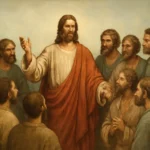
If you are counting the people closest to Jesus, the short answer is 12 apostles. Jesus selected twelve men to receive special training, preach the kingdom of God, and serve as witnesses to his ministry and resurrection.
The number becomes more complicated after Judas Iscariot’s death. The remaining apostles appointed Matthias to restore the group to twelve, while the New Testament also calls Paul an apostle and uses the term more broadly for several other Christian workers. So the answer depends on whether you mean the original group, the restored Twelve, or everyone described as an apostle.
Short answer: Jesus chose 12 original apostles. After Judas Iscariot left the group, Matthias replaced him. In the wider New Testament sense, more than 12 people were called apostles.
The number twelve was not accidental. It recalled the twelve tribes of Israel, the descendants of Jacob who formed the people of Israel. By appointing twelve apostles, Jesus signaled that God was forming and renewing his people around him.
The Gospels describe Jesus choosing the Twelve after spending time in prayer. Mark 3:13-19, Matthew 10:1-4, and Luke 6:12-16 give lists of the men, although some names appear in slightly different forms. Jesus then sent them to preach, heal, and announce that God’s kingdom was drawing near.
These men were not merely a committee or a group of casual followers. They held a particular role as authorized representatives of Jesus. They learned from him in a close setting and later became important witnesses in the earliest Christian communities.
The names of the original twelve apostles
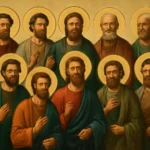
The four Gospel lists identify the original group, with minor differences in wording and order. The following names represent the twelve men Jesus appointed during his earthly ministry:
Simon Peter, also called Cephas, who became a prominent leader among the early Christians.
Andrew, Peter’s brother and one of the first disciples associated with Jesus.
James son of Zebedee, the brother of John and one of Jesus’ closest followers.
John, James’s brother, traditionally associated with several important New Testament writings.
Philip, who appears in several Gospel accounts involving Jesus’ ministry and teaching.
Bartholomew, often associated by many readers with Nathanael, although the Gospel lists use the two names differently.
Matthew, identified as a tax collector before becoming a disciple.
Thomas, also known as Didymus, who appears prominently in John’s Gospel after Jesus’ resurrection.
James son of Alphaeus, sometimes distinguished from James son of Zebedee as “James the Less.”
Thaddaeus, whose name is listed as Judas son of James in Luke’s list and Acts.
Simon the Zealot, identified by his former or associated political outlook.
Judas Iscariot, who betrayed Jesus and later died before the early church appointed a replacement.
The names can seem confusing because the Gospels sometimes use alternative names. Simon Peter, for example, is known by several forms of his name, while Thaddaeus appears as Judas son of James in some passages. This does not mean the lists contain different numbers of apostles; each list still names twelve.
How the Gospel lists of the apostles differ
Matthew 10, Mark 3, and Luke 6 each provide a list of the Twelve. Acts 1 also lists the remaining apostles after Judas Iscariot’s death. The lists agree on the central group but vary in order and in the name used for one or two individuals.
Peter appears first in all four lists, which reflects his visible role in the Gospel narratives. James and John are also usually near the beginning. The less prominent apostles appear in varying sequences, and Thaddaeus is identified as Judas son of James in Luke and Acts.
These differences do not change the main answer to how many apostles were there. They show that the biblical writers were not presenting one standardized roster in exactly the same format. They were identifying the same core group of twelve appointed by Jesus.
Bartholomew and Nathanael require particular care. John’s Gospel mentions Nathanael, while the Synoptic Gospels name Bartholomew. Many Christians and biblical scholars connect them, partly because Bartholomew is a family or patronymic name and often appears alongside Philip. Still, the text does not explicitly state that they are the same person, so it is better to describe the identification as a common tradition rather than an absolute certainty.
What happened to Judas Iscariot and Matthias
Judas Iscariot was one of the original twelve apostles, but he betrayed Jesus to the authorities. After Jesus’ death, Judas died, leaving eleven apostles. Acts 1 describes the remaining group praying and selecting Matthias to take Judas’s place.
The apostles considered a specific qualification for the replacement: the candidate needed to have accompanied Jesus’ followers from the time of John’s baptism through the resurrection. The purpose was to preserve the group’s role as witnesses to Jesus’ ministry and resurrection.
Matthias was chosen over another candidate named Joseph Barsabbas, also called Justus. Acts does not provide a detailed account of Matthias’s later ministry, but it clearly presents him as the person added to the apostolic group.
That means there were twelve apostles again after Matthias was selected. When people refer to “the Twelve,” they may mean the original group during Jesus’ ministry or the restored group after Judas was replaced. Judas and Matthias were not serving in the group at the same time.
Count the group by period: There were twelve during Jesus’ ministry, eleven for a short period after Judas’s departure, and twelve again after Matthias was chosen.
Why Paul is also called an apostle
Paul was not one of the original twelve men chosen during Jesus’ earthly ministry. Nevertheless, the New Testament repeatedly identifies him as an apostle of Jesus Christ. Paul says that his apostleship came through a commission from the risen Jesus, not through appointment to the original Twelve.
Acts 9 describes Paul’s conversion and calling, while Acts 13 records the church at Antioch setting apart Paul and Barnabas for missionary work. Paul later defends his authority in letters such as Romans, 1 Corinthians, Galatians, and 2 Corinthians. His writings show that he understood apostleship as a direct commission to proclaim Christ, especially among the Gentiles.
Paul’s status explains why “twelve apostles” and “all the apostles” are not always interchangeable phrases. The Twelve were a distinct foundational group connected with Jesus’ earthly ministry. Paul belonged to a broader circle of commissioned messengers, even though he was not one of the original Twelve.
Paul also describes himself as one who had seen the risen Christ and had been entrusted with the gospel. In 1 Corinthians 15, he includes himself among those to whom the risen Jesus appeared, while also acknowledging that his calling came later than that of the other apostles.
What the word apostle means in the New Testament
The word apostle comes from a Greek term related to being sent as a messenger or representative. In the New Testament, it can refer to a person given a special commission to proclaim Jesus’ message and represent his authority.
Sometimes the word has a narrow, formal meaning. In that sense, it points to the Twelve and to Paul as figures with a unique role in the foundation of the early church. At other times, the word seems to be used more broadly for Christian missionaries or representatives.
For example, Acts 14 refers to Paul and Barnabas together as apostles in the context of their missionary work. Romans 16:7 mentions Andronicus and Junia, although translations and interpretations differ over whether the phrase means they were well known among the apostles or were themselves regarded as apostles.
This broader usage is why a simple count can be misleading. The Bible gives a definite number for the special group Jesus appointed—twelve—but it does not give one complete list of every person who might be called an apostle in the wider sense.
Were the seventy or seventy-two disciples apostles?
Luke 10 describes Jesus sending out seventy or seventy-two disciples, depending on the manuscript tradition and Bible translation. These followers were sent in pairs to prepare towns for Jesus’ ministry. Their mission was important, but the passage does not identify them as the Twelve.
This group is sometimes confused with the apostles because Jesus sent them to preach and gave them authority for their mission. In everyday language, they were messengers sent by Jesus. In the Gospel’s formal organization, however, Luke distinguishes them from “the Twelve,” who had already been appointed.
The number in Luke 10 is also not a reliable answer to the question of how many apostles there were. It refers to a larger group of disciples sent on a particular mission, not to a replacement list for the Twelve. The passage teaches that Jesus commissioned many followers, while still preserving a distinct group of twelve apostles.
Some translations say seventy, and others say seventy-two. This difference comes from variations among ancient manuscripts. It does not affect the central distinction between that mission and the special group known as the Twelve.
Common mistakes when counting the apostles
Several counting methods can produce an incorrect answer because they mix different groups or different periods. Keep the question precise before adding names together.
Do not count Judas and Matthias as simultaneous members of the Twelve. Matthias replaced Judas after Judas’s death, so the group had twelve members in each restored roster, not thirteen at one time.
Do not add Paul to the original Twelve. Paul was an apostle, but he was called later and was not one of the men selected during Jesus’ earthly ministry.
Do not treat the seventy or seventy-two as another name for the Twelve. Luke presents them as a separate group sent on a different mission.
Do not assume every follower of Jesus was an apostle. The New Testament describes many disciples and believers without using the formal title apostle.
Do not mistake alternate names for extra people. Thaddaeus and Judas son of James are generally understood as two names for the same apostle.
Do not assume every apostle had the same role. The Twelve, Paul, Barnabas, and other possible apostles were not all commissioned in exactly the same way.
A helpful approach is to ask three questions: Which period are you counting, which biblical group is under discussion, and whether “apostle” is being used narrowly or broadly? Those questions usually resolve the apparent contradictions.
How many apostles were there at different points
The number changes depending on the moment in the biblical story. A chronological count makes the answer easier to understand:
During Jesus’ ministry: Jesus selected twelve apostles, including Judas Iscariot.
After Judas’s betrayal and death: the apostolic group temporarily had eleven remaining members.
After Matthias was selected: the Twelve were restored to twelve members.
After Paul’s calling: the New Testament recognized at least one additional apostle beyond the Twelve.
During the wider missionary movement: Paul, Barnabas, and possibly other Christian leaders were described with apostolic language.
This timeline shows why answers such as “twelve,” “thirteen,” or “more than twelve” may each appear in discussions, even though they refer to different meanings. Twelve is the standard answer for Jesus’ chosen group; thirteen or more may describe a broader count that includes later apostles, but it is not a fixed biblical total for every apostle who ever served.
What authority the apostles received
Jesus sent the Twelve to announce God’s kingdom and to minister to people in his name. The Synoptic Gospels describe them preaching, healing, and confronting spiritual opposition as signs of the authority Jesus gave them.
After the resurrection, the apostles became witnesses to what they had seen and heard. In Acts, they teach publicly, care for the growing community, and testify that God raised Jesus from the dead. Their witness helped shape the preaching and teaching of the earliest church.
Their authority was not presented as personal status. It was tied to Jesus’ commission and to faithfulness to his message. The New Testament also records their weaknesses: they misunderstand Jesus, argue about status, abandon him at his arrest, and sometimes struggle to understand how the gospel applies to Gentiles.
That combination matters when counting them. The apostles were a defined group with a significant role, but the Bible does not portray them as flawless or identical. Their calling, personalities, backgrounds, and later responsibilities varied considerably.
Why the number twelve remains significant
The restored number twelve carried symbolic meaning for the early Christian movement. Jesus’ apostles represented continuity with Israel while also announcing a renewed covenant community centered on him.
Jesus refers to the Twelve in a future setting in Matthew 19:28, where they are connected with judging the twelve tribes of Israel. Revelation 21:14 also uses the image of twelve foundations associated with the names of the apostles of the Lamb. These passages reinforce the symbolic importance of the number.
That symbolism helps explain the decision to replace Judas. The early believers were not simply filling an empty administrative position. They understood the number twelve as part of the group’s identity and mission as witnesses to Jesus.
At the same time, the significance of twelve does not mean that no one else could be an apostle. The New Testament’s treatment of Paul and Barnabas shows that God’s mission extended beyond the original group. The Twelve remained a unique foundation, while the wider apostolic mission continued through other commissioned leaders.
The clearest answer to the question
If a quiz, sermon, or general Bible question asks, “How many apostles were there?” the expected answer is twelve. These were the men Jesus specifically chose and sent during his ministry.
If the question asks how many people were called apostles across the entire New Testament, there is no single universally stated total. You would need to include Matthias after Judas, Paul, Barnabas, and possibly other people depending on how you interpret passages about apostolic workers.
The most accurate wording is therefore: Jesus chose twelve original apostles, Matthias later replaced Judas, and the New Testament uses the title apostle for additional commissioned leaders. That answer respects both the clear number associated with “the Twelve” and the broader way the term appears in Scripture.
How to identify the apostles in a Bible passage
When you encounter the word apostle, read the surrounding passage before deciding which group it means. A few details can guide you:
Look for the phrase “the Twelve,” which normally identifies Jesus’ special group of twelve apostles.
Check whether the passage names Judas Iscariot or describes events before his death.
See whether Matthias has already been chosen in Acts 1.
Notice whether the passage is discussing Paul and Barnabas in a missionary setting.
Distinguish the Twelve from the seventy or seventy-two disciples sent in Luke 10.
Compare parallel Gospel lists when a name or order seems different.
These steps prevent most confusion. They also show why biblical counting requires attention to context, timing, and terminology rather than simply adding every name associated with Jesus’ mission.
Frequently asked questions
Who were the first apostles Jesus chose?
The first group consisted of Simon Peter, Andrew, James son of Zebedee, John, Philip, Bartholomew, Matthew, Thomas, James son of Alphaeus, Thaddaeus, Simon the Zealot, and Judas Iscariot. The Gospels list these twelve with some differences in order and naming. Judas later left the group, and Matthias was selected to replace him.
Was Paul one of the twelve apostles?
No. Paul was not part of the original Twelve chosen during Jesus’ earthly ministry. He became an apostle after encountering the risen Christ and receiving a commission to preach, especially among the Gentiles. The New Testament clearly calls Paul an apostle, but it treats his calling as distinct from the original appointment of the Twelve.
Did Jesus have more than twelve disciples?
Yes. Jesus had many disciples, meaning followers or learners, and he sent a separate group of seventy or seventy-two on a mission described in Luke 10. The Twelve were a specific group within the larger body of disciples. Therefore, “twelve apostles” does not mean Jesus had only twelve followers.
Why was Matthias chosen instead of leaving eleven apostles?
Acts 1 presents the apostles as restoring the number twelve after Judas’s death. The candidates had to have followed Jesus’ ministry from John’s baptism through the resurrection so the replacement could serve as a witness. After prayer and selection, Matthias was added to the group.
















Leave a Reply