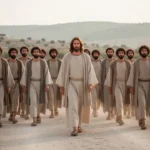
If you are trying to remember the twelve apostles, the names can feel confusing because the Gospel lists are not identical. The basic answer is clear: Jesus chose twelve men to be his closest representatives, sent them to teach and heal, and connected their number with the twelve tribes of Israel. The New Testament names most of them, but gives far more information about some than others.
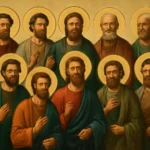
The twelve were Simon Peter, Andrew, James son of Zebedee, John, Philip, Bartholomew, Matthew, Thomas, James son of Alphaeus, Thaddaeus, Simon the Zealot, and Judas Iscariot. After Judas Iscariot betrayed Jesus and died, Matthias was chosen to join the remaining eleven, according to Acts 1.
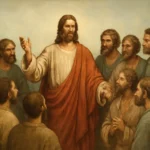
The word apostle comes from a Greek term meaning a person who is sent. In the Gospels, Jesus had many followers, but he selected twelve for a particular role. Mark 3, Luke 6, and Matthew 10 describe him appointing them to be with him and sending them out to proclaim God’s kingdom, confront evil, and care for the sick.
The number twelve carried strong biblical meaning. Israel was traditionally organized around twelve tribes descended from Jacob’s sons. By choosing twelve representatives, Jesus signaled a renewal and gathering of God’s people around his mission. The apostles were not simply a list of early believers; they formed a symbolic leadership group at the center of Jesus’ public ministry.
The twelve spent time listening to Jesus, watching how he treated people, and learning how to announce his message. Their training included ordinary travel, difficult conversations, public ministry, and private explanations of Jesus’ teachings. They also experienced moments of misunderstanding, fear, rivalry, and failure, which the Gospels present openly rather than hiding.
A useful distinction: “Disciple” describes a learner or follower, while “apostle” emphasizes someone commissioned and sent. The New Testament sometimes uses the terms broadly, but the twelve apostles were a specific group within Jesus’ larger circle of disciples.
The apostles did not all have the same personality, background, or level of prominence. Some worked in fishing villages around the Sea of Galilee, while Matthew had served as a tax collector. Simon the Zealot appears to have had an association with a movement opposed to Roman rule. Their differences show that Jesus’ inner circle was not built from one social type or professional class.
The names and backgrounds of the twelve apostles
The four main lists appear in Matthew 10, Mark 3, Luke 6, and Acts 1. They agree on the overall group but vary in order and in a few names. The following descriptions combine what the New Testament says with traditional identifications, while distinguishing firm evidence from later tradition.
Simon Peter and Andrew
Simon Peter is the best-known member of the group. Jesus gave Simon the name Peter, related to the idea of a rock, and the Gospels often place him first in their lists. He was a fisherman from Galilee and worked with his brother Andrew. Peter frequently spoke for the disciples, sometimes showing insight and sometimes misunderstanding Jesus’ mission.
Peter confessed that Jesus was the Messiah in the region of Caesarea Philippi, as described in Matthew 16. He also objected when Jesus spoke about suffering and later denied knowing him three times during the night of Jesus’ arrest. The Gospel of John describes Jesus restoring Peter after the resurrection, and Acts presents Peter as a prominent witness and speaker in the early Jerusalem church.
Andrew was Peter’s brother and also a fisherman. In John’s Gospel, Andrew is associated with bringing people to Jesus, including Peter and a boy whose food is used in the feeding of the multitude. He appears less often than Peter, but these scenes portray him as attentive and willing to connect others with Jesus.
James and John, the sons of Zebedee
James son of Zebedee and John were brothers who worked as fishermen. Jesus called them while they were with their father and hired workers, and the two brothers became part of a smaller group that witnessed events such as the raising of Jairus’s daughter, the transfiguration, and Jesus’ prayer in Gethsemane.
Jesus gave James and John the nickname “Boanerges,” which Mark explains as meaning “sons of thunder.” The name may reflect their intense temperament. In Luke 9, the brothers wanted severe judgment on a Samaritan village that did not welcome Jesus. Their mother, or in another Gospel passage the brothers themselves, also asked for positions of honor in Jesus’ kingdom, revealing that the apostles did not immediately understand the servant-shaped nature of his leadership.
James was the first of the twelve whose death as a martyr is recorded in the New Testament. Acts 12 says that King Herod Agrippa I had James killed by the sword. John is traditionally associated with several New Testament writings, but the biblical texts do not always identify their authors directly, so later attributions should be treated with care.
Philip and Bartholomew
Philip came from Bethsaida, the same town associated with Peter and Andrew. In John 1, Philip responds to Jesus’ call by telling Nathanael that he has found the one spoken of by Moses and the prophets. Philip also appears in the feeding of the multitude, where Jesus asks him how the crowd could be fed, and during a later conversation when some Greeks want to meet Jesus.
Bartholomew is named in the Synoptic Gospel lists and Acts, but the name may function as a family designation meaning “son of Tolmai.” John’s Gospel does not name Bartholomew, but it does describe a disciple called Nathanael. Many Christians have therefore identified Bartholomew with Nathanael, although the text never states the identification in a single direct sentence.
Nathanael is introduced as a thoughtful man who initially questions whether anything significant can come from Nazareth. After meeting Jesus, he recognizes him in a striking confession of faith, as recorded in John 1. Later Christian tradition gives Bartholomew a wide missionary career, but details about his travels and death are less certain than the Gospel material.
Matthew and Thomas
Matthew is identified in Matthew 9 as a tax collector whom Jesus calls to follow him. Tax collectors worked within a system connected to Roman administration and were often viewed by fellow Jews as compromised or morally suspect. Jesus’ willingness to call Matthew fits the Gospels’ repeated emphasis on inviting outsiders and sinners to repentance and fellowship.
Matthew’s Gospel includes a tax collector named Matthew among the twelve. Early Christian tradition connects that apostle with the author of the Gospel according to Matthew, but the Gospel itself does not explicitly identify its author. The safe biblical point is that Matthew belonged to the twelve and had previously worked as a tax collector.
Thomas is also called Didymus, a name that means “twin.” John’s Gospel gives him several memorable scenes. He is willing to face danger with Jesus, yet after the crucifixion he says he needs convincing evidence before accepting the resurrection testimony of the other disciples. When he encounters the risen Jesus, Thomas makes a profound confession of faith.
Calling Thomas “doubting Thomas” can reduce his story too much. His questions show that resurrection faith was not presented as a casual assumption among the disciples. The passage in John 20 addresses both Thomas’s need for evidence and the faith of later believers who would not see the risen Jesus in the same direct way.
James son of Alphaeus, Thaddaeus, and Simon the Zealot
James son of Alphaeus is often called James the Less or James the Younger to distinguish him from James son of Zebedee. The New Testament gives very little information about him beyond his place in the lists. He should not automatically be identified with James, the brother of Jesus, or with James the leader of the Jerusalem church; those identifications are debated and involve different passages and traditions.
Thaddaeus appears in Matthew 10 and Mark 3. Luke and Acts use the name Judas son of James for what appears to be the same apostolic position. John 14 records a question from “Judas, not Iscariot,” which helps distinguish this disciple from Judas Iscariot. Many Christian traditions therefore treat Thaddaeus and Judas son of James as two names for one apostle.
Simon the Zealot is identified by his association with the Zealot label. The Gospels do not explain precisely what that label meant in Simon’s case, and it should not be turned into a detailed biography without evidence. At minimum, the title distinguishes him from Simon Peter and suggests a background or affiliation that made his inclusion among Jesus’ followers notable.
Simon Peter: fisherman, prominent spokesman, and later leader in the early church.
Andrew: Peter’s brother and a disciple who introduced others to Jesus.
James son of Zebedee: fisherman and brother of John; the first apostolic martyr recorded in Acts.
John: James’s brother and member of Jesus’ close inner circle.
Philip: a disciple from Bethsaida who brought Nathanael to Jesus.
Bartholomew: named in the apostolic lists and traditionally identified with Nathanael.
Matthew: a former tax collector called by Jesus.
Thomas: the disciple associated with questioning the resurrection and then confessing faith.
James son of Alphaeus: a less-documented member of the twelve.
Thaddaeus: also commonly identified with Judas son of James.
Simon the Zealot: a disciple distinguished by the Zealot designation.
Judas Iscariot: the apostle who handed Jesus over to the authorities.
How the Gospel lists differ
Readers sometimes expect all four lists to use the same order and names, but the differences are part of the New Testament record. Peter is consistently prominent, and James, John, Andrew, Philip, Bartholomew, Matthew, Thomas, James son of Alphaeus, Simon the Zealot, and Judas Iscariot recur across the lists. The main variation concerns Thaddaeus and Judas son of James, along with the order of the names.
Matthew and Mark include Thaddaeus, while Luke and Acts name Judas son of James. John’s Gospel refers to Judas “not Iscariot,” which supports the view that another Judas belonged to the twelve. Some interpreters understand “Judas son of James” as “Judas brother of James,” because the Greek wording can be understood in more than one way.
The lists also arrange the apostles in groups. Peter, Andrew, James, and John generally appear near the beginning. Philip, Bartholomew, Matthew, and Thomas often form a middle group, while James son of Alphaeus, Simon the Zealot, Thaddaeus or Judas son of James, and Judas Iscariot tend to appear later. These arrangements may reflect familiarity or prominence, but the texts do not explain the ordering.
The differences do not change the central point. Jesus chose a group of twelve, and the early Christian community remembered the group through several overlapping lists. Variation in order is not the same as contradiction, especially when ancient writers often arranged names by relationship, importance, or memory rather than by a fixed official roster.
Use caution with later biographies: stories about where individual apostles traveled, how they died, and which countries they evangelized come mainly from later church traditions. They can be meaningful, but they are not equally well supported by the New Testament.
What the apostles did during Jesus’ ministry
The apostles’ first assignment was to be with Jesus and learn from him. Their work was not limited to listening. Jesus sent them out in pairs to announce that God’s kingdom was near, call people to repentance, heal the sick, and confront unclean spirits. Matthew 10, Mark 6, and Luke 9 describe this mission in different ways.
Their authority came from Jesus’ commission rather than from education, wealth, or political office. They traveled with limited provisions and depended on hospitality. This arrangement made the mission an expression of trust and placed the message at the center rather than the personal status of the messenger.
The Gospels also show the apostles making serious mistakes. They struggled to understand Jesus’ teaching about suffering, argued about which of them was greatest, failed to stay awake during his anguish in Gethsemane, and abandoned him at the arrest. These failures matter because the apostles are portrayed as real witnesses who were gradually formed, not as flawless heroes.
Peter’s denial is the clearest example, but the wider group also failed. After the crucifixion, the disciples were frightened and uncertain. The resurrection appearances then became the basis for their renewed witness, and Acts presents them publicly proclaiming Jesus despite opposition from authorities.
The apostles also had a pastoral responsibility within the growing community of believers. Acts 6 describes a dispute involving the distribution of food to widows. The twelve called the community together and supported the appointment of seven men to oversee that practical need, allowing the apostles to continue their ministry of prayer and the word.
They accompanied Jesus and learned through his teaching and example.
They announced God’s kingdom and called people to respond to the message.
They served people directly through healing, prayer, and practical care.
They witnessed the resurrection and proclaimed Jesus after his death.
They helped organize the early church as the number of believers increased.
The apostles were not the only people sent to share the Christian message. The New Testament also names figures such as Paul and Barnabas as apostles in broader uses of the term. Still, “the Twelve” remained a distinctive foundational group, especially in the Gospel narratives and the early Jerusalem church.
What happened to Judas Iscariot and the vacant place
Judas Iscariot was one of the twelve, yet the Gospels describe him betraying Jesus to the chief priests. He identified Jesus to the arresting group with a kiss in the account recorded in the Synoptic Gospels. John also describes Judas as the disciple who turned against Jesus, while presenting the betrayal within a larger account of spiritual conflict and human responsibility.
The New Testament gives two accounts of Judas’s death. Matthew 27 describes Judas returning the money, expressing remorse, and dying by hanging before the chief priests use the money to buy a field. Acts 1 gives a different narrative description in which Judas dies after falling in a field. Readers have proposed ways to relate the accounts, but the texts emphasize the same broad reality: Judas died after betraying Jesus, and his place among the twelve became vacant.
Before Pentecost, the remaining apostles and other believers gathered in Jerusalem. Acts 1 says that Peter described the need for someone who had accompanied Jesus from the beginning of his public ministry through the resurrection witness. Two men were proposed: Joseph called Barsabbas, also known as Justus, and Matthias.
The community prayed and cast lots, and Matthias was counted with the eleven apostles. This scene is the New Testament’s clearest account of restoring the number twelve after Judas’s departure. Matthias is not mentioned again by name in Acts, so later reports about his missionary work and death belong to church tradition rather than the main biblical narrative.
Paul was not one of the original twelve, but he called himself an apostle because the risen Jesus commissioned him. His letters describe his calling and ministry in detail. Barnabas is also called an apostle in Acts 14, showing that the word could be used more broadly for authorized messengers, even though the original twelve held a unique place in the story of Jesus’ ministry.
Why the twelve apostles still matter to Christian history
The apostles are remembered as witnesses to Jesus’ life, death, and resurrection. Their importance does not rest on each man having an equally detailed biography. Instead, the group represents the continuity between Jesus’ ministry and the communities that continued his teaching after Easter.
Christian tradition has preserved different accounts of the apostles’ later work. Thomas is especially associated with Christian communities in India, while Peter, Paul, and other apostles are connected with various regions around the Mediterranean and beyond. Some traditions are ancient and influential, but the available evidence is uneven, so specific claims should be labeled as tradition rather than presented as certain history.
Their stories also demonstrate how early Christian leadership was remembered. Peter’s restoration emphasizes forgiveness and responsibility. Thomas’s questions show that honest uncertainty can become a path toward conviction. Matthew’s call highlights welcome for people viewed as compromised, while James and John illustrate how ambition could be reshaped into service.
The list of the twelve is therefore more than a memory exercise. It shows a community formed from different backgrounds and personalities, commissioned for a shared purpose. The New Testament keeps both sides of that picture: the apostles were entrusted with an extraordinary mission, and they remained people who needed correction, courage, forgiveness, and continued growth.
Frequently asked questions
Were the twelve apostles the same as the twelve disciples?
In most Gospel contexts, “the twelve disciples” and “the twelve apostles” refer to the same core group. “Disciple” emphasizes following and learning, while “apostle” emphasizes being sent with authority. Jesus had many disciples beyond the twelve, so not every disciple was one of the apostles. The wording depends on the passage and its focus.
Did Jesus choose Paul as one of the twelve apostles?
No. Paul was not part of the original twelve chosen during Jesus’ earthly ministry. According to Acts and Paul’s letters, the risen Jesus commissioned him as an apostle to proclaim the gospel, especially among Gentiles. Paul therefore had apostolic authority in a broader sense, but he did not replace one of the original twelve.
Is Nathanael the same person as Bartholomew?
Many Christians and biblical scholars identify Nathanael with Bartholomew because Bartholomew appears in the apostolic lists while Nathanael appears in John’s Gospel. The identification is plausible and longstanding, but the New Testament does not state it directly. It is best described as a traditional identification rather than an explicit biblical fact.
Who replaced Judas Iscariot among the apostles?
Matthias was chosen to join the remaining eleven after Judas’s death. Acts 1 says the believers selected him from among men who had accompanied Jesus from the beginning and had witnessed the resurrection. They prayed and cast lots between Matthias and Joseph Barsabbas, also called Justus, and Matthias was then counted with the apostles.














Leave a Reply