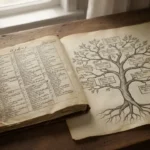
The names of the twelve tribes of Israel are Reuben, Simeon, Levi, Judah, Dan, Naphtali, Gad, Asher, Issachar, Zebulun, Joseph, and Benjamin. These tribes trace their family lines to the twelve sons of Jacob, whose name was later changed to Israel.
In lists describing land, military organization, or later biblical history, Joseph may appear through his two sons, Ephraim and Manasseh. Levi is often left out of territorial lists because the Levites received priestly duties and towns rather than one large tribal territory. That is why the phrase “the twelve tribes” can refer to slightly different combinations of names.
Jacob was the son of Isaac and grandson of Abraham. According to Genesis, Jacob had twelve sons through his wives Leah and Rachel and through Bilhah and Zilpah, their servants. God gave Jacob the name Israel, and his sons became the ancestors of the tribes that formed the people of Israel.
The birth stories in Genesis 29–30 connect several names with the mothers’ feelings and circumstances. These explanations are part of the biblical narrative, while the precise meanings of some Hebrew names can be discussed by scholars in more than one way. The name meanings below therefore give the traditional or commonly associated sense rather than claiming that every translation is certain.
Quick distinction: The twelve sons of Jacob and the twelve territorial tribes are related but not always listed in exactly the same way. Joseph’s two sons, Ephraim and Manasseh, can represent Joseph in land lists, while Levi is usually treated separately because of its religious service.
The twelve names in family order
Reuben — Jacob’s firstborn son through Leah. His name is commonly connected with the idea “see, a son” or “the Lord has seen.”
Simeon — Leah’s second son. His name is associated with hearing or being heard, reflecting Leah’s belief that God had heard her.
Levi — Leah’s third son. His name is traditionally linked with attachment or joining, expressing her hope that Jacob would become more closely attached to her.
Judah — Leah’s fourth son. His name is connected with praise or thanksgiving. Judah later became one of the most prominent tribes.
Dan — The son of Bilhah, Rachel’s servant. His name is associated with judging or justice.
Naphtali — Bilhah’s second son. The name is traditionally connected with struggle or wrestling, reflecting Rachel’s description of her rivalry with Leah.
Gad — The son of Zilpah, Leah’s servant. His name is linked with fortune, luck, or a troop, depending on the interpretation.
Asher — Zilpah’s second son. His name means happy or blessed and reflects Leah’s declaration that other women would call her fortunate.
Issachar — Leah’s fifth son and Jacob’s ninth son overall. His name is commonly explained through the idea of reward or wages.
Zebulun — Leah’s sixth son. His name is traditionally associated with honor, dwelling, or habitation.
Joseph — Rachel’s first son. His name is connected with adding or increasing, because Rachel expressed hope for another son.
Benjamin — Rachel’s second son and Jacob’s youngest. His name means “son of the right hand” or “son of the south,” depending on how the Hebrew expression is understood.
This family order comes from the sons themselves, not from the order of later land allotments. The tribes’ locations, prominence, and political relationships developed over many generations, so a birth-order list should not be confused with a map of the tribes.
Where each tribe came from in Jacob’s family
Leah was the mother of Reuben, Simeon, Levi, Judah, Issachar, and Zebulun. Rachel was the mother of Joseph and Benjamin. Bilhah, Rachel’s servant, was the mother of Dan and Naphtali, while Zilpah, Leah’s servant, was the mother of Gad and Asher.
Leah’s sons: Reuben, Simeon, Levi, Judah, Issachar, and Zebulun.
Rachel’s sons: Joseph and Benjamin.
Bilhah’s sons: Dan and Naphtali.
Zilpah’s sons: Gad and Asher.
This arrangement matters because the family tensions in Genesis help explain several later stories. Joseph’s brothers resented him and sold him into slavery, yet he eventually rose to power in Egypt and preserved the family during a famine. Benjamin remained especially important to Jacob because he was Rachel’s other son.
The tribal story is therefore both genealogical and theological. The tribes are presented as a large extended family, but the biblical books also describe their separate responsibilities, territories, leaders, conflicts, and relationships with the sanctuary and the monarchy.
Why Joseph becomes Ephraim and Manasseh
Joseph had two sons in Egypt: Ephraim and Manasseh. In Genesis 48, Jacob adopted and blessed them in a way that gave them standing among his own sons. As a result, Joseph can be counted as one tribal name, or his inheritance can be represented by two tribes named after his sons.
This creates an apparent counting problem. If Joseph becomes Ephraim and Manasseh, there are thirteen names when Levi is also included. The biblical lists solve this differently depending on their purpose: Levi may be omitted from a land division, or Joseph may be represented by only one name rather than both of his sons.
Ephraim and Manasseh were not simply unrelated additions. They were branches of Joseph’s family that received tribal status. This is why a list of tribal territories in the book of Joshua includes both Ephraim and Manasseh, while a list emphasizing Jacob’s sons may name Joseph instead.
How to count them: For the sons of Jacob, use Joseph. For many land-allotment lists, use Ephraim and Manasseh in Joseph’s place, and remember that Levi’s special status changes the total.
What the tribe of Reuben represented
Reuben was Jacob’s firstborn through Leah, which gave him a natural place of honor in the family. Yet the biblical narrative presents his position as diminished because of serious misconduct involving Bilhah, one of his father’s concubines. In Jacob’s final blessing in Genesis 49, Reuben is described as unstable rather than dominant.
Reuben’s descendants settled east of the Jordan River, in an area associated with pastureland. This location placed the tribe beyond the main western territory of Canaan, alongside Gad and part of Manasseh. Reuben’s eastern position could be useful for livestock, but it also separated the tribe from much of Israel’s central territory.
The tribe illustrates an important biblical pattern: birth order did not guarantee lasting authority. Leadership and influence shifted among the brothers’ descendants. Reuben remained one of the recognized tribes, but Judah and Joseph’s branches became more prominent in later biblical history.
What the tribes of Simeon and Levi shared
Simeon and Levi were full brothers, both sons of Leah. Genesis 34 describes their violent response after their sister Dinah was harmed by Shechem. Jacob later criticized their anger and violence in his blessing, and the later distribution of land reflected a reduced or unusual territorial role for both tribes.
Simeon’s towns were located within the territory assigned to Judah. Over time, this arrangement made Simeon’s identity closely connected with Judah’s larger and more powerful tribal region. Biblical genealogies and historical passages still name Simeon, but the tribe appears less prominently than Judah, Benjamin, or the Joseph tribes.
Levi had a different development. The Levites served in duties connected with the tabernacle and later the temple, including responsibilities assigned to priests and other members of the tribe. Aaron and Moses belonged to Levi’s family line, although the priestly office itself belonged specifically to Aaron’s descendants.
Instead of receiving one consolidated territory, Levi received towns distributed among the other tribes. This means “the tribe of Levi” is a genealogical and religious designation, but not normally one of the twelve large territorial regions shown on maps of Israel.
Why Judah became the leading southern tribe
Judah was Leah’s fourth son, and his name is associated with praise. In the narrative of Joseph, Judah takes a significant role in persuading his brothers not to kill Joseph and later offers himself in place of Benjamin. These actions contribute to his growing importance within the family story.
Judah received a large territory in the southern part of Canaan. Its area included Jerusalem’s later surroundings, although Jerusalem itself was associated with complex boundaries and was not immediately controlled in the same way throughout Israel’s early history. The tribe also included important places such as Hebron and Bethlehem.
Jacob’s blessing in Genesis 49 gives Judah imagery of leadership and kingship. Later biblical tradition connects the royal line of David with Judah. The southern kingdom that remained after the division of the united monarchy was commonly called Judah, and the term “Jew” ultimately developed from the name Judah through later linguistic history.
Judah’s prominence does not mean every earlier tribe disappeared. It means that political power, royal authority, and later national identity became especially associated with Judah and its capital, Jerusalem.
What Dan and Naphtali reveal about the northern tribes
Dan was the first son of Bilhah. The tribe initially received an allotment in the western part of the land, near the territory of Judah and the Philistine coastal area. Because of pressure from neighboring peoples, part of the tribe later migrated north and established itself around the city of Laish, which was renamed Dan.
The tribe of Dan is also connected with a sanctuary at Dan in the period of the divided kingdom. In the book of Judges, Samson is identified as a Danite, showing that the tribe continued to have a distinct identity during the era before Israel’s monarchy became firmly established.
Naphtali, Bilhah’s second son, received territory in the far north. Its location included the region around the Sea of Galilee and areas near the northern borders. The tribe’s position exposed it to conflict with neighboring kingdoms, and later prophetic writings use Naphtali’s northern location in messages about judgment and hope.
The names Dan and Naphtali are connected with the family rivalries surrounding Rachel and Leah. Yet their later stories are shaped less by those household tensions and more by geography, warfare, migration, and the political struggles of northern Israel.
Gad was the son of Zilpah, Leah’s servant. Gad’s descendants settled east of the Jordan, south of or near the territory associated with Reuben. Their land was suitable for herding and was strategically exposed to attacks from surrounding peoples.
In the wilderness narratives, Gad is counted among the tribes that provided fighting men. When the Israelites prepared to enter Canaan, the tribes of Reuben and Gad, along with part of Manasseh, asked to receive land east of the Jordan because it was suitable for their substantial herds. They also agreed to help the other tribes take possession of land west of the river.
Asher was Zilpah’s second son. Its territory lay along the northern Mediterranean coast, near areas associated with Phoenician cities. The tribe’s location gave it access to fertile land and coastal trade routes, although the biblical book of Judges says Asher did not fully drive out all the earlier inhabitants from its allotted area.
Gad and Asher are sometimes overlooked because neither became the center of Israel’s monarchy. Their locations nevertheless show how varied the tribal territories were, from eastern pasturelands to northern coastal districts.
What Issachar and Zebulun contributed
Issachar was Leah’s fifth son. Genesis connects his name with reward, and Jacob’s blessing uses imagery of a strong animal carrying a burden. The tribe occupied an area in the fertile Jezreel Valley and surrounding districts, a region important for agriculture and military movement.
Because the Jezreel Valley connected northern and central parts of the land, Issachar’s territory had strategic value. It was also exposed to conflicts involving Canaanite city-states and later foreign powers. The tribe’s location placed it near routes that linked the coast, the Jordan Valley, and the interior highlands.
Zebulun was Leah’s youngest son and Jacob’s tenth son overall. Its territory was in northern Israel, generally near the areas assigned to Asher and Naphtali. Jacob’s blessing associates Zebulun with the sea and trade, although the exact geographical details in the tribal descriptions require careful reading rather than a simple assumption that Zebulun controlled a major seaport.
In the book of Judges, Zebulun and Issachar are among the tribes that support the struggle led by Deborah and Barak. Their cooperation shows that tribal alliances could become important when Israel faced a common enemy.
How Ephraim and Manasseh shaped Israel’s history
Ephraim and Manasseh were Joseph’s two sons, but they became major tribal groups in their own right. Manasseh received land on both sides of the Jordan: one portion east of the river and another in the central northern area of Canaan. This made Manasseh geographically extensive but not always politically unified.
Ephraim occupied a central highland region west of the Jordan. Its territory included Shiloh, an early center of Israelite worship, and it stood near important routes through the hill country. Because of its size and location, Ephraim often exercised strong influence over the northern tribes.
The name Ephraim became associated with the northern kingdom after the monarchy divided. Prophets sometimes use “Ephraim” as a poetic or political name for the northern kingdom of Israel, much as “Judah” could refer to the southern kingdom.
Manasseh appears in several biblical lists and narratives as a large and influential tribe. Its eastern and western branches faced different local conditions, while its western portion bordered Ephraim and other northern tribes. Together, Ephraim and Manasseh explain why Joseph’s family received a double inheritance.
What Benjamin contributed to Israel’s story
Benjamin was Jacob’s youngest son and Rachel’s second child. Rachel died while giving birth to him, first naming him Ben-Oni, a name associated with sorrow or trouble. Jacob called him Benjamin, traditionally understood as “son of the right hand” or “son of the south.”
Benjamin’s territory was relatively small but strategically important. It lay between Judah and the northern tribes and included the area around Jerusalem. Its location made it a natural bridge between the southern and central parts of the land.
Several important biblical figures are associated with Benjamin. King Saul was a Benjamite, and Mordecai in the book of Esther is identified as a Benjaminite. The apostle Paul also describes himself as being from the tribe of Benjamin, showing that tribal identities continued to matter in Jewish self-understanding during the first century.
Benjamin’s history also includes severe internal conflict. Judges 19–21 describes a war between the other Israelite tribes and Benjamin, after which the tribe nearly disappeared. It survived, however, and later produced Israel’s first king.
Why the biblical lists of tribes differ
Readers often compare lists in Genesis, Exodus, Numbers, Deuteronomy, Joshua, Ezekiel, and Revelation and notice that the names are not always identical. The differences usually arise from the purpose of the list, not from a mistake in the idea that Jacob had twelve sons.
Genealogy lists: These normally name Jacob’s sons, including Joseph and Levi.
Military lists: These may organize the tribes by camp, marching order, or fighting strength.
Land lists: These often name Ephraim and Manasseh as separate inheritances and leave Levi out of the territorial count.
Political or prophetic lists: These may use tribal names symbolically or arrange them according to a theological purpose.
Later symbolic lists: Lists such as the one in Revelation may use a different selection and order for reasons connected with the passage’s symbolism.
For example, the census in Numbers 1 includes Joseph through Ephraim and Manasseh while excluding Levi from military enrollment. The land descriptions in Joshua likewise treat Levi differently because the Levites received towns and support rather than a single tribal region.
Dan is absent from the list of tribes in Revelation 7, while Joseph is included and Manasseh also appears. The text does not provide a simple explanatory sentence for every difference, so readers should avoid forcing every biblical list into one identical format.
How to remember the names and their relationships
A practical way to memorize the twelve sons is to group them by mother rather than trying to learn one long sequence. Begin with Leah’s six sons, then Rachel’s two sons, followed by the two sons of Bilhah and the two sons of Zilpah.
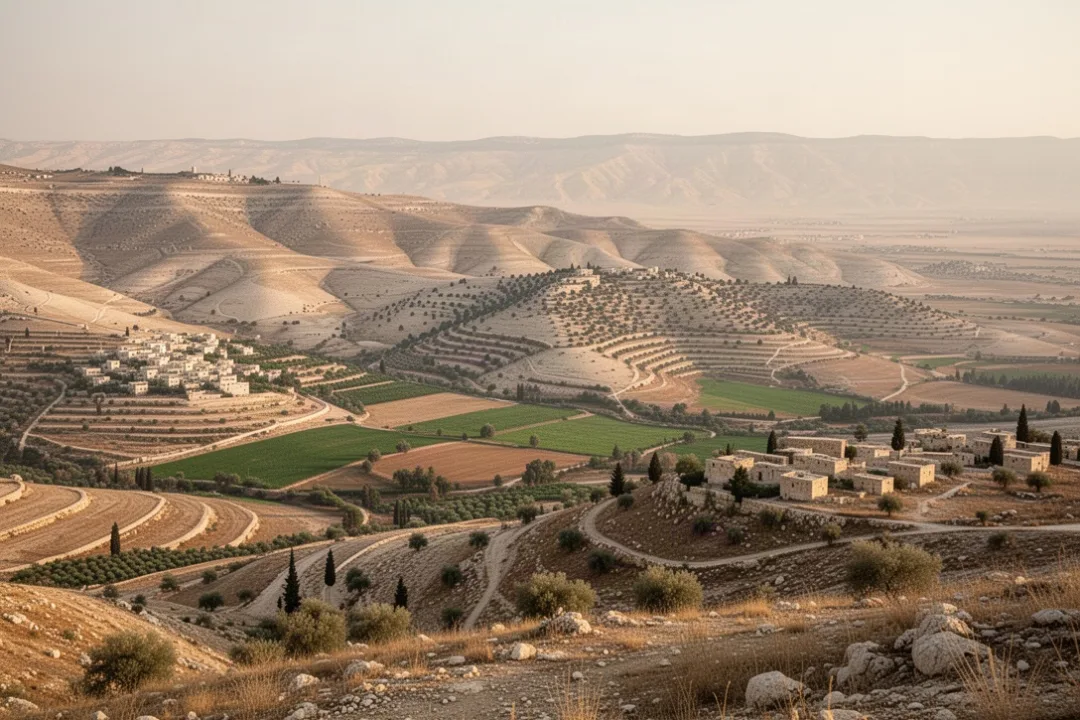
For a land-map memory aid, place the tribes into broad regions rather than expecting perfectly fixed borders. Judah and Benjamin belong mainly to the south and central area; Ephraim and western Manasseh occupy the central highlands; several tribes, including Issachar, Zebulun, Asher, and Naphtali, are associated with the north; and Reuben, Gad, and eastern Manasseh are east of the Jordan.
These geographic descriptions are broad because boundaries changed and biblical passages sometimes describe the same areas from different perspectives. The goal is to understand the overall pattern: the tribes formed a connected but diverse confederation rather than twelve isolated nations with unchanging borders.
What the twelve tribes mean in the Bible
The tribes represent more than a family tree. They show how the biblical story moves from one household to a people with shared worship, laws, land, and memory. Each tribe carries a place in the promises made to Abraham, Isaac, and Jacob, even though the tribes do not receive equal prominence.
The number twelve also becomes a recurring pattern of completeness in biblical organization. The twelve tribes are later echoed by the twelve apostles, although the two groups are not identical and should not be treated as interchangeable. The tribal structure provides a way to speak about the whole people of Israel through its recognized family divisions.
At the same time, the stories preserve tension within the group. Reuben loses expected authority, Simeon becomes closely connected with Judah, Levi serves without a standard territory, Joseph is represented through two sons, and Benjamin survives a near-disastrous civil conflict. These details make the tribal tradition more complex than a simple list of names.
When you see a list of the twelve tribes, first ask what the passage is doing. Is it naming Jacob’s sons, dividing land, organizing an army, describing the northern and southern kingdoms, or using the tribes symbolically? That question usually explains why the names and order differ.
A reliable way to study the tribes in Scripture
Start with Genesis 29–30 and Genesis 35 to identify the family relationships and the births of the sons. Then read Genesis 49, where Jacob speaks about the future of his sons, and Genesis 48, which explains the special position of Ephraim and Manasseh.
Next, compare the organizational passages rather than reading one list in isolation. Numbers 1 presents a military census, Numbers 2 arranges the camp, and Joshua 13–19 describes territorial allotments. These passages make clear why Levi and Joseph are handled differently.
Read Genesis 29–30: Identify the mothers and the first ten sons.
Read Genesis 35: Add Benjamin and observe the circumstances of his birth.
Read Genesis 48: See how Ephraim and Manasseh receive tribal status.
Read Genesis 49: Consider Jacob’s words about each son.
Read Joshua 13–19: Compare tribal territories and the special treatment of Levi.
Read Judges and 1–2 Samuel: Observe how tribal alliances and rivalries affect Israel’s history.
Reading the names alongside their family connections, locations, and later roles gives a more accurate picture than memorizing an isolated list. It also prevents a common misunderstanding: “twelve tribes” is a flexible biblical framework, while “the twelve sons of Jacob” identifies a specific set of brothers.
Frequently asked questions
Are the twelve tribes of Israel named after Jacob’s sons?
Yes. The traditional tribal genealogy begins with Jacob’s twelve sons, who became known as the sons of Israel after Jacob received the name Israel. Joseph’s two sons, Ephraim and Manasseh, later received tribal status and sometimes replace Joseph in lists connected with land or administration. Levi’s special priestly role also causes differences between genealogical and territorial lists.
Which tribe did King David come from?
David came from the tribe of Judah. The biblical account places his family in Bethlehem, a town associated with Judah. David’s royal line became central to the history of the southern kingdom, and later biblical writings connect the expected Messiah with David’s house and therefore with Judah’s royal tradition.
Why did the tribe of Levi not receive land like the other tribes?
The Levites were assigned religious duties connected with the tabernacle and later the temple. Instead of one large, continuous territory, they received towns distributed among the other tribes. This arrangement allowed them to serve throughout Israel. Priests came specifically from Aaron’s descendants, who were part of Levi’s broader family.
Are the twelve tribes still identifiable today?
Some Jewish families preserve traditions about descent from particular tribes, especially Levi and the priestly line, and many people identify broadly with the Jewish people rather than a specific tribe. After ancient kingdoms were conquered and populations dispersed, clear records for most individual tribal lines were not preserved. Claims about a specific tribal ancestry should therefore be treated carefully.