Isaac and Jacob: Their lives, family, and biblical legacy
Isaac and Jacob: Their lives, family, and biblical legacy
Isaac was Abraham’s son, and Jacob was Isaac’s son whose twelve sons became the ancestors of Israel’s tribes. Their stories in Genesis connect Abraham’s covenant with the formation of the people later known as Israel, while also showing how faith, family conflict, fear, and reconciliation shaped that history.
How Isaac and Jacob fit into the biblical family line
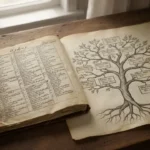
Isaac and Jacob belong to the central family line of Genesis. Abraham is Isaac’s father, Sarah is Isaac’s mother, and Rebekah becomes Isaac’s wife. Isaac and Rebekah have twin sons, Esau and Jacob. Jacob later has twelve sons, whose families become the twelve tribes of Israel.
Abraham and Sarah are the parents of Isaac.
Isaac and Rebekah are the parents of Esau and Jacob.
Jacob and his wives become the parents of the twelve sons associated with Israel’s tribes.
Jacob’s name becomes Israel, giving the nation its biblical name.
This family tree matters because the biblical promises given to Abraham are repeatedly carried forward. Genesis presents God’s covenant with Abraham as continuing through Isaac and then Jacob, rather than through every branch of the family equally. Ishmael, Abraham’s son through Hagar, is also blessed and becomes the ancestor of a great people, but the covenant line in Genesis proceeds through Isaac.
The stories do not portray this family as peaceful or ideal. Abraham and Sarah experience long waiting and difficult decisions. Isaac and Rebekah face tension between their sons. Jacob deceives both his father and his brother, later struggles with Laban, and suffers deeply when he believes Joseph has died. The biblical narrative places divine promise alongside very human weakness.
What the Bible says about Isaac’s early life
Isaac’s birth is presented as the fulfillment of a promise that seemed impossible because Abraham and Sarah were advanced in age. His name is connected with laughter, reflecting the mixture of disbelief, surprise, and joy surrounding the announcement of his birth. The story appears in Genesis 17–21.
Isaac’s childhood includes one of the most difficult episodes in Genesis: God commands Abraham to offer Isaac, but stops him before the sacrifice takes place. The account in Genesis 22 emphasizes Abraham’s trust and God’s provision of a ram. It does not describe Isaac as the source of the command or as a willing architect of the event. Readers often debate Isaac’s age and emotional experience because the passage does not state them clearly.
Read the sacrifice narrative carefully: Genesis 22 is about a test of Abraham and God’s provision, not a general approval of human sacrifice. The story ends with Isaac spared and the sacrificial animal provided.
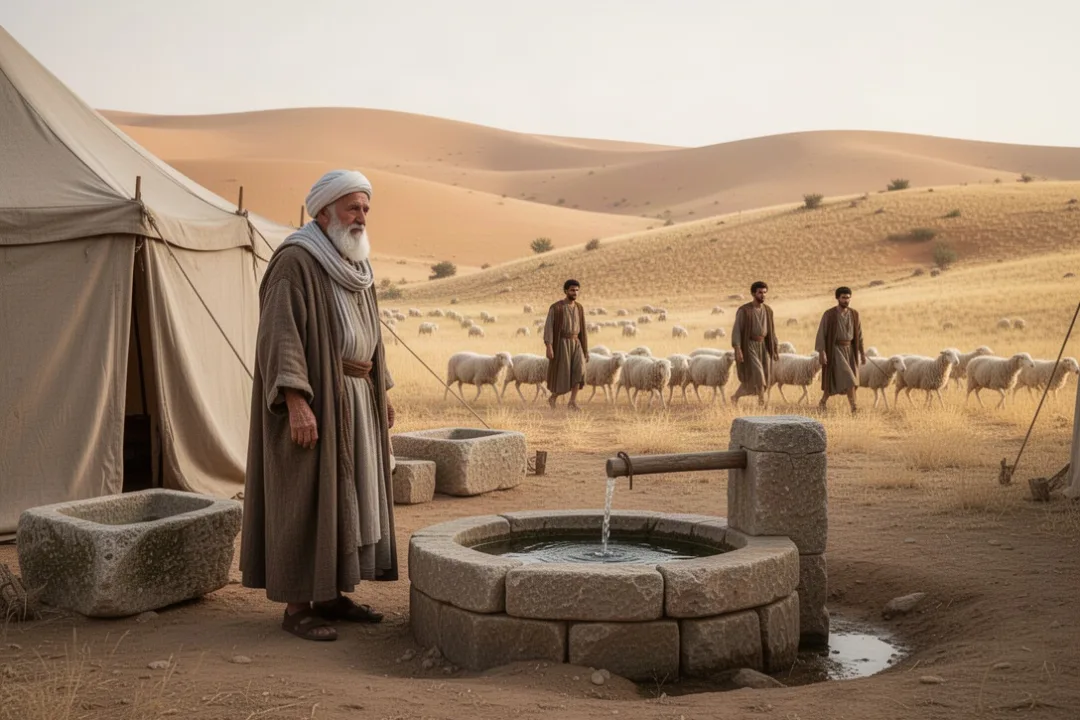
After Sarah dies, Abraham arranges a marriage for Isaac. A servant travels to Abraham’s relatives and meets Rebekah at a well. Her willingness to provide water for the traveler and his camels becomes a sign of her character, and she returns with the servant to marry Isaac. Genesis 24 gives the longest account of this courtship and marriage process.
Isaac and Rebekah initially have no children. Isaac prays, Rebekah conceives, and the pregnancy is difficult. She receives an oracle that the older son will serve the younger, establishing the tension that later develops between Esau and Jacob. Their twins are named Esau and Jacob, and the family’s unequal preferences soon become significant.
How Isaac’s character is shown through conflict and patience
Isaac is sometimes overshadowed by Abraham and Jacob, but Genesis gives him a distinct role. He is associated with continuity, endurance, and conflict over wells. During a famine, he moves toward Gerar, where he presents Rebekah as his sister because he fears for his safety. The decision resembles Abraham’s earlier deception and creates danger when the truth becomes known.
Isaac becomes prosperous in the land, and local herders dispute access to wells that his servants have dug or reopened. Rather than fight over each disputed well, Isaac moves on and digs elsewhere. He eventually finds room to settle, and the narrative presents this as a form of restraint. His life shows that preserving peace can sometimes require giving up an immediate advantage.
Isaac also receives a reaffirmation of the promise made to Abraham. God’s blessing is connected to Abraham’s faithfulness, and Isaac becomes the next bearer of the covenant. Genesis does not depict him as a passive placeholder; his household, economic success, prayer, and relationship with neighboring rulers all contribute to the story of the family’s growth.
In old age, Isaac’s eyesight fails. He plans to bless Esau, the son he loves, and asks for a meal prepared from game. Rebekah overhears the plan and helps Jacob disguise himself as Esau. Jacob receives the blessing intended for Esau, using clothing and goat skins to imitate his brother’s smell and hair. Isaac later recognizes what has happened, but the blessing cannot simply be withdrawn.
The episode reveals a divided household. Isaac favors Esau, Rebekah favors Jacob, and each parent acts separately rather than resolving the tension openly. The deception does not create the rivalry by itself, but it turns a family competition into a crisis. Esau’s anger becomes so intense that Jacob must leave home to escape him.
Why Jacob’s name and identity are central to his story
Jacob’s name is associated in Genesis with the heel and with grasping or supplanting. His birth story describes him emerging after Esau while holding his brother’s heel. Later events reinforce the association: Jacob negotiates for Esau’s birthright and deceives Isaac to obtain the paternal blessing.
Jacob’s purchase of the birthright occurs when Esau returns exhausted from the field. Esau agrees to surrender his firstborn rights in exchange for Jacob’s stew. The passage presents Esau as treating the birthright lightly and Jacob as shrewdly pursuing it. Even so, Jacob’s conduct is not portrayed as morally uncomplicated. He takes advantage of his brother’s immediate hunger, and the family’s later deception brings serious consequences.
The blessing from Isaac is different from the birthright, although the two are related. The birthright concerns the privileges of the firstborn, while the paternal blessing carries authority and future prosperity within the family. Jacob receives Isaac’s blessing through Rebekah’s plan, and Esau’s grief and anger make Jacob’s departure necessary.
On the journey away from home, Jacob sleeps at a place later called Bethel and dreams of a stairway or ramp connecting earth and heaven, with messengers moving along it. God speaks of the promises given to Abraham and Isaac and connects them to Jacob. The dream reassures Jacob that he is not abandoned, even while he is leaving the security of his family.
Jacob responds by setting up the stone he used as a pillow and naming the place Bethel, meaning “house of God.” His response includes a vow, but his faith is still developing. The scene marks a transition from Jacob as a schemer operating within his family to Jacob as a person who must encounter God directly while living away from home.
What Jacob learns through his years with Laban
Jacob travels to the household of Laban, his mother’s relative, and falls in love with Rachel. He agrees to work seven years to marry her. Laban, however, gives him Leah instead, explaining that the older daughter must marry before the younger. Jacob then marries Rachel as well after agreeing to additional service.
The arrangement produces a complicated household involving Leah, Rachel, Bilhah, and Zilpah. Genesis describes rivalry, grief, competition, and the births of Jacob’s children. The sons born during this period become the founders of the tribes associated with Israel, although the family relationships remain strained and unequal.
Jacob’s years with Laban mirror some of Jacob’s earlier behavior. He had deceived his father by appearing to be Esau; now Laban deceives him by substituting Leah for Rachel. Jacob later complains that Laban changes his wages repeatedly. The narrative does not present every detail of their economic agreement in modern terms, but it clearly shows a relationship marked by mistrust and exploitation.
Despite these conflicts, Jacob becomes wealthy and recognizes that he must leave. He departs with his family and possessions, and Laban pursues him. Their confrontation ends with a formal agreement and a boundary marker. The settlement does not erase the past, but it prevents further direct conflict between them.
Jacob’s time with Laban is significant because it shows that his character does not change instantly. He remains calculating and protective of his interests, yet he also becomes a husband, father, worker, and household leader. His transformation develops through repeated pressure rather than one simple moment.
What happened when Jacob returned to meet Esau
Jacob’s return home brings him face to face with the fear he has carried since leaving. He learns that Esau is approaching with four hundred men. The text does not clearly state Esau’s intention, so Jacob prepares for several possibilities: he divides his camp, sends gifts ahead, prays, and places his family in an order that reflects his fears and priorities.
Before meeting Esau, Jacob wrestles through the night with a mysterious figure at the Jabbok River. Genesis 32 identifies the figure in different ways within the scene, and Jacob later names the place Peniel because he believes he has encountered God. His hip is injured, and he leaves the struggle limping. The event becomes a symbol of persistence, vulnerability, and transformation.
Jacob receives the name Israel during this encounter. The name is connected to striving or wrestling with God, though translations and explanations vary. The change does not erase the name Jacob or every aspect of his earlier personality. Instead, it signals a new stage in his identity as someone marked by struggle with God and with people.
When Jacob finally meets Esau, Esau runs to him, embraces him, and weeps. This is one of the clearest scenes of reconciliation in Genesis. Jacob offers gifts, while Esau initially resists them. Their meeting shows that Jacob’s fear was not the same as Esau’s intention, although the brothers do not resume life as one household.
Reconciliation does not require pretending that deception never occurred. Jacob and Esau go separate ways, and the narrative later links Esau with Edom. Their relationship is restored enough for a peaceful meeting, but their households and territories remain distinct. That balance makes the scene more realistic than a simple claim that every family conflict has disappeared.
How Jacob became Israel and father of the twelve tribes
Jacob’s twelve sons are Reuben, Simeon, Levi, Judah, Dan, Naphtali, Gad, Asher, Issachar, Zebulun, Joseph, and Benjamin. Their mothers are Leah, Rachel, Bilhah, and Zilpah. Genesis and later biblical books use different arrangements depending on whether they are discussing family descent, tribal territory, or other purposes.
Leah’s sons include Reuben, Simeon, Levi, Judah, Issachar, and Zebulun.
Rachel’s sons are Joseph and Benjamin.
Bilhah’s sons are Dan and Naphtali.
Zilpah’s sons are Gad and Asher.
Jacob’s name Israel becomes especially important because it identifies both the individual patriarch and the people descended from him. The biblical text may call Jacob “Jacob” and “Israel” within the same narrative, sometimes emphasizing his personal life and sometimes his national significance.
The twelve-tribe pattern is not always represented by exactly the same list in every biblical context. Joseph’s sons, Ephraim and Manasseh, later receive tribal status, while Levi’s descendants have a distinctive priestly role and do not always appear as a territorial tribe. Readers should therefore treat the number twelve as a meaningful organizational pattern without assuming every list serves the same purpose.
Why Joseph’s story completes Jacob’s family narrative
Jacob’s relationship with Joseph becomes a major source of family conflict. Jacob gives Joseph a distinctive garment, and Joseph’s dreams suggest that his family members will one day bow before him. His brothers interpret the favoritism and dreams as threats, and they sell him to traveling merchants. They then make Jacob believe that Joseph has been killed by a wild animal.
Jacob’s grief is profound and long-lasting. The family’s deception leaves him convinced that he will mourn Joseph for the rest of his life. This reversal is striking: Jacob once deceived his father with clothing and a prepared animal, and now his sons use Joseph’s garment and an animal’s blood to deceive him.
Joseph eventually rises to authority in Egypt and helps preserve food during famine. When Jacob’s sons travel to Egypt, they encounter Joseph without recognizing him. Their later reconciliation brings Jacob’s entire household to Egypt, where they survive the famine and settle in the land of Goshen.
Jacob’s final years include blessings for his sons and for Joseph’s sons, Ephraim and Manasseh. He adopts Joseph’s sons into the family’s inheritance structure, giving them a place among the tribes. Genesis ends the patriarchal family story with Jacob’s death and burial preparations, while the book of Exodus begins with the later growth and oppression of the Israelites in Egypt.
How Isaac and Jacob differ as biblical figures
Isaac and Jacob share the same covenant line, but Genesis gives them different narrative profiles. Isaac’s life is comparatively centered on receiving, preserving, and passing on what came from Abraham. Jacob’s life is more mobile and conflict-filled, taking him from Canaan to Mesopotamia and back again.
Isaac is associated with continuity: he receives the promise, marries Rebekah, reopens wells, and carries forward Abraham’s household.
Jacob is associated with transformation: he leaves as a fugitive, builds a large family, wrestles with God, and returns with the name Israel.
Isaac tends toward quiet endurance: he often responds to disputes by moving and finding another place.
Jacob acts through negotiation and strategy: his choices produce both advancement and painful consequences.
Both experience fear: Isaac fears for his safety in Gerar, while Jacob fears Esau’s response to the stolen blessing.
Neither man fits a simple category such as “good example” or “bad example.” Isaac shows trust and endurance but participates in a divided family system. Jacob receives the covenant promise but uses deception and later suffers the effects of deception within his own household.
Common mistakes when reading Isaac and Jacob
These stories span many chapters and include recurring names, customs, and promises. A few reading habits make the narratives easier to understand and prevent common misunderstandings.
Do not confuse Jacob with his son Joseph. Jacob is the father; Joseph is the son whose brothers sell him into slavery and who later serves in Egypt.
Do not treat Esau as merely a villain. Esau gives up his birthright and wants revenge, but he also shows generosity and forgiveness when he meets Jacob.
Do not assume a blessing makes every action righteous. Jacob is chosen within the covenant story, but his deception still causes fear, separation, and family pain.
Do not collapse birthright and blessing into one event. Jacob buys the birthright from Esau and later receives Isaac’s blessing through deception.
Do not read every number twelve list as identical. Tribal lists reflect different purposes, and Joseph’s sons and Levi can affect how the tribes are counted.
Do not overlook the women in the narrative. Sarah, Rebekah, Leah, Rachel, Bilhah, and Zilpah influence marriages, births, household alliances, and the movement of the covenant family.
Do not assume reconciliation restores the old household. Jacob and Esau reconcile during their meeting, but they continue with separate households and territories.
A useful reading practice: Track three things in each episode—who receives a promise, what human choice complicates the situation, and what consequence follows. This keeps the family drama connected to the larger covenant story.
What Isaac and Jacob teach about family conflict and faith
The stories present faith as something lived within imperfect relationships. Isaac and Rebekah do not handle parental favoritism well. Jacob and Esau allow competition over status and inheritance to define their relationship. Laban exploits Jacob, and Jacob’s sons repeat deception when they hide Joseph’s fate.
At the same time, Genesis does not claim that human failure cancels the covenant promise. The promise continues through betrayal, migration, infertility, famine, and grief. That continuation should not be confused with approval of every decision. The narrative holds two ideas together: God’s purpose remains active, and human actions still carry real consequences.
Jacob’s transformation is particularly gradual. He begins as someone who grasps for advantage, but he becomes more aware of his dependence, his fear, and his responsibility for a large household. His limp after wrestling at Peniel gives physical form to a changed identity: the man who once relied on cleverness now walks with a lasting reminder of vulnerability.
Isaac’s story offers a different emphasis. His life shows that a person can contribute to a long historical promise through ordinary faithfulness: maintaining a household, raising children, managing disputes, praying for a family, and preserving what has been received. His quieter role is essential to the continuation of the biblical story.
Where to read the stories of Isaac and Jacob
Isaac’s main story appears in Genesis 21–35, although some chapters focus more directly on Abraham or Jacob. For Isaac’s birth, read Genesis 21; for the near-sacrifice and provision of the ram, Genesis 22; for his marriage to Rebekah, Genesis 24; and for his family conflict and wells, Genesis 25–27.
Jacob’s story begins in Genesis 25, where his birth and rivalry with Esau are described. Genesis 27 covers the stolen blessing, Genesis 28 the dream at Bethel, Genesis 29–31 the years with Laban, Genesis 32–33 the wrestling and reunion with Esau, and Genesis 37–50 Jacob’s family story through Joseph. Genesis 35 records the name Israel and several major family transitions.
Reading these chapters in sequence makes repeated patterns easier to see. Deception involving clothing appears more than once, younger children receive unexpected prominence, and family members repeatedly leave home before returning or settling elsewhere. The patterns are not accidental decorations; they connect individual episodes across generations.
For a focused study, compare the promises given to Abraham in Genesis 12, 15, and 17 with the reaffirmations to Isaac and Jacob. Then compare Jacob’s first departure from Canaan with his return. The contrast shows how his understanding of family, land, fear, and divine presence develops over time.
Frequently asked questions
Were Isaac and Jacob father and son?
Yes. Isaac was the son of Abraham and Sarah, and Jacob was one of Isaac’s twin sons with Rebekah. Jacob’s twin brother was Esau. This makes Jacob Abraham’s grandson and places him in the family line through which Genesis traces the covenant promise from Abraham to Isaac and then to Jacob, whose name became Israel.
Why did Jacob receive the blessing instead of Esau?
Genesis presents several connected reasons. God’s prenatal message to Rebekah indicated that the older son would serve the younger, Esau had sold his birthright to Jacob, and Rebekah helped Jacob deceive Isaac. The story explains how Jacob received the blessing, but it does not portray the deception as harmless or free from painful consequences.
Did Jacob become Israel?
Yes. During a nighttime struggle near the Jabbok River, Jacob receives the name Israel. The name marks his encounter with God and his persistence through struggle. Genesis continues to use both names, but Israel becomes especially important because Jacob’s descendants are known as the people of Israel and his twelve sons are linked with Israel’s tribes.
How did Isaac and Jacob die?
Genesis says Isaac died at an old age and was buried by Esau and Jacob. Jacob died in Egypt after blessing his sons and Joseph’s sons. He requested burial in the family burial place at Machpelah in Canaan, where Abraham, Sarah, Isaac, Rebekah, and Leah were also associated with burial.












Leave a Reply