Abraham’s sons: Ishmael, Isaac, and the six by Keturah
Abraham’s sons: Ishmael, Isaac, and the six by Keturah
Abraham had eight named sons, although Isaac and Ishmael are the two most prominent in the Bible and in later Jewish, Christian, and Islamic traditions. Ishmael was Abraham’s first son, born to Hagar, while Isaac was born later to Sarah. After Sarah’s death, Abraham also had six sons with Keturah.
The different roles of these sons can be confusing because the biblical narrative concentrates on only a few family members. Genesis gives the names of all eight, but it follows Isaac’s line in detail because that line leads to Jacob, the ancestor of the tribes of Israel. Ishmael also becomes the father of a significant people, while the six sons of Keturah are connected with additional tribes and regions.
Who Abraham’s sons were and who their mothers were
The sons of Abraham are listed in two parts of Genesis. Ishmael was born to Hagar, Sarah’s Egyptian servant. Isaac was born to Sarah, Abraham’s wife, when both Abraham and Sarah were advanced in age. Genesis later names six more sons born to Keturah: Zimran, Jokshan, Medan, Midian, Ishbak, and Shuah.
Ishmael: Abraham’s son by Hagar.
Isaac: Abraham’s son by Sarah and the heir of the covenant promise in the Genesis story.
Zimran, Jokshan, Medan, Midian, Ishbak, and Shuah: Abraham’s sons by Keturah.
Genesis presents Keturah as Abraham’s wife after Sarah’s death, although some Jewish traditions describe her relationship to Abraham differently or identify her with Hagar. The biblical text itself names her as the mother of six sons and does not provide a full account of each son’s life.
The family record also distinguishes between Abraham’s descendants and the particular line through which the covenant story continues. Abraham gave gifts to the sons of his other wives and sent them away from Isaac while he was still living, but Isaac received Abraham’s inheritance. That arrangement makes clear that the narrative recognizes multiple branches of Abraham’s family while giving Isaac a special place in the promise associated with the land and covenant.
The central distinction: Abraham’s eight sons all belong to his family, but the Genesis account follows Isaac’s descendants as the covenant line and describes Ishmael and the sons of Keturah as founders of other branches.
Ishmael was Abraham’s first son
Ishmael was born after Sarah gave Hagar to Abraham because Sarah had not yet had a child. In the ancient setting of Genesis, a wife might give her servant to her husband in the hope that the servant’s child would be counted within the household. Hagar conceived, but the arrangement produced tension between Hagar and Sarah.
The name Ishmael is associated with the idea that God hears. In Genesis, Hagar encounters God in the wilderness and receives a promise concerning her unborn son. The account gives Ishmael an important identity before his birth: he is not treated as an accidental or forgotten child, even though the later covenant narrative centers on Isaac.
Genesis describes Ishmael as growing into the ancestor of twelve rulers or tribal leaders. His twelve sons are named in Genesis 25, and the list presents them as heads of peoples. This resembles the later description of Jacob’s twelve sons, although the two lists serve different narrative roles. Ishmael’s descendants are connected with areas around the northern Arabian Peninsula and neighboring regions, but the biblical genealogies do not provide a modern map of every group.
The story of Ishmael’s childhood includes his departure from Abraham’s household with Hagar. Sarah wanted Hagar and Ishmael sent away after Isaac’s birth, and Abraham was distressed by the request. God told Abraham to listen to Sarah in this matter and promised that Ishmael would also become a great nation. Abraham then provided provisions for Hagar and Ishmael before they went into the wilderness.
The biblical account emphasizes both separation and protection. Ishmael does not become the heir through whom Isaac’s covenant line continues, but God still hears the boy’s cries and preserves him. The narrative therefore avoids presenting Ishmael as worthless or outside divine concern. His descendants receive a future of their own.
As an adult, Ishmael is described as living in the wilderness of Paran and taking an Egyptian woman as his wife. Later, he appears alongside Isaac at Abraham’s burial. That brief reunion matters because it shows the brothers participating together in a family duty despite the earlier conflict surrounding their households.
Isaac became the son of promise in Genesis
Isaac was Abraham’s son by Sarah, and his birth is portrayed as the fulfillment of a promise that had seemed impossible. Sarah had been unable to have children, and both she and Abraham were old when the promise of a son was repeated. Isaac’s name is connected with laughter, reflecting the earlier reactions of Abraham and Sarah to the announcement that they would have a child.
Isaac’s role is not simply that of another son in a large family. Genesis identifies him as the son through whom God’s covenant with Abraham would continue. The covenant includes promises concerning descendants, relationship with God, and a land associated with Abraham’s journey. Isaac therefore occupies the central place in the biblical genealogy that leads to Jacob and the people of Israel.
One of the most difficult episodes connected with Isaac is the command that Abraham take him to a mountain and present him as an offering. Genesis ultimately describes God stopping Abraham before Isaac is killed and providing an animal instead. Jewish and Christian interpreters have discussed the meaning of this passage in many ways, including questions of trust, obedience, sacrifice, and God’s rejection of human sacrifice. The text should not be reduced to a simple lesson, because the episode raises profound moral and theological questions.
Isaac later marries Rebekah, and they have twin sons, Esau and Jacob. Jacob becomes the central ancestor of the twelve tribes of Israel. Through this family line, the Genesis story moves from Abraham to Isaac, then to Jacob, and eventually to the nation whose history fills much of the rest of the Hebrew Bible.
Isaac’s story is quieter than Abraham’s and Jacob’s, but his position is essential. He is the link between the first generation of the promise and the next generation. His life also preserves the connection between the family’s earlier travels and its later settlement in the land promised to Abraham’s descendants.
The six sons Abraham had with Keturah
After Sarah’s death, Genesis says that Abraham took Keturah as a wife. She bore him six sons: Zimran, Jokshan, Medan, Midian, Ishbak, and Shuah. Unlike Ishmael and Isaac, these sons receive only brief treatment, mostly through genealogical lists.
Zimran, Jokshan, and Medan
Zimran is the first son listed among Keturah’s children. The Bible gives no extended story about him, and later attempts to identify his descendants with a particular historical people remain uncertain. His inclusion in the genealogy shows that Abraham’s family extended into several branches beyond the line of Isaac.
Jokshan had two sons, Sheba and Dedan. These names also appear in other biblical genealogies and references, but the repeated names make it difficult to establish one uninterrupted family tree from every occurrence. Sheba and Dedan are associated in different passages with trade, wealth, and peoples to the south or southeast of Israel. The biblical material suggests broad regional connections rather than giving enough information for a precise modern identification.
Medan is named between Jokshan and Midian. Like Zimran, he has no separate narrative in Genesis. His name is preserved as part of the family record, which indicates that the genealogy values the existence of these branches even when their individual stories are not developed.
Midian, Ishbak, and Shuah
Midian is the best-known of Keturah’s sons because the Midianites appear in several later biblical stories. Moses spends time in the land of Midian and marries Zipporah, whose father Jethro is associated with Midian. Midianites also appear in accounts involving trade, conflict, and relations with Israel.
These later references do not mean that every person called a Midianite can be traced through a simple biological record back to one individual. Biblical genealogies often explain relationships between peoples in a compact way, while the historical development of those groups was more complex. Still, Genesis clearly presents Midian as one of Abraham’s sons and the ancestor associated with a people known as Midian.
Ishbak and Shuah are the last two sons listed as Keturah’s children. The Bible says little about either man. Shuah is sometimes connected by readers with the Shuhite people, including Bildad the Shuhite in Job, but the available biblical information does not establish every detail of that connection with certainty.
The six sons by Keturah show that Abraham’s descendants were not limited to Isaac and Ishmael. At the same time, Genesis gives them less narrative attention because its main concern is the line leading from Abraham to Isaac, Jacob, and Israel. A short genealogy does not imply that a person had no importance; it means the biblical author is emphasizing a different purpose in that passage.
Why Isaac and Ishmael receive different roles
A common question is why Isaac is called the heir when Ishmael was Abraham’s firstborn son. In the Genesis narrative, inheritance and covenant status are not determined by birth order alone. Isaac is the son born through Sarah, the wife connected to the promise that Abraham would become the ancestor of a chosen people.
Ishmael’s status is still substantial. God promises that he will become fruitful, multiply, and father twelve rulers. Abraham also shows concern for him, and Ishmael returns with Isaac to bury their father. The story creates a distinction between the covenant line and the wider family blessing rather than portraying Ishmael as abandoned by God.
The difference can be described in several ways:
Birth order: Ishmael is older, but Isaac is the son through whom the Genesis covenant line is traced.
Motherhood: Ishmael is Hagar’s son, while Isaac is Sarah’s son.
Inheritance: Isaac receives Abraham’s principal inheritance in the narrative.
Descendants: Ishmael becomes the ancestor of twelve tribal leaders, and Isaac becomes the father of Esau and Jacob.
Narrative focus: Genesis follows Isaac’s line in detail because it leads to Israel’s patriarchs and tribes.
This distinction also explains why the two brothers are sometimes placed in opposition in religious discussions. Their stories involve real family conflict, but Genesis includes signs of shared ancestry and mutual connection as well. Both are Abraham’s sons, both receive a future, and both are present at Abraham’s burial.
Read the genealogy on its own terms: Isaac’s special covenant role does not erase Ishmael’s place in Abraham’s family, and the six sons of Keturah should not be overlooked simply because Genesis gives them shorter accounts.
Abraham’s sons in Jewish, Christian, and Islamic traditions
Jewish and Christian readings of Genesis generally identify Isaac as the son through whom the covenant with Abraham continues. In the Hebrew Bible, the genealogy moves from Isaac to Jacob, and Jacob’s twelve sons become the ancestors of the tribes of Israel. Christian writings also treat Abraham, Isaac, and Jacob as central figures in the history of God’s promises.
Christian interpretation often discusses Ishmael in relation to Isaac, especially when considering the difference between the two lines in Genesis. These discussions vary widely. Some readings emphasize the contrast between the two mothers and the two covenant roles, while others stress God’s care for Ishmael and the promise that he would become a great nation.
Islamic tradition honors both Abraham, known as Ibrahim, and Ishmael, known as Isma'il. The Quran presents Abraham and Ishmael as important servants of God and associates them with the building or restoration of the Kaaba in Mecca. Islamic tradition commonly regards Ishmael as an ancestor of the Arab peoples and gives him a major place in the story of Abraham’s family.
Islamic tradition also differs from the biblical account in how it identifies the son connected with Abraham’s attempted sacrifice. The Quran does not name that son in the relevant passage, while many later Muslim interpretations identify him as Ishmael. Jewish and Christian traditions generally identify Isaac in the Genesis account. This is a significant difference, and it should be described carefully rather than treated as though all traditions tell the episode in the same way.
These traditions share several broad themes: Abraham’s trust in God, the importance of his sons, the growth of their descendants, and the continuing significance of their family. They differ in how they understand covenant, inheritance, sacrifice, and the historical identity of later peoples.
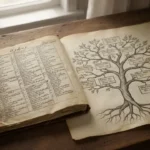
How to read Abraham’s family tree accurately
When someone asks about “Abraham’s sons,” the best answer depends on whether they mean the two sons emphasized in the main narrative or every son named in Genesis. Saying only “Isaac and Ishmael” is understandable in a basic discussion, but it leaves out Keturah’s six sons. Saying only that Abraham had eight sons also misses why Isaac and Ishmael matter so much.
A reliable way to remember the family is to separate the information into three maternal branches:
Hagar’s branch: Ishmael, Abraham’s first son and the ancestor of twelve named tribal leaders.
Sarah’s branch: Isaac, the son connected to the covenant line that leads through Jacob and the tribes of Israel.
Keturah’s branch: Zimran, Jokshan, Medan, Midian, Ishbak, and Shuah, whose descendants form additional branches of Abraham’s family.
It also helps to distinguish genealogy from narrative detail. Genesis gives a name or family connection to many people without telling their complete life story. The lack of a long account does not make Keturah’s sons less genuinely part of Abraham’s family; it simply reflects the book’s focus on the line that leads to Israel.
Finally, avoid treating ancient tribal names as if they were modern national identities with perfectly documented borders. Biblical genealogies often preserve memory about relationships among peoples, but they do not always provide enough evidence to match every name to one present-day group. The safest reading identifies what the text says clearly and leaves uncertain connections labeled as uncertain.
Frequently asked questions
How many sons did Abraham have?
Abraham had eight named sons in Genesis: Ishmael by Hagar, Isaac by Sarah, and six by Keturah. Keturah’s sons were Zimran, Jokshan, Medan, Midian, Ishbak, and Shuah. Isaac and Ishmael are discussed far more extensively, which is why people sometimes mention only those two when asking about Abraham’s children.
Who was Abraham’s first son?
Ishmael was Abraham’s first son. He was born to Hagar, Sarah’s Egyptian servant, before Isaac was born to Sarah. Although Ishmael was the firstborn, Genesis presents Isaac as the son through whom the covenant line continues. Ishmael also receives a promise that he will become the father of a great nation and twelve rulers.
Was Isaac or Ishmael the son connected with the sacrifice story?
Genesis identifies Isaac as the son Abraham was commanded to take to the mountain, although God stopped the sacrifice before Isaac was killed. The Quran does not name the son in the corresponding passage. Many later Islamic interpretations identify him as Ishmael, while Jewish and Christian readings generally identify Isaac.
What happened to Abraham’s other six sons?
Genesis records that Abraham had six sons with Keturah: Zimran, Jokshan, Medan, Midian, Ishbak, and Shuah. It provides little biography for most of them, but it connects their families with additional peoples and regions. Midian is the most prominent in later biblical stories, especially those involving Moses and the land of Midian.
















Leave a Reply