Acts 15 Jerusalem Council: An Insight into the Early Church’s Turning Point
The narrative commonly referred to as the Acts 15 Jerusalem Council marks one of the most consequential moments in the life of the early Christian communities. Known by many names—the Jerusalem council, the Acts 15 meeting in Jerusalem, or simply the Acts 15 assembly—this episode gathers the leaders of the church to address a crisis that cut to the heart of what it meant to be a follower of Jesus in a world of diverse cultures and religious practices.
From a literary standpoint, the record in the Book of Acts situates the discussion within a broader arc: the spread of the gospel to Gentiles, the dynamic leadership of apostles such as Peter and Paul, and the evolving understanding of how the gospel relates to the Mosaic Law. The decisions reached during this council did more than resolve a theological disagreement; they established a model for how a new religious movement could maintain unity while respecting diversity. The debate over whether Gentile converts must observe circumcision and the ceremonial aspects of the Hebrew law triggered fierce debate, but out of the dialogue emerged a carefully crafted decree that shaped mission strategy, church practice, and the identity of Christian communities for generations.
In this article, we will explore the Acts 15 Jerusalem Council from several angles: its historical background, the key figures involved, the precise decisions reached, the theological and practical implications, and the longer-term impact on early Christianity. We will also consider how the language of this event—the terms used, the rhetoric employed, and the way authority is exercised—helps readers today understand the nature of early Christian leadership and governance. Throughout, we will highlight crucial terms and phrases in bold to emphasize their importance for understanding the debate and its outcomes.
Context and Backstory: Why a Jerusalem Council Was Necessary
To appreciate the significance of the council in Acts 15, one must first grasp the tensions at play in the early Christian movement. The gospel began within a Jewish milieu, and Jesus himself operated within a Hebrew framework of expectations, laws, dietary rules, and ritual practices. As the early church began to evangelize beyond Jewish circles, Gentile converts entered the community. This created questions about what it meant to belong to the people of God when one did not share the full spectrum of Israel’s ceremonial and civil laws.
Several factors contributed to the sense that a formal response was needed. First, there were Judaizer tendencies—that is, certain Christian groups who insisted that Gentile believers should adopt the Mosaic Law, including circumcision, as a prerequisite for full inclusion. Second, there were real consequences for mission work: without a clear decision, Gentile evangelism risked creating divisions among churches that held different expectations about law observance. Third, the leadership of the church wanted to safeguard the unity of the move of God while preserving a sense of discernment in how the Gentiles were integrated into the people of God. In this light, the Jerusalem assembly emerged as a space where apostles and elders could testify, reason, and discern together under the guidance of the Holy Spirit.
In addition to the immediate theological question, the council touched on the broader question of how church authority would operate in a growing, multiethnic movement. Authority and discernment—who speaks for the church, how decisions are made, and how to treat those with divergent dietary and ritual practices—are themes that recurred in later councils. The Acts 15 account thus serves as a foundational text for understanding early Christian governance, not merely a technical ruling about circumcision.
The Participants and the Shape of the Debate
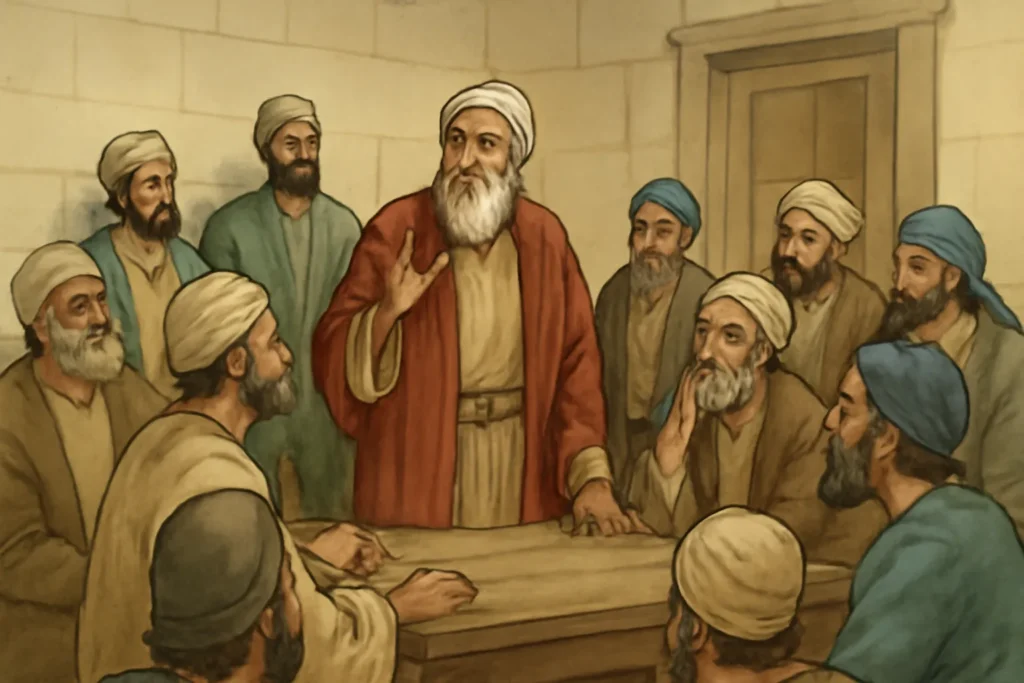
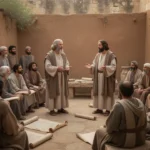
The leadership of the Jerusalem meeting included the core apostolic circle and elders who had contributed to the spread of the gospel. There is particular attention paid to the figures of Peter, Paul, and James, often described as the brother of Jesus and a formative voice in the early church. The account records how each contributor spoke in the proceedings, adding weight to a decision that would be publicly endorsed by the community.
The narrative emphasizes a sequence: Paul and Barnabas recount the discoveries of their missionary journeys among the Gentiles, especially in Antioch, where God had acted through miraculous signs and the spread of faith among non-Jewish people. This testimony provided powerful evidence that the Holy Spirit was at work among Gentiles independent of circumcision or adherence to ceremonial law. Peter’s speech then re-centers the issue from miracle-work to the divine inclusion of Gentiles into the people of God—the point being that God granted repentance unto life even to the Gentiles. Finally, James offers a verdict that reflects a pastoral and communal wisdom: while Gentiles should not be required to adopt the full Torah observance, certain constraints would help preserve harmony and moral clarity within the diverse church.
The Jerusalem assembly thus demonstrates a pattern: testimony about divine action, followed by a reasoned argument from Scripture and tradition, culminating in a decision that respects both the universality of the gospel and the integrity of local contexts. The interplay among these leaders—Peter’s emphasis on God’s initiative, Paul’s emphasis on missionary fruit, and James’s pastoral pruning—produced a decree that would function as a charter for the mission and life of faith communities beyond Jerusalem and Judea.
The Core Decree: What Was Decided
The decisive moment in the Acts 15 Jerusalem Council was encapsulated in a succinct, carefully worded decree that addressed both the immediate controversy and the broader life of the church. The language is famously compact and theology-rich, with a sense that the decision carries a divine endorsement: “It seemed good to the Holy Spirit, and to us, to lay upon you no greater burden than these necessary things.” This formulation places the Holy Spirit at the center of the decision-making process and invites a shared sense of responsibility among church leaders and congregants alike.
From this core statement, the council enumerated a set of practical requirements designed to foster unity without imposing the full burden of Mosaic observance on Gentile converts. The key provisions can be summarized as follows:
Avoid things sacrificed to idols — Gentile believers should refrain from participating in meals that were associated with idol worship or sacrificial rites, which could risk confusion about allegiance and worship.
Avoid blood — Gentiles were urged to abstain from consuming blood, a prohibition rooted in both dietary laws and concerns about the sanctity and camp of life.
Avoid things strangled — This phrase often overlaps with the prohibition on blood, emphasizing humane handling of meat and ritual purity concerns in a broader sense.
Avoid sexual immorality — This broad category included practices associated with pagan cults and with certain social norms in the Greco-Roman world, which the early church sought to distance itself from to preserve moral integrity.
Beyond these four explicit directives, the decree also communicates an implicit expectation: Gentile Christians should adopt a posture of moral and ceremonial restraint that would foster harmony between Jewish and Gentile believers. The practical effect was not to impose the full ceremonial law on Gentiles, but to provide a baseline of conduct that would facilitate fellowship across cultural boundaries. The phrase “these necessary things” signals a pragmatic, pastoral approach rather than a strict reapplication of the Torah for all Gentile converts.
In addition to the four prohibitions, the council’s statement about keeping yourselves from these things implies a trust in the ongoing work of the Holy Spirit to shape behavior. The coding of the decision as a shared discernment, rather than a unilateral decree, reinforced the sense that the church's authority emerged from communal faithfulness and divine guidance rather than a single leader’s fiat. This model of governance—where testimony, reason, and Spirit-led consensus converge—became a hallmark for how early Christians navigated future disagreements and integrated diverse communities into a single mission.
Theological Significance: What the Decision Tells Us About Faith and Law
The Acts 15 council is often read through the lens of who belongs to God’s people and what it means to be part of the church. The decision to permit Gentiles to enter the church without the full burden of circumcision marks a radical expansion of the community and a redefinition of identity. This development has several theological implications worth highlighting:
Justification by faith and inclusion apart from circumcision — The early church’s decision underscored that entry into the people of God rests on acceptance of the gospel’s message, not on adherence to ceremonial rites. This aligns with the broader narrative in Acts that emphasizes faith and grace as the ground of belonging.
Authority and discernment in mission — The council models a constructive tension between apostolic authority and the humility of listening to the diverse experiences of missionaries like Paul and Barnabas. The outcome demonstrates that authority in the early church was not merely hierarchical; it depended on communal discernment and openness to the Spirit’s guiding work in real time.
Continuity and discontinuity with the Mosaic Law — The decree represents both continuity (recognizing the wisdom of moral boundaries, such as abstaining from idolatry and sexual immorality) and discontinuity (refraining from requiring Gentiles to observe ceremonial aspects of the law). It suggests a pragmatic path toward a new form of community that honors historical roots while embracing a broader horizon of inclusion.
Mission strategy shaped by law and freedom — The acts of inclusion did not render the law irrelevant; rather, they placed a responsible boundary around how the law would function in a diverse missionary context. This shaped how churches would teach, worship, and relate to non-Jewish believers as the church expanded into the Greco-Roman world.
From a literary and historical perspective, the Acts 15 council also addresses a perennial question for religious movements: how to maintain doctrinal integrity while embracing cultural difference. The solution—codified in the decree—acknowledges both the reality that God’s Spirit was at work among Gentiles and the pastoral need to preserve unity in the face of potential friction. In this sense, the Jerusalem meeting becomes a masterclass in balancing fidelity to core convictions with a generous welcome to newcomers. In scholarship and modern preaching, the phrase “It seemed good to the Holy Spirit, and to us” is often cited as a model of Spirit-led decision-making that is neither impulsive nor sectarian.
Immediate and Long-Term Impacts on the Early Church
The consequences of the Acts 15 Jerusalem Council reverberated through the early Christian movement in several concrete ways. It established a precedent for how the church would handle questions about law, ritual, and inclusion, and it significantly affected the trajectories of missionary work and church governance. Here are some of the most impactful outcomes:
Paul and Barnabas’ mission gains legitimacy — The council’s decree provided a public endorsement for Gentile mission, which in turn bolstered Paul and Barnabas’ ongoing travels and preaching among non-Jewish populations. It helped reduce resistance from Jewish Christians who had concerns about circumcision and the requirements placed on Gentile converts.
A framework for future councils — The Acts 15 decision can be seen as an early example of a formal council approach within the church: a gathering of leaders, a sharing of witness, a weighing of testimonies, and a community-wide resolution. This model would recur in later generations as Christian communities faced new doctrinal and practical issues.
Impact on the pace and method of Gentile inclusion — The decree contributed to a more rapid integration of Gentiles into Christian life, including worship, fellowship, and leadership roles, without the barrier of compulsory circumcision. This openness to Gentile inclusion helped the church to grow rapidly beyond its Jewish roots.
The shaping of ecclesiastical boundaries — While the council affirmed inclusion, it also helped define boundaries around certain practices. By naming specific prohibitions, the church provided a moral and communal framework that helped churches maintain fellowship across diverse contexts.
The diffusion of gospel-centered identity — The focus shifted toward a gospel-centered identity that transcended strict ethnic or ceremonial categories. This helped the early church articulate a mission that could be understood in multiple cultural settings, enabling a more universal claim about Jesus’ lordship.
In the decades that followed, the churches in Asia Minor, Greece, and beyond would reflect on this Acts 15 decision as they navigated new contexts and challenges. The persistent theme across these communities was that the message of Christ was the central criterion for belonging, while cultural practices could be reinterpreted in light of the gospel.
The Four Prohibitions and the Broader Implications for Christian Ethics
The participants in the Acts 15 council used a targeted list of prohibitions to create practical boundaries for Gentile believers. These prohibitions worked as a bridge between two groups with different cultural and religious backgrounds. Here is a closer look at each element and its ethical or pastoral significance:
Things sacrificed to idols — The prohibition aimed to minimize ties with idolatrous practices that could cause scandal or confusion about Christian exclusivity in worship. It signaled a clear stance against participating in idolatrous rites while allowing room for Gentile identity to emerge apart from a Jewish ritual framework.
Blood — Dietary purity rules, including avoidance of blood, reflected a concern for life-centered ethics and reverence for the sanctity of life, as well as continuity with some Old Testament laws that safeguarded humane treatment of animals and respect for life.
Things strangled — This reinforces the blood prohibition and highlights a concern for humane practices in meat preparation and consumption, tying ethical conduct to community harmony.
Sexual immorality — The broad catchall here acknowledges that Greek and Roman moral codes included practices that Christians found incompatible with the witness of the gospel. This ethical boundary helped define a distinct Christian moral economy and protected the integrity of Christian marriage and family life against practices associated with pagan religion and social norms.
Beyond the four prohibitions, the decree invites Gentile Christians to adopt a posture of restraint that would promote fellowship with Jewish believers and maintain social cohesion in mixed congregations. The ethical implications extend into worship life, community meals, church discipline, and public witness. The Acts 15 record shows that ethical praxis—what believers do in daily life—matters for mission success and for the credibility of the church’s message to outsiders. As such, the council’s ethical guidance was not merely a set of rules but a framework for the gospel to transform behavior within diverse communities.
Variations in Language and Semantic Breadth: Different Ways to Refer to the Jerusalem Meeting
Scholars and readers often describe this pivotal event using a variety of phrases to capture its scope and significance. Some of the common refrains include:
The Acts 15 council in Jerusalem and the Jerusalem assembly addressing Gentile inclusion
The Acts 15 meeting where the apostles and elders deliberated on the law and faith
The Acts 15 debate about circumcision and the Mosaic Law in light of grace
The Jerusalem summit that produced the decree for Gentile believers
The Acts 15 adjudication on whether Gentile converts must be circumcised
Using these variations helps preserve semantic breadth and allows readers to recognize that the event is discussed in a range of scholarly and pastoral contexts. Each wording emphasizes a different facet—decision-making, governance, inclusion, or ethical boundaries—without changing the core historical memory of what happened in Jerusalem at that time.
Contemporary Relevance: Lessons for Modern Churches
Although the events described in the Acts 15 narrative occurred nearly two millennia ago, the underlying questions remain relevant for contemporary religious communities: How should a faith community welcome newcomers who do not share every tradition? How should leadership balance fidelity to core convictions with openness to diverse expressions of faith? And how should the church discern together when confronted with hotly contested issues?
Several practical lessons emerge from this ancient decision that resonate today:
Discernment over coercion — The Jerusalem council model shows that decisions emerge through listening to testimonies, wrestling with Scripture, and seeking the Spirit’s guidance. Modern churches can learn from this by prioritizing dialogue and shared discernment rather than unilateral edicts.
Clarity of core convictions — The decree identifies essential boundaries: not compromising on the gospel’s core message while allowing flexibility in areas that are culturally contextual. This helps communities articulate what is non-negotiable and what is negotiable in practice.
Hospitality toward difference — The inclusion of Gentile believers without forcing them to adopt every Jewish practice models a posture of welcome that respects cultural diversity while maintaining communal integrity.
Pastoral boundaries that foster unity — The explicit prohibitions demonstrate how boundaries can be used to preserve peace within a multiethnic church, preventing practices that would be harmful to fellowship or that would hinder mission.
In a world where religious and cultural pluralism is common, the Acts 15 framework offers a historical example of how a faith community can navigate controversy with a posture of humility, obedience to God, and a shared commitment to mission. The language of “it seemed good to the Holy Spirit, and to us” remains a compelling invitation to contemporary church leaders to cultivate consensus through spiritual discernment and a pastoral imagination that sees unity in diversity.
The Decree in Practice: How Churches Implemented the Acts 15 Decisions
In the wake of the Jerusalem council ruling, local churches and traveling missionaries underwent shifts in their patterns of ministry. Here are some representative ways the four prohibitions and the emphasis on inclusion were interpreted and applied in different gospel communities:
Local congregations began inviting Gentile believers into shared meals and worship without imposing circumcision or full Torah observance, while still encouraging moral and ethical discernment in daily life.
Pastors and teachers clarified boundaries by teaching about idol worship, ethical behavior, and respectful engagement with neighbors who held other beliefs.
Mission teams adjusted their outreach strategies to emphasize the universality of the gospel rather than the observance of particular ceremonial practices, allowing for a more culturally contextualized proclamation of Jesus as Lord.
Church leaders fostered accountability structures that helped communities maintain unity and address conflicts arising from culturally diverse practices.
Across different regions, the outcome was a church that could testify to the same gospel while expressing it through varied liturgical forms and cultural expressions. This adaptability did not imply relativism about core beliefs; rather, it showed that the church’s central confession—that Jesus is Lord and the gospel is good news for all—could be carried by people with diverse backgrounds and customs.
Conclusion: The Acts 15 Jerusalem Council as a Foundational Moment
The Acts 15 Jerusalem Council stands as a foundational moment in the history of early Christianity because it addresses a crisis with wisdom that honors both the gospel’s universal claim and the gospel’s particular communities. The decision to refrain from imposing circumcision on Gentile believers while prescribing a set of prudent boundaries created a framework for inclusion, mission, and governance that would shape the church’s trajectory for centuries. The council’s core message—affirming the Spirit-led discernment of the church, recognizing God’s work among the Gentiles, and establishing practical guidelines for communal life—continues to be relevant for contemporary readers who seek to understand how to live faithfully in a diverse world.
By examining the various labels for this event—the Acts 15 council, the Jerusalem assembly, or the Acts 15 meeting—we remind ourselves that the essential insights transcend terminology. The Buenos Aires, Antioch, Rome, or Ephesus of the first-century world all stood in the shadow of this decision, as communities learned to navigate the tension between staying true to the gospel and extending that gospel in love to people who spoke different languages, worshipped differently, and had different religious inheritances. As readers today reflect on Acts 15, they discover a story about how a diverse group of leaders learned to listen, reason, and trust the Spirit to guide them toward a common path forward—one that would empower the church to proclaim good news to all nations, without turning away those who belonged to the nations and the nations who would belong to God through Christ.













Leave a Reply