Saint Stephen is remembered as Christianity’s first martyr, a deacon in the early Jerusalem church who was killed for proclaiming Jesus as the Messiah.
His story appears in Acts chapters 6 and 7, where he is described as a man filled with faith, grace, wisdom, and the Holy Spirit. Stephen served a growing Christian community, defended his beliefs before a religious council, and faced death while praying for his attackers.
His life connects several important themes in the New Testament: service to the poor, the spread of the gospel beyond its original setting, conflict over the meaning of the temple and the law, and forgiveness in the face of violence. He is honored by many Christian traditions, especially on December 26 in Western Christianity.
Who Saint Stephen was in the early Christian church
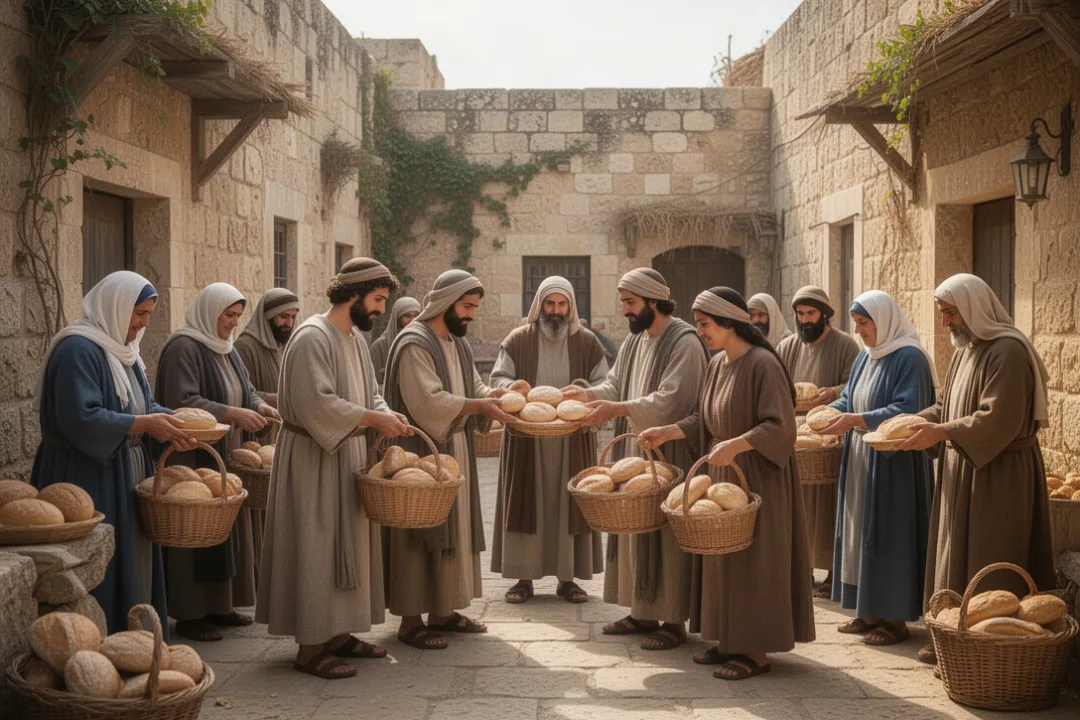
Stephen appears shortly after Pentecost, when the number of Jesus’ followers in Jerusalem was increasing. The church included both Hebrew-speaking believers and Greek-speaking Jewish believers, sometimes called Hellenists. A complaint arose that Greek-speaking widows were not receiving a fair share of the daily distribution of food.
The apostles asked the community to choose seven reputable men who were known to be spiritually mature and wise. These men would oversee the practical work so the apostles could continue giving themselves to prayer and teaching. Stephen was the first person named in that group.
Acts describes him as “full of faith and the Holy Spirit” in its own wording, but Bible translations differ, so the central idea matters more than a memorized phrase. Stephen was not presented as merely an administrator. He was a trusted servant whose spiritual life and public witness were both evident.
The Greek name Stephanos means “crown” or “wreath.” That meaning later became especially significant in Christian reflection because Stephen received the crown of martyrdom. The name itself does not prove anything about his family or background, but it became a natural symbol in the traditions surrounding him.
Core fact: Stephen was chosen as one of seven servants because the church needed both practical care and spiritual integrity. His ministry shows that feeding people and proclaiming faith were not treated as unrelated forms of service.
Why the seven deacons were chosen
Many Christians refer to the seven men in Acts 6 as the first deacons. The passage does not give a complete later-style job description for the office, and different churches understand the relationship between these men and later deacons in different ways. Still, Stephen’s appointment is an important early example of the church organizing its service fairly.
The problem was not simply a shortage of food. It involved fair treatment within a diverse community. The church included people with different languages, cultural habits, and social connections. Widows were particularly vulnerable because they often lacked the economic support that a household might otherwise provide.
By selecting respected leaders, the community addressed the concern without abandoning prayer, teaching, or spiritual discernment. The apostles did not imply that practical ministry was beneath them. Instead, they recognized that a rapidly growing congregation needed shared responsibility.
Stephen’s story therefore begins with an ordinary but demanding responsibility: making sure vulnerable people were treated properly. His later public preaching should not obscure this earlier work. In the biblical account, care for people in need stands alongside courage in public witness.
The need: Greek-speaking widows believed they were being overlooked in the daily distribution.
The response: The whole community participated in selecting qualified servants.
The qualifications: The chosen men were known for good character, wisdom, and spiritual maturity.
The result: Leadership became more distributed, allowing the church’s practical and teaching ministries to continue.
Stephen’s preaching and the opposition he faced
After his appointment, Stephen is described as performing great wonders and signs among the people. He also debated members of several synagogues in Jerusalem. Acts identifies opponents connected with the Synagogue of the Freedmen, along with people from regions including Cyrene, Alexandria, Cilicia, and Asia.
The passage does not say that every person in those communities opposed Stephen. It describes particular individuals who were unable to withstand the wisdom and Spirit with which he spoke. Their response was to arrange accusations that he had spoken against Moses and God, the temple, and the law.
These accusations were serious because they touched the foundations of Jewish religious identity. Stephen was a Jewish follower of Jesus speaking in a setting shaped by Israel’s Scriptures and worship. The conflict was not a simple dispute between unrelated religions. It concerned how God’s promises were being fulfilled and how Jesus should be understood within Israel’s story.
False witnesses claimed that Stephen spoke against the temple and the customs associated with Moses. Acts presents these charges as distorted versions of his teaching. His message did challenge the idea that God’s presence could be confined to a building, but the speech also affirmed God’s activity throughout Israel’s history.
When Stephen was brought before the council, those watching him saw that his face appeared like the face of an angel. This description signals calm, holiness, and divine favor rather than a change in his physical identity. He was not portrayed as frightened into silence or persuaded to withdraw his testimony.
What Stephen’s speech in Acts 7 means
Stephen’s speech is the longest recorded speech in Acts. Rather than offering a short defense against each accusation, he retells major parts of Israel’s history, including Abraham, Joseph, Moses, the exodus, the wilderness, and the building of the temple.
His approach shows that the Christian message did not begin by rejecting Israel’s Scriptures. Stephen places Jesus within the continuing story of God’s dealings with Israel. At the same time, he points to a recurring pattern: God’s chosen messengers are often rejected by the people they were sent to help.
Joseph was rejected by his brothers before becoming an instrument of rescue. Moses was rejected by some Israelites before becoming their leader. Stephen uses these examples to argue that rejection does not prove that a messenger lacks divine authority. Instead, rejection can repeat an older pattern found throughout the biblical story.
Stephen also stresses that God’s presence is not limited to one location. God appeared to Abraham in Mesopotamia, spoke to Moses in the wilderness, and accompanied Israel before the temple was built. The temple was honored as part of Israel’s worship, but it could not contain God as though the Creator were confined to a human structure.
His speech reaches its sharpest point when he accuses his hearers of resisting the Holy Spirit and rejecting the Righteous One. Christians understand the Righteous One as Jesus. Stephen’s words are direct and confrontational, yet they are framed by a larger theological argument: the leaders’ response to Jesus continues the historical resistance to God’s messengers.
Acts 7 presents Stephen as a witness who interprets Israel’s history through the death and resurrection of Jesus.
Readers should be careful not to use Stephen’s speech as a reason for hostility toward Jewish people. The conflict occurs among people who share Jewish heritage and the Scriptures of Israel. It concerns specific leaders and a dispute about Jesus, not a license for contempt toward an entire ethnic or religious community.
Stephen’s vision of Jesus before his death
As his opponents became furious, Stephen looked toward heaven and said that he saw the heavens opened and the Son of Man standing at the right hand of God. This is a decisive moment in the narrative. Stephen’s claim is that Jesus, whom the authorities rejected and who was crucified, now shares in heavenly authority.
The title Son of Man recalls the vision in Daniel 7, where a humanlike figure receives authority and an everlasting kingdom from God. Stephen’s vision therefore presents Jesus not as a defeated teacher but as the vindicated figure who stands in God’s presence.
In many Christian interpretations, Jesus is often described as seated at God’s right hand, reflecting royal authority and completed victory. Stephen sees him standing, which has led Christians to suggest several meanings. Jesus may be standing to welcome his witness, to act as an advocate, or to rise in judgment against those who reject him. Acts does not explain the posture in detail, so these interpretations should remain reverent possibilities rather than rigid conclusions.
The vision also changes the emotional direction of the scene. Stephen is physically surrounded by hostile people, but his attention is directed toward heaven. His confidence does not come from believing that suffering is pleasant. It comes from believing that Jesus is alive, reigning, and present with him.
How Saint Stephen died
The crowd dragged Stephen outside the city and stoned him. In the ancient world, stoning was a form of execution associated with grave offenses under certain interpretations of Jewish law. The account in Acts focuses less on reconstructing the legal process and more on Stephen’s faithfulness, his final prayers, and the consequences of his death.
As he was dying, Stephen prayed that Jesus would receive his spirit. He then knelt and asked God not to hold the sin against those killing him. These prayers echo themes found in the crucifixion narratives, especially Jesus’ trust in God and his mercy toward his persecutors.
The resemblance does not mean Stephen’s death was identical to Jesus’ death. Christian theology treats Jesus’ crucifixion as unique. Stephen’s final words instead show a disciple following the pattern of his teacher: entrusting himself to God and refusing to answer violence with a request for revenge.
The account names a young man called Saul as a witness who approved of Stephen’s killing. Saul later became the apostle Paul, one of the most influential missionaries in the early church. Acts does not claim that Stephen’s death immediately caused Saul’s conversion, but placing Saul at the scene creates a powerful connection between the martyr and the future apostle.
After Stephen’s death, persecution spread against the church in Jerusalem. Many believers were scattered through Judea and Samaria, and those who scattered preached the message about Jesus. In this way, Stephen’s death forms part of a major turning point: opposition in Jerusalem helped carry the Christian message into new regions.
Why Saint Stephen is called the first martyr
The word martyr comes from a Greek term meaning witness. In Christian use, it came to describe someone who remained faithful to Christ even when that witness led to death. Stephen is called the first Christian martyr because Acts records his execution as the first death of a believer for publicly confessing faith in Jesus.
Martyrdom should not be confused with seeking danger or treating life as worthless. Stephen did not create violence around himself, and the story does not praise his attackers. His example concerns faithfulness under coercion: he refused to deny what he believed, while his final prayer rejected personal vengeance.
The church’s understanding of martyrdom includes both truth and love. A person may be brave in defending a position yet still act with cruelty. Stephen’s death is remembered differently because his courage is paired with mercy, prayer, and confidence in God’s justice.
His witness also challenges a narrow idea of Christian leadership. Stephen was not one of the twelve apostles, and he is introduced through a practical ministry of care. His authority came through character, service, spiritual wisdom, and a willingness to speak truthfully when pressured.
Saint Stephen’s feast day and Christian observances
Western churches commonly celebrate Saint Stephen’s feast on December 26, the day after Christmas. This placement links the celebration of Christ’s birth with the first recorded Christian martyrdom. The calendar moves quickly from the incarnation to the cost of discipleship.
Eastern Christian traditions commonly observe Saint Stephen on December 27, though local calendars and liturgical practices can vary. Some Eastern churches also commemorate Stephen at other points in the year. If you are checking a parish schedule, the local calendar is more reliable than assuming every denomination uses the same date.
In many places, the feast has been marked with worship, prayers, processions, charitable giving, and remembrance of those who suffer for their faith. Customs differ widely by country and denomination. Some traditions emphasize Stephen’s role as a deacon, while others focus on his death, his vision of Christ, or his example of forgiveness.
The day after Christmas also gives the feast a particular spiritual emphasis. Christian celebration is not separated from the realities of sacrifice and opposition. Stephen’s story reminds worshipers that receiving Christ’s life may require courageous service, not merely festive observance.
Saint Stephen as a patron saint
Saint Stephen is widely honored as the patron saint of deacons and altar servers. He is also associated in various traditions with stonemasons, bricklayers, and people who work with stone, largely because of the manner of his death. Patronage lists are not identical everywhere, so local churches may connect him with additional groups or occupations.
He is a fitting patron for people who serve in visible and practical ways. His story begins with distributing food and ends with public testimony, showing that humble service and courageous speech can belong to the same vocation.
People may ask Saint Stephen’s intercession when they need strength to endure hostility, wisdom to speak responsibly, or grace to forgive someone who has caused harm. Prayer to a saint is understood differently among Christian traditions. Catholics, Eastern Orthodox Christians, and some other churches ask saints to pray for them, while many Protestant communities pray directly to God without invoking saints.
That difference should be recognized respectfully. Across traditions, Stephen remains a shared example of a Christian who served vulnerable people, testified to Jesus, and entrusted his life to God.
Practical ways to understand Saint Stephen’s example
Stephen’s story can be read as a historical account, a theological witness, and a guide for Christian conduct. It is most useful when these dimensions remain connected. His courage did not float above everyday responsibilities, and his forgiveness did not require pretending that violence was acceptable.
Read Acts 6 and 7 together: The first chapter explains Stephen’s service and character; the second gives the speech, vision, and death.
Notice the vulnerable people in the story: The dispute began with widows who believed they were being neglected, not with an abstract theological argument.
Distinguish conviction from aggression: Stephen spoke firmly, but the narrative does not excuse the crowd’s violence.
Study the history he recounts: Abraham, Joseph, Moses, the wilderness, and the temple all help explain his argument.
Observe his final prayer: His response to persecution includes trust in Jesus and a plea for mercy rather than revenge.
Consider the effect of service: Leadership in the early church included organizing fair care as well as teaching publicly.
Common mistakes when discussing Saint Stephen
Several misunderstandings can weaken the meaning of Stephen’s story. The most common involve treating a later church tradition as though it were stated directly in Acts, or turning a conflict within the first-century Jewish community into a stereotype about Jews as a whole.
Calling him one of the twelve apostles: Stephen was one of the seven chosen in Acts 6, not one of Jesus’ twelve apostles.
Assuming “deacon” has only one universally defined meaning: Stephen is traditionally called a deacon, but churches differ in how they relate the seven in Acts to later diaconal offices.
Blaming all Jewish people for his death: Acts describes particular opponents and a specific crowd; it does not justify collective blame.
Ignoring the food-distribution dispute: Stephen’s public ministry grew out of practical service to a divided and vulnerable community.
Presenting martyrdom as a desire for death: His example is faithful endurance, not reckless self-destruction.
Reducing the speech to an attack on the temple: Stephen’s argument is broader: God has acted throughout Israel’s history and cannot be confined to a building.
Forgetting Saul’s later role: The future apostle Paul is present at Stephen’s death, creating an important link between persecution and the church’s later mission.
A careful reading matters: Stephen’s courage should never be used to excuse hatred, antisemitism, or violence. His final prayer makes mercy part of his witness, even while he names injustice plainly.
What Saint Stephen teaches about Christian leadership
Stephen’s life challenges the assumption that the most important ministry is always the most visible. He is remembered because he preached publicly and died courageously, but Acts first introduces him through the fair distribution of food. His public witness grew from a reputation for trustworthy service.
That pattern offers a practical standard for churches and other communities. Leaders should be able to handle ordinary responsibilities honestly before they seek influence in public debates. Wisdom should be visible in conduct, not only in eloquent speech.
Stephen also shows why diverse communities need transparent systems. When people from different cultural or linguistic backgrounds believe they are being overlooked, good intentions are not enough. Leaders need to listen, investigate, share responsibility, and correct unfair practices.
Finally, Stephen’s story places courage within relationship. He does not stand alone as a self-made hero. He is chosen by a community, empowered by the Holy Spirit, rooted in Israel’s Scriptures, and focused on Jesus. His witness is personal, but it is not individualistic.
Why Saint Stephen still matters
Saint Stephen remains important because his story joins service, truth, suffering, and forgiveness in one life. He cared for people who were being overlooked, spoke about Jesus when doing so was dangerous, and prayed for mercy as his enemies killed him.
His example also helps explain how the early church grew. The gospel spread not only through formal leaders but through believers who served faithfully, endured persecution, and carried the message into new places. Stephen’s death was tragic, yet Acts portrays it as part of a movement that could not be contained by fear.
For Christians, Stephen’s vision of Jesus offers hope that faithful witness is seen by God even when it is rejected by people. For anyone studying early Christianity, his story provides a window into the movement’s internal diversity, its connection to Jewish history, and the high cost faced by some of its earliest members.
Remembering Stephen does not require romanticizing violence or seeking persecution. It means honoring a person whose practical compassion became public courage, whose conviction remained connected to Scripture, and whose last recorded prayer refused to let hatred have the final word.
Frequently asked questions
Was Saint Stephen one of Jesus’ apostles?
No. Stephen was not one of the twelve apostles. He was one of seven men chosen by the Jerusalem church to help oversee the fair distribution of food, especially in response to concerns involving Greek-speaking widows. He later became a prominent preacher and is described in Acts as the first Christian martyr.
Where can I read the story of Saint Stephen?
The main account is in Acts 6 and 7. Acts 6 describes Stephen’s appointment, service, wisdom, and opposition. Acts 7 records his speech before the council, his vision of Jesus, his stoning, and his final prayers. Acts 8 describes the persecution that followed his death and mentions Saul’s role in it.
Why is Saint Stephen celebrated right after Christmas?
Western Christianity observes Saint Stephen’s feast on December 26, immediately after Christmas. The calendar places the first martyr close to the celebration of Jesus’ birth to show that Christian discipleship includes both receiving Christ’s life and accepting the possibility of costly faithfulness. Eastern traditions commonly observe his feast on December 27.
What can people learn from Saint Stephen’s final prayer?
Stephen’s final prayer combines trust in God with mercy toward his attackers. It does not deny that violence is wrong or suggest that victims should ignore injustice. Instead, it shows a refusal to seek personal revenge. His example encourages honest resistance to wrongdoing while leaving judgment and ultimate justice to God.















Leave a Reply