The word martyr comes from a Greek term meaning witness. In Christian use, it came to describe believers whose testimony about Jesus led to imprisonment, torture, or death. A martyr is therefore not simply someone who dies in a religious conflict; the term refers to a person killed because of faithful identification with Christ.
Christian communities have used the phrase martyrs for Christ to honor people who refused to deny their faith under pressure. Their witness may have involved preaching, protecting other Christians, refusing to participate in idolatry, opposing injustice, or declining to abandon Christian convictions. The central issue is not a desire to die, but faithfulness when obedience becomes costly.
Martyrdom is different from dying in a war, committing violence, taking reckless risks, or pursuing death. Historic Christian teaching generally treats martyrdom as something suffered rather than something deliberately sought. A believer may accept danger for the sake of truth and love, but should not manufacture danger to gain recognition or prove spiritual courage.
Essential distinction: Christian martyrdom means suffering or death because of faithful witness to Christ; it does not mean seeking death, harming others, or treating every difficult experience as persecution.
How martyrdom developed in the early Christian church
The earliest Christian understanding of martyrdom grew from Jesus’ own suffering and death. The Gospels present Jesus as remaining faithful to his mission even when it led to execution. Christians who later faced persecution understood their endurance as participation in Christ’s pattern of truthful witness, sacrificial love, and hope in God.
The New Testament describes several forms of opposition against the first Christians. Jesus warned his followers that they could face rejection, arrest, and violence because they belonged to him. The book of Acts records the death of Stephen, a prominent member of the Jerusalem church, after he testified about Jesus before a hostile audience. His death became one of the clearest early examples of Christian martyrdom.
The apostle James, the brother of John, was killed by the sword according to Acts 12. The apostle Paul also endured beatings, imprisonment, public hostility, and other dangers, although the New Testament does not describe the manner of his death. These accounts show that Christian witness could carry real political and social consequences from the beginning.
Early Christians did not describe every hardship as martyrdom. Some believers were threatened, fined, excluded from civic life, or imprisoned without being killed. These experiences were serious forms of persecution, but the word martyr gradually became associated especially with those who died because of their confession of faith.
What the Bible teaches about faithful suffering
The Bible does not present suffering as proof that a person is automatically righteous. Instead, it connects faithful suffering with loyalty to God, love for enemies, courage, and hope. Jesus teaches his followers to expect opposition, while also instructing them to respond without hatred and to pray for those who persecute them.
Several biblical themes help explain Christian martyrdom:
Witness: Believers are called to make Christ known through their words and conduct, even when their testimony is unwelcome.
Perseverance: Faithfulness means remaining committed to God rather than abandoning conviction under pressure.
Nonretaliation: Jesus’ teaching in Matthew 5 presents enemy-love and refusal of revenge as central Christian responses.
Hope beyond death: Passages such as Romans 8 and Revelation 7 connect suffering believers with God’s final care and restoration.
Community responsibility: Hebrews 13 urges Christians to remember prisoners and those being mistreated, rather than ignoring their suffering.
Important passages include Matthew 5:10–12, Matthew 10:16–39, John 15:18–25, Acts 7, Romans 8:18–39, 2 Timothy 3:10–12, Hebrews 11:35–40, and Revelation 6:9–11. These passages do not give permission to pursue violence or death. They emphasize faithfulness, courage, compassion, and confidence in God.
This reference is often associated with martyrdom, but its larger message is a call to steadfast loyalty. The passage encourages Christians facing suffering to remain faithful while trusting that their lives are secure in God’s hands. It should not be used to pressure someone into remaining in an avoidable or abusive situation.
How to recognize the central marks of a Christian martyr
Historical cases differ widely, and no single checklist can capture every person’s experience. Still, Christian tradition commonly looks for several connected features when describing someone as a martyr for Christ.
The person is identified with Christ. The individual’s faith, Christian confession, ministry, or conduct is a meaningful part of the conflict.
There is a credible threat or act of persecution. The person faces punishment, violence, or death because of that Christian identity or witness.
The response remains faithful. The person refuses to deny Christ or abandon a core Christian commitment, while avoiding hatred and unnecessary provocation.
The death is connected to the persecution. A tragic death alone does not establish martyrdom; the cause and circumstances matter.
The witness reflects Christian character. Courage is joined with truthfulness, humility, love of neighbor, and concern for others.
These marks require careful judgment. A person may be killed while doing religious work, but the death might result from ordinary crime, political conflict, or personal hostility rather than persecution. In other cases, available evidence may be incomplete. Churches and historians should avoid confident claims when the facts are uncertain.
Why the first Christian martyrs mattered to the church
Early martyrs gave Christian communities visible examples of steadfast faith under pressure. Their stories were read aloud, remembered in worship, and preserved in letters or accounts. Such stories helped believers who were afraid, divided, or tempted to compromise understand that faithfulness was possible even in extreme circumstances.
Martyrs also challenged the assumption that power determines truth. A prisoner, slave, foreigner, or socially marginalized believer could possess a courage that authorities could not control. By refusing to treat the state, a ruler, or an idol as ultimate, martyrs made a public claim about the lordship of Christ.
At the same time, the church’s memory of martyrs has sometimes been shaped by legend. Later accounts may combine reliable historical details with symbolic speeches, miraculous stories, or details added to express theological convictions. This does not make the witness meaningless, but it does mean that readers should distinguish between documented evidence, longstanding tradition, and devotional interpretation.
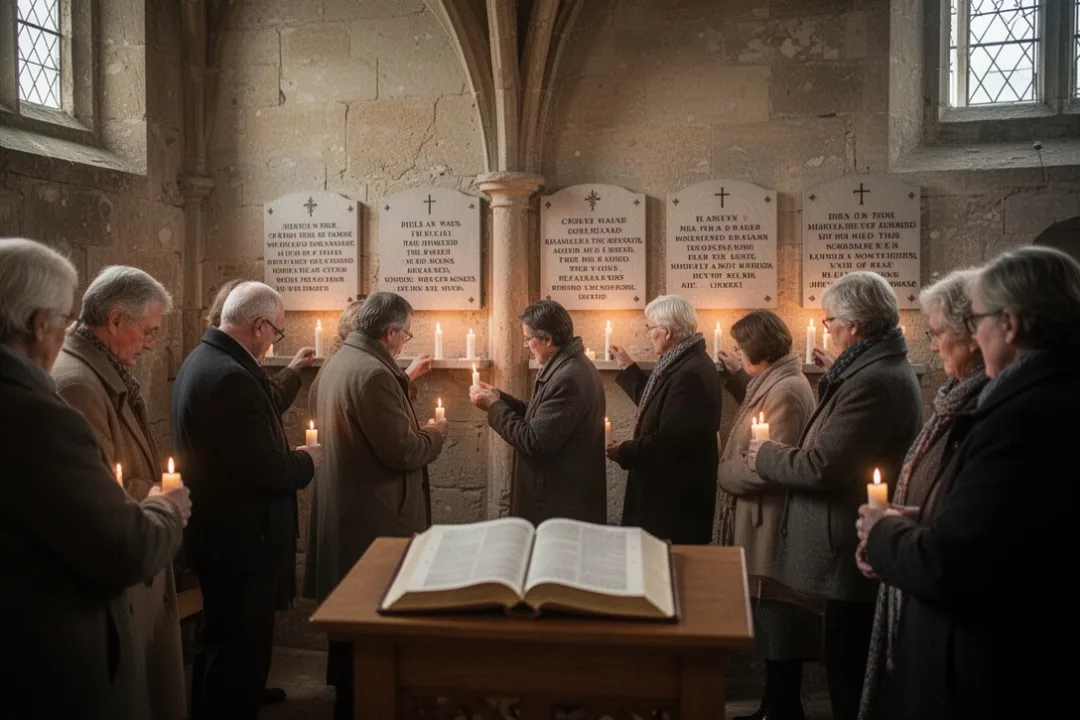
The early church also developed practices for honoring martyrs. Communities gathered near burial places, commemorated the dates of their deaths, and thanked God for their witness. In many traditions, the death date became a spiritual “birthday” because it marked the believer’s entrance into eternal life. Different Christian denominations still vary in how they recognize saints, blesseds, or exemplary witnesses.
Examples of martyrdom in Christian history
Stephen is the first person explicitly described in the New Testament as dying for Christian testimony. Acts 6–7 presents him as a servant of the church who cared for the needy, spoke publicly about Jesus, and faced false accusations. His account combines practical service, bold speech, forgiveness, and trust in God.
Polycarp, a second-century Christian bishop, is remembered in an early account of his death after refusing to deny Christ. The historical details are interpreted differently by scholars, but the story became influential because it portrays an elderly Christian leader meeting pressure with calm conviction rather than contempt for his opponents.
Perpetua and Felicity are among the best-known early Christian martyrs. Their story, preserved in an ancient account, describes women imprisoned in North Africa because of their Christian identity. Perpetua was from a prominent household, while Felicity was enslaved and pregnant. Their remembered witness has influenced Christian reflection on courage, friendship, motherhood, social inequality, and spiritual dignity.
Christian history includes many later examples from different regions and periods. Some died under imperial persecution; others were killed during local conflicts, anti-Christian campaigns, colonial upheavals, or modern extremist attacks. Their circumstances should not be flattened into one story. Understanding a martyr requires attention to the person’s setting, the motives of the persecutors, and the evidence available.
Read historical accounts carefully: Honor the courage of martyrs while checking whether a source separates verified events from later tradition, rhetorical embellishment, or political interpretation.
How modern Christians should understand persecution
Christians in many parts of the world still face harassment, discrimination, imprisonment, forced displacement, and violence. Some are targeted because they publicly identify as Christian; others are caught in broader ethnic, political, or civil conflicts. A responsible account should avoid exaggeration and should not label every hardship or policy disagreement as persecution.
Modern persecution can take forms that are less visible than execution. A Christian may lose employment, access to education, housing, family relationships, or legal protection because of religious identity. In some places, converts face threats from relatives or local communities. In others, churches are restricted, religious leaders are detained, or public Christian practice is heavily controlled.
The term martyr should be applied with care when a death occurs in a complicated political situation. The victim may have been Christian, but the motive for the killing could involve ethnicity, land, criminal activity, or political power rather than faith. Careful reporting protects both the truth and the dignity of the people involved.
Christians who are not facing direct persecution can respond by listening to affected communities, supporting trustworthy relief organizations, contacting public officials about unjust treatment, and praying specifically for those in danger. Support should respect local leadership and avoid turning another community’s suffering into material for political self-promotion.
How to honor martyrs for Christ without romanticizing suffering
Remembering martyrs should strengthen compassion and faithfulness, not create an unhealthy fascination with death. Stories of martyrdom can become harmful when they ignore the grief of families, celebrate violence, or suggest that seeking danger is more spiritual than ordinary service.
A balanced remembrance does several things:
Names the person accurately: Learn the individual’s life, work, relationships, and faith rather than reducing them to the manner of death.
Remembers the survivors: Pray for and support relatives, church members, and communities who continue to carry the loss.
Rejects revenge: Christian memory should not become a reason to hate an entire religion, ethnicity, nation, or political group.
Defends truth: Avoid repeating stories that cannot be verified, especially when they could place living people at risk.
Connects memory with service: Let the witness inspire protection of the vulnerable, hospitality, honesty, and care for persecuted believers.
In this sense, the best memorial to a martyr is not merely admiration. It is a community that becomes more committed to truth without cruelty, courage without recklessness, and love that remains active under pressure.
How martyrdom differs from ordinary Christian sacrifice
Christian discipleship often involves sacrifice. Believers may give money, time, status, comfort, or professional opportunities to serve God and neighbor. They may endure misunderstanding because of their convictions. These sacrifices can be meaningful without being martyrdom.
Martyrdom requires a more specific connection between death and persecution for Christ. A missionary who dies from illness has suffered a profound loss, but the death is not automatically martyrdom. A Christian who dies while rescuing someone may demonstrate extraordinary love, yet the death does not become martyrdom unless it resulted from persecution connected to Christian witness.
Likewise, a person who experiences criticism for an unwise statement should not automatically claim persecution. Christian witness includes the responsibility to accept correction, apologize for wrongdoing, and distinguish rejection of harmful behavior from rejection of the gospel.
What faithful witness looks like in everyday life
Most Christians will never face a decision involving execution. Faithfulness is more often tested through repeated, ordinary choices. A believer may need to tell the truth when lying would be profitable, refuse corruption when silence would be easier, defend a vulnerable person, or remain kind when treated unfairly.
These actions do not make someone a martyr, but they express the same basic loyalty that martyrdom reveals under extreme conditions. A Christian’s witness can be seen in integrity at work, patience in family life, care for strangers, responsible speech, and willingness to suffer social disadvantage rather than betray conscience.
When pressure becomes serious, Christians can seek wise counsel rather than acting impulsively. Useful steps include:
Clarify the issue. Determine whether the conflict concerns Christian faith, personal preference, politics, or a legitimate consequence of harmful conduct.
Check the facts. Separate direct threats from rumors, assumptions, and online speculation.
Seek trusted support. Speak with mature church leaders, legal professionals, advocacy groups, or people familiar with the local situation.
Protect vulnerable people. Avoid public actions that expose children, converts, family members, or local believers to unnecessary danger.
Choose a faithful and peaceful response. Tell the truth, refuse denial of Christ, and avoid retaliation or dehumanizing language.
Use lawful protection when available. Seeking safety, leaving a dangerous place, or using legal rights is not a failure of faith.
Jesus’ escape from danger in some Gospel accounts and Paul’s use of legal protections in Acts show that Christians are not required to pursue suffering when a responsible path to safety exists. Preserving life can be an act of wisdom, especially when others depend on you.
How churches can support people facing persecution
Churches can begin by learning from people who are actually experiencing pressure rather than assuming what they need. A public statement may be useful in one situation and dangerous in another. Confidentiality, local knowledge, and consent matter when supporting threatened Christians.
Practical support may include emergency housing, legal assistance, medical care, trauma counseling, family aid, relocation help, and long-term employment support. Churches can also welcome displaced believers without treating them as symbols. They need friendship, stability, opportunities to serve, and space to grieve.
Prayer should be specific and informed. Congregations can pray for protection, wisdom, truthful courts, reconciliation, endurance, and the needs of children and families. They can also pray for persecutors to repent, reflecting the Christian refusal to reduce any person to an enemy category.
Church leaders should teach members how to recognize credible information. Responsible advocacy avoids inflated numbers, unverified stories, and language that encourages hostility toward other faith communities. Truthful solidarity is more durable than sensational reporting.
Questions Christians can ask when studying a martyr’s story
Historical and devotional accounts become more useful when readers ask careful questions. Instead of focusing only on the dramatic final moment, consider the whole life and the community around it.
What evidence explains why this person was targeted?
Did the person’s Christian identity or witness directly contribute to the danger?
Which details come from eyewitness testimony, later tradition, or artistic retelling?
How did the person treat opponents and fellow believers?
What happened to the person’s family and church afterward?
Does the story encourage faithful love, or does it glorify violence and revenge?
How can the church respond to similar suffering today?
These questions preserve the dignity of the martyr while preventing simplistic conclusions. They also help believers see that Christian witness is not only about a dramatic death. It includes the choices, relationships, service, and convictions that shaped the person’s entire life.
Why the witness of martyrs still speaks to Christians
Martyrs for Christ remind the church that faith is more than private opinion. Christianity makes claims about Jesus’ identity, God’s authority, human dignity, and the hope of resurrection. When believers remain faithful under coercion, they show that conscience cannot rightly be owned by the state, a crowd, or a powerful individual.
Their witness also places a responsibility on those who remember them. Admiration without obedience can become sentimental. The lives of martyrs call Christians to practice the qualities they celebrate: courage joined with humility, conviction joined with compassion, and hope joined with practical care for people who suffer.
For Christians, the deepest meaning of martyrdom is not death itself. It is the confession that Christ is worth trusting above every earthly power, and that love, truth, and hope can remain faithful even when the cost is severe.
Frequently asked questions
Are all Christians who die for their beliefs considered martyrs?
No. Christian martyrdom normally requires a clear connection between the person’s death and persecution because of faith in Christ. Someone may die while doing Christian service, during a war, or in a criminal attack without being killed for Christian witness. Determining the description requires reliable evidence about the person’s identity, the attackers’ motives, and the circumstances.
Does the Bible tell Christians to seek martyrdom?
No. The Bible encourages faithfulness when persecution comes, but it does not tell believers to create dangerous situations or pursue death. Christians may flee, seek legal protection, and protect their families when possible. The focus is steadfast obedience to Christ, not gaining honor through suffering or exposing others to unnecessary danger.
How can I pray for Christians facing persecution?
Pray for protection, wisdom, courage, access to justice, medical and emotional care, and strength for families affected by violence or imprisonment. Pray also for churches to respond wisely and for persecutors to turn away from cruelty. When possible, learn what local believers actually request, since public attention or certain forms of aid can sometimes increase their risk.
What is the difference between a martyr and a Christian hero?
A Christian hero is a broad, informal description for someone who shows exceptional courage or service. A martyr is a more specific term for a believer who dies because of faithful witness to Christ. A person can be a courageous Christian without being a martyr, and a martyr’s importance does not depend on dramatic personality, public fame, or official recognition.











Leave a Reply