O God, whose only begotten Son: meaning and prayer
O God, whose only begotten Son: meaning and prayer
“O God, whose only begotten Son” begins a traditional Christian prayer about Jesus Christ’s Ascension and the believer’s hope of sharing his heavenly life. The wording is especially associated with collects used around the Feast of the Ascension, although the exact text differs among prayer books, denominations, and modern translations.
The prayer brings together several central Christian beliefs: Jesus is the unique Son of God, he rose from the dead and entered heavenly glory, the Holy Spirit remains with the Church, and Christians are called to set their hearts on life with God. Its language is brief, but its meaning reaches from Christ’s identity to the shape of everyday discipleship.
The opening phrase belongs to a collect, a short prayer designed to gather the themes of a worship service into a focused petition. In many historic Christian traditions, a collect is addressed to God the Father, refers to the work of Jesus Christ, and ends by acknowledging the Holy Spirit. That structure is visible in prayers for the Ascension.
The wording is found in forms of the Ascension Day liturgy, including traditional Anglican and Catholic prayer traditions. Some versions begin, “O God, whose only-begotten Son, our Lord Jesus Christ,” and then refer to his ascension into heaven. Other versions use a related collect that asks God to help believers ascend in heart and mind and remain with Christ.
“Only begotten” is an older translation of language describing Jesus as God’s unique or one-of-a-kind Son. It does not mean that Jesus was created in the same way creatures are created. In historic Christian theology, the phrase points to Christ’s unique relationship with the Father and to his divine nature.
Wording varies by tradition. If you are looking for the prayer in a particular prayer book, missal, or church service, check that source directly. “Only begotten,” “only Son,” and “one and only Son” may express the same theological idea in different English styles.
What the phrase says about Jesus Christ
The first part of the prayer identifies Jesus as the only begotten Son. This is not merely a poetic title. It places the prayer within the Christian confession that Jesus is uniquely related to God the Father and reveals God in a way no ordinary prophet or teacher can.
The phrase also connects with the language of the Nicene Creed, which describes Jesus as the only-begotten Son of God and as sharing the Father’s divine nature. Different churches explain the wording with slightly different theological vocabulary, but the central claim remains consistent: Jesus is not simply one messenger among many. He is the Son through whom Christians understand God’s saving work.
That claim gives the rest of the prayer its foundation. Christians do not ask to rise toward heaven through personal achievement, spiritual technique, or moral superiority. They pray because Christ has already acted first. His identity makes his death, resurrection, Ascension, and continuing presence the basis for Christian hope.
Why “begotten” does not mean “made”
Modern readers may hear “begotten” and assume that it describes a beginning in time. In classical Christian teaching, however, begotten and created are not interchangeable. The language is intended to distinguish the Son’s eternal relationship with the Father from the created existence of the world.
This distinction became especially important in the early church because Christians were answering questions about who Jesus is. The creedal language affirms that the Son is truly divine rather than a superior creature. A modern prayer may use “only Son” or “unique Son” to make the meaning easier to understand, but the theological emphasis remains Christ’s singular identity.
How the prayer connects with the Ascension
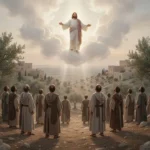
The Ascension is the Christian belief that the risen Jesus was taken into heavenly glory. It is celebrated on the fortieth day of Easter in traditions that follow the biblical chronology, although many churches observe it on the following Sunday. The event is described in Acts 1:1–11 and reflected in other New Testament passages.
The Ascension does not mean that Jesus simply traveled upward through physical space and disappeared. Christian worship uses the event to speak about Christ’s exaltation, authority, and presence with the Father. Jesus is no longer encountered in the same earthly way as before the resurrection, yet Christians confess that he reigns and continues to act for his people.
The prayer’s opening therefore leads to a request about the believer’s own life. Because Christ has entered heavenly glory, Christians ask for grace to live with that destination in view. The language of ascending “in heart and mind” is not a demand to ignore the world. It is a request for a renewed perspective shaped by Christ’s reign.
Several New Testament passages support this pattern of thought. Colossians 3:1–4 directs believers to seek the things above because their life is joined to the risen Christ. Philippians 3:20–21 describes Christian citizenship in heaven and the hope of bodily transformation. Hebrews 4:14–16 presents Jesus as the great high priest who has passed through the heavens and invites believers to approach God with confidence.
What “dwell in spirit amid heavenly things” means
Traditional versions of the prayer often ask that believers may dwell in spirit amid heavenly things. This does not mean escaping responsibilities, despising physical life, or pretending that suffering is unreal. Christian hope includes the renewal of creation and the resurrection of the body, so it is not based on abandoning the material world.
To dwell amid heavenly things means allowing the reality of God’s kingdom to shape your priorities now. Prayer, worship, generosity, repentance, mercy, and faithfulness become expressions of a life oriented toward Christ. The believer remains at work, cares for family, serves neighbors, and participates in ordinary life while recognizing that none of these activities is the final measure of existence.
The phrase can also correct two opposite mistakes. One is earthbound anxiety, in which immediate problems become the whole horizon of life. The other is a form of religious escapism, in which heavenly language is used to avoid loving people or confronting injustice. The Ascension prayer points beyond both extremes: it directs the heart toward Christ while sending the Christian back into faithful service.
Heavenly-mindedness in ordinary decisions
A heavenly perspective can affect practical choices without producing a rigid formula for every situation. It may lead you to ask whether your use of time reflects love of God and neighbor, whether success has become an idol, or whether fear is controlling a decision that should be guided by trust.
It can also change how you understand hidden acts of faithfulness. Caring for a sick relative, telling the truth when dishonesty would be easier, forgiving someone, or continuing to pray in grief may appear small to other people. The prayer reminds you that Christian obedience is measured in relation to Christ, not by public recognition.
What “according to his promise” contributes to the prayer
Some forms of the Ascension collect refer to Christ’s promise to send the Holy Spirit or to remain with his Church. This detail keeps the prayer from treating heaven as a distant place where Jesus is absent. The Ascension is joined to the sending of the Holy Spirit and to Christ’s continuing care for his people.
Before his death and resurrection, Jesus taught his disciples that they would not be left as orphans. The Gospel of John presents the Spirit as the promised Helper and witness. Acts 1:8 connects the Spirit’s coming with the disciples’ calling to bear witness. These passages are not reproduced in the prayer, but they explain why Ascension worship naturally leads toward Pentecost.
The promise also gives the prayer a dependable basis. Christians are not trying to persuade God to notice them through impressive words. They are asking God to fulfill what he has already promised. Christian prayer is confident because it rests on God’s character and promise, even when the person praying feels uncertain.
Prayerful focus: When the words feel formal or unfamiliar, concentrate on the movement of the prayer: Christ is the unique Son, Christ has entered glory, the Spirit is given, and you are called to live faithfully in hope.
How different Christians may understand the prayer
Anglican, Catholic, Lutheran, Methodist, and other traditions may use similar Ascension prayers while placing them in different service books. A traditional Anglican collect may emphasize ascending in heart and mind. A Catholic version may ask that believers dwell spiritually among heavenly realities. A modern prayer may use accessible wording about sharing Christ’s life and remaining faithful in the world.
These differences do not necessarily represent different beliefs. Liturgical language develops as churches translate ancient prayers, revise older English, or adapt worship for congregational use. The same prayer may appear in a formal version for Eucharistic worship and a simpler version for family or personal prayer.
There can also be differences in capitalization and punctuation. “Only-begotten” may be hyphenated, and some versions say “our Lord Jesus Christ” while others say “Jesus Christ our Lord.” Those details matter when identifying a specific edition, but they do not change the central subject: the Father’s unique Son and his exaltation into heavenly glory.
How to pray “O God, whose only begotten Son” personally
A collect can be prayed as written, but it can also become a pattern for personal prayer. Begin by addressing God with reverence, then remember who Jesus is, reflect on his Ascension, and ask for the grace to live in the hope of his kingdom. The prayer is short enough to use during morning worship, before reading Scripture, or at the end of the day.
Address God clearly. Begin with the traditional opening or with your own words, recognizing God as Father, Lord, and giver of life.
Confess who Jesus is. Name him as the unique Son, risen Lord, Savior, and King rather than treating him only as an example.
Remember the Ascension. Give thanks that Christ reigns in glory and that his earthly ministry has not ended in defeat.
Ask for a heavenly perspective. Pray for desires, habits, and decisions shaped by God’s kingdom.
Receive the call to faithful service. Ask how hope in Christ should affect the people and responsibilities in front of you today.
You may want to sit quietly after the prayer instead of adding many more words. Consider one question: What would change today if I remembered that Christ is present and reigns? The answer may concern patience, courage, generosity, repentance, or simply the willingness to remain faithful in an ordinary task.
Common mistakes when interpreting the Ascension prayer
Older religious language can be misunderstood when it is read without its biblical and liturgical setting. The following mistakes are common because modern English uses words such as “heaven,” “begotten,” and “spirit” in ways that may not match historic Christian usage.
Reading “only begotten” as “created.” The phrase describes Christ’s unique Sonship, not a beginning in which Jesus was made as a creature.
Treating heaven as merely a location in the sky. The Ascension primarily speaks of Christ’s exaltation, authority, and communion with the Father.
Using heavenly hope to avoid earthly responsibility. The prayer should encourage love, service, justice, and faithfulness rather than withdrawal from neighbors.
Assuming one English version is the only correct wording. Historic prayers often have legitimate translations and revisions.
Praying for a spiritual escape from the body. Christian hope includes resurrection and the renewal of creation, not contempt for physical life.
Separating the Ascension from the Holy Spirit. The liturgical season connects Christ’s exaltation with the promise and mission of the Spirit.
These cautions are useful when teaching children, preparing a sermon, or choosing a prayer for congregational worship. A brief explanation can make the language accessible without removing its depth. The goal is not to replace traditional words automatically, but to help people understand what they are saying.
How the prayer relates to Christian hope
The prayer is ultimately about more than remembering a past event. It expresses the hope of union with Christ. When Christians ask to ascend in heart and mind, they are asking for present grace and looking toward the future completion of salvation.
That hope includes the belief that Christ will come again and that his people will share in his life. The precise way Christians describe the end times differs among traditions, but the prayer’s basic direction is clear: the future belongs to Christ, and believers are invited to live now in light of that future.
This hope can be especially meaningful during grief, illness, or uncertainty. The prayer does not promise that suffering will disappear immediately. Instead, it places suffering within a larger story in which death does not have the final word and Christ’s reign is more lasting than present circumstances.
It also gives worship a vertical and outward movement. The heart is lifted toward God, while the believer’s life is directed toward other people. Ascension faith is not passive waiting; it is a way of living under the authority of the risen Christ while awaiting the fullness of his kingdom.
Using the prayer in worship, study, and family devotion
In public worship, the prayer can serve as a collect on Ascension Day or during the days between Ascension and Pentecost. A leader may read a traditional form and briefly explain “only begotten,” “ascended,” and “dwell in spirit.” That small amount of context can help a congregation pray with understanding rather than merely repeat unfamiliar language.
For Bible study, compare the prayer’s themes with Acts 1:1–11, John 14–16, Colossians 3:1–4, and Hebrews 4:14–16. Read the passages in your preferred Bible translation and observe how each one contributes a different emphasis: Christ’s departure, the Spirit’s presence, the believer’s new life, or confident access to God.
For family devotion, use one sentence at a time. Ask what it means to call Jesus the Son, what Christians mean by his Ascension, and how a person might show heavenly hope through an earthly act of love. Children may understand the prayer better when abstract words are connected to concrete actions such as sharing, telling the truth, praying for someone, or welcoming a lonely person.
For personal use, keep the prayer near another regular spiritual practice. You might pray it before reading the daily Gospel, after receiving Communion, or during a quiet evening walk. Its concise form makes it suitable for repetition, while its theology gives repeated prayer more substance than a passing inspirational phrase.
Why this ancient wording still matters
“O God, whose only begotten Son” remains meaningful because it joins doctrine, worship, and daily life in a few lines. It names Jesus, remembers what God has done, asks for the Spirit’s help, and directs the believer toward a life shaped by heavenly hope.
The prayer also protects against reducing Christianity to either private comfort or moral instruction. It begins with God’s action in Christ before it asks anything of the believer. Christian obedience matters, but it is a response to grace rather than a way to earn a place in God’s presence.
When you pray these words, you can use traditional language with confidence while taking time to understand it. The central movement is simple: look to the unique Son, trust the Lord who has entered glory, receive the Spirit’s help, and live faithfully until Christ’s promises are fully revealed.
Frequently asked questions
Is “only begotten Son” a reference to Jesus?
Yes. The phrase refers to Jesus Christ and emphasizes his unique relationship with God the Father. In historic Christian theology, “begotten” does not mean created or made. It distinguishes the Son from created beings and expresses the belief that Jesus shares the divine nature. Modern translations and prayers may use “only Son,” “unique Son,” or “one and only Son” to communicate the same central idea.
Which feast uses the prayer beginning “O God, whose only begotten Son”?
The wording is associated primarily with the Feast of the Ascension, when Christians remember Jesus entering heavenly glory after his resurrection. Exact versions vary among Anglican, Catholic, and other Christian prayer books. Some emphasize Christ’s Ascension, while others ask believers to ascend in heart and mind or to live among heavenly things.
Can I pray this collect outside Ascension Day?
Yes. Although its liturgical setting is the Ascension season, the prayer can be used throughout the year. Its themes—Christ’s identity, heavenly glory, the Holy Spirit, Christian hope, and faithful service—apply to ordinary Christian prayer. You can pray it during morning devotion, Bible reading, Communion preparation, or times when you need to renew your perspective.
Does heavenly-mindedness mean withdrawing from everyday life?
No. In Christian teaching, heavenly-mindedness means allowing Christ’s reign and future hope to shape present conduct. It should encourage love of neighbor, honesty, mercy, service, and perseverance. The prayer does not treat physical life or earthly responsibilities as worthless. Instead, it places ordinary work and relationships within a larger hope centered on the risen and exalted Christ.














Leave a Reply