Nicene Creed Catholic: Meaning and Mass Text Explained
Nicene Creed Catholic: Meaning and Mass Text Explained
The Nicene Creed is the Catholic Church’s shared profession of faith in the Trinity, Jesus Christ, the Church, baptism, resurrection, and eternal life.
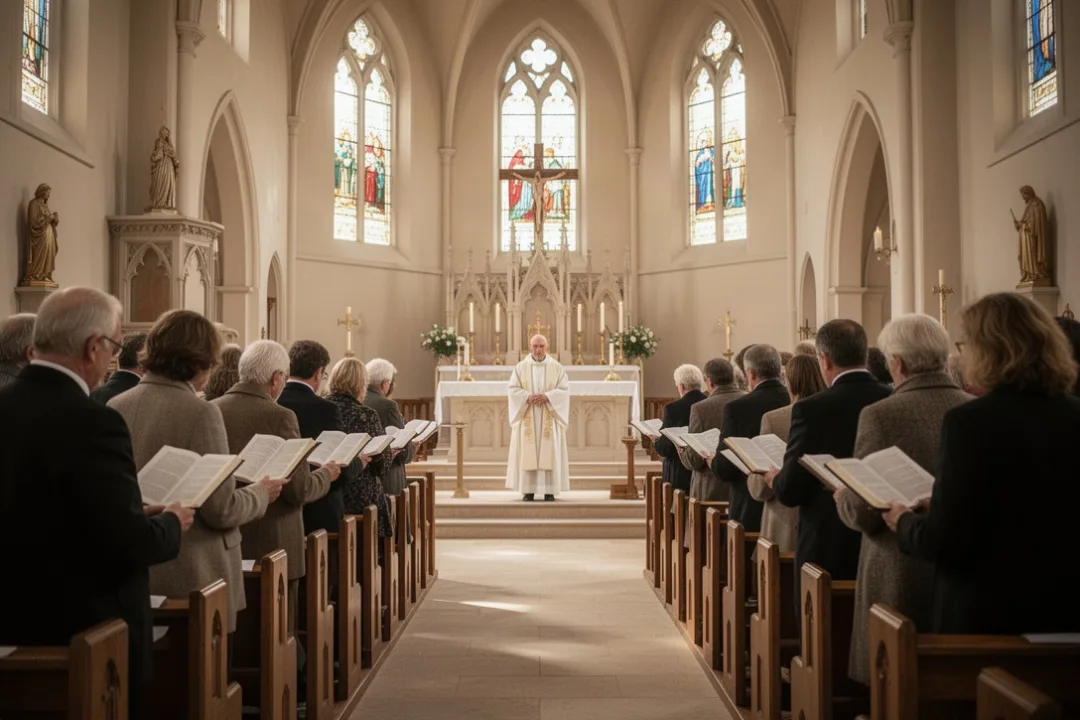
At Catholic Mass, the creed normally follows the homily and precedes the Prayer of the Faithful on Sundays and certain major feast days. When the congregation recites it together, Catholics are not merely repeating old words. They are affirming the central beliefs that unite the Church across nations, languages, and generations.
The name can be confusing because the creed commonly used at Mass is more precisely called the Nicene-Constantinopolitan Creed. It developed from the creed associated with the Council of Nicaea in A.D. 325 and received its fuller form at the Council of Constantinople in A.D. 381. Catholic liturgy often refers to the complete text simply as the Nicene Creed.
A creed is a concise statement of belief. The word comes from the Latin credo, meaning “I believe.” The Nicene Creed uses “I believe” even when the whole assembly says it together, because Christian faith involves both personal trust and membership in a believing community.
The creed is not a private prayer asking God for something. It is a profession of faith: a public declaration of what Catholics believe God has revealed and what the Church has received from the apostles. Its structure follows the three divine Persons of the Trinity, then describes the Church and the Christian hope of salvation.
The creed’s statements are deliberately connected. Catholics believe in one God, but that one God is Father, Son, and Holy Spirit. They believe that the eternal Son truly became human in Jesus Christ, that salvation is connected to his death and resurrection, and that the Holy Spirit continues God’s work in the Church.
Central idea: The Nicene Creed is both a statement of Christian doctrine and an act of worship. Catholics profess these truths not as an abstract list, but as beliefs about the living God and his work of salvation.
Why Catholics recite the Nicene Creed at Mass
The creed has a distinct place in the Catholic liturgy because the congregation has just heard the readings and the homily. After listening to Scripture and its explanation, the assembly responds by professing the faith those readings proclaim. This gives the creed a connection to the Liturgy of the Word, rather than making it an isolated recitation.
Reciting the creed also prepares the congregation for the Eucharistic part of Mass. Catholics come to the altar as people united in faith, not simply as individuals attending the same event. The profession of faith expresses that unity before the Church offers the prayers of the faithful and celebrates the Eucharist.
The creed is usually said on Sundays, because Sunday commemorates Christ’s resurrection, and on solemnities and other celebrations specified by the liturgical calendar. It is not normally recited at every weekday Mass. The Apostles’ Creed may also be used, especially during Lent and Easter, and the local liturgical norms determine when each profession is chosen.
When the congregation says “I believe,” the words have several dimensions:
Personal: each person accepts the faith with his or her own mind and will.
Communal: the profession is made with the whole Church, including Catholics around the world.
Liturgical: the words are spoken as part of worship, not merely classroom instruction.
Historical: the same essential faith has been handed down through the Church’s tradition.
How the Nicene Creed is organized
The creed moves through the main subjects of Catholic faith in a deliberate order. It begins with the Father, turns at length to Jesus Christ, then professes belief in the Holy Spirit. After that, it names the Church and several realities connected with Christian salvation.
Its major sections can be outlined this way:
The Father: God is one, almighty, and the creator of all that exists.
The Son: Jesus Christ is the eternal Son of God who became human for humanity’s salvation.
The saving events of Christ’s life: his incarnation, suffering, death, resurrection, ascension, and future return.
The Holy Spirit: the Spirit is divine, gives life, and speaks through the prophets.
The Church and the sacraments: the Church is one, holy, catholic, and apostolic; there is one baptism for the forgiveness of sins.
The future hope: Christians await the resurrection of the dead and life in the world to come.
This order shows that Catholic belief is not built around a single teaching separated from the others. Creation, the incarnation, the Church, the sacraments, and eternal life belong to one story of God’s relationship with humanity.
What Catholics mean by belief in God the Father
The opening section professes belief in one God, the Father almighty, maker of heaven and earth and of all that is visible and invisible. This language expresses biblical monotheism: Catholics do not believe in competing gods or in a universe ruled by unrelated spiritual powers.
Calling God “Father” does not mean God is limited by human biological categories. It identifies the first Person of the Trinity and reveals God as the source of divine life. Catholic teaching also uses “Father” because Jesus speaks of God in this way and teaches his disciples to approach God as their Father.
The phrase “maker of heaven and earth” means that everything created depends on God. “Visible and invisible” includes the material universe as well as spiritual realities, such as angels. Creation is therefore not divine, but it is genuinely good because it comes from God.
This section also provides a Catholic response to two opposite errors. The material world is not evil simply because it is physical, and created things are not gods simply because they possess beauty or power. The world has value while remaining distinct from its Creator.
What the creed teaches about Jesus Christ
The largest section concerns Jesus Christ because Catholic faith depends on who Jesus is. The creed identifies him as the only-begotten Son of God, eternally related to the Father. He is not a created being who became important later. He is truly divine.
The creed then uses the word “consubstantial” with the Father. In the English Catholic text, this word means that the Son shares the same divine being or substance as the Father. It replaced the older English phrase “of one being with the Father.” Although “consubstantial” may sound technical, its purpose is clear: Jesus Christ is fully God, not a lesser divine figure.
The creed also says that all things were made through the Son. Catholic teaching therefore sees the Son as active in creation, not only in the events of Jesus’ earthly life. The eternal Son entered human history without ceasing to be divine.
The phrase “for us men and for our salvation” is found in the official English translation used in the Roman Catholic liturgy. Here, “men” is an older formal use referring to humanity, not males alone. The meaning is that Christ became human for the salvation of all people.
What “incarnate by the Holy Spirit” means
The creed says that the Son came down from heaven and, for humanity’s salvation, became incarnate by the Holy Spirit and was born of the Virgin Mary. Incarnation means that the eternal Son truly took on human nature. Jesus is not merely God appearing to look human, nor is he only a particularly holy man.
Catholic faith holds that Jesus Christ is true God and true man. He has a divine nature and a human nature united in the one divine Person of the Son. This teaching protects both parts of the Christian proclamation: God truly entered human history, and human nature was truly assumed and redeemed.
The creed names the Holy Spirit’s role and Mary’s role together. The conception of Jesus is attributed to the Holy Spirit, while Mary is identified as his mother according to his human birth. Catholic devotion to Mary rests on this connection to the identity of her Son, not on the belief that Mary is divine.
At the words about the incarnation, Catholics traditionally make a bow as a sign of reverence. On the solemnities of the Annunciation and Christmas, the liturgical instructions call for a genuflection instead. These gestures express belief that the Son of God truly became human.
How the creed describes Christ’s death and resurrection
The creed names several historical events: Jesus suffered under Pontius Pilate, was crucified, died, and was buried. Mentioning Pontius Pilate places Christ’s passion in ordinary human history. Catholic faith is not based on a timeless myth detached from real events.
The creed then professes that Jesus rose from the dead on the third day in accordance with the Scriptures. The resurrection is more than the survival of Jesus’ message or the disciples’ continuing inspiration. Catholics believe that God raised Jesus bodily, transforming his human life and defeating death.
Christian salvation includes forgiveness and reconciliation, but it does not stop with an inward spiritual experience. The resurrection points toward the renewal of the whole person. That is why the creed later professes the resurrection of the dead, not merely the immortality of the soul.
Jesus’ suffering and death also have a central place in Catholic belief. The cross reveals the seriousness of sin, the depth of divine love, and Christ’s obedient self-offering. The creed states the events plainly, while the rest of Catholic worship and teaching explores their meaning.
What Christ’s ascension and return mean
The creed says that Christ ascended into heaven and is seated at the right hand of the Father. This does not mean that heaven is simply a physical location somewhere above the earth. The language expresses Christ’s entry into divine glory and his participation in the Father’s authority.
Jesus remains truly human after the ascension. Catholics therefore believe that human nature has been brought into the glory of God in Christ. The ascension does not mean that Jesus abandoned the Church. Rather, Christ remains present to his people in ways that include the Eucharist, Scripture, the sacraments, and the Church’s gathered worship.
The creed also says that Christ will come again in glory to judge the living and the dead. This affirms both Christ’s future return and his authority as judge. Catholic teaching understands judgment as the full revelation of truth and the definitive establishment of justice, not as a reason for speculation about a precise date.
Because the creed connects Christ’s return with the living and the dead, every human life has lasting significance. Catholic hope includes accountability, mercy, justice, and the final triumph of God’s kingdom.
What Catholics believe about the Holy Spirit
The creed professes belief in the Holy Spirit, the Lord and giver of life. The Holy Spirit is not an impersonal force or a poetic name for God’s influence. The Spirit is the third Person of the Trinity, fully divine with the Father and the Son.
The Spirit proceeds from the Father and the Son in the Latin Catholic wording of the creed. This phrase is known as the Filioque, a Latin term meaning “and the Son.” It appears in the Western form of the creed and reflects the Catholic understanding of the Spirit’s eternal relationship within the Trinity.
The Filioque has also been part of a long theological and historical dispute between the Catholic Church and Eastern Orthodox Churches. Eastern Christians generally use a form that says the Spirit proceeds from the Father, following the Greek text and Eastern tradition. The difference should be treated with care: it concerns the way the Trinity is expressed, not a belief that Catholics worship a different God.
The creed says that the Holy Spirit is worshiped and glorified with the Father and the Son. It also says that the Spirit spoke through the prophets. Catholics therefore see the Spirit’s work in the inspiration of Scripture, the life of the Church, the sacraments, and the sanctification of believers.
What “one, holy, catholic, and apostolic Church” means
The word catholic in the creed is not a reference to a denomination’s name as such. In this context, it means universal: the Church is meant for all peoples and is not confined to one nation, culture, language, or historical period.
The four adjectives describe essential marks of the Church:
One: the Church has one Lord, one faith, one baptism, and one sacramental life, even though Christians experience painful divisions.
Holy: the Church is made holy by Christ and the Holy Spirit, even though her members are still called to conversion.
Catholic: the Church possesses the fullness of Christian faith and is sent to every people and place.
Apostolic: the Church is founded on the apostles’ teaching and continues their mission through apostolic succession.
Saying that the Church is holy does not claim that every Catholic person or every action carried out by Church members is morally perfect. The Church’s holiness comes from God’s presence and grace. Catholics are expected to acknowledge sin honestly and seek reform rather than use the Church’s holiness as an excuse for wrongdoing.
The word “apostolic” connects Catholic life to the apostles’ witness to Christ. It includes fidelity to apostolic teaching, continuity in ordained ministry, and the Church’s mission to proclaim the Gospel. The creed therefore describes the Church as both historical and living.
What the creed teaches about baptism and forgiveness
The creed professes one baptism for the forgiveness of sins. Baptism is the first sacrament of Christian initiation and marks a person’s entrance into the life of Christ and the Church. Through baptism, Catholics believe a person receives the forgiveness of original sin and, in the case of an adult, any personal sins for which the person is properly disposed.
The phrase “one baptism” also explains why the Catholic Church ordinarily recognizes a valid baptism performed with water and the Trinitarian formula, even when it was celebrated in another Christian community. A person is not baptized repeatedly as a routine response to later spiritual growth.
Forgiveness remains part of Christian life after baptism. Catholics believe Christ entrusted the Church with a sacramental ministry of reconciliation, especially through confession. The creed’s reference to forgiveness therefore points to God’s continuing mercy and to the Church’s responsibility to proclaim and administer that mercy.
What “resurrection of the dead” and eternal life mean
The final section professes hope in the resurrection of the dead and life in the world to come. Catholic belief is not that death permanently separates the body from a purely spiritual future. At the end of time, God will raise the dead and bring human beings to the fullness of judgment and restoration.
This teaching gives the human body serious dignity. Christian hope does not treat the body as disposable or unimportant. The person who is redeemed is the whole person, body and soul, although the manner of resurrection remains a mystery beyond ordinary human experience.
Life in the world to come means eternal communion with God. Catholic teaching also includes the reality of judgment, heaven, hell, and purification after death, but the creed’s final words emphasize hope. The Christian future is not endless existence without purpose; it is life brought to completion in God.
The creed ends with “Amen.” This is not decorative punctuation. It is an assent that means the person or assembly accepts what has been professed. The final word turns the creed from a set of statements into a personal and communal act of faith.
Practical tips for praying the Nicene Creed at Mass
The creed can become so familiar that its meaning fades into the background. A few simple practices can help you participate more deliberately without treating the text as a private exercise during the liturgy.
Listen for the movement of the creed: notice how it begins with the Father, focuses on Christ, names the Holy Spirit, and then describes the Church and Christian hope.
Pay attention to “consubstantial”: remember that this word affirms Jesus’ full divinity and equality with the Father.
Use the gestures prayerfully: bow at the incarnation and observe the deeper gesture prescribed for Christmas and the Annunciation.
Include yourself in “I believe”: say the words as your own profession while remaining united with the congregation.
Reflect on one phrase during the week: for example, consider what “one baptism” or “the resurrection of the dead” means for your Christian life.
Follow the approved liturgical text: avoid substituting personal wording during Mass, since the creed belongs to the Church’s public worship.
Several common mistakes can make the creed harder to understand. These are worth correcting:
Confusing “catholic” with a modern label: in the creed, it means universal and whole, although Catholics also identify their Church with this profession.
Reducing Jesus to a moral teacher: the creed explicitly teaches that he is the eternal Son and truly divine.
Treating the resurrection as a metaphor only: Catholic faith includes the bodily resurrection of Christ and the future resurrection of the dead.
Assuming “one” means division does not exist: the Church’s unity is a gift and a calling, even while Christians recognize real divisions and work toward reconciliation.
Skipping difficult terms: words such as “consubstantial” and “incarnate” are worth learning because they protect essential beliefs.
Practical reminder: If you are unsure when to sit, stand, bow, or kneel, follow the congregation and the local parish’s instructions. The gestures support worship, but understanding and sincere participation matter more than performing them anxiously.
How the Nicene Creed differs from the Apostles’ Creed
Both the Nicene Creed and the Apostles’ Creed are accepted professions of Catholic faith, and both follow the basic pattern of Father, Son, and Holy Spirit. The Nicene Creed is longer and gives more detailed language about Christ’s divinity, his relationship with the Father, the Holy Spirit, and the Church.
The Apostles’ Creed is an ancient baptismal profession associated by tradition with the apostles. It is frequently used in Catholic prayer, including the Rosary, and may be used at Mass under the provisions of the Roman Missal. The Nicene Creed developed in response to disputes about Christian doctrine and therefore contains more precise theological wording.
The two professions do not express competing faiths. They provide different summaries of the same Catholic belief. The choice of one or the other depends on the liturgical context, the season, and the norms governing the celebration.
Why the creed still matters for Catholic life
The Nicene Creed gives Catholics a common vocabulary for beliefs that can otherwise become vague. It says that God is Creator, that Jesus is truly divine and truly human, that the Holy Spirit gives life, that the Church has a visible and spiritual identity, and that death does not have the final word.
It also links doctrine with daily discipleship. Belief in the Creator shapes how Catholics view the world and human dignity. Belief in the incarnation calls them to see God’s closeness in Christ. Belief in the Church and baptism gives Christian life a communal and sacramental form.
When the creed is prayed attentively, its familiar phrases become a framework for examining faith. The words ask more than whether someone agrees with a list. They invite trust in the Father, allegiance to Christ, openness to the Holy Spirit, participation in the Church, and hope in the resurrection and life everlasting.
Frequently asked questions
Is the Nicene Creed required at every Catholic Mass?
No. It is normally recited on Sundays and holy days of obligation, along with certain solemn celebrations. It is generally omitted at weekday Masses unless the liturgical celebration calls for it. The Apostles’ Creed may be used instead in approved circumstances, so the exact profession can vary by parish and liturgical season.
Why does the Catholic Creed say “consubstantial with the Father”?
“Consubstantial” means that the Son shares the same divine being as the Father. The word protects the Catholic belief that Jesus is fully God, not a created spirit or a lesser divine being. It is a precise theological term describing the unity of the Father and the Son within the Trinity.
Does “catholic” in the Creed mean Roman Catholic?
The word originally means universal or whole. In the Creed, it describes the Church as intended for all peoples and as possessing the fullness of Christian faith. Roman Catholics also understand this mark to identify the Church they belong to, but the word’s basic meaning in the profession is broader than a national or cultural label.
Why do Catholics bow during the Nicene Creed?
Catholics bow at the words describing Christ’s incarnation as a bodily sign of reverence for the mystery that the eternal Son became human. On Christmas and the Annunciation, the liturgical instructions call for a genuflection instead. These gestures express belief in Christ’s real humanity and divine identity.












Leave a Reply