Catholic Creed: meaning, words, and how to pray it
Catholic Creed: meaning, words, and how to pray it
The Catholic Creed is a public statement of faith centered on the Trinity, Jesus Christ, the Church, and the hope of resurrection.
When Catholics recite the Creed at Mass, they are doing more than repeating familiar words. They are joining their voices to Christians across generations and around the world, affirming the beliefs that shape Catholic worship, prayer, moral life, and understanding of salvation. The word creed comes from the Latin credo, meaning “I believe.”
Two creeds have a recognized place in Catholic life: the Nicene Creed, normally used at Sunday Mass, and the Apostles’ Creed, often used in baptismal celebrations and the Rosary. They differ in length and wording, but both confess faith in God the Father, Jesus Christ the Son, and the Holy Spirit.
What the Catholic Creed is and why Catholics recite it
A creed is a carefully formed summary of essential Christian beliefs. It is not meant to explain every Catholic teaching, answer every theological question, or replace personal prayer. Instead, it gives the Church a shared foundation: Catholics can profess the same central faith even when their languages, cultures, spiritual styles, and life experiences differ.
The Creed follows the basic shape of the Christian faith. It begins with one God, the Father, then focuses at greatest length on Jesus Christ because Christian faith depends on who Jesus is and what he accomplished. It continues with the Holy Spirit, the Church, baptism, the resurrection of the dead, and eternal life.
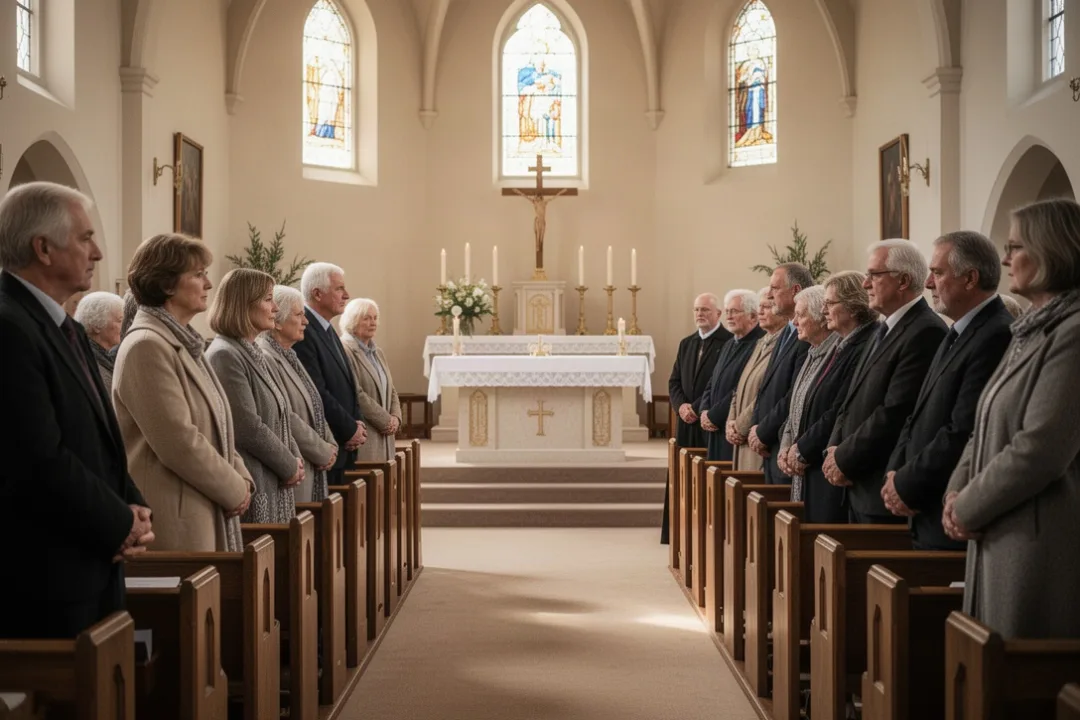
At Mass, the Creed comes after the readings and homily. This placement has meaning. Catholics first hear Scripture proclaimed and explained; then they respond by professing the faith that Scripture and the Church hand on. The Creed is therefore both a personal confession—“I believe”—and a communal act, because the entire congregation says it together.
The Creed also protects the meaning of Christian teaching. Individual words were chosen with care because small changes can create large differences in meaning. For example, saying that the Son is “consubstantial with the Father” means that the Son truly shares the same divine being as the Father, rather than being merely a superior creature or a person who resembles God.
Key idea: The Creed is not a checklist of abstract ideas. It is a statement about the God Catholics trust, the person of Jesus Christ, the work of the Holy Spirit, and the future God promises to his people.
The word “Catholic” in the phrase “Catholic Creed” can refer to the Creed as used by the Catholic Church. Within the Creed itself, however, “catholic” means universal or “according to the whole.” It points to a faith intended for every people and place, not to a narrow ethnic, national, or private religious identity.
What the Nicene Creed says about the Father and creation
The Nicene Creed begins with belief in one God, the Father almighty, creator of heaven and earth and of all that is visible and invisible. This opening establishes several ideas at once: God is one, God is the source of all creation, and reality includes more than what human beings can observe with their senses.
Calling God “Father” does not mean that God is male in a biological sense. It expresses a relationship of origin, love, authority, and care. Catholic theology uses this title because Jesus taught his disciples to approach God as Father and because the Christian faith understands the Father as the eternal source of the Son and the one who sends the Son for human salvation.
The Creed’s reference to heaven and earth includes the whole created order. The visible world includes human life, nature, and the material universe. The invisible world includes spiritual realities, such as angels. Creation is not divine, but it is good because it comes from God. This distinction allows Catholics to value the physical world without worshiping it.
Belief in creation also shapes the Catholic view of human dignity. If every person is created by God, no one’s worth depends entirely on wealth, intelligence, health, productivity, nationality, or social position. Human dignity is received before it is achieved. That belief influences Catholic teaching about family life, care for the vulnerable, justice, work, peace, and responsibility for the environment.
Creation does not mean that God made the world and then withdrew from it. Catholic faith describes God as continuing to sustain creation. The ordinary patterns of nature, human freedom, scientific discovery, and historical events exist within a world that remains dependent on God. This belief does not remove the need for reason or scientific investigation; it provides a theological account of why anything exists at all.
What the Creed teaches about Jesus Christ
The section about Jesus is the heart of the Nicene Creed. It identifies him as the only-begotten Son of God, eternally related to the Father, and truly divine. The Creed then describes his incarnation, earthly life, death, resurrection, ascension, and future coming in glory.
Jesus is truly God and truly human
The Creed says that Jesus is God from God, Light from Light, true God from true God. These phrases defend the Christian belief that Jesus is not simply a prophet, moral teacher, or unusually holy person. He is the eternal Son, sharing the divine nature with the Father.
It also says that the Son is consubstantial with the Father. This technical term became important because early Christians debated how Jesus could be divine and yet distinct from the Father. The Church used precise language to confess that the Son is fully God, not a lesser divine being and not a created intermediary.
The Creed then says that the Son came down from heaven and became human for the sake of human salvation. In Catholic theology, this is the Incarnation: the eternal Son truly enters human history as Jesus Christ. He does not merely appear to be human. He is born of Mary, lives a human life, suffers, dies, and rises while remaining divine.
The mention of Mary is significant. The Creed identifies her as the one from whom Jesus received his human nature and connects his birth with the Holy Spirit. Catholic teaching about Mary is therefore closely linked to teaching about Jesus. Her role matters because the Creed is affirming that the Son genuinely became human rather than simply taking on an outward appearance.
Jesus’ suffering, death, resurrection, and return
The Creed names Pontius Pilate to locate Jesus’ suffering and death in real human history. The crucifixion is not presented as a myth outside time. Jesus suffered and died under a known political authority, and his death is understood as central to God’s work of redemption.
When the Creed says that Jesus died and was buried, it emphasizes the reality of his death. His resurrection is not merely the survival of his influence, the continuation of his teachings, or the disciples’ emotional recovery after his loss. Catholic faith proclaims that God raised Jesus bodily from the dead. The risen Christ is transformed and glorified, yet remains the same Jesus who was crucified.
The phrase “for us and for our salvation” expresses the purpose of Christ’s coming. Salvation includes forgiveness of sin, reconciliation with God, liberation from the power of death, healing of human life, and participation in divine life. Catholic theology sees these gifts as beginning through grace in the present and reaching fulfillment in eternal life.
The Creed also says that Jesus ascended into heaven and is seated at the right hand of the Father. These expressions do not describe heaven as merely a physical location above the clouds. They proclaim that the risen Christ shares in the Father’s glory and reigns with divine authority. His human nature is not discarded; humanity itself has been brought into the glory of God through Christ.
Finally, Jesus will come again in glory to judge the living and the dead. This teaching gives history a moral direction. Human choices matter, injustice is not ignored forever, and God’s judgment is connected with truth and mercy. The Creed does not provide a timetable for the end of the world. It calls Christians to live in hope, accountability, and readiness.
What the Creed says about the Holy Spirit and the Church
After professing faith in the Father and the Son, Catholics profess belief in the Holy Spirit, who is called the Lord and giver of life. The Holy Spirit is not an impersonal force or simply a symbol of inspiration. The Spirit is divine and acts personally in creation, revelation, the life of the Church, and the sanctification of believers.
The Creed says that the Holy Spirit proceeds from the Father and the Son. In the Western Catholic tradition, this wording is commonly known as the Filioque, a Latin phrase meaning “and the Son.” Eastern Christian traditions use a different form of the Creed and have historically raised questions about the addition’s wording and its relationship to the original Greek text. The Catholic Church continues to confess the divinity and eternal relationship of the Holy Spirit within the Trinity.
The Holy Spirit spoke through the prophets, meaning that the Spirit is associated with God’s revelation throughout salvation history. In Christian understanding, the Spirit inspired the prophets, guided the authors of Scripture, prepared people for Christ, and continues to lead the Church into deeper understanding of the faith.
The Creed then turns from the Trinity to the Church. Catholics profess belief in one, holy, catholic, and apostolic Church. These four marks describe the Church’s identity and mission.
One: The Church is united by one Lord, one faith, one baptism, and one sacramental life, even though Christians experience painful divisions.
Holy: The Church belongs to God and receives holiness from Christ and the Holy Spirit, even though its members remain capable of sin.
Catholic: The Church is universal, carrying the fullness of Christian faith and sent to every people and culture.
Apostolic: The Church is founded on the apostles, preserves their teaching, and continues their mission through ordained ministry and faithful witness.
These marks prevent a shallow understanding of the Church. “Holy” does not mean every Catholic behaves perfectly. “One” does not mean there are no historical wounds or divisions. “Catholic” does not mean one culture must replace all others. “Apostolic” does not mean the Church is only concerned with the past. Together, the four marks describe a community that receives its life from Christ and is sent into the world.
The Creed also says that Catholics acknowledge one baptism for the forgiveness of sins. Baptism is the sacrament of entry into Christian life. It unites a person with Christ, incorporates the person into the Church, and signifies forgiveness and new life. The reference to “one baptism” means that baptism is not repeatedly administered as a routine renewal ceremony. A person who has already received valid Christian baptism is not baptized again.
What the Creed means by resurrection and eternal life
The final part of the Creed looks toward the future: the resurrection of the dead and the life of the world to come. Catholic belief is not limited to the immortality of the soul. It includes the resurrection of the body, meaning that God will restore and transform the whole human person.
This belief gives the body serious value. The body is not a disposable container for the “real” self. Human beings are embodied persons, and bodily life is part of God’s creation. Catholic respect for the body therefore includes care for health, the dignity of the dying, sexual responsibility, burial practices, and concern for people whose bodies are suffering through illness, poverty, violence, or neglect.
The resurrection of the dead is connected to Jesus’ own resurrection. Because Christ has risen, Catholics hope that death is not the final defeat of the person. The Creed does not explain every detail of what a resurrected body will be like. It affirms continuity with the person who lived and transformation into a state suited for eternal communion with God.
“The life of the world to come” refers to the fulfillment of God’s saving work. Catholic teaching speaks of heaven as complete communion with God and understands eternal life as more than endless time. It is a participation in God’s own life, marked by joy, peace, holiness, and the healing of every division caused by sin.
The Creed’s ending is therefore a profession of hope, but not an escape from present responsibilities. The promise of eternal life encourages Catholics to practice love, forgiveness, justice, and mercy now. Faith in future resurrection can strengthen care for the living because each person is seen as destined for a future beyond death.
Practical tip: If the Creed feels familiar but distant, choose one phrase each week and connect it with a prayer, a Gospel passage, or a concrete act of Christian service.
How the Nicene and Apostles’ Creeds differ
The Catholic Church recognizes both the Nicene Creed and the Apostles’ Creed as valid expressions of Christian faith. The difference is mainly one of history, length, and setting. Neither is intended to compete with the other.
The Nicene Creed grew from the Church’s response to controversies about the identity of Christ and the Trinity. The Council of Nicaea formulated an early version in A.D. 325, and the Creed received its fuller form through the Council of Constantinople in A.D. 381. It gives detailed language about the Son’s eternal divinity and the Holy Spirit’s divine status.
The Apostles’ Creed is shorter and closely related to early baptismal professions of faith used in Rome and other Christian communities. Tradition associates it with the apostles, but the Church does not teach that the Twelve Apostles sat down and wrote the text in its present form. It developed over time from statements used to teach and baptize Christians.
Both creeds follow a Trinitarian pattern and affirm the central events of salvation. The Apostles’ Creed uses more concise language, while the Nicene Creed includes additional detail about Christ’s relationship with the Father, the Holy Spirit, the Church, baptism, and resurrection.
At Sunday Mass: The Nicene Creed is ordinarily used, although the Apostles’ Creed may be used on certain occasions.
At baptism: The Apostles’ Creed is often used in question-and-answer form or as a profession of faith.
During the Rosary: The Apostles’ Creed is traditionally prayed at the beginning.
For personal study: Comparing both texts can show how the Church expresses the same faith in a longer and shorter form.
When Catholics recite a creed, they are not claiming that human understanding is complete. Faith seeks understanding, and Catholic theology continues to reflect on the Creed’s meaning. At the same time, the Creed provides boundaries for that reflection. It identifies the central claims that define Christian belief rather than leaving every question open to private interpretation.
You can pray the Creed slowly by pausing at each major section: the Father who creates, the Son who saves, the Spirit who gives life, the Church that continues Christ’s mission, baptism that brings forgiveness, and the resurrection that opens onto eternal life. This approach turns a familiar communal response into a focused act of trust.
Frequently asked questions
Is the Catholic Creed the same as the Nicene Creed?
The Nicene Creed is the creed most commonly meant when Catholics refer to the Creed at Sunday Mass. However, Catholic tradition also recognizes the Apostles’ Creed. Both summarize essential Christian beliefs, but the Nicene Creed gives more detailed language about Jesus’ divine nature and the Holy Spirit.
Why does the Creed say “I believe” when the congregation says it together?
“I believe” expresses each person’s personal assent, while the shared recitation shows that Catholics profess the faith as a community. The wording holds both dimensions together: Christian faith is personally embraced, but it is also received and lived within the Church.
What does “consubstantial” mean in the Catholic Creed?
“Consubstantial” means that the Son shares the same divine being or nature as the Father. The term rejects the idea that Jesus is merely a created being or a lesser divine figure. It protects the Catholic belief that Jesus is fully God while remaining distinct from the Father.
Can someone pray the Catholic Creed outside Mass?
Yes. You can pray either creed privately, with a family, in a prayer group, or during Catholic devotions such as the Rosary. Praying it slowly and reflecting on one phrase at a time can help you understand its meaning rather than reciting it only from memory.










Leave a Reply