St Michael prayer: meaning, words, and how to pray it
St Michael prayer: meaning, words, and how to pray it
The St Michael prayer is a traditional Christian prayer asking God’s protection through the intercession of St. Michael the Archangel, especially in moments of spiritual fear, temptation, or conflict.
The prayer is commonly associated with Pope Leo XIII and is traditionally prayed in this form:
St. Michael the Archangel, defend us in battle; be our protection against the wickedness and snares of the devil. May God rebuke him, we humbly pray; and do thou, O Prince of the heavenly hosts, by the power of God, cast into hell Satan and all evil spirits who wander through the world seeking the ruin of souls. Amen.
Different prayer books may use small variations, such as “be our defense” instead of “be our protection,” or “who prowl about the world” instead of “who wander through the world.” These wording differences do not change the prayer’s central request: that God protect his people and that evil be resisted by God’s power.
Central idea: The St Michael prayer is not a magical formula. It is a humble appeal to God, asking for protection, strength, and freedom from evil while recognizing that St. Michael serves God rather than replacing God.
Why Christians pray to St. Michael
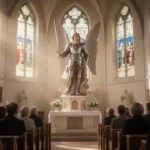
St. Michael is known in Christian tradition as an archangel and defender of God’s people. His name is commonly understood to mean “Who is like God?” That question points away from pride and self-reliance and toward God’s authority.
The Bible mentions Michael by name in several passages. In Daniel 10 and Daniel 12, Michael appears as a powerful heavenly protector. In Jude 9, he is described as an archangel who contends with the devil but leaves judgment to the Lord. Revelation 12 portrays Michael and his angels fighting the dragon, a symbolic representation of evil.
These passages help explain the prayer’s language about spiritual battle, protection, and the defeat of evil. They do not present Michael as an independent power. Instead, they show him as a servant of God whose strength comes from God.
For many Christians, praying to St. Michael means asking him to intercede with God. In other words, the person praying is not worshiping an angel. The prayer asks a faithful servant of God to pray for protection and courage, much as Christians may ask other believers to pray for them.
How to pray the St Michael prayer step by step
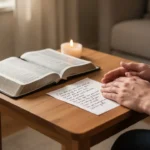
You can pray the St Michael prayer at any time, with or without a formal religious setting. A simple, attentive approach can help you pray it as an act of faith rather than as words spoken automatically.
Become still for a moment. Sit, stand, or kneel in a place where you can give the prayer your attention. Take a slow breath and acknowledge that you are turning toward God.
Make the sign of the cross if it belongs to your tradition. This can mark the beginning of prayer and remind you that your confidence rests in God.
Name your need honestly. You might be facing fear, temptation, anger, confusion, conflict, or concern for another person. You do not need dramatic language; a direct request is enough.
Pray the words slowly. Pay attention to phrases such as “defend us,” “we humbly pray,” and “by the power of God.” Let the words shape your understanding of where protection comes from.
Ask for a faithful response. Pray for wisdom to avoid harmful choices, courage to tell the truth, patience in conflict, and help from trustworthy people when you need it.
End with trust. Remain quiet for a moment, then finish with “Amen,” meaning that you affirm the prayer and entrust its outcome to God.
The prayer does not require a particular posture or time of day. Some people pray it in the morning, before sleep, after a difficult conversation, or before entering a situation that feels spiritually or emotionally demanding.
What each part of the prayer means
“St. Michael the Archangel”
This opening identifies the one being asked to intercede. In Christian teaching, an archangel is a heavenly messenger and servant of God. Addressing Michael by name makes the prayer personal, but it does not make him the source of divine power.
The title also places the prayer within a long tradition of honoring Michael as a defender. The emphasis is not on fascination with angels. It is on God’s care and on the possibility that spiritual help can come through faithful servants of God.
The word “battle” can refer to spiritual struggle, including temptation, despair, hatred, dishonesty, addiction, resentment, and the pressure to act against your conscience. It does not mean that every disagreement is a supernatural attack.
For this reason, the phrase can be prayed broadly. You may ask for defense when you are trying to reject destructive habits, protect a vulnerable person, remain truthful under pressure, or persevere through a period of fear. The battle may be external, internal, or both.
“Be our protection against wickedness and snares”
A snare is a trap. The prayer recognizes that harm is often gradual rather than obvious. A person may be drawn into a destructive situation through small compromises, secrecy, manipulation, resentment, or repeated choices that weaken judgment.
This line can prompt practical reflection. Are you ignoring warning signs? Are you accepting advice from someone who consistently harms you? Are you using spiritual language to avoid getting professional help? Asking for protection should include a willingness to recognize danger and act wisely.
“May God rebuke him, we humbly pray”
This sentence places judgment in God’s hands. The person praying is not claiming personal authority over evil or encouraging retaliation. The word “humbly” matters because Christian prayer is meant to form a posture of dependence, not superiority.
The line can also discourage fear-driven behavior. Rather than trying to control every spiritual threat, you can ask God to confront evil and then take the responsible steps available to you.
“O Prince of the heavenly hosts”
This title reflects the traditional image of Michael as a leader among the angels. It presents him as a defender who acts in an ordered heavenly service. The image is meant to communicate strength, discipline, and loyalty to God.
It should not be read as a promise that every difficulty will disappear immediately. The prayer asks for help in resisting evil, but Christian faith also recognizes that suffering, uncertainty, and healing can take time.
“By the power of God”
This is one of the prayer’s most important phrases. Michael’s authority is not independent; it is received from God. The line protects the prayer from becoming a superstition about an angelic figure with power that can be mechanically summoned.
When you say these words, you are placing your confidence in God’s sovereignty. You are asking for help while admitting that you do not control every outcome.
“Cast into hell Satan and all evil spirits”
This language expresses a firm rejection of evil. In traditional Christian belief, Satan represents the adversary of God, while evil spirits represent forces opposed to God’s goodness and truth. The prayer asks that these powers be defeated and prevented from harming souls.
Christians understand this language in different ways. Some emphasize the reality of personal spiritual beings; others also focus on the destructive patterns of sin, deception, and injustice that affect human life. In either case, the prayer calls the person to resist evil rather than cooperate with it.
“Who wander through the world seeking the ruin of souls”
The phrase uses vivid traditional language to describe the danger of forces that lead people away from God and from their true good. “Ruin of souls” can include the loss of love, moral clarity, hope, freedom, and relationship with God.
Praying this line can lead to a concrete question: What is pulling me away from truth and love? The answer may involve a habit, relationship, fear, or attitude that deserves attention.
There is no single required occasion for the prayer. Its purpose is broad enough to fit ordinary life as well as moments of serious concern.
Before starting the day: Ask for wisdom, self-control, and protection in the choices ahead.
During temptation: Pray for strength to pause, reject a harmful action, and choose a healthier response.
After a frightening experience: Use the prayer to place fear before God rather than allowing fear to dictate your next decision.
During family or community conflict: Ask for protection from hatred, manipulation, revenge, and careless speech.
Before travel or a difficult appointment: Pray for safety, calm, and the ability to respond wisely.
At the end of the day: Review where you experienced grace, where you fell short, and where you need help tomorrow.
With other prayers: Include it in a Rosary, prayer service, devotional routine, or personal time of intercession.
Some Catholic parishes pray the St Michael prayer after Mass or during special devotions. Local practices vary, and the prayer is not required at every Mass. Its use may depend on the parish, diocese, community, or personal devotion.
How the prayer relates to spiritual warfare
Spiritual warfare is a Christian way of describing the struggle to remain faithful to God in the presence of sin, temptation, suffering, and evil. It is not a license to label every inconvenience or disagreement as demonic activity.
The New Testament frequently emphasizes qualities such as truth, faith, righteousness, prayer, perseverance, and peace when describing spiritual resistance. The St Michael prayer fits this pattern when it leads you toward honesty, self-control, compassion, and dependence on God.
A healthy understanding of spiritual warfare has practical results. If the prayer helps you resist cruelty, break a destructive habit, forgive responsibly, or seek reconciliation, it is being used in a constructive way. If it increases obsession, panic, suspicion, or hostility toward innocent people, it should be reconsidered with guidance from a mature pastor or another qualified professional.
Use prayer with practical wisdom: Ask for protection, but also lock the door, leave an unsafe situation, contact emergency services when necessary, set boundaries, and seek medical or mental health care when those forms of help are needed.
What the St Michael prayer is not
The prayer is not a spell, incantation, or guaranteed technique for controlling events. Repeating it a certain number of times does not force God to act in a particular way, and carrying a printed copy does not function as a protective object by itself.
It is also not a substitute for repentance, responsible action, or professional care. If you have harmed someone, prayer should be accompanied by accountability and an effort to repair the damage. If you are experiencing persistent fear, disturbing perceptions, or thoughts of harming yourself or another person, contact a qualified mental health professional or emergency service rather than relying on prayer alone.
The prayer should not be used to accuse a particular person of being possessed or evil. Human conflict can involve sin and serious harm without giving you enough knowledge to make spiritual judgments about another person. Protecting yourself may require distance, documentation, legal support, or help from trusted authorities.
Praying the St Michael prayer for someone else
You may pray the St Michael prayer on behalf of a family member, friend, congregation, or community. A simple intention before the prayer can make the purpose clear: ask God to protect the person, give them wisdom, surround them with trustworthy help, and guide everyone involved toward truth and healing.
Intercessory prayer should respect the other person’s dignity and freedom. Avoid using the prayer as a way to control someone, expose private information, or justify unwanted religious pressure. You can pray faithfully while also listening, offering practical support, and respecting appropriate boundaries.
For a person facing danger, spiritual support should accompany concrete assistance. Depending on the circumstances, that may mean helping them contact a domestic violence advocate, doctor, counselor, clergy member, school official, attorney, or emergency service.
Ways to include the prayer in a daily routine
A regular practice can be brief and uncomplicated. The goal is not to create a rigid performance but to make room for attention, trust, and moral clarity.
Choose a consistent time, such as after waking or before bed.
Begin with a short moment of silence rather than rushing into the words.
State one specific intention, such as protection from anger or guidance in a difficult decision.
Pray the St Michael prayer slowly once.
Ask for one concrete virtue you need that day, such as courage, patience, honesty, or restraint.
Take one responsible action that supports the prayer.
That final step helps connect devotion with daily life. If you pray for protection from harmful speech, pause before sending an angry message. If you pray for freedom from temptation, remove an easy opportunity to repeat the behavior. If you pray for courage, make the call or tell the truth in a respectful way.
You can also combine the prayer with Scripture reading, the Rosary, silent prayer, worship, confession or reconciliation where practiced, and acts of service. These practices can keep the devotion centered on relationship with God rather than fear of evil.
Questions to reflect on while praying
The St Michael prayer can become more meaningful when you reflect on its words instead of treating it as a quick verbal shield. Consider one question at a time:
Where do I most need protection right now?
What temptation or fear is affecting my judgment?
Am I asking God for help while refusing a practical step I already know I should take?
Have I confused spiritual courage with anger or aggression?
Who can offer wise, trustworthy support in this situation?
What would a truthful and loving response look like today?
These questions direct attention toward discernment. They also help prevent the prayer from becoming detached from real decisions, relationships, and responsibilities.
When to seek guidance from a priest or pastor
A priest, pastor, or other trusted spiritual leader can help you understand the prayer within your church’s tradition. Consider seeking guidance if you are unsure how to interpret spiritual experiences, if the prayer is connected to a serious conflict, or if fear is becoming the main force in your religious life.
Choose someone who encourages both faith and sound judgment. Healthy pastoral care should not tell you to ignore abuse, stop necessary medical treatment, abandon prescribed medication, or avoid qualified professional help. Spiritual counsel and clinical care can work together.
If you or someone else may be in immediate danger, call emergency services in the United States by dialing 911. If you are in emotional crisis or thinking about suicide, call or text 988 to reach the Suicide and Crisis Lifeline. Prayer can accompany urgent help, but it should never delay it.
Prayed with humility, the St Michael prayer can remind you that evil should be resisted, fear does not have to rule you, and protection is ultimately sought from God. Its strongest use is not as a promise of a trouble-free life, but as a request for courage, discernment, and faithful action in the life you are actually living.
Frequently asked questions
Is the St Michael prayer Catholic?
Yes. It is especially associated with Catholic devotion and Pope Leo XIII, but Christians from other traditions may also use it when they honor St. Michael and believe in asking for angelic intercession. Practices differ among churches, so the best way to understand its use is within your own denomination’s teaching and prayer tradition.
How many times should I pray the St Michael prayer?
There is no universally required number of repetitions. You can pray it once slowly and attentively, repeat it as part of a devotional routine, or include it in a group service. The value of the prayer does not depend on reaching a particular number. Its purpose is sincere reliance on God, not mechanical repetition.
Can I pray the St Michael prayer for protection at home?
Yes. You may pray it in your home for yourself, your household, or people you are concerned about. Pair the prayer with sensible safety measures and peaceful communication. If your concern involves abuse, threats, illness, or immediate danger, contact the appropriate professional or emergency resource rather than treating prayer as the only protection needed.
Is St. Michael more powerful than God?
No. In Christian teaching, St. Michael is a created angel and servant of God. The prayer asks for his intercession, but repeatedly identifies God as the source of authority and power. That distinction is central to the devotion: Christians honor Michael as a defender while directing worship, trust, and ultimate dependence to God.












Leave a Reply