“The seven archangels” does not refer to one universally agreed list. The Bible names some angels individually, describes a group of seven angels in certain passages, and leaves the identities of that group largely unspecified. Later Jewish, Christian, and devotional traditions supplied different names and roles.
The most widely recognized names are Michael, Gabriel, Raphael, Uriel, Selaphiel, Jegudiel, and Barachiel. Even this familiar list is not accepted by every church or religious tradition. Some sources replace one of these names with Jeremiel, while others recognize only three archangels by name.
The central distinction: the Bible refers to seven angels in some passages, but it does not provide one complete, universally accepted list of seven archangels and their assignments.
An archangel is generally understood as an angel of high rank or special responsibility. The word comes from a Greek term combining the ideas of “chief” and “messenger,” although religious communities do not all define angelic ranks in exactly the same way.
Angels are presented in Scripture as spiritual messengers and servants of God. They may deliver announcements, protect people, carry out judgment, strengthen believers, or praise God. The word archangel, however, is used sparingly in the Bible, so later ideas about a structured angelic hierarchy come from a mixture of Scripture, Jewish writings, early Christian interpretation, and religious tradition.
Some Christian teachings describe several orders of angels, such as cherubim, seraphim, thrones, dominions, virtues, powers, principalities, archangels, and angels. That classification is associated especially with later theological reflection rather than with a single biblical passage. It should not be confused with the seven-name lists used in popular devotion.
The term also carries different weight across traditions. A Catholic reader may hear “archangel” and think primarily of Michael, Gabriel, and Raphael. An Eastern Orthodox reader may be familiar with a broader group of seven or eight. A reader of Jewish mystical or apocryphal texts may encounter names and roles that are not used in mainstream Christian worship.
Where the number seven comes from
The number seven appears frequently in biblical and Jewish religious symbolism. It can suggest fullness, order, or completeness, but the presence of seven angels in a passage does not automatically identify them as the same seven named in a later tradition.
The clearest biblical references include passages in Tobit and Revelation. In Tobit, Raphael identifies himself as one of seven angels who stand in the presence of God. Revelation refers several times to seven angels, including seven angels connected with the churches and seven angels who receive trumpets. Those passages do not give a full list of names.
First Thessalonians 4:16 refers to an archangel, but it does not name that angel. Jude 1:9 specifically names Michael as an archangel during a dispute concerning Moses. These references support the idea that archangels have a distinctive role, but they do not establish a complete set of seven.
Raphael’s name appears in Tobit, a book accepted as Scripture in Catholic and Orthodox traditions but placed among the Apocrypha or deuterocanonical writings in many Protestant traditions. That difference helps explain why some Christian communities recognize Raphael while others focus only on Michael and Gabriel.
The seven names most often associated with archangels
The following list reflects a common Christian devotional tradition. It combines names from different religious and historical sources, so the descriptions should be read as traditional associations, not as a single biblical job chart.
Michael: Michael is associated with protection, spiritual conflict, courage, and defense of God’s people. His name is commonly interpreted as a question meaning “Who is like God?” In Daniel, Jude, and Revelation, Michael appears as a powerful heavenly figure who opposes evil.
Gabriel: Gabriel is associated with revelation, announcements, and the communication of God’s purposes. In Daniel, Gabriel helps explain visions. In Luke, Gabriel announces the births of John the Baptist and Jesus. The name is often understood to mean “God is my strength.”
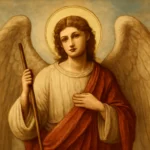
Raphael: Raphael is linked with healing, guidance, safe travel, and care for the vulnerable. He is a central figure in Tobit, where he accompanies Tobias and helps bring healing to Tobiah and Sarah. His name is commonly interpreted as “God heals.”
Uriel: Uriel is often connected with wisdom, illumination, repentance, and insight. The name means something like “light of God.” Uriel appears in several Jewish and Christian writings outside the standard biblical canon, but he is not named in the Protestant Bible.
Selaphiel: Selaphiel is associated in Eastern Christian tradition with prayer, reverence, and attention before God. His name is sometimes interpreted as referring to prayer or intercession. Spelling and descriptions vary among sources.
Jegudiel: Jegudiel is traditionally connected with service, faithful labor, leadership, and the proper use of responsibility. Some devotional images show him holding a crown or a whip, symbols interpreted in different ways. He is not named in the canonical Bible.
Barachiel: Barachiel is associated with blessing, encouragement, and God’s generous care. Traditional images may portray him with flowers or bread, although such symbols are devotional rather than biblical identifiers. The name is often explained as “blessing of God.”
The first three names have the strongest footing in widely recognized Christian Scripture: Michael and Gabriel appear in the Bible, while Raphael appears in Tobit. The other four belong primarily to later tradition and devotional practice. This does not make them meaningless to people who honor them, but it does mean their status differs from that of the biblical names.
Michael’s role as protector and defender
Michael is the archangel most strongly associated with spiritual protection. In Daniel, he is described as a chief prince who stands with God’s people. In Jude, he is called an archangel. In Revelation, he leads heavenly forces against the dragon, a symbolic representation of evil.
Because of these passages, Christians often ask for Michael’s intercession or protection during times of fear, conflict, temptation, or uncertainty. Artistic representations commonly show him with a sword, armor, or a defeated dragon. These images express his traditional role as a defender, not a license to treat spiritual conflict as a literal battle plan for ordinary disagreements.
Michael’s name also carries a theological emphasis: God, not the angel, is the source of victory. The question “Who is like God?” directs attention away from Michael as an independent supernatural power and toward the greatness of God. That distinction matters in traditions that honor angels but reject worship directed toward them.
Gabriel’s role as messenger and interpreter
Gabriel is best known as a messenger of important divine announcements. In the Book of Daniel, Gabriel helps Daniel understand difficult visions. In the Gospel of Luke, he announces the coming births of John and Jesus and speaks with Zechariah and Mary.
Gabriel’s role is therefore broader than simply delivering news. He brings meaning, clarification, and a sense of purpose to events that people may not yet understand. In Christian reflection, he is often associated with truth, vocation, prophecy, and the courage to receive a difficult message.
Gabriel is sometimes called a “female angel” or “male angel” in popular culture, but the Bible does not present angels as human beings with ordinary biological sex. Artistic traditions may portray Gabriel in different ways. The more significant point is the angel’s function as a servant and messenger of God.
Raphael’s role as healer and traveling companion
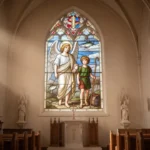
Raphael’s story in Tobit gives the tradition of the healing archangel its clearest foundation. He travels with Tobias under an assumed human identity, offers practical guidance, helps protect him on the journey, and participates in the healing of Tobias’s father and Sarah.
The story does not present healing as magic performed independently by Raphael. Instead, Raphael’s actions direct attention to God’s mercy and providence. At the end of the narrative, he makes clear that he was sent by God and that praise belongs to God rather than to the angel.
Raphael is consequently associated with hospitals, medical care, journeys, family healing, and emotional restoration. People may ask for his intercession when facing illness or travel, while still recognizing the role of physicians, caregivers, community support, and responsible decisions.
Uriel and the names outside the biblical canon
Uriel is one of the most familiar names in expanded lists of archangels, but his place varies considerably. He appears in writings such as First Enoch and Second Esdras, texts that hold different levels of authority across Jewish and Christian communities. Some Eastern Christian traditions honor him, while many Western churches do not include him among officially named archangels.
Uriel’s traditional association with light and wisdom comes naturally from the meaning of his name and from the roles assigned to him in later literature. He is often portrayed as an interpreter of mysteries, a guide toward repentance, or a bearer of divine illumination. These descriptions should be attributed to the relevant tradition rather than presented as universal biblical teaching.
Selaphiel, Jegudiel, and Barachiel are especially common in Eastern Orthodox devotional contexts and in some later Christian prayers and images. Their names may appear with different spellings, transliterations, or assignments. For example, one source may connect Selaphiel with prayer, while another may describe him more generally as a worshiping or interceding angel.
Jeremiel is another name sometimes included in lists of seven. He is associated in certain writings with hope, mercy, visions, and the review of a person’s life. Because these names come from different streams of tradition, there is no single universally binding arrangement of seven names and responsibilities.
Check the source before making a claim: a list described as “the seven archangels” may come from Catholic, Eastern Orthodox, Anglican, Jewish, esoteric, or modern devotional material. Its names and teachings may not apply outside that tradition.
How major Christian traditions identify the archangels
Roman Catholic teaching generally recognizes Michael, Gabriel, and Raphael by name. These three appear in the Bible or in the Catholic biblical canon, and the Church has cautioned against publicly invoking angels under names not found in approved Scripture or established liturgical tradition. Catholic practice therefore tends to avoid presenting a seven-name list as official doctrine.
Eastern Orthodox tradition commonly gives greater prominence to a group of seven archangels, often naming Michael, Gabriel, Raphael, Uriel, Selaphiel, Jegudiel, and Barachiel. Some Orthodox sources also mention Jeremiel, resulting in a list of eight or an alternative arrangement. Local calendars, icons, and devotional materials may differ.
Protestant traditions vary widely. Many emphasize Michael and Gabriel because they are named in the Protestant Bible, while Raphael and the other names may be treated as noncanonical or as products of later tradition. Some Protestant writers discuss the seven angels of Revelation without identifying them as seven named archangels.
Jewish sources also contain several lists of prominent angels, especially in Second Temple literature, rabbinic material, and mystical writings. The names and roles can differ from Christian lists. Judaism does not have one universally accepted seven-archangel doctrine shared by every Jewish community.
Islamic tradition prominently recognizes angels such as Jibril, Mika’il, and Israfil, among others, but the Christian phrase “seven archangels” should not be imposed on Islamic angelology. Names may correspond across languages, yet the stories, functions, and religious frameworks are not identical.
What the Bible actually says about named angels
Scriptural references should be separated from later descriptions. Michael is named in Daniel, Jude, and Revelation. Gabriel is named in Daniel and Luke. Raphael is named in Tobit, depending on the biblical canon used by a reader’s tradition.
Several other angels appear without personal names. Revelation describes seven angels, but it does not identify them as Michael, Gabriel, Raphael, Uriel, Selaphiel, Jegudiel, and Barachiel. The same caution applies to references to “the archangel” or to groups of heavenly beings.
Readers should also distinguish between an angel’s description and a proper name. For example, a passage may describe an angel as standing in God’s presence without giving that angel an individual identity. Later writers may connect the description with a known name, but that connection is an interpretation rather than a direct statement of the biblical text.
How people use the seven archangels in prayer and devotion
Devotional practices differ, but many people use the seven archangels as a way to reflect on particular spiritual needs. Michael may represent courage, Gabriel understanding, Raphael healing, Uriel wisdom, Selaphiel prayer, Jegudiel faithful work, and Barachiel blessing.
These associations can provide a useful structure for meditation, provided they are not treated as a substitute for the teachings of a person’s faith community. A prayer may ask God for protection, wisdom, healing, or guidance while asking an angel to intercede. In many Christian traditions, angels are honored as servants of God, not worshiped as gods.
A simple devotional pattern might include:
Read an appropriate passage, such as Daniel for Michael and Gabriel, Luke for Gabriel, or Tobit for Raphael.
Name the concern clearly, such as fear, illness, confusion, responsibility, or the need for peace.
Ask God for help, with or without a request for the intercession of a particular angel.
Choose a practical response, such as seeking medical advice, reconciling with someone, studying carefully, or protecting a vulnerable person.
This approach keeps devotion connected to ethical action. A request for Raphael’s help does not replace medical treatment. A request for Michael’s protection does not excuse aggression. A request for Gabriel’s guidance does not make every private impression a divine message.
Common mistakes when researching the seven archangels
Treating one list as universal: Lists vary by denomination, historical period, and source. Identify where a list comes from before presenting it as authoritative.
Calling every name biblical: Michael and Gabriel are biblical names, and Raphael appears in Tobit. Uriel, Selaphiel, Jegudiel, Barachiel, and Jeremiel come from other writings or later traditions.
Assigning fixed powers to angels: Traditional roles can help organize devotion, but they should not be presented as independent supernatural powers or guaranteed outcomes.
Confusing angels with saints: Angels are spiritual beings in religious teaching; saints are human beings recognized for holiness after or during earthly life. Their roles in prayer are not interchangeable.
Assuming Revelation names the seven: Revelation names several groups of seven angels but does not provide the popular seven-name roster.
Using unverified angel names: Online lists often combine biblical material, apocryphal texts, occult systems, and modern invention without labeling the differences.
Ignoring canonical differences: Tobit is accepted as Scripture by some churches and not by others. A careful explanation should state that difference rather than assuming one canon fits everyone.
When checking a source, look for its religious tradition, date, and textual basis. A church prayer book, a medieval devotional work, a Jewish mystical text, and a modern spiritual website may all use the word archangel while meaning different things.
How to explain the seven archangels accurately
A clear explanation begins with the strongest common ground: Michael and Gabriel are named in widely used biblical texts, Raphael is named in Tobit, and several passages refer to groups of seven angels without identifying all seven. From there, explain the expanded traditions and label them as traditions.
Use careful language such as “is traditionally associated with”, “appears in,” or “some Orthodox sources name.” Avoid statements such as “the Bible says there are exactly seven archangels named…” because the text does not support that claim.
It is also helpful to distinguish canonical Scripture, deuterocanonical Scripture, apocryphal writings, and later devotion. These categories are not valued in the same way by every religious community, but identifying them gives readers enough context to understand why lists differ.
If you are choosing an image, prayer, or study guide, use one that identifies its tradition. A Byzantine icon, a Catholic prayer, and a modern seven-color meditation chart may all represent archangels differently. Their differences are part of the subject, not necessarily evidence that one source has simply made a mistake.
Questions to consider when choosing a devotional tradition
Before adopting a particular seven-archangel practice, ask whether it fits your religious community’s teaching and whether the source identifies its origins. Consider whether the practice directs attention toward God, moral responsibility, prayer, and care for others rather than toward promises of secret power.
It is also reasonable to keep the practice limited to reflection. You might use the traditional themes as prompts: protection when facing danger, communication when truth must be spoken, healing when someone is ill, wisdom when making a decision, prayer when distracted, faithful service when work is difficult, and blessing when giving thanks.
Those themes can be meaningful even when a reader does not accept every name or story. The most responsible use of the tradition combines historical awareness, theological humility, and practical compassion.
Why the lists continue to differ
The varied lists exist because the idea developed across several bodies of literature rather than from one definitive roster. Biblical passages, Jewish angel traditions, Christian apocrypha, medieval theology, liturgical calendars, icons, and modern devotional material each contributed names and interpretations.
As texts moved between Hebrew, Aramaic, Greek, Latin, and other languages, names acquired different spellings. Religious communities also made different decisions about which writings belonged in Scripture and which were useful but noncanonical. Those decisions shaped which angels were publicly named and honored.
For that reason, disagreement over the seven archangels is often a question of tradition and authority, not merely a matter of memorizing the right names. A careful reader can appreciate the symbolism of the expanded list while still recognizing that Michael, Gabriel, and Raphael have a different textual status from the other commonly listed figures.
Frequently asked questions
Are all seven archangels named in the Bible?
No. Michael and Gabriel are named in widely accepted biblical passages, and Raphael is named in Tobit, which is part of the Catholic and Orthodox biblical canon. The Bible refers to groups of seven angels, especially in Revelation, but it does not provide one complete list of seven names. Uriel and the other expanded-list names come from additional writings or later tradition.
Who are the seven archangels in Eastern Orthodox tradition?
A commonly used Eastern Orthodox list names Michael, Gabriel, Raphael, Uriel, Selaphiel, Jegudiel, and Barachiel. Some Orthodox sources also include Jeremiel, so the names and number may differ by local tradition or source. These variations are why the list should be described as a traditional Orthodox roster rather than a universally binding Christian doctrine.
Can Christians pray to the seven archangels?
Practices differ among churches. Many Christians ask God for help while requesting the intercession of Michael, Gabriel, or Raphael, and some traditions honor a larger group. Other communities discourage invoking angels under names not found in their accepted Scriptures. Christians generally distinguish between honoring angels as God’s servants and worshiping God alone.
What is the difference between an archangel and an angel?
An archangel is usually understood as an angel with a high rank or major responsibility, although religious traditions define the hierarchy differently. The Bible uses the term only rarely and does not give a complete ranking system. “Angel” is the broader term for heavenly messengers or servants, while “archangel” suggests a chief or especially prominent role.











Leave a Reply