Who are the archangels? Names, roles, and traditions
Who are the archangels? Names, roles, and traditions
When you hear the word archangel, you may picture a winged messenger, a guardian in spiritual artwork, or a named figure from a prayer. The natural question is: who are the archangels, exactly? The answer depends partly on which Christian tradition you are asking about, because the Bible names some angels directly while later Jewish and Christian writings identify others.
In the broadest Christian understanding, archangels are powerful angelic beings with especially important responsibilities in God’s service. Michael and Gabriel are the two most widely recognized biblical names. Raphael is accepted in Catholic and Eastern Orthodox traditions through the Book of Tobit, while Uriel appears in certain ancient and later traditions but is not named in the standard Protestant Bible.
What the word archangel means in Christian teaching
The word archangel comes from Greek roots associated with a chief or leading messenger. It does not mean an angel who is divine, nor does it describe a separate god or independent spiritual power. In Christian theology, archangels remain created beings who serve God and carry out his purposes.
The Bible gives relatively little information about the organization of the angelic world. It refers to angels as servants, messengers, worshipers, protectors, and participants in God’s work. Some passages suggest ranks or distinctions among heavenly beings, but they do not provide a complete chart explaining every angelic order.
Only Michael is explicitly called “the archangel” in the New Testament. Jude 1:9 describes Michael in a dispute involving Moses, and 1 Thessalonians 4:16 associates the Lord’s return with an archangel’s call. Gabriel is clearly a major messenger in Luke and Daniel, but those passages do not use the title archangel for him.
A useful distinction: The Bible clearly names Michael and Gabriel, but it does not give a complete official list of archangels. Lists of seven or more names usually come from a combination of Scripture, deuterocanonical books, ancient religious traditions, and later devotional writings.
The main archangels and the sources behind their names
Different churches organize the names differently, but the following breakdown covers the figures most often associated with the word archangel:
Michael: the heavenly defender and leader who opposes evil.
Gabriel: the messenger who announces major developments in God’s plan.
Raphael: the healer and guide named in the Book of Tobit.
Uriel: a figure honored in some Jewish and Christian traditions, though not named in the standard Protestant Bible.
Other traditional names: figures such as Selaphiel, Jegudiel, Barachiel, and Jeremiel appear in particular Eastern, apocryphal, or devotional traditions rather than in a universal Christian list.
These names should not be treated as equally documented. Michael and Gabriel have strong biblical recognition across many Christian communities. Raphael has a significant place in Catholic and Orthodox Christianity. The remaining names depend more heavily on ancient texts, regional practice, and theological tradition.
Michael represents spiritual protection and faithful resistance
Michael is the most clearly identified archangel in the Bible. His name is commonly understood to mean “Who is like God?”—a question that emphasizes God’s uniqueness rather than Michael’s own greatness.
In Daniel 10, Michael appears as a heavenly protector connected with the people of Israel. Daniel 12 presents him as a great prince who stands watch over them during a time of severe trouble. These passages portray Michael as a defender operating under God’s authority.
In Revelation 12, Michael leads heavenly forces against the dragon, a symbol of Satan and opposition to God. The scene presents spiritual conflict in vivid imagery, but its central point is not that Michael acts independently. Michael’s authority is derived from God, and his victory serves God’s purposes.
Jude 1:9 offers another important detail. Michael does not pronounce a judgment on the devil by his own authority; instead, he appeals to the Lord’s judgment. This supports a broader Christian understanding of angels as powerful servants who remain subject to God.
What Christians commonly associate with Michael
Protection: Michael is often invoked as a guardian against evil and spiritual danger.
Courage: His biblical role encourages steadfastness when faith is tested.
Justice: Michael’s opposition to the dragon is associated with the triumph of God’s truth over rebellion.
Leadership: He is portrayed as a commander of heavenly forces, not as a rival to God.
Churches and individuals may honor Michael through feast days, prayers, hymns, icons, and art. These practices vary by denomination. A prayer addressed to Michael in Catholic or Orthodox devotion is generally understood as asking for his intercession or protection, not worshiping him as God.
Gabriel serves as a messenger of major revelations
Gabriel is best known as God’s messenger in announcements that shape biblical history. His name is often interpreted as meaning “God is my strength” or “strength of God,” although translations of ancient names can vary in wording.
In Daniel 8 and Daniel 9, Gabriel explains visions and helps Daniel understand their meaning. The passages present him as an interpreter of revelation, bringing clarity to difficult prophetic material.
Gabriel also appears in Luke 1. He tells Zechariah about the birth of John the Baptist and later announces to Mary that she will bear Jesus. Luke presents Gabriel as standing in God’s presence and as being sent with messages of exceptional importance.
These appearances give Gabriel a distinctive role. Michael is commonly associated with defense, while Gabriel is commonly associated with proclamation and understanding. That contrast is a useful devotional shorthand, although the Bible does not formally assign each angel a complete job description.
Why Gabriel’s messages matter
Gabriel’s announcements involve promises that seem impossible from a human perspective: the birth of John to an elderly couple and the conception of Jesus through God’s action. His role is not merely to deliver information. He helps people interpret what God is doing and calls them to respond in faith.
Luke 1 also shows that receiving a heavenly message does not remove human responsibility. Zechariah struggles to believe Gabriel’s announcement, while Mary responds with humility and trust. The narrative keeps the focus on God’s initiative rather than on Gabriel’s personality.
Gabriel’s place in Christian imagination extends beyond biblical scenes. He appears in paintings of the Annunciation, church architecture, seasonal celebrations, and prayers connected with communication and divine guidance. Still, Christians should distinguish these artistic and devotional associations from details explicitly stated in Scripture.
Raphael is the healing guide in the Book of Tobit
Raphael is named in the Book of Tobit, which is included in Catholic and Eastern Orthodox Bibles but classified as deuterocanonical or apocryphal by many Protestant communities. His name is commonly connected with the idea that God heals.
In Tobit, Raphael accompanies Tobias on a journey while concealing his identity. He helps Tobias navigate danger, provides instructions connected with the healing of Tobit’s blindness, and assists in the resolution of Sarah’s troubled marriage situation. At the end, Raphael reveals that he is one of the angels who stand before God.
Raphael’s role combines guidance, healing, protection, and answered prayer. Unlike Michael and Gabriel, he is not named in the standard Protestant Old or New Testament. That difference explains why some Christians speak of three named archangels—Michael, Gabriel, and Raphael—while others limit their biblical list to Michael and Gabriel.
The Book of Tobit also presents a valuable spiritual theme: help may be present even when it is not immediately recognized. Raphael travels with Tobias as an apparently ordinary companion. The story therefore connects angelic assistance with humility, practical care, family responsibilities, and trust in God.
Tradition matters here: Saying that Raphael is an archangel is accurate within Catholic and Eastern Orthodox tradition, but readers from Protestant traditions may not regard Tobit as part of the biblical canon. The difference reflects the status of the book, not confusion about the character’s name.
Uriel and the wider lists of archangels
Uriel is one of the best-known names outside the shorter biblical lists. The name is often interpreted as relating to God’s light or fire. Uriel appears in texts associated with ancient Jewish and Christian literature, including works connected with Ezra and Enoch, although the status and wording of those texts differ across communities.
Uriel is not named in the standard Protestant Bible, and he is not universally recognized as an archangel by all Christians. Some Eastern Christian traditions honor him among a group of seven archangels. Other churches do not include him in formal teaching or public devotion.
Traditional descriptions of Uriel often connect him with wisdom, illumination, repentance, and understanding. These themes are meaningful within devotional practice, but they should not be presented as a universally established biblical assignment.
Other names may appear in lists of seven archangels, particularly in Eastern Christianity or in writings outside the biblical canon. Depending on the source, the list may include:
Selaphiel: associated in some traditions with prayer and worship.
Jegudiel: associated in some traditions with service, work, and perseverance.
Barachiel: associated in some traditions with blessing and God’s favor.
Jeremiel: connected in some texts with hope, visions, or the evaluation of human life.
These associations are not equally old, equally widespread, or equally authoritative. A name can be familiar in religious art or popular spirituality without being accepted as canonical Scripture. Checking the tradition behind a list prevents accidental confusion between biblical teaching and later devotional development.
The question “Who are the archangels?” does not have one identical answer across all churches because Christians use different collections of texts and different theological authorities. The Roman Catholic Church recognizes the Archangels Michael, Gabriel, and Raphael in its liturgical calendar. Eastern Orthodox churches honor a broader group, commonly identifying seven archangels, though the names and practices can vary.
Many Protestant churches focus on the names directly found in the books they accept as Scripture. In that setting, Michael is the only figure explicitly called an archangel, while Gabriel is a named angel with a major messenger role. Some Protestant writers also avoid assigning a formal archangel title to Gabriel because the biblical text does not use it.
Jewish sources and later Christian writings also influence how people understand the heavenly realm. The term itself has a long history in Jewish and Christian thought, but not every text has the same status. A careful answer should identify the source before presenting a name as universally accepted.
A practical way to compare the traditions
Start with the biblical text: Michael is called an archangel, and Gabriel is named as a major messenger.
Check the biblical canon being used: Tobit adds Raphael for Catholics and Orthodox Christians.
Separate canonical books from other ancient writings: Uriel and several additional names come from traditions outside the shared Protestant canon.
Identify the church tradition: Liturgical calendars, icons, prayers, and feast days may recognize more archangels than a particular Bible translation does.
Distinguish doctrine from popular imagery: Art and modern spiritual writing often add details that the original texts do not state.
What the Bible says about angels beyond their names
Although the Bible names relatively few angels, it says more about their purpose. Angels worship God, deliver messages, carry out divine commands, protect or assist people in certain situations, and participate in scenes of judgment and spiritual conflict.
Hebrews 1:14 describes angels as ministering spirits sent to serve those who will receive salvation. The verse supports the idea that angels are servants rather than objects of worship. Psalm 103 portrays angels as powerful beings who obey God’s word, while passages such as Isaiah 6 describe heavenly beings praising God’s holiness, even though the beings in that vision are identified as seraphim rather than archangels.
The New Testament also warns against giving angels a status that belongs to God. Colossians 2:18 cautions against an unhealthy fascination with angel worship. Revelation 19:10 and 22:8–9 present an angel refusing worship and directing it toward God instead.
These passages establish several boundaries:
Angels are created: They are not eternal gods or alternate forms of God.
Angels serve God: Their authority is received, not self-generated.
Angels may help people: Their ministry does not make them independent sources of salvation.
Angels must not replace God: Christian worship is directed to God alone.
Angelic appearances require discernment: Not every spiritual claim or vision should be accepted without testing.
How archangels differ from cherubim, seraphim, and ordinary angels
People sometimes use “angel” as if it were the name of one uniform category. Biblical language is more varied. Archangels, cherubim, and seraphim are not simply interchangeable labels, even though all are associated with the heavenly world.
Cherubim appear as guardians and throne-associated beings. In Genesis 3, cherubim guard the way to the tree of life after humanity’s expulsion from Eden. In Exodus and related passages, cherubim are connected with the symbolic presence of God in the tabernacle and temple. Ezekiel’s visions use complex imagery for cherubim, including wings and multiple faces.
Seraphim appear most prominently in Isaiah 6. They surround God’s throne, proclaim his holiness, and participate in the cleansing of Isaiah’s lips through a symbolic act. The word is associated with burning or fiery beings, but the passage does not call them archangels.
Ordinary angels are frequently described as messengers or servants. Some protect people, guide them, or deliver announcements. The Bible does not provide enough information to create a universally agreed ranking that places every named and unnamed angel in a precise level.
Later Christian theologians developed systems of angelic orders. The familiar ninefold arrangement of angels, archangels, principalities, powers, virtues, dominions, thrones, cherubim, and seraphim comes from theological tradition rather than from one biblical passage that lists all nine together. It can be useful for studying Christian thought, but it should not be mistaken for a direct biblical directory.
Do archangels have wings and halos?
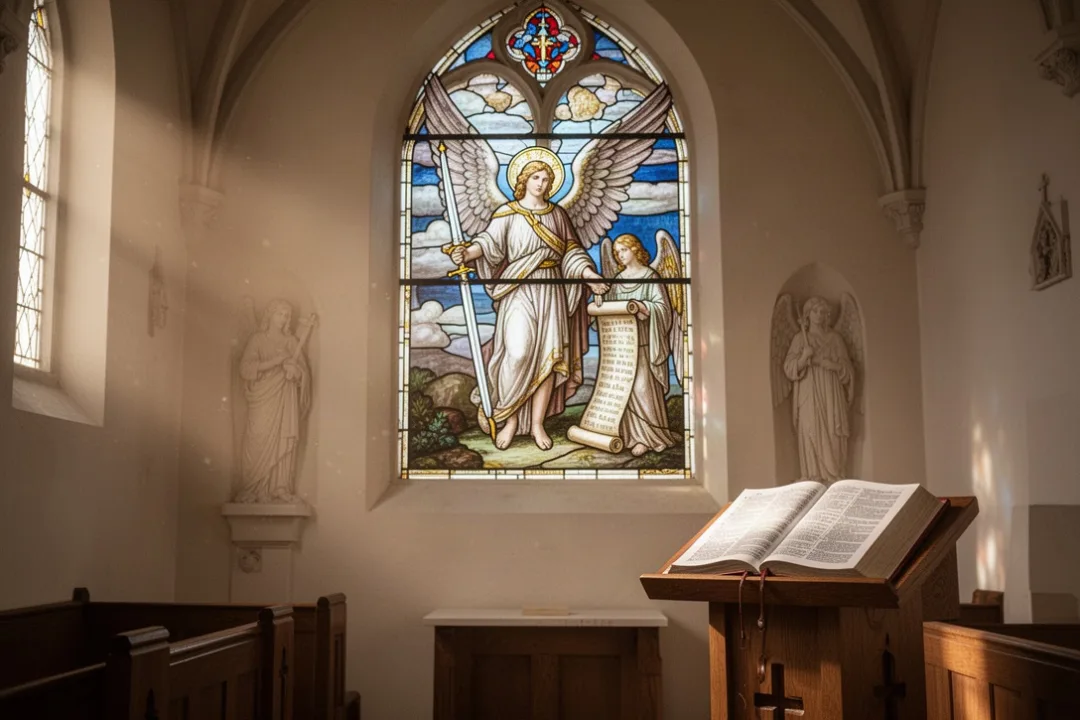
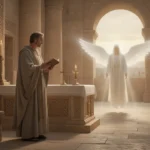
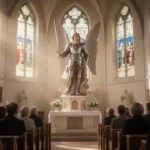
Popular images commonly show archangels with wings, armor, halos, swords, or radiant clothing. These symbols communicate spiritual authority and heavenly origin, but not every detail comes directly from passages about Michael, Gabriel, or Raphael.
The Bible sometimes describes angels with wings, especially in visions involving cherubim and seraphim. Other angelic appearances are described in more human terms, and some biblical characters do not initially recognize that they are meeting an angel. Christian artists have therefore used different visual styles across centuries.
Michael is often shown with a sword or armor because of his role in spiritual conflict. Gabriel may be shown with a lily or scroll because of the Annunciation. Raphael is frequently depicted with Tobias and a fish because of the story in Tobit. These symbols help viewers identify a scene, but they are artistic conventions rather than proof that every archangel always appears that way.
Can people pray to archangels?
Christian practice differs on this question. Catholic and Eastern Orthodox believers may ask Michael, Gabriel, or Raphael to pray for them or to assist them under God’s authority. This is understood as seeking the intercession of a heavenly servant, not treating an archangel as divine.
Many Protestant Christians prefer to pray directly to God and may honor angels without addressing them in prayer. Some are cautious about invoking angels because the New Testament emphasizes prayer to God through Jesus Christ and warns against angel worship.
If you are considering an archangel prayer, a sound approach is to keep the focus on God. You might ask God for protection, wisdom, healing, or courage while recognizing the traditional role associated with a particular archangel. Avoid practices that treat an angel as a source of power independent of God or that promise guaranteed supernatural results.
Healthy boundaries for angel-related devotion
Direct worship and ultimate trust to God.
Use Scripture and your church’s teaching as the primary guide.
Do not assume an angel’s name or message is authentic simply because it sounds spiritual.
Be cautious of anyone selling guaranteed protection, secret angelic knowledge, or spiritual power.
Remember that Christian faith does not depend on identifying every angelic rank.
What archangels can mean for everyday faith
The stories of the archangels connect spiritual beliefs with ordinary human concerns. Michael represents courage when people face evil or injustice. Gabriel represents the challenge of receiving and communicating difficult news. Raphael represents the possibility of healing and guidance during a vulnerable journey.
These themes can shape reflection without requiring speculation about unseen beings. A person dealing with conflict might pray for the courage associated with Michael’s faithful resistance. Someone facing a major decision might reflect on Gabriel’s role as a messenger and ask for honesty, wisdom, and humility. A family experiencing illness might turn to God for care while remembering Raphael’s traditional connection with healing.
The emphasis remains on God’s character and action. Archangels are not spiritual shortcuts, and knowing their names does not give a person control over the supernatural. Their biblical and traditional roles point beyond themselves to God’s authority, protection, revelation, and care.
A clear answer to who the archangels are
If you need the shortest biblically grounded answer, begin with Michael and Gabriel. Michael is explicitly called an archangel and is portrayed as a defender in spiritual conflict. Gabriel is a named heavenly messenger who explains visions and announces the births of John the Baptist and Jesus.
Add Raphael when speaking from Catholic or Eastern Orthodox tradition, where the Book of Tobit is received as Scripture. Mention Uriel and other names as figures from particular Jewish, Eastern Christian, apocryphal, or devotional traditions rather than as universally recognized biblical archangels.
The most responsible answer acknowledges both the shared core and the differences. Christianity teaches that angels serve God, but it does not require every believer to accept one detailed list of names and ranks. The central message is not the catalog of heavenly beings; it is the God whom they serve.
Frequently asked questions
How many archangels are there according to the Bible?
The Bible does not provide a complete number. Michael is explicitly called an archangel, and Gabriel is named as a prominent heavenly messenger. Catholic and Orthodox traditions recognize additional figures, while many Protestant readers limit their discussion to the names found in their biblical canon. Lists of seven archangels come from broader religious traditions and ancient writings.
Is Gabriel officially called an archangel in Scripture?
No biblical passage directly gives Gabriel the title “archangel.” Gabriel is clearly a high-ranking messenger who explains visions in Daniel and announces important events in Luke. Many Christians call him an archangel based on his importance and later tradition, but the title is explicit for Michael, not Gabriel.
Why is Raphael not included in every Christian Bible?
Raphael appears in the Book of Tobit. Catholic and Eastern Orthodox churches include Tobit among their biblical books, while many Protestant traditions place it among the Apocrypha and do not treat it as canonical Scripture. As a result, Raphael is widely recognized in some churches but not accepted as a biblical archangel by all Christians.
Are archangels the same as guardian angels?
No. “Archangel” identifies a leading or especially significant angelic figure in religious tradition, while a guardian angel is understood as an angel assigned to protect or assist a person. Christianity does not teach that every guardian angel is an archangel. The two ideas may overlap in devotion, but they describe different roles.












Leave a Reply