Feast of St. Michael the Archangel: meaning and traditions
Feast of St. Michael the Archangel: meaning and traditions
The feast of St. Michael the Archangel is celebrated on September 29 in many Western Christian traditions.
In the Roman Catholic Church, the official celebration is called the Feast of Saints Michael, Gabriel, and Raphael, Archangels. These three are the angels named in the Bible, and the feast brings together their distinct missions: Michael is associated with spiritual defense, Gabriel with announcing God’s plans, and Raphael with healing and guidance.
When the feast of St. Michael the Archangel is celebrated
September 29 is the principal date for the feast in the Roman Catholic Church, the Church of England, and many other Western churches. In English-speaking countries, the day is often known as Michaelmas, a name formed from “Michael’s Mass.” The date is fixed, so it falls on the same day each year.
The celebration is not generally a federal or public holiday in the United States. Parish observance varies widely. Some churches celebrate the feast during the Sunday Mass or worship service closest to September 29, while others hold a weekday service, prayer gathering, Bible study, or special program about the ministry of angels.
The feast has a different date in some Eastern Christian traditions. Many Eastern Orthodox churches celebrate the Synaxis of the Archangel Michael and the other Bodiless Powers on November 8. A synaxis is a gathering for a liturgical celebration, especially one honoring a group of saints or angels. Local calendars and church traditions can affect the way the day is observed.
Calendar note: September 29 is the Western feast of Michael, Gabriel, and Raphael. November 8 is the principal observance in many Eastern Orthodox churches, so the date depends on your denomination and local calendar.
The Western feast developed from earlier celebrations connected with St. Michael. One important influence was the dedication of a church in Rome associated with Michael. Over time, the feast became part of the wider church calendar and came to honor the three archangels named in Scripture.
Older Western calendars sometimes gave Michael a separate feast, while later liturgical revisions placed Michael, Gabriel, and Raphael together on September 29. This arrangement reflects the fact that the Bible identifies these three archangels by name, although it does not provide a complete list of all heavenly beings or establish every later title used in Christian tradition.
What St. Michael represents in Christian belief
Michael’s name comes from a Hebrew expression commonly understood to mean “Who is like God?” The question is not a claim that Michael is equal to God. Instead, it directs attention away from the angel and toward God’s unique authority, holiness, and power.
In Christian teaching, angels are created spiritual beings, not gods and not human beings who have died. They serve God and carry out missions according to God’s will. The feast therefore honors Michael as a servant and messenger of God, while worship belongs to God alone.
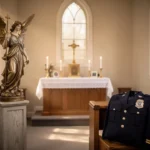
Michael is especially associated with protection, courage, and the defense of what is good. Christian art often portrays him holding a sword, wearing armor, or standing over a defeated dragon. These images are symbolic. They express the struggle against evil rather than suggesting that Christians should seek violence or rely on physical force.
Michael’s traditional role also includes helping believers resist temptation and remain faithful during hardship. That does not mean every danger will disappear or that prayer to Michael replaces wise action. Rather, devotion to Michael can remind Christians to ask for strength, reject evil, and trust God when they feel vulnerable.
Michael appears by name in several biblical passages. In the Book of Daniel, he is described as a great prince who stands with God’s people during a time of conflict and distress. These passages present him as a powerful heavenly protector, while still placing his authority under God’s larger purpose.
In the Letter of Jude, Michael is connected with a dispute involving the devil. The passage emphasizes Michael’s restraint: he does not pronounce judgment on his own authority but leaves judgment to the Lord. This detail is significant because it presents spiritual strength together with humility and dependence on God.
The Book of Revelation describes a heavenly battle in which Michael and his angels oppose the dragon, a symbolic figure associated with Satan. The passage uses vivid apocalyptic imagery to portray the defeat of evil and the vindication of God’s people. It is not a simple description of an earthly military event.
These references support the main themes of the feast: God’s victory over evil, the protection of the faithful, and the need for humility in spiritual conflict. They do not support treating Michael as an independent supernatural power who can be commanded or manipulated.
Michael’s name points beyond the angel himself to the incomparable greatness of God.
Why Gabriel and Raphael are celebrated with Michael
The September 29 feast includes Gabriel and Raphael because they are also named as archangels in the Bible. Their presence gives the celebration a broader meaning: God’s work includes protection, proclamation, healing, and guidance, not only the defeat of evil.
Gabriel appears in the Book of Daniel as an interpreter of visions. In the Gospel of Luke, he announces the births of John the Baptist and Jesus. Because of these passages, Gabriel is strongly associated with revelation and joyful announcement. He is often depicted with a lily, a staff, or a scroll, although these symbols come from Christian art and tradition rather than from a biblical description.
Raphael is a central figure in the Book of Tobit, which is included in the Catholic and Orthodox biblical canons but not in the Jewish or Protestant canons. Raphael accompanies Tobias, offers guidance, and is connected with the healing of Tobit and Sarah. For this reason, Christians often ask for Raphael’s intercession in matters involving healing, travel, and safe guidance.
Michael, Gabriel, and Raphael represent different forms of service. Michael defends, Gabriel announces, and Raphael accompanies and heals. Their feast can therefore help worshipers reflect on the many ways God assists and calls people: through courage in conflict, clarity in vocation, care for the sick, and faithful companions along difficult roads.
Michael: protection, courage, spiritual resistance, and God’s victory over evil.
Gabriel: revelation, proclamation, vocation, and messages that call for a response.
Raphael: healing, companionship, safe travel, and practical guidance.
The feast does not require Christians to choose one archangel against the others. It is a shared celebration of God’s heavenly servants and of the different kinds of help described in Scripture and Christian tradition.
How churches observe the feast
The central observance is Christian worship, not a private magical practice. In a Catholic parish, the feast may be marked by the celebration of Mass, readings about angels, a homily on spiritual protection, or a prayer asking God to strengthen the church. In Anglican and other Protestant settings, the day may include Scripture readings, hymns, a sermon, and prayers for the ministry of angels.
Liturgical colors and local customs differ by denomination. The readings selected for September 29 may focus on Michael’s battle with evil, the angels’ service, or the vision of heaven. A congregation may also use the day to pray for people who face danger, illness, persecution, or difficult moral choices.
Some communities hold a procession, blessing, parish meal, lecture, or children’s program. Others use the occasion to teach about the difference between biblical angels and popular images of angels. There is no single required celebration outside the official liturgy of a particular church.
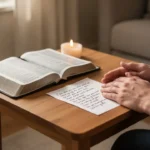
Individuals can observe the feast quietly at home. A useful practice is to read the biblical passages about Michael, Gabriel, and Raphael, then consider how their missions relate to your own responsibilities. You might also attend worship, pray for someone who needs protection, or offer practical help to a person who is sick or isolated.
Check your church calendar to learn whether your congregation observes the feast on September 29 or on a nearby Sunday.
Read the relevant passages, such as Daniel 10 and 12, Jude 9, Revelation 12, Luke 1, and the Book of Tobit if it is part of your tradition.
Pray for protection and wisdom, keeping the focus on God rather than treating an angel as an independent power.
Choose a concrete act of service, such as visiting someone who is ill, helping a traveler, or standing beside a person facing injustice.
Reflect on spiritual courage by identifying one harmful habit, fear, or injustice that needs a faithful response.
A prayer to St. Michael is widely used in Catholic devotion. It asks Michael to defend believers in spiritual struggle and to resist the power of evil. The prayer is an appeal for God’s protection through Michael’s service, not an attempt to command the angel. Some parishes pray it after Mass or during special devotions, while others leave its use to personal prayer.
Healthy devotion: Prayer to St. Michael should lead to trust in God, moral responsibility, and care for others. It should not encourage fear, superstition, or the belief that an angel can be controlled through special words or objects.
Michaelmas traditions and their historical meaning
In medieval and early modern Europe, Michaelmas had importance beyond the church service. It was associated with the beginning of autumn and became one of the traditional quarter days in parts of Britain and Ireland. Quarter days were dates used for practical arrangements such as rents, contracts, employment terms, and the start or end of certain administrative periods.
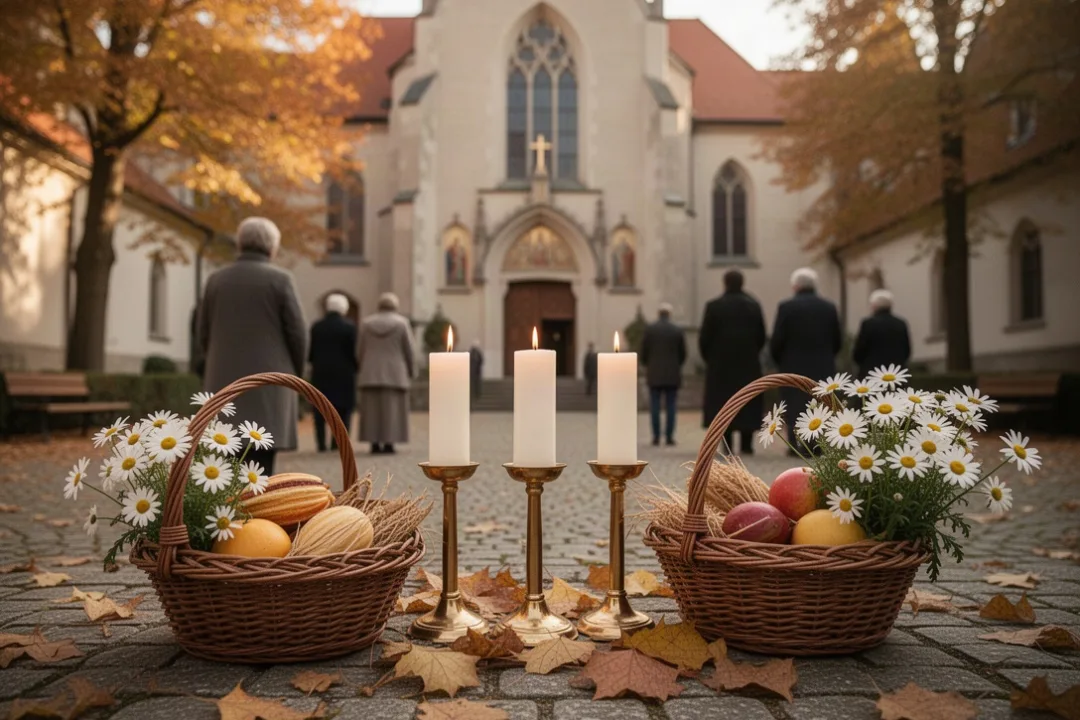
Michaelmas also followed the harvest season in many places. Churches and communities sometimes connected the feast with gratitude for food, land, and the work completed during the growing season. These customs were regional rather than universal, and they should not be confused with required Christian teachings about Michael.
Food traditions developed in some areas. A Michaelmas goose, for example, became associated with the feast in parts of England. Other communities marked the season with apples, grains, bread, or local harvest foods. Today, a church meal or harvest supper can reflect the historical connection between the feast and gratitude, although no particular food is required.
Michaelmas daisies are also linked by name and season with the feast. These late-blooming flowers became a familiar symbol of the time of year in some regions. Their association is cultural and seasonal, not a formal part of the liturgy.
The older customs show how a church feast could shape the calendar of ordinary life. Worship, agriculture, employment, and local community events were once closely connected. In the United States, most of these customs are less familiar, but a parish can adapt the underlying themes through a harvest meal, a service project, or prayers for workers and families.
What the feast means for Christians today
The feast of St. Michael the Archangel invites Christians to think about faithfulness under pressure. Michael is not honored because he acts independently or seeks glory. He is honored as one who serves God’s purpose and stands with those who need help.
That emphasis can make the feast relevant to ordinary decisions. Protecting another person may mean reporting abuse, refusing dishonest behavior, defending someone who is being mistreated, or making a home safer. Spiritual courage is often expressed through patient, responsible action rather than dramatic experiences.
The feast also challenges exaggerated ideas about angels. Scripture presents angels as real servants of God, but it does not encourage people to become fascinated with them for their own sake. Christian attention should remain centered on God’s holiness, Christ’s saving work, and the call to love one’s neighbor.
Michael’s example can be especially meaningful for people who feel surrounded by fear or conflict. The feast does not promise a life without danger. Instead, it offers a framework for responding to danger with prayer, truthfulness, self-control, and confidence that evil does not have the final word.
Gabriel adds the question of how you receive and share important truth. Raphael brings attention to healing and companionship. Together, the three archangels encourage a balanced form of faith: defend what is right, speak truth with care, and accompany people who are suffering.
A personal observance might include lighting a candle, attending church, reading the biblical passages, or saying a traditional prayer. It might also involve calling a sick friend, supporting a caregiver, or seeking help for a serious problem rather than facing it alone. These actions express the feast more faithfully than superstition or decorative symbolism by connecting prayer with responsible love.
For families, the feast can become a simple teaching opportunity. Parents can explain that angels serve God, that Michael’s name points to God’s greatness, and that courage includes asking for help. Children can draw a protective image, learn the names of the three archangels, or participate in a service project without being taught that religious objects have magical power.
For congregations, September 29 can also be a time to pray for people who work in dangerous conditions, those who protect the vulnerable, medical workers, travelers, and anyone facing spiritual or emotional distress. A church may honor these needs while remembering that genuine protection can include prevention, community support, medical care, and wise counsel.
The feast remains meaningful because its central message is simple: God is greater than evil, and those who serve God are called to courage, humility, and care. St. Michael’s day honors an archangel, but its deepest focus is the God whom Michael serves.
Frequently asked questions
Is the feast of St. Michael the Archangel a holy day of obligation?
In most places, September 29 is not a universal holy day of obligation for Catholics. The obligation to attend Mass depends on the official calendar of your country and diocese. A parish may celebrate the feast with a weekday Mass or transfer its observance to a Sunday, but attendance requirements are determined by local church law.
Why is Michael called an archangel?
“Archangel” generally means a chief or principal angel. The Bible names Michael as an archangel in Jude 9 and presents him as a leader among heavenly beings. Christian traditions may use the title in slightly different ways, but Michael is consistently associated with leadership, protection, and service under God’s authority.
Can I pray to St. Michael for protection?
In Catholic and some other Christian traditions, people ask St. Michael to intercede for them and defend them in spiritual struggle. The prayer is directed ultimately to God, who is the source of protection. It should be joined with sensible action, such as seeking medical, legal, pastoral, or personal safety assistance when needed.
What is the difference between Michaelmas and the feast of St. Michael?
Michaelmas is the traditional English name for the September 29 celebration. In modern Western church calendars, the feast usually honors Michael together with Gabriel and Raphael, so “Michaelmas” can refer to the wider Feast of the Archangels. Historically, the term also described seasonal, legal, and agricultural customs connected with the date.











Leave a Reply