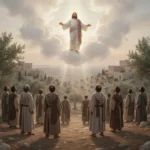
Sunday Pentecost is the Christian feast observed 50 days after Easter Sunday. It remembers the event described in Acts 2, when Jesus’ disciples were gathered in Jerusalem and received the Holy Spirit in a powerful and public way. The experience gave them courage to speak about Jesus and enabled people from many regions to hear the message in languages they understood.
The day is sometimes called Whitsunday, especially in older English Christian traditions. “Pentecost” comes from a Greek word meaning “fiftieth,” reflecting the feast’s place in the Easter season. Because Easter falls on a different date each year, Pentecost also moves from year to year.
For many churches, Pentecost is one of the most significant celebrations after Easter and Christmas. It focuses not mainly on an event from Jesus’ earthly life, but on the continuing presence and work of the Holy Spirit in the church and in individual believers.
The central idea: Pentecost is about God empowering ordinary people to live, speak, serve, and worship through the presence of the Holy Spirit.
When Sunday Pentecost occurs each year
Pentecost falls on the seventh Sunday after Easter. In traditional Christian counting, Easter Sunday is the first day, making Pentecost the fiftieth day of the Easter celebration. It can occur in May or June in Western churches, depending on the date of Easter.
The date is connected indirectly to the Jewish festival of Shavuot, also called the Feast of Weeks. In the biblical calendar, Shavuot took place after Passover and was associated with the grain harvest. By the time of Acts 2, Jerusalem was filled with Jewish pilgrims who had come for this festival, which helps explain why so many people from different places were present when the disciples began speaking.
Most Western churches calculate Easter using the Gregorian calendar. Eastern Orthodox churches may calculate Easter using a different calendar system, so Orthodox Pentecost can fall on a different Sunday. The meaning of the feast remains closely related, even when the date differs.
How the first Pentecost unfolded in Acts 2
The account in Acts 2 presents Pentecost as the fulfillment of Jesus’ promise that his followers would receive power from the Holy Spirit. Before his ascension, Jesus told the disciples to remain in Jerusalem and wait for this gift, as recorded in Acts 1.
The event unfolds through several connected signs and responses:
The disciples gather together. They are waiting and praying in Jerusalem, following Jesus’ instructions.
A sound like a strong wind fills the house. The description points to a force beyond ordinary human control.
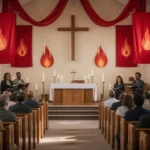
What appears like divided flames rests on those present. This visual sign represents the holy presence that comes upon the community.
The disciples speak in other languages. People from many regions hear them declaring God’s works in their own languages.
The crowd reacts with confusion and amazement. Some wonder what the event means, while others mock the disciples.
Peter explains the event. He connects it with the prophets and proclaims Jesus’ death and resurrection.
A new community forms. Acts describes people responding to Peter’s message and joining the fellowship of believers.
The account does not present Pentecost as a private spiritual experience meant only for a few exceptional people. The Spirit comes upon a gathered community, and the result is public witness, shared understanding, and new life together. The disciples who had previously been fearful now speak openly in a crowded city.
What the Holy Spirit represents at Pentecost
Christian traditions use different language to describe the Holy Spirit, but Pentecost consistently emphasizes the Spirit as God’s active presence. The Spirit is not treated merely as an idea, mood, or symbol. In the biblical account, the Spirit teaches, empowers, guides, comforts, and brings people together.
The wind and fire in Acts 2 communicate several aspects of the Spirit’s work. Wind suggests movement and breath, while fire suggests purification, holiness, energy, and visible transformation. These signs are not presented as a formula that must be repeated every Pentecost. They point toward the Spirit’s power to renew people and direct them toward God’s purposes.
Pentecost also highlights the relationship between the Spirit and human speech. The disciples do not receive power to create confusion for its own sake. Instead, people from different places hear the message in languages they can understand. This gives the event an outward, missionary purpose.
For Christians, the Spirit’s presence does not remove personality or cultural difference. The people in Acts do not become one indistinguishable group. Rather, they are brought into shared understanding while remaining people from different regions and backgrounds.
Why Pentecost is connected with the birth of the church
Christians often call Pentecost the birthday of the church because it marks the beginning of the disciples’ public mission in the power of the Spirit. Jesus had gathered and taught them, and they had witnessed his death and resurrection. At Pentecost, they begin proclaiming the good news openly and forming a continuing community of faith.
This phrase does not mean that no followers of God existed before Acts 2. Jesus’ disciples, the people of Israel, and the earliest Christian believers were already present. It means that Pentecost marks a decisive transition: the followers of Jesus move from waiting together to witnessing together.
The church’s life after Pentecost includes several features that remain central to Christian communities:
Worship and prayer: believers gather to praise God and seek direction.
Teaching: the apostles explain Jesus’ life, death, resurrection, and significance.
Fellowship: members share life rather than practicing faith in isolation.
Generosity: resources are used to meet genuine needs within the community.
Mission: the message moves beyond one location and reaches different peoples.
Service: spiritual gifts are directed toward the good of others.
Pentecost therefore points both backward and forward. It looks back to Jesus’ promise and the resurrection, while looking forward to the church’s continuing work in the world.
How churches observe Sunday Pentecost
Churches mark Pentecost through worship practices that draw attention to the Holy Spirit, the worldwide church, and the calling to serve others. The exact customs differ among denominations, but the day is often more visually and musically expressive than an ordinary Sunday.
Red clothing and decorations
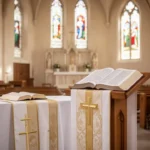
Red is the traditional liturgical color for Pentecost in many Western churches. It recalls the fire described in Acts 2 and can also suggest the Spirit’s power and energy. Congregations may use red banners, cloths, flowers, altar coverings, or clothing for clergy and worship leaders.
Some churches use other colors or incorporate white, gold, or multiple colors to emphasize the universal reach of the gospel. The color itself is not the meaning of Pentecost, but it provides a visible reminder of the day’s themes.
Readings from Acts 2 and other biblical passages
Acts 2 is the central reading for Pentecost in many traditions. Churches may also read passages about the Spirit from John, Romans, 1 Corinthians, Galatians, or other parts of the Bible. These readings often address spiritual gifts, life in the Spirit, unity, prayer, and the relationship between the Spirit and the church.
When these passages are read publicly, the goal is not simply to retell an ancient event. They invite the congregation to consider how God’s presence shapes its worship, decisions, relationships, and service.
Music, prayer, and testimonies
Music plays a prominent role in many Pentecost services. Hymns and songs may focus on the Holy Spirit, renewal, mission, unity, or the church’s call to witness. Congregations may also include prayers for guidance, healing, courage, justice, and the needs of communities around the world.
Some churches invite members to share brief testimonies about how they have experienced guidance, comfort, conviction, or strength through faith. Testimonies are most helpful when they point beyond personal achievement and acknowledge the Spirit’s work in ordinary acts of love, endurance, wisdom, and service.
Confirmation and baptism
In some denominations, Pentecost is a common time for baptisms, confirmations, or receptions into church membership. These ceremonies fit the day’s focus on entering the Christian community and receiving support for a life of faith.
Other congregations use Pentecost to recognize volunteers, commission missionaries, pray over ministry leaders, or bless people beginning a new form of service. These practices emphasize that the Spirit equips the whole church, not only ordained clergy.
What Pentecost teaches about language and cultural difference
One of the most striking details in Acts 2 is that the crowd includes people from many nations and language groups. The miracle does not require everyone to abandon their native language and adopt one cultural pattern. Instead, each person hears about God in a language that is familiar.
This makes Pentecost a strong biblical image for cross-cultural communication. Christian mission is not meant to erase the identity of the people who receive the message. It requires listening, translation, humility, and a willingness to communicate in ways others can understand.
The story also challenges communities that confuse uniformity with unity. The church can include people with different histories, languages, customs, and social experiences without expecting them to become culturally identical. Unity at Pentecost is created by the Spirit, not by forcing everyone into one style of worship or one social background.
For a congregation, this may lead to practical questions:
Are visitors able to understand the service and feel genuinely welcomed?
Are different languages and cultural traditions treated with respect?
Does the church listen to its neighbors before deciding how to serve them?
Are people with different gifts given meaningful ways to participate?
Does the congregation communicate the Christian message with clarity and sensitivity?
How spiritual gifts fit the meaning of Pentecost
The New Testament connects the Holy Spirit with spiritual gifts—abilities and forms of service that strengthen the community. First Corinthians 12, Romans 12, and Ephesians 4 describe gifts in different ways. The lists include forms of teaching, leadership, encouragement, generosity, mercy, service, wisdom, and other contributions.
These passages do not suggest that every Christian has the same role. They present the church as a body whose members need one another. Pentecost celebrates the Spirit’s generosity in equipping people differently for a shared purpose.
A spiritual gift is not simply a talent used for personal recognition. Its value is measured by how it contributes to love, truth, justice, care, and the common good. Someone who organizes meals for a grieving family, teaches children patiently, welcomes newcomers, repairs a community space, or offers wise counsel may be serving through the Spirit’s work just as genuinely as someone preaching from a pulpit.
Discernment matters. Churches should encourage people to develop their gifts while also providing accountability, training, and care. Claims about spiritual power should never be used to control others, excuse harmful behavior, or place one person above the whole community.
A practical test for spiritual service: Ask whether a gift helps people love God and neighbor more faithfully, strengthens the community, and reflects humility rather than personal status.
Ways to observe Sunday Pentecost at home
You do not need an elaborate event to observe Pentecost meaningfully. A simple practice can connect the biblical story with your own responsibilities, relationships, and hopes for the church.
Read Acts 1 and Acts 2. Notice the disciples’ waiting, the Spirit’s arrival, Peter’s explanation, and the community that follows.
Pray for the Spirit’s guidance. Ask for courage, wisdom, compassion, and a willingness to serve rather than asking only for a dramatic experience.
Use the color red. Add a red cloth, flower, candle, or piece of clothing as a visual reminder of Pentecost.
Listen to worship music from another culture. Choose music from a Christian tradition different from your own and reflect on the worldwide church.
Identify one gift you can use. Consider a practical way to help your congregation, neighborhood, workplace, or family.
Contact someone who feels isolated. A thoughtful call, meal, message, or visit can turn Pentecost’s emphasis on community into action.
Pray for people who communicate across differences. Include translators, teachers, missionaries, community leaders, and families learning a new language.
Families with children can create paper flames, learn the names of countries represented in their church, or make a prayer circle in which each person names one way the family can show love during the coming week. The activity matters less than helping children connect Pentecost with God’s presence and service to others.
How Pentecost differs from Easter and Trinity Sunday
Easter celebrates Jesus’ resurrection. Pentecost comes later and celebrates the Holy Spirit’s coming upon the disciples. The two feasts are closely connected: the resurrection is the foundation of the Christian message, while Pentecost shows the disciples receiving power to proclaim that message.
Trinity Sunday usually follows Pentecost in Western liturgical calendars. It focuses on the Christian understanding of God as Father, Son, and Holy Spirit. Pentecost, by contrast, concentrates more directly on the Spirit’s action in the disciples and the church.
These celebrations should not be treated as competing ideas. Easter, Pentecost, and Trinity Sunday are related parts of the Christian calendar. Easter centers on resurrection, Pentecost on the Spirit’s empowering presence, and Trinity Sunday on the nature of God as understood through Christian faith.
Common misunderstandings about Sunday Pentecost
Pentecost is not only about dramatic experiences
The wind, fire, and languages in Acts 2 are dramatic signs, but Pentecost also leads to ordinary patterns of worship, generosity, teaching, and care. A person does not need an unusual emotional experience to take part in the Spirit’s work.
The biblical account presents the Spirit coming upon a community, not only upon a small group of officials. Christian traditions differ in how they describe spiritual authority, but Pentecost supports the idea that every believer has a role in the life and mission of the church.
Speaking in tongues is not interpreted identically by every church
Some Christian communities understand tongues in Acts 2 primarily as recognizable human languages. Others connect the passage with forms of prayer or spiritual speech discussed elsewhere in the New Testament. Churches vary in practice and teaching, so a respectful explanation should acknowledge these differences rather than assuming one interpretation is universal.
Pentecost is more than a celebration of individual power
The Spirit equips people for witness and service, but Acts 2 places the result within a community. Pentecost is not a promise of personal success, influence, or control. Its direction is outward: toward God, toward other people, and toward a community shaped by generosity and shared faith.
Questions to consider during Pentecost worship
Whether you attend a formal service or observe quietly at home, several questions can make the day more meaningful:
Where do I need courage to speak or act faithfully?
Which people do I struggle to understand, and how can I listen more carefully?
What ability or resource can I share for someone else’s benefit?
Does my church make room for different languages, cultures, ages, and gifts?
Where is renewal needed in my relationships or community?
How can my faith become visible through patient, practical service?
These questions keep Pentecost connected to real life. The feast is not only a remembrance of what happened in Jerusalem. It is also an invitation to trust God’s presence, recognize the gifts of others, and participate in the church’s continuing witness.
Why Sunday Pentecost still matters
Sunday Pentecost matters because it answers a basic Christian question: how does Jesus’ work continue after his earthly ministry? Acts 2 responds by describing the Holy Spirit empowering a diverse community to carry the message forward.
The feast also offers a vision of a church that is united without being uniform. People hear in different languages, bring different gifts, and come from different places, yet they are drawn into a shared life. That vision challenges churches to practice hospitality, humility, clear communication, and responsible service.
For an individual believer, Pentecost can be a time to pray for renewed courage and discernment. For a congregation, it can be a time to examine how faithfully it welcomes people, develops gifts, serves its neighbors, and communicates the gospel. For the worldwide church, it points to a mission that crosses borders while respecting the people it reaches.
The day’s message is both spiritual and practical: God’s Spirit gives life to the church, equips its people, and sends them to serve.
Frequently asked questions
Is Pentecost always celebrated on a Sunday?
In Western Christian calendars, the main observance is Pentecost Sunday, which comes seven Sundays after Easter Sunday. Some churches also hold a vigil or additional services on the preceding Saturday. Eastern Orthodox churches likewise celebrate Pentecost on a Sunday, though their date may differ because Easter is calculated according to a different calendar tradition.
What color is associated with Pentecost?
Red is the most common liturgical color because it recalls the fire imagery in Acts 2 and symbolizes the Spirit’s power. Some congregations use white, gold, or several colors instead, particularly when they want to emphasize the worldwide church. Color customs vary by denomination and are not required for a meaningful observance.
What is a simple Pentecost prayer theme?
You might pray for courage to speak truthfully, wisdom to make faithful decisions, compassion for people unlike you, and willingness to use your abilities in service. You can also pray for unity among Christians, understanding across languages and cultures, and renewal for your local congregation without expecting one specific type of spiritual experience.
How is Pentecost related to the Jewish festival of Shavuot?
Pentecost takes place in the same season as Shavuot, the Jewish Feast of Weeks. Acts 2 places the disciples in Jerusalem during a major Jewish pilgrimage festival, when visitors from many regions were present. The Christian feast develops its own meaning around the Holy Spirit and the church, while retaining this important biblical and historical setting.










Leave a Reply