Sunday, October 4, 2026, is the 27th Sunday in Ordinary Time in the Catholic Church. It falls in Liturgical Year B, and the principal Gospel reading is Mark 10:2–16, which addresses marriage, divorce, and Jesus’ welcome of children.
The date also falls on the memorial of Saint Francis of Assisi, but because October 4 is a Sunday, the Sunday liturgy normally takes precedence. The exact celebration can vary slightly by country or diocese, especially where a local solemnity has been assigned.
What Catholic Sunday is celebrated on October 4, 2026?
The Catholic Church celebrates the 27th Sunday in Ordinary Time on October 4, 2026. “Ordinary Time” does not mean unimportant or routine in the everyday sense. The word refers to the numbered weeks outside the seasons of Advent, Christmas, Lent, and Easter.
Ordinary Time is divided into two main periods. The first begins after the Christmas season and continues until Lent. The second begins after Pentecost and continues until Advent. October falls in this second period, when the Church continues to reflect on Jesus’ ministry and the practical shape of Christian discipleship.
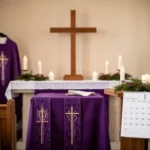
The liturgical color for this Sunday is generally green. Green is used during Ordinary Time as a sign associated with growth, hope, and the ongoing life of faith. The priest’s vestments, altar frontal, and other decorations may reflect that color, although local customs can affect the visual details of the celebration.
Direct answer: If you mean the upcoming Sunday from October 3, 2026, it is the 27th Sunday in Ordinary Time, Year B, celebrated on October 4.
Which Bible readings are used at Mass?
The readings for the 27th Sunday in Ordinary Time, Year B, are drawn from Genesis, the Psalms, Hebrews, and the Gospel of Mark. Together, they explore human relationships, the dignity of every person, and the way believers receive God’s kingdom with trust.
First reading: Genesis 2:18–24
Responsorial Psalm: Psalm 128
Second reading: Hebrews 2:9–11
Gospel: Mark 10:2–16
Genesis 2:18–24 presents companionship and marriage
The first reading describes the creation of woman and the formation of the human family. Its central idea is that human beings are not made for isolation. The passage presents companionship as part of God’s intention for human life and describes marriage as a profound union between husband and wife.
In the Catholic understanding, this reading is connected with the dignity of marriage as a covenant. It is not merely a legal arrangement or a private contract. Marriage involves a committed relationship in which husband and wife are called to mutual love, fidelity, and shared responsibility.
Psalm 128 connects family life with blessing
Psalm 128 is a prayer about the blessings associated with reverence for God, faithful work, and family life. Its imagery includes a household gathered around the table and children growing within a secure family setting.
The psalm is not a promise that every faithful person will have an easy or trouble-free life. Rather, it expresses hope that life ordered toward God can bear fruit in the home and in the wider community. The Church may also pray it with awareness of families facing grief, poverty, separation, infertility, abuse, or other serious difficulties.
Hebrews 2:9–11 emphasizes Christ’s solidarity with humanity
The second reading reflects on Jesus’ humility and suffering. It presents Christ as one who truly entered the human condition and passed through suffering, while remaining the source of salvation. The passage also emphasizes the close relationship between Christ and the people he saves.
This reading gives the Sunday a wider focus than family life alone. It reminds worshipers that Christian discipleship rests on the mystery of Christ becoming fully involved in human existence. God’s care is not distant or abstract; in Jesus, it is revealed through a life that includes service, suffering, and faithful love.
Mark 10:2–16 addresses marriage and welcomes children
In the Gospel, some Pharisees question Jesus about divorce. Jesus refers back to the creation account and teaches that marriage is meant to express a deep, lasting union. He also explains that Moses permitted divorce because of human hardness of heart, not because divorce represented the original purpose of marriage.
The passage then turns to children. When people bring children to Jesus, the disciples try to stop them, but Jesus corrects the disciples and receives the children. He teaches that God’s kingdom must be received with the openness and dependence represented by a child.
These two scenes belong together. The Gospel speaks about the seriousness of covenant love, but it also shows Jesus protecting access to him for people who may have little social power. Children were not treated as obstacles or interruptions; Jesus made space for them and blessed them.
Why the Gospel matters for Catholics today
The Gospel reading can be challenging because it speaks directly about marriage, divorce, and the permanence of committed love. Catholic teaching understands sacramental marriage as a lifelong covenant. At the same time, the Church recognizes that many people carry painful experiences of divorce, abandonment, domestic violence, or relationships that were never valid marriages in the Church’s understanding.
Jesus’ teaching should not be used as a weapon against people who are already wounded. The Church’s pastoral response includes accompaniment, prayer, counseling, and practical support. Catholics who are divorced or remarried may have questions about participation in the Church, and those questions are best discussed personally with a priest or qualified pastoral minister rather than answered through general assumptions.
The reading also invites reflection on what makes a marriage strong. Couples might consider whether their relationship includes faithfulness, honesty, forgiveness, shared prayer, and care for the vulnerable. The passage is not simply a rule about what may or may not happen after a marriage breaks down; it points toward the faithful love that marriage is intended to embody from the beginning.
The section about children carries an equally practical message. In the Catholic Church, children are not only future members of the community. They already belong within the worshiping body through baptism and deserve safety, attention, instruction, and a genuine voice in age-appropriate ways.
Parents and guardians can pray with children and bring them into regular Sunday worship.
Parishes can make children feel welcomed rather than treated as distractions.
Adults can protect children from abuse, neglect, exploitation, and spiritual manipulation.
Teachers and catechists can present the faith clearly while respecting children’s questions.
The entire community can remember families who need food, housing, health care, or emotional support.
Receiving the kingdom “like a child” does not mean being childish or uninformed. It suggests trust, humility, receptiveness, and dependence on God. Adults can possess knowledge, experience, and responsibility while still recognizing that salvation is received as a gift rather than earned through self-sufficiency.
Pastoral care: The Church’s teaching on marriage should be read together with Christ’s compassion. A difficult marital history does not place someone outside God’s concern or the possibility of healing and renewed faith.
How October 4 relates to Saint Francis of Assisi
October 4 is the feast day of Saint Francis of Assisi, a thirteenth-century Italian saint known for his radical poverty, care for creation, service to people who were poor, and love for Christ. Many parishes mark the date with a blessing of animals, especially because Francis is associated with creation and with a traditional story of his kindness toward living creatures.
In 2026, however, October 4 is a Sunday. In the Roman Catholic calendar, Sundays have a special rank because they celebrate the Resurrection of Jesus. A Sunday in Ordinary Time will generally be celebrated instead of the memorial of Saint Francis when the two occur on the same date.
That does not mean Saint Francis is forgotten. A parish may mention him in announcements, offer a blessing of animals at another suitable time, or incorporate themes associated with his life into a service outside the principal Sunday Mass. The local pastor and diocese determine how such observances are scheduled.
Saint Francis’ example can also complement the Sunday’s themes. His life shows how Christian love becomes concrete through humility, care for others, and a willingness to abandon status and comfort. His concern for creation can encourage families and parishes to treat the natural world as a gift entrusted to human responsibility.
How the Catholic liturgical year determines the Sunday
The Catholic Church uses a recurring liturgical calendar to organize Sunday worship. Each year combines a particular cycle of Sunday readings with the seasons and feasts that shape the Church’s prayer. The three Sunday cycles are commonly identified as Year A, Year B, and Year C.
Year A gives special attention to the Gospel of Matthew. Year B is centered primarily on Mark, while also using passages from John during important seasons. Year C focuses mainly on Luke. The Gospel for October 4, 2026, comes from Mark, so the Sunday belongs to Year B.
The year does not change on January 1. The liturgical year begins with the First Sunday of Advent, which occurs near the end of the calendar year. That is why a date in October 2026 belongs to the liturgical year that began with Advent in 2025 and continues until Advent begins in late 2026.
The calendar for October 4, 2026, can be understood through these steps:
Identify the civil date: Sunday, October 4, 2026.
Place the date in the Church’s seasonal calendar: it falls during Ordinary Time.
Count the numbered Sunday: it is the 27th Sunday in Ordinary Time.
Determine the Sunday lectionary cycle: the date belongs to Year B.
Check for a saint’s feast or a local solemnity: Saint Francis is remembered on October 4, but the Sunday celebration normally has precedence.
For personal prayer, you can use the Sunday readings before Mass, after Mass, or during the week that follows. Reading the passages slowly and considering how the Gospel connects with family life, human dignity, and dependence on God can help turn the liturgical calendar into a regular pattern of prayer.
What changes if you attend a vigil or a different country’s Mass?
The Saturday evening Mass on October 3, 2026, is a Sunday vigil Mass. In Catholic practice, a properly celebrated Saturday evening vigil fulfills the Sunday obligation. The readings are normally those assigned to Sunday, even though the Mass takes place on Saturday.
There can be differences between the readings used in the United States and those used in another country. Catholic bishops’ conferences use approved lectionaries, and local calendars may assign particular observances to certain dates. The central celebration remains the same, but the wording, sequence, or additional options can differ.
A parish may also celebrate a special event such as a patronal feast, anniversary, dedication, or diocesan observance. Some local celebrations have a higher liturgical rank than the ordinary Sunday listing. If you need the exact readings for a particular parish, check its bulletin or website, or ask the parish office.
Mass times do not change the identity of the day. A Saturday evening vigil and Sunday morning Mass both point to the same Sunday celebration. A Sunday afternoon or evening Mass also belongs to that Sunday, unless the parish is celebrating a separate rite or special liturgy according to the approved calendar.
For October 4, 2026, the simplest answer remains the 27th Sunday in Ordinary Time, Year B. Saint Francis of Assisi may be remembered around the date, but the Sunday liturgy centers on the readings from Genesis, Psalm 128, Hebrews, and Mark.
Frequently asked questions
Is October 4, 2026, also the feast of Saint Francis of Assisi?
Yes. October 4 is traditionally associated with Saint Francis of Assisi. Because the date falls on a Sunday in 2026, the Sunday celebration normally takes precedence at Mass. A parish may still honor Saint Francis through announcements, prayers, a separate service, or an animal blessing scheduled according to local practice.
What is the Catholic liturgical year for October 4, 2026?
October 4, 2026, belongs to Liturgical Year B. The Sunday Gospel is mainly taken from Mark during this cycle. The liturgical year began with Advent in late 2025 and continues through the Saturday before Advent begins in late 2026.
Can I attend Mass on Saturday evening instead of Sunday?
In general, a properly celebrated Saturday evening vigil Mass fulfills the Sunday Mass obligation. On October 3, 2026, the vigil would normally use the readings and prayers for the 27th Sunday in Ordinary Time. Parish schedules and any special local celebration should be confirmed directly with the parish.
What does “Ordinary Time” mean in the Catholic Church?
Ordinary Time is the season outside Advent, Christmas, Lent, and Easter. It is called “ordinary” because the Sundays are numbered, not because they are less meaningful. During this season, the Church reflects on Jesus’ ministry and on how Christian faith is lived through worship, relationships, service, and daily choices.










Leave a Reply