Adoration Catholic: what to expect and how to pray
Adoration Catholic: what to expect and how to pray
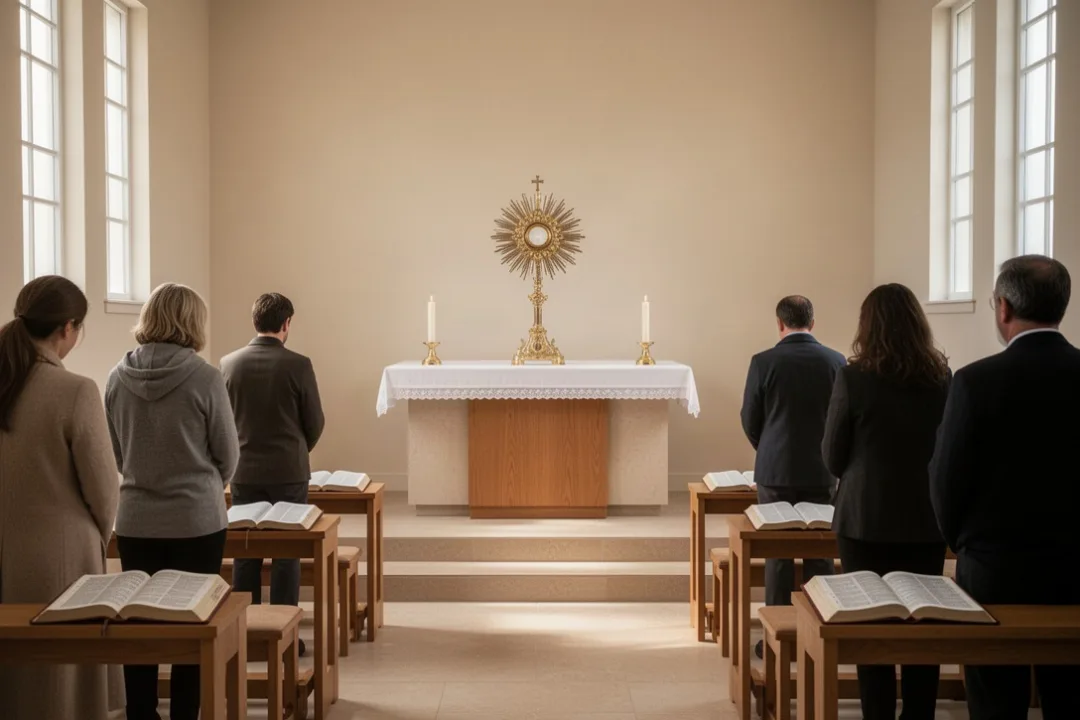
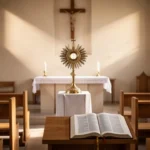
Catholic adoration is a time of prayer before Jesus Christ present in the Eucharist. Usually, the consecrated Host is displayed in a vessel called a monstrance, allowing you to sit or kneel quietly in the presence of the Blessed Sacrament.
You do not need a special prayer, extensive Bible knowledge, or a perfect ability to concentrate. You can bring your gratitude, worries, questions, or simply your willingness to remain present. Adoration is not a performance; it is a quiet act of worship, attention, and love.
At Mass, Catholics believe that bread and wine become the Body and Blood of Christ through the consecration. Eucharistic adoration extends prayerful worship beyond the celebration of Mass. When the consecrated Host is exposed, Catholics honor Christ with the same reverence given to the Eucharist during and after Mass.
The practice rests on the Catholic belief in the Real Presence: Christ is truly present in the Eucharist, not merely remembered as a symbol. The Eucharist remains reserved in the tabernacle after Mass primarily so Communion can be brought to the sick and dying, and also so the faithful can pray before Christ outside the liturgy.
Adoration therefore differs from looking at a religious object or using a quiet room for private reflection. The chapel may be peaceful, but the purpose is specifically prayer before the Eucharistic Lord. Catholics may express this worship through silence, Scripture, devotional prayers, singing, or simple attentiveness.
A helpful starting point: You do not have to fill every minute with words. Sitting quietly before the Blessed Sacrament can itself be a sincere prayer when you intentionally place yourself in God’s presence.
How exposition and Benediction work
Exposition is the liturgical act of placing the consecrated Host in a monstrance or another approved vessel for adoration. A priest, deacon, or other authorized minister may expose and later repose the Blessed Sacrament according to the parish’s practice and the Church’s liturgical norms.
Some parishes offer a scheduled hour of exposition each week. Others maintain a chapel with regular or extended access, while some offer adoration only during a particular devotion, retreat, or parish event. The exact arrangement differs, so check the parish website or bulletin before arriving.
Benediction is a Eucharistic blessing given with the exposed Blessed Sacrament. During this service, the priest or deacon uses the monstrance to bless the congregation. Prayers, hymns, incense, and a period of silence may be included. Adoration can happen without Benediction, and Benediction normally takes place as part of a larger period of Eucharistic prayer.
When the Host is in the tabernacle rather than exposed, Catholics may still pray before the Eucharist. This is sometimes called prayer before the tabernacle or adoration before the reserved sacrament. The physical setting is different, but the central act remains prayerful attention to Christ’s presence.
What to do when you arrive at adoration
Arrive quietly and observe what others are doing. Some chapels have a sign-in sheet, a scheduled adorer, or instructions about maintaining a minimum number of people present. Follow the parish’s directions rather than assuming every chapel operates in the same way.
After entering, make a genuflection toward the exposed Eucharist if you are physically able. A genuflection is a deliberate bending of one knee as a sign of reverence. If the sacrament is in the tabernacle, Catholics traditionally genuflect toward the tabernacle when it is located in the sanctuary and clearly identified as the place where the Eucharist is reserved.
Choose a place where you can pray without blocking others. You may sit, kneel, or change posture as needed. Silence is usually expected, although some periods may include communal prayers, music, or guided meditation.
If you are uncertain, it is perfectly acceptable to watch discreetly and follow the local custom. The most important actions are reverence, quiet, and a sincere intention to pray.
A “holy hour” usually means about an hour of prayer before the Eucharist, although the phrase can also describe a shorter or longer period. You are not required to pray continuously in a formal way. A balanced hour may include silence, Scripture, devotional prayers, spiritual reading, and examination of your life in God’s presence.
One simple structure can help if you feel distracted or unsure:
Begin with reverence. Make the Sign of the Cross, acknowledge Christ’s presence, and ask for the grace to remain attentive.
Offer the time to God. Bring your intentions, concerns, relationships, work, and decisions into prayer.
Listen in silence. Let your thoughts settle without expecting a dramatic feeling or immediate answer.
Pray with Scripture. Read a short passage slowly and consider what it reveals about Christ, mercy, discipleship, or hope.
Respond honestly. Give thanks, ask forgiveness, request help, or speak to God in your own words.
End with gratitude. Entrust the next part of your day to God and leave quietly when your time is finished.
You might divide the hour into four periods of roughly fifteen minutes. For example, begin with praise, move to repentance, pray for other people, and finish with thanksgiving. The timing does not need to be exact; the structure simply gives your attention somewhere to go.
Prayer ideas for different needs
When you feel anxious, name the specific fear rather than trying to hide it. Ask for peace and wisdom, then sit with the truth that you do not have to control every outcome. A short repeated prayer can help bring your attention back when your mind wanders.
When you need to make a decision, describe the choice plainly and ask for freedom from pride, fear, or pressure. Consider which option better reflects love of God and neighbor. Adoration is not a magical method for receiving a sign; it is a place to become more truthful, receptive, and willing to follow what is good.
When you are grateful, recall particular gifts rather than offering only general thanks. You may give thanks for a person, an act of forgiveness, a period of healing, or the strength to endure something difficult. Gratitude can turn a distracted visit into a deliberate act of worship.
When you feel spiritually dry, do not assume that nothing is happening. Faithful prayer is not measured by strong emotion. You can simply say that you are present, ask for help, and remain for a few minutes without demanding a particular spiritual experience.
Ways to pray during Catholic adoration
There is no single approved style that every person must use. Different forms of prayer can support one another, and your needs may change from one visit to the next.
Silent prayer: Rest quietly in God’s presence and return gently to attention whenever you become distracted.
Adoration and praise: Acknowledge God’s holiness, goodness, mercy, and faithfulness in your own words.
Contrition: Confess your sins honestly to God and ask for the grace to change. Sacramental confession remains the ordinary means of receiving forgiveness for mortal sins.
Petition: Pray for your family, friends, parish, community, the sick, people who are suffering, and your own needs.
Intercession: Bring the concerns of others before Christ without trying to control the result.
Lectio divina: Read a short Scripture passage slowly, reflect on a word or phrase, respond in prayer, and rest quietly.
The Rosary or another devotion: Use a familiar prayer to contemplate the mysteries of Christ’s life while remaining aware of the Eucharistic presence.
Spiritual reading: Read a short passage from the Bible, a saint’s writing, or an approved devotional book without letting reading replace prayerful attention.
Some people use a journal to record a prayer intention or insight. Keep the writing modest and quiet, especially in a small chapel. The purpose is not to produce pages of thoughts but to help you notice how God may be inviting you to grow in faith, charity, patience, or courage.
“Stay with me, Lord,” is often enough to begin a sincere period of prayer.
That sentence is not a requirement or a special formula. It expresses a basic Christian desire: to remain close to Christ and receive the grace needed for the next faithful step.
Adoration, Mass, and private prayer are not the same
Mass is the central act of Catholic worship, not a substitute for it. At Mass, the Church gathers for the liturgy of the Word and the Eucharist, including the offering and consecration of the Eucharistic sacrifice and reception of Holy Communion. Adoration flows from the Eucharist but does not replace participation in Sunday Mass.
Private prayer at home can happen anywhere and may include many forms of conversation with God. Adoration has the distinctive focus of prayer before the Eucharistic presence. It combines personal prayer with a public, sacramental setting maintained by the Church.
Adoration is also different from receiving Holy Communion. During Communion, a properly disposed Catholic receives the Eucharist. During adoration, you worship Christ present in the consecrated Host without receiving it. If you are not Catholic or are not able to receive Communion, you can still sit quietly and pray according to your conscience and the parish’s guidance.
These practices support one another. Mass gives the Eucharist its liturgical context, Communion unites the communicant to Christ and the Church, private prayer allows personal conversation with God, and adoration creates extended time to remain attentive to the Eucharistic Lord.
Practical tips and common mistakes to avoid
A first visit can feel unfamiliar, especially if you are unsure about posture, silence, or how long to stay. A few practical habits make the experience more peaceful for you and for everyone sharing the chapel.
Check the schedule first. Confirm the location, hours, entrance, and whether a code or sign-in process is required.
Arrive a few minutes early. This gives you time to silence your phone, settle in, and enter without disrupting prayer.
Keep your phone away. Turn off sounds and avoid checking messages unless there is a genuine emergency.
Dress respectfully. Choose clean, modest clothing appropriate for a place of worship and the parish’s local custom.
Stay for the time you promised. If you signed up for an assigned hour, arrange a replacement or contact the coordinator if you cannot attend.
Leave quietly. When exposition is ending, follow the minister’s directions and maintain a prayerful atmosphere.
Do not panic about distractions. A wandering mind is normal; calmly return to your prayer instead of becoming frustrated.
Ask before bringing children or food. Parish rules vary, and food, drinks, and active conversation are generally unsuitable in the chapel.
A common mistake is believing that a successful holy hour must feel peaceful from beginning to end. Another is treating adoration as a way to force a desired answer from God. The goal is communion with Christ, not a guaranteed mood, vision, solution, or emotional release.
Respect the chapel’s purpose: Keep conversations outside, avoid unnecessary movement, and do not photograph the exposed Eucharist unless the parish has specifically authorized it for a liturgical reason.
Another mistake is assuming that you must kneel the entire time. Kneeling can express reverence, but physical limitations, age, illness, pregnancy, and fatigue should be treated with good sense. Sitting quietly and attentively is not irreverent when kneeling is difficult or unsafe.
How to handle distractions and spiritual dryness
Distraction does not mean you have failed at prayer. Your mind may move toward unfinished tasks, family concerns, physical discomfort, or memories. Notice what happened, offer the thought to God if appropriate, and return to a simple focus such as the name of Jesus, a Scripture passage, or the fact of Christ’s presence.
It can help to remove avoidable distractions before prayer. Write down urgent tasks, choose a comfortable position, and decide whether you will use a prayer book or the Bible. If reading makes you restless, close the book and sit in silence. If silence makes you anxious, use a familiar prayer until you can become still again.
Spiritual dryness may last for a short period or much longer. Do not measure the value of adoration by whether you feel comforted. A person who remains faithful during a difficult or ordinary visit may be practicing a deeper form of trust than someone who feels immediate peace.
If adoration brings up painful memories, intense anxiety, or unresolved trauma, you do not have to force yourself to remain. Speak with a trusted priest, spiritual director, counselor, or mental health professional as appropriate. Prayer and professional care can work together, and seeking help is not a failure of faith.
How adoration can shape daily Christian life
Time before the Eucharist is not meant to end when you leave the chapel. Prayer can gradually affect how you speak, choose, forgive, work, and respond to people who need patience. The lasting fruit may be quiet: greater honesty, a stronger desire for reconciliation, renewed attention to the poor, or courage to accept a difficult responsibility.
Try carrying one concrete intention into the rest of the day. You might decide to apologize, call someone who is lonely, avoid a harmful habit, pray for an enemy, or complete an obligation with greater care. Adoration should lead toward love of God and neighbor, not remain detached from ordinary duties.
Regularity can be more helpful than length. A brief weekly visit may form a stable habit, while an occasional long visit may be useful during a retreat or season of need. Choose a pattern you can honor without neglecting family, work, worship, health, or responsibilities.
Many Catholics find it useful to connect adoration with the liturgical year. Advent may invite prayerful waiting, Lent may emphasize repentance and the Cross, Easter may focus on the risen Christ, and ordinary time may provide space to reflect on discipleship. The Eucharist remains the center, while the season gives your prayer a particular emphasis.
People who are curious about Catholic faith are generally welcome to enter a parish adoration chapel respectfully. You do not need to be Catholic to sit quietly, observe, or pray. If you are unsure what to do, you may speak with a parish staff member or priest before the visit.
Attendance at adoration and reception of Communion are separate questions. Catholic discipline regarding Communion depends on a person’s relationship to the Church, baptism, preparation, and state of grace. Visitors should follow the parish’s instructions and refrain from receiving Communion if they are not properly disposed according to Catholic teaching.
Someone who cannot receive Communion can still make a prayer of spiritual desire, ask God for grace, or remain prayerfully seated while others approach the altar. A priest or parish minister can explain local practice without embarrassment or pressure.
Questions to bring into a regular holy hour
When you return regularly, you may want to pray with one question at a time rather than trying to address every concern. Good questions are open, honest, and directed toward faithful action rather than curiosity about the future.
Where am I being invited to grow in love?
What am I holding onto that I need to surrender to God?
Whom have I neglected, judged, or failed to forgive?
What responsibility am I avoiding?
How can I serve someone who is suffering?
What truth from the Gospel do I need to remember today?
Where do I need healing, wise counsel, or sacramental reconciliation?
Do not expect every question to receive an immediate answer. Prayer may clarify your motives before it clarifies your decision. Sometimes the most faithful response is to take one small, loving action and return later for further discernment.
Finding Catholic adoration near you
Search your diocesan website, parish websites, Catholic church directories, or parish bulletins for terms such as “Eucharistic adoration,” “adoration chapel,” “holy hour,” or “Benediction.” Schedules can change because of holidays, parish events, clergy availability, or renovations, so verify the time before traveling.
When contacting a parish, ask whether the Eucharist will be exposed or reserved in the tabernacle, whether visitors may enter outside scheduled hours, and whether someone must be present continuously. You can also ask whether the parish offers guided prayer, confession during adoration, or Benediction at the end.
For your first visit, choose a time when you can stay for at least fifteen or twenty minutes without rushing. Bring a Bible or prayer book if helpful, but bring no expectation that you must pray in a particular way. Enter reverently, remain as you are able, and allow the quiet presence of the Eucharist to become the center of your attention.
Frequently asked questions
Do I have to stay for a full hour during Catholic adoration?
No. A holy hour is a common devotional practice, not a requirement that every visitor must complete. If you are new to adoration, staying for 10 to 20 minutes can be a good beginning. If you have committed to a scheduled adoration hour, contact the parish coordinator if you cannot attend so another person can cover the time.
Can I pray silently if I do not know Catholic prayers?
Yes. You can speak to God in your own words, sit quietly, read a short Gospel passage, or repeat a simple prayer such as asking Christ to remain with you. Familiar Catholic devotions are available, but they are not an entrance requirement. Reverence and an honest desire to pray matter more than using formal language.
Is Eucharistic adoration required for Catholics?
No. Catholics are obliged to participate in Sunday Mass and certain holy days according to Church law, but Eucharistic adoration is a voluntary devotion. Many Catholics find it spiritually helpful, while others deepen their relationship with God through Scripture, personal prayer, service, or other approved devotions. Adoration should support, not replace, Mass and the sacraments.
What should I do if I become emotional during adoration?
You may remain quietly, pray, step outside briefly, or leave if you need to. Strong emotions can arise during prayer, but they do not automatically indicate a special message or spiritual breakthrough. If distress is persistent or connected to trauma, discuss it with a trusted priest, spiritual director, counselor, or qualified mental health professional.












Leave a Reply