A spiritual communion prayer expresses your sincere desire to receive Jesus Christ in the Eucharist when you cannot receive Holy Communion sacramentally. A commonly used Catholic prayer begins, “My Jesus, I believe that You are present in the Most Holy Sacrament,” and asks Christ to come spiritually into your heart.
You can pray it during Mass, before the tabernacle, while watching a livestreamed Mass, or at another quiet time of prayer. Spiritual communion does not replace receiving the Eucharist when you are able and properly disposed, but it helps you turn toward Christ with faith, love, repentance, and desire.
What spiritual communion means in Catholic practice
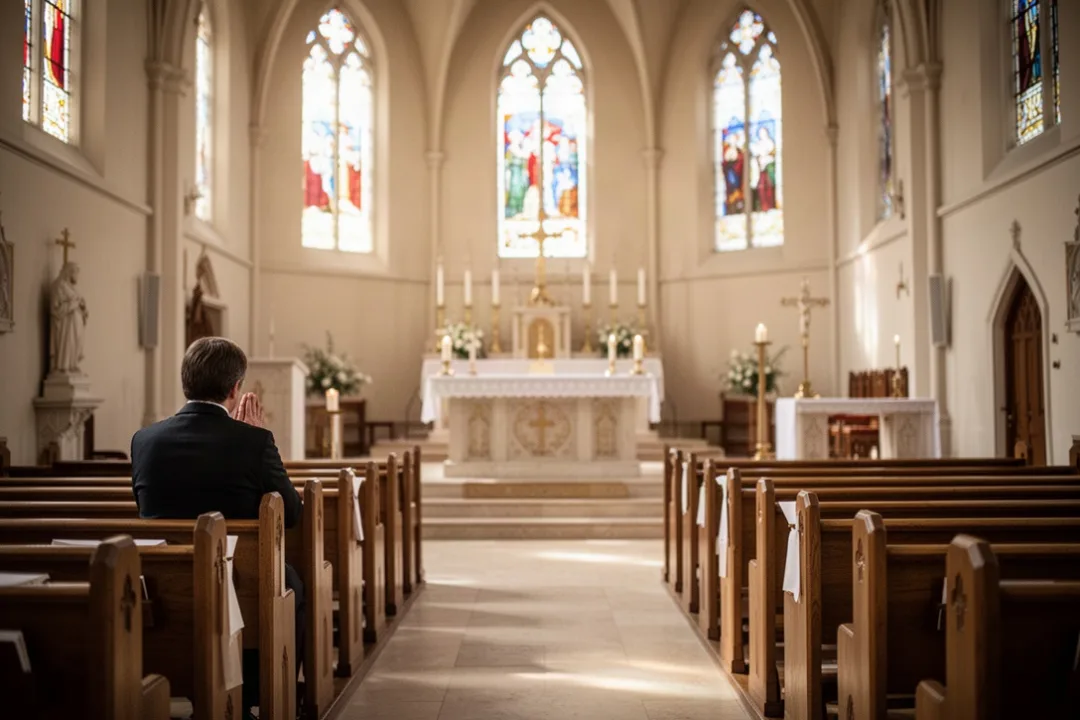
Spiritual communion is an act of interior prayer in which you unite yourself to Jesus and express your longing to receive Him in the Eucharist. You are not claiming to have received the consecrated Host. Instead, you ask Christ to come to you spiritually and to deepen your relationship with Him.
The practice is especially meaningful when circumstances prevent sacramental Communion. You might be ill, traveling, unable to attend Mass, caring for someone, unable to approach the altar for a particular reason, or attending Mass without being able to receive. A person who is not yet Catholic may also pray with reverence and ask Jesus to draw them closer, while learning more about Catholic faith and the Eucharist.
Catholic spirituality traditionally connects spiritual communion with St. Alphonsus Liguori, whose prayer is widely used in parishes, prayer books, and personal devotion. Many other prayers are also suitable. The essential elements are not a particular set of words but a sincere act of faith and love directed toward Christ.
Keep the distinction clear: spiritual communion is a real act of prayer and desire, but it is not the sacramental reception of the Eucharist. The two should be held together without confusing them.
Spiritual communion can also help you participate inwardly when you are present at Mass but cannot receive. During the Communion rite, you can remain prayerfully attentive, ask Jesus to unite you more closely to Him, and pray for the grace to live according to the Gospel.
A traditional Catholic spiritual communion prayer
The following prayer is one of the best-known Catholic formulas for spiritual communion. It uses simple language: belief in Christ’s Eucharistic presence, love for Him, desire to receive Him, and a request for lasting union.
My Jesus, I believe that You are present in the Most Holy Sacrament. I love You above all things, and I desire to receive You into my soul. Since I cannot now receive You sacramentally, come at least spiritually into my heart. I embrace You as if You were already there and unite myself wholly to You; never permit me to be separated from You. Amen.
You may pray the formula exactly as written, adapt it in your own words, or use a shorter version when circumstances require. The phrase “I cannot now receive You sacramentally” recognizes the difference between spiritual desire and sacramental Communion. The prayer then turns that limitation into an opportunity for trust rather than discouragement.
“Come at least spiritually into my heart” is a request for Christ to act within you through grace. It does not mean that the Eucharistic species has appeared in your body. It means you are asking Jesus to strengthen your faith, purify your intentions, guide your choices, and draw you into deeper communion with Him.
A shorter prayer for daily use
When you need a brief prayer, you can say:
Jesus, I believe You are present in the Eucharist. I love You and desire to receive You. Since I cannot receive You sacramentally now, come spiritually into my heart and unite me more closely to You. Help me remain faithful to You. Amen.
This shorter form can be prayed at work, during illness, while traveling, or in a moment of quiet at home. You do not need a special setting or a long period of silence. What matters is that you pause and pray attentively rather than treating the words as an automatic formula.
How to make an act of spiritual communion
There is no single required ritual for spiritual communion. A calm, deliberate sequence can help you pray with greater attention, especially if you are distracted or unsure what to say.
Become aware of God’s presence. Sit, kneel, or stand quietly. Make the Sign of the Cross if that helps you begin prayer.
Turn your thoughts toward Jesus. Recall that Catholics believe Christ is truly present in the Eucharist and that He invites you into a relationship of love.
Express faith and love. Tell Jesus that you believe in Him, love Him, and want to belong to Him more completely.
State your desire for Communion. Acknowledge honestly that you cannot receive sacramentally at that moment, if that is the reason for your prayer.
Ask Christ to come spiritually into your heart. Invite Him to shape your thoughts, conduct, relationships, and response to suffering.
Remain silent for a short time. Let the prayer become personal. You might repeat the name of Jesus or simply rest in His presence.
Choose one response. Offer a concrete act of patience, forgiveness, service, honesty, or obedience as a way of living out the grace you seek.
The prayer can take one minute or several minutes. A longer period is not automatically more prayerful. A brief prayer made with attention may be more fruitful than many words spoken while your mind is elsewhere.
If you are praying during Mass, follow the readings and prayers as fully as possible. At the time when people receive Communion, you can pray the spiritual communion formula and remain recollected. If you are watching Mass online, participate in the responses and listen to the readings, while remembering that viewing a broadcast is not the same as being physically present at the Eucharistic celebration.
Afterward, avoid judging the experience by whether you felt peaceful or emotionally moved. Spiritual communion is based primarily on faith and the will, not on a particular sensation. Some days may bring consolation; other days may feel dry or distracted. You can still make a genuine act of love.
When Catholics pray for spiritual communion
Many people associate spiritual communion with the moment of Communion at Mass, but the practice can fit into several kinds of prayer. Its purpose is always to deepen union with Christ, not merely to fill a gap in a routine.
During Mass: Pray it if you cannot receive the Eucharist or if you are participating without approaching the altar.
During Eucharistic adoration: Express your love for Jesus and your desire to receive Him, while reverently acknowledging His sacramental presence.
At home: Use it during morning prayer, evening prayer, or a quiet time of reflection.
During illness or recovery: Unite your physical limitations and fears to Christ and ask for spiritual strength.
While traveling: Pray when distance, scheduling, or unusual circumstances prevent you from attending Mass or receiving Communion.
When accompanying another person: If you attend a liturgy with someone who cannot receive, you can pray privately and respectfully without drawing attention to the person.
As preparation for sacramental Communion: Let the desire expressed in the prayer encourage a more attentive and reverent reception when you are able.
Someone who has not received First Communion, someone who is exploring Catholicism, or someone who cannot receive for personal circumstances may use the prayer as an honest request for closeness to Jesus. The prayer should not be used to pretend that a person has received a sacrament. It is better understood as a respectful act of longing and openness.
Spiritual communion can also be helpful when you are physically present at Mass but decide not to receive because you need to resolve a serious matter through Confession or seek guidance about your situation. Individual circumstances can be complicated, so a priest can offer personal advice without embarrassment or assumptions.
How spiritual communion relates to Mass and the Eucharist
The Eucharist is at the center of Catholic worship. In the Mass, bread and wine are consecrated and become the Body and Blood of Christ, and Catholics who are properly prepared receive Holy Communion as a sacrament. Spiritual communion honors this reality by expressing desire for Christ, but it does not produce the same sacramental reception.
For this reason, spiritual communion should not become a convenient substitute for attending Sunday Mass when attending is reasonably possible and no serious obstacle prevents it. Catholics are called to participate in the Sunday Eucharist. If you cannot attend because of sickness, caregiving, lack of access, or another substantial reason, prayer at home can still unite you to Christ and to the Church.
When you receive Holy Communion, you receive the sacrament through the Church’s liturgical celebration and the consecrated elements. In spiritual communion, you make an interior act of desire. Both forms of prayer can be sincere and fruitful, but they are not identical.
A practical guide: If you are unsure whether you may receive Communion, do not let uncertainty turn into shame. You may make an act of spiritual communion and ask a priest for clear, personal guidance before your next reception.
The practice can support Eucharistic faith in periods when regular reception is difficult. It can also remind you that Christian prayer is not limited to what you can control. You may not be able to attend a particular Mass, approach the altar, or resolve every concern immediately, but you can still turn your heart toward Christ.
At the same time, spiritual communion should lead toward the rest of Catholic life rather than remain an isolated devotional phrase. It can prompt you to examine your conscience, return to Confession when needed, read Scripture, serve another person, repair a relationship, or seek help in living faithfully.
Ways to pray with greater reverence and attention
A spiritual communion prayer is simple, but simple does not mean careless. A few practical habits can help you make the prayer more deliberate and personal.
Prepare your body and surroundings
If possible, put down your phone, silence unnecessary notifications, and choose a position that helps you remain attentive. Kneeling may be appropriate in a church, while sitting may be more suitable during illness or at home. God is not measuring your posture, but a respectful posture can help express what you believe.
Use the words slowly
Pause after each main movement of the prayer. After “I believe,” consider what you believe about Jesus and the Eucharist. After “I love You,” let the words become an honest offering rather than a phrase you rush past. After asking Christ to come spiritually into your heart, remain quiet for a little while.
Spiritual communion should affect the way you live. After praying, choose one small act that reflects union with Christ:
Speak patiently to someone who has frustrated you.
Ask forgiveness instead of defending yourself.
Give practical help to a family member or neighbor.
Resist gossip or an uncharitable judgment.
Return to a responsibility you have been avoiding.
Spend a few minutes reading a Gospel passage prayerfully.
These actions do not earn the Eucharist or replace grace. They are responses to grace. The prayer becomes more than a request when it shapes your choices after you finish speaking.
Bring distractions back gently
Distractions are common, particularly when you are tired, sick, or worried. When you notice your thoughts wandering, return to a phrase such as “Jesus, I desire to be united with You” without scolding yourself. Repeatedly returning to prayer is itself an act of perseverance.
Ask for help when circumstances are unclear
Questions about receiving Communion can involve personal, pastoral, or canonical details. A parish priest, chaplain, or another qualified Catholic minister can help you understand your situation. Spiritual communion gives you a way to pray in the meantime, but it should not be used to avoid seeking needed guidance.
Whether you use the traditional formula or your own words, the heart of the practice remains steady: believe in Christ, love Him, desire sacramental Communion, invite Him into your life spiritually, and respond through faithful living. That prayer can be brief, quiet, and deeply sincere wherever you are.
Frequently asked questions
Can I pray a spiritual communion prayer if I am not Catholic?
Yes. Anyone may respectfully pray to Jesus and ask for a closer relationship with Him. If you are learning about Catholicism, spiritual communion can express your desire to understand and follow Christ. It does not mean you have received the Eucharist or entered the Catholic Church. A Catholic parish, priest, or religious education program can answer questions about becoming Catholic.
Should I pray spiritual communion if I can receive Holy Communion?
You may pray an act of spiritual communion before or after receiving the Eucharist, but it does not replace sacramental Communion when you are properly prepared and able to receive. Many Catholics use the prayer to prepare their hearts, renew their gratitude, or express love for Christ outside Mass.
Can spiritual communion forgive serious sin?
Spiritual communion is a sincere prayer for union with Christ, but it is not the Sacrament of Reconciliation and should not be treated as a substitute for Confession. If you believe you are conscious of serious sin, make the prayer honestly and arrange to speak with a priest about Confession and receiving Communion.
Is watching Mass online the same as attending Mass?
No. Watching a broadcast can support prayer and help you unite yourself spiritually with the Church, especially when illness or another serious obstacle prevents attendance. It does not provide physical participation in the Eucharistic celebration or sacramental Communion. During the broadcast, you can pray an act of spiritual communion with faith and reverence.












Leave a Reply