The First Saturday devotion is traditionally practiced on the first Saturday of five consecutive months. To complete it, you receive Communion, go to confession, pray five decades of the Rosary, and spend at least 15 minutes meditating on one or more mysteries of the Rosary, all with the intention of making reparation to the Immaculate Heart of Mary.
The devotion is commonly called the Five First Saturdays. It is associated with the messages of Our Lady of Fatima and is meant to lead you toward repentance, the Eucharist, prayer, and a deeper love for Christ through Mary. The practices should be completed sincerely rather than treated as a spiritual checklist or a guarantee of favors.
At a glance: On each of five consecutive first Saturdays, make a good confession, receive Holy Communion, pray five decades of the Rosary, and meditate for 15 minutes on one or more Rosary mysteries while intending to make reparation to the Immaculate Heart of Mary.
The devotion grew from the apparitions of Our Lady of Fatima in Portugal in 1917. According to the accounts of the three shepherd children, Mary called for prayer, penance, conversion, and the Rosary. The later practice of the Five First Saturdays was connected especially with Sister Lucia, one of the children, who reported further revelations concerning devotion to the Immaculate Heart.
The central theme is reparation. In Christian prayer, reparation means offering love, worship, repentance, and sacrifice in response to sin and indifference toward God. This devotion focuses on offenses against Mary because, in Catholic understanding, honoring Mary ultimately honors God’s work in her and points believers toward Jesus Christ.
The number five is traditionally linked with five kinds of offenses against Mary’s Immaculate Heart. These are commonly described as attacks on her Immaculate Conception, perpetual virginity, divine motherhood, the rejection or neglect of her role as Mother of all people, and the deliberate leading of children away from her. The purpose is not to speculate about other people’s guilt but to make a personal act of love and repentance.
What you need to do on each First Saturday
The devotion has four visible practices and one interior intention. The practices are confession, Communion, the Rosary, and 15 minutes of meditation. The interior intention is to make reparation for offenses against the Immaculate Heart of Mary.
Go to confession. Receive the Sacrament of Reconciliation in preparation for the devotion, observing the normal requirements for a worthy confession.
Receive Holy Communion. Communion should be received on the first Saturday as part of the devotion, with a sincere desire to unite yourself to Christ.
Pray five decades of the Rosary. Pray the Rosary with attention, offering it in reparation and asking for Mary’s intercession.
Meditate for at least 15 minutes. Reflect on one or more mysteries of the Rosary, apart from simply reciting the prayers.
Make the intention of reparation. Offer these acts to console the Immaculate Heart of Mary and repair the dishonor caused by sin.
These elements are normally completed on the same first Saturday. Since parish schedules differ, you may need to plan confession on another nearby day if a priest is not available. The essential point is to approach the sacraments and prayer with faith, attention, and the intention traditionally associated with the devotion.
How to complete the devotion step by step
1. Choose five consecutive first Saturdays
Begin by identifying a sequence of five consecutive first Saturdays. Mark the dates on a calendar and check the parish schedule for Saturday Masses, confession, and any communal Rosary. A written plan can help you avoid losing track, especially when holidays, travel, illness, or changes in parish schedules affect your routine.
“Consecutive” means that the Saturdays are ordinarily practiced one after another. If you miss a month, do not assume that you have fulfilled the devotion. Speak with a priest about how to begin again or how to address unusual circumstances. The practice is intended to cultivate perseverance, not anxiety.
2. Prepare for confession
Examine your conscience before confession and honestly bring your sins to Christ through the ministry of the Church. You may go to confession on the first Saturday itself or, according to the customary practice, within a reasonable period before or after it when circumstances make same-day confession difficult. Because local guidance and individual situations vary, ask a priest if you are uncertain about timing.
The confession is not meant to be a formality performed only to satisfy a condition. Reconciliation should include contrition, a clear confession of sins, and a genuine desire to change. If you are already in a state of grace, you should still follow the devotion’s established practice by making confession as part of your preparation, unless a priest gives you different pastoral guidance.
Do not delay confession because you think you must remember every detail perfectly. Prepare carefully, confess honestly, and accept the sacrament with humility. A priest can help if you are unsure how to make a good confession or if a long time has passed since your last one.
3. Receive Holy Communion with the right intention
Attend Mass and receive Holy Communion on the first Saturday, provided you are properly disposed according to Catholic teaching. Communion is the heart of the practice because the devotion is not merely a series of Marian prayers. It is an offering united to Christ’s sacrifice and a response to his love in the Eucharist.
Before Mass, take a quiet moment to renew your intention. You might offer your Communion for the conversion of sinners, for faithfulness to Christ, and in reparation for offenses against Mary’s Immaculate Heart. You do not need elaborate words. A brief, sincere prayer is enough.
If a serious obstacle prevents you from attending Mass or receiving Communion, do not try to settle the question by guessing. Contact a priest when possible. The First Saturday devotion should draw you into the Church’s sacramental life, not encourage fear or disregard for legitimate pastoral judgment.
4. Pray the five decades of the Rosary
The devotion calls for five decades of the Rosary, which normally means one complete set of the five mysteries assigned for that day. You may pray the Joyful, Sorrowful, Glorious, or Luminous Mysteries according to the customary schedule or your personal devotional practice. If your parish prays the Rosary together, joining that prayer can provide helpful structure.
Pray slowly enough to remain aware of the mysteries. The repeated prayers are meant to support contemplation of the Gospel, not replace it. When your attention wanders, return gently to the scene you are considering: the announcement to Mary, Christ’s Passion, his Resurrection, or another mystery from his life.
Begin with the customary opening prayers of the Rosary.
Announce the five mysteries you will pray.
Pray one Our Father, ten Hail Marys, and one Glory Be for each decade, according to your local custom.
Offer the Rosary in reparation and for the intentions of the Immaculate Heart.
Close with the customary concluding prayers or a brief personal prayer.
The exact wording of some Rosary prayers may differ slightly according to language and local custom. What matters most is that you pray the full five decades with reverence and a sincere intention.
5. Spend 15 minutes meditating on the mysteries
The meditation is a separate element from the vocal Rosary. Spend at least 15 minutes contemplating one or more mysteries of the Rosary, either before or after the five decades. You may use Scripture, a meditation book, a parish reflection, or your own quiet prayer.
For example, while considering the Agony in the Garden, you might reflect on Christ’s obedience, his suffering, and your own need to surrender fear to God. While considering the Resurrection, you might ponder the victory of Christ, the hope of eternal life, and the ways you are called to live as a witness to that hope.
The meditation does not need to be complicated. Read a short Gospel passage, picture the scene, consider what it reveals about Jesus and Mary, and ask how it should shape your life. Remain with the mystery instead of trying to cover too much material.
A practical distinction: Reciting the five decades and meditating for 15 minutes are related but separate practices. The Rosary gives you vocal prayer; the additional meditation gives you time to reflect quietly on the life of Christ.
6. Make the intention of reparation
The intention of reparation gives the devotion its particular character. Before beginning, tell God that you are offering the confession, Communion, Rosary, and meditation in reparation for offenses against the Immaculate Heart of Mary. You may also include prayers for conversion and for those who reject or dishonor the faith.
An intention does not require a dramatic emotional experience. You may feel peaceful, distracted, tired, or spiritually dry. The value of the offering does not depend on strong feelings. Make the intention deliberately, complete the practices faithfully, and continue turning your heart toward God.
The 15-minute meditation can be adapted to your prayer life, but it should remain connected to the mysteries of the Rosary. The following method gives you a simple structure without forcing your prayer into a rigid formula.
Choose one mystery. Select a mystery that speaks to your current circumstances or follow the mysteries assigned for the day.
Read a related Gospel passage. Use a short passage connected with the scene and read it slowly.
Notice what Christ reveals. Consider his actions, words, suffering, mercy, or victory.
Consider Mary’s presence. Reflect on her faith, cooperation, sorrow, joy, or closeness to her Son.
Apply the mystery to your life. Ask what conversion, virtue, or act of charity the mystery invites from you.
End with a quiet offering. Give thanks and renew your desire to live in friendship with God.
For the Joyful Mysteries, you might meditate on Mary’s humility at the Annunciation or her charity in visiting Elizabeth. For the Sorrowful Mysteries, you could reflect on Christ’s sacrifice and the cost of sin. The Glorious Mysteries invite hope in the Resurrection and eternal life, while the Luminous Mysteries focus on Christ’s public ministry and the revelation of God’s kingdom.
You can also divide the time among several mysteries. For instance, spend three minutes on each of five mysteries, or give the entire period to one mystery that needs more attention. Avoid turning the meditation into a study session. Learning about the Gospel is valuable, but this period is primarily for prayerful reflection.
Why the devotion includes five Saturdays
The five-Saturday pattern is connected to the traditional list of offenses against Mary’s Immaculate Heart. It gives the practice a defined period while encouraging regular participation in confession, Mass, the Rosary, and meditation. Repeating these practices month after month can help them become part of a stable spiritual life.
The five Saturdays should not be understood as a mechanical transaction. Catholic devotion does not teach that completing a set number of actions forces God to grant a particular result. The practice expresses love, repentance, and trust. Its purpose is conversion: a movement away from sin and toward Christ, with Mary’s intercession.
The devotion also emphasizes the dignity of Mary’s motherhood. Catholics honor her not as a rival to Jesus but as the mother who received him, cared for him, stood near his Cross, and continues to point believers toward him. Any authentic Marian devotion should increase love for the Eucharist, Scripture, the Church, and the works of mercy.
How the devotion should shape daily Christian life
Completing five Saturdays is only one part of a wider life of faith. The devotion can become more fruitful when its themes continue during the rest of the month. Regular Sunday Mass, frequent confession, daily prayer, Scripture reading, and practical charity give the First Saturdays a lasting context.
Reparation should also influence the way you treat other people. If you pray for conversion but remain harsh, dishonest, or indifferent toward those around you, the devotion has not yet reached its intended depth. Consider choosing one concrete response after each Saturday:
Make peace with someone you have treated unfairly.
Spend time praying for people who have lost their faith.
Practice greater care in the way you speak about the Church and other people.
Teach children a prayer or help them understand the Rosary.
Offer a quiet sacrifice instead of responding impatiently.
Give practical help to someone who is lonely, sick, poor, or discouraged.
These actions do not replace the four traditional practices. They help you live out the conversion those practices are meant to encourage. Devotion becomes more credible when it produces humility, patience, mercy, and fidelity.
Common questions about confession and Communion
Can confession be made on a different day?
The customary practice allows confession to be made near the first Saturday when same-day confession is not possible, traditionally within a period before or after the Saturday. Priests may offer pastoral guidance based on your circumstances. Since the timing is connected with sacramental discipline and personal preparation, ask your confessor rather than relying on an online formula.
What if you miss one of the five Saturdays?
If you miss a Saturday, the safest practical approach is to ask a priest whether you should begin the five-month sequence again. The devotion is traditionally described as five consecutive Saturdays, so simply adding another month may not correspond to that practice. Do not become discouraged or treat the missed month as spiritual failure; begin again with renewed sincerity.
Can you receive Communion at a Saturday evening Mass?
A Saturday evening Mass may fulfill the Sunday obligation under the Church’s rules, but the First Saturday devotion has its own traditional focus on Saturday. Parish schedules and liturgical circumstances can vary, so ask your pastor or confessor whether a particular Mass fits the devotion. The intention, proper preparation, and actual reception of Communion should all be considered.
Ways to prepare for your first First Saturday
A little preparation can keep the devotion prayerful instead of rushed. Look at the parish bulletin several days ahead, confirm confession times, and decide when you will pray the Rosary and meditate. If you need to travel, identify a parish where you can attend Mass and receive the sacraments.
Prepare your interior intention before arriving at church. You may write a short prayer such as: “Lord Jesus, I offer these practices in reparation for offenses against the Immaculate Heart of Mary. Help me to grow in repentance, faith, and charity.” The wording is your own; sincerity matters more than a particular text.
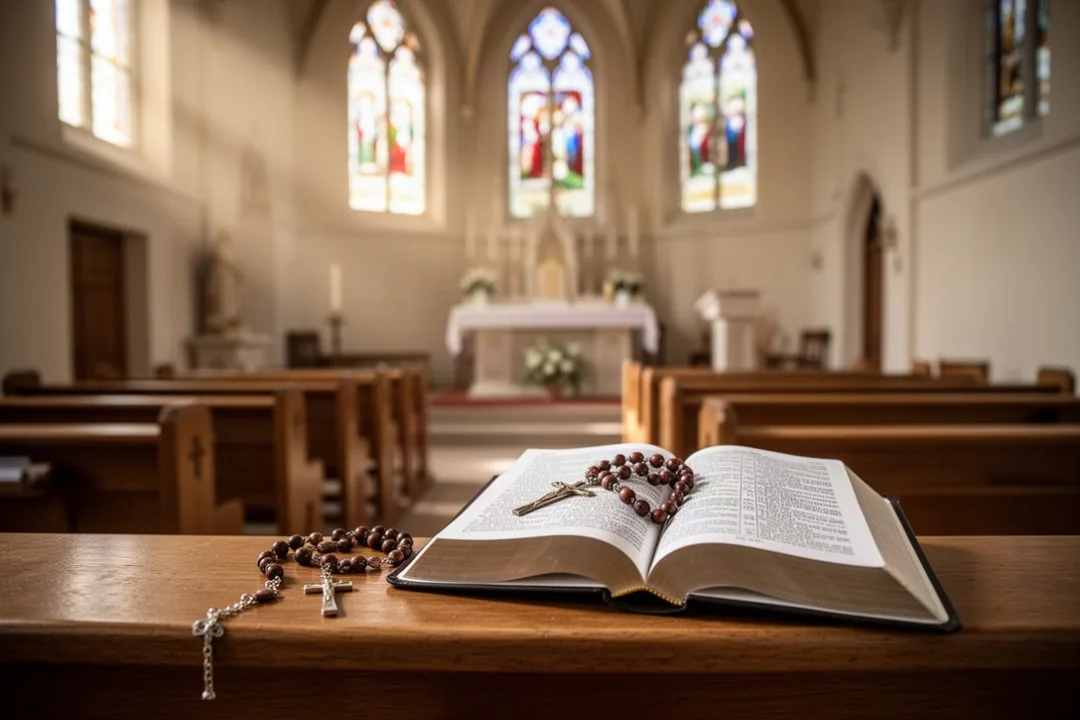
Bring a Rosary and, if helpful, a Bible or devotional book. Silence your phone and choose a place where you can remain undisturbed for the meditation. If you are praying with family or a parish group, allow time afterward for personal reflection so that the 15-minute meditation is not lost in the schedule.
If you are new to the devotion, focus on completing each practice carefully rather than trying to create an elaborate ceremony. You do not need special objects, expensive books, or a complicated set of prayers. The sacrament of Reconciliation, Holy Communion, the Rosary, meditation, and the intention of reparation are the essential elements traditionally associated with the Five First Saturdays.
Keeping the devotion centered on Christ
Mary’s role in this devotion is to lead you closer to her Son. The Rosary repeatedly directs your attention to the major events of Jesus’ life, death, and Resurrection. Confession restores friendship with God, and Communion unites you more deeply to Christ. These practices prevent Marian devotion from becoming detached from the Gospel.
It is also helpful to distinguish devotion from superstition. A devotion is an intentional way of praying that forms your relationship with God. Superstition treats religious actions as automatic techniques that control events. The First Saturday devotion is not a bargain with God and should not be used to claim certainty about a particular worldly outcome.
Approach the practice with confidence but also freedom. If you are burdened by scrupulosity, speak with one consistent confessor and follow his guidance. If you are unable to complete a practice because of illness, work, family responsibilities, or another serious obstacle, seek pastoral advice instead of trying to resolve every question through fear.
The First Saturday devotion is most fruitful when it renews your love for Christ, strengthens your participation in the sacraments, deepens your prayer, and makes you more willing to serve others. The five Saturdays provide a clear pattern, but the grace they point toward is meant to continue in ordinary life.
Frequently asked questions
Do I have to pray a specific set of Rosary mysteries?
No single set of mysteries is universally required for the First Saturday devotion. Pray five decades of the Rosary according to your parish or personal custom, and meditate on the mysteries you are praying. The important elements are the complete five decades, attentive prayer, and the intention of reparation. If your parish follows a particular schedule, joining that practice can make the devotion easier to complete faithfully.
Can I practice the devotion if I am not Catholic?
You may pray the Rosary and reflect on its mysteries as a non-Catholic Christian, but the traditional devotion includes sacramental confession and Holy Communion within Catholic life. Those who cannot receive Catholic sacraments can still learn about the spirituality, pray for conversion, and speak with a Catholic priest about what participation would mean in their circumstances.
Is the First Saturday devotion required for Catholics?
No. The Five First Saturdays are a voluntary Catholic devotion, not a universal obligation. Catholics are bound by the Church’s requirements concerning Sunday and holy-day worship, proper reception of the sacraments, and Christian moral life. You may practice this devotion as a structured way to grow in prayer, repentance, love for Christ, and appreciation of Mary’s intercession.
What should I do if I cannot attend Mass on a first Saturday?
Contact a priest or your parish as soon as practical. The traditional devotion includes receiving Holy Communion, so simply substituting a private prayer does not automatically complete that element. A priest can help you respond appropriately to illness, lack of transportation, work obligations, or another serious obstacle without encouraging either carelessness or unnecessary anxiety.












Leave a Reply