The word liturgy refers to worship carried out by the Church as a community, not simply to private prayer. It includes the words, gestures, symbols, music, readings, and actions through which Catholics worship God together. The term comes from a Greek word associated with a public work or service performed for the community.
In Catholic teaching, the liturgy is not a performance created by the priest or congregation. It is the prayer of the whole Church, with Jesus Christ as its central priest and active presence. The bishop, priest, deacon, and laypeople each have particular roles, but the entire baptized assembly participates in the worship.
The Mass is the best-known form of Catholic liturgy, but it is not the only one. Catholic liturgy also includes the celebration of the seven sacraments, the Liturgy of the Hours, funeral rites, blessings, the dedication of churches, and other official rites. These celebrations use visible signs and spoken prayers to express and communicate God’s grace.
Essential distinction: Catholic liturgy is more than a gathering with religious content. It is the Church’s authorized worship, celebrated according to established rites and directed toward communion with God and the sanctification of the faithful.
How Catholic liturgy developed through Scripture and tradition
Catholic liturgy has roots in both Jewish worship and the life, death, and resurrection of Jesus. The first Christians gathered for prayer, listened to the apostles’ teaching, shared meals, and celebrated the breaking of the bread. These practices developed into the Eucharistic celebration that Catholics now call the Mass.
The Bible provides the foundation for many liturgical actions. Catholics hear Scripture proclaimed during worship, use psalms in prayer, and celebrate rites that reflect biblical events and promises. The Eucharist is connected with Jesus’ Last Supper and with the early Christian gatherings described in the New Testament. Baptism reflects Christ’s command to make disciples and baptize them in the name of the Father, Son, and Holy Spirit.
Over the centuries, local churches developed different customs, prayers, musical traditions, and liturgical calendars. The Catholic Church still includes several distinct liturgical traditions. The Roman or Latin tradition is the most widespread in the United States, while Eastern Catholic churches preserve traditions such as the Byzantine, Alexandrian, Armenian, Chaldean, and West Syriac rites.
These traditions are fully Catholic, even when their ceremonies look different. An Eastern Catholic Divine Liturgy may use an icon screen, extensive chanting, and different prayers from a Roman Catholic Mass. The central realities remain the same: worship of the Trinity, proclamation of the Gospel, celebration of the sacraments, and communion in the Church.
What happens during a Catholic Mass step by step
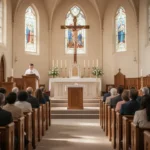
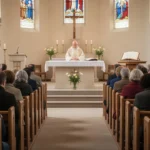
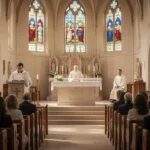
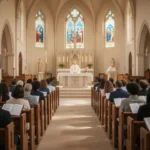
The structure of the Mass helps the congregation move from gathering, to hearing God’s word, to celebrating the Eucharist, and finally to being sent into daily life. The exact music and some local customs may vary, but the basic order is stable.
Gathering and entrance: The assembly comes together, the ministers enter, and the priest leads the people in the opening rites.
Penitential Act: The congregation acknowledges its need for God’s mercy. This is an act of repentance and humility, not a replacement for the sacrament of Reconciliation.
Liturgy of the Word: Scripture is proclaimed, a psalm is sung or recited, the Gospel is read, and the homily applies the readings to Christian life.
Profession of faith and intercessions: On appropriate Sundays and feast days, the congregation professes the faith and prays for the Church, the world, those in need, and the local community.
Liturgy of the Eucharist: Bread and wine are brought forward, the Eucharistic Prayer is proclaimed, and the Church gives thanks to God.
Communion Rite: The congregation prays the Lord’s Prayer, exchanges a sign of peace, and receives Holy Communion when properly prepared.
Concluding rites: The priest gives a blessing, and the people are dismissed to live the Gospel in the world.
The Mass has two closely connected main parts: the Liturgy of the Word and the Liturgy of the Eucharist. Catholics do not treat these as two unrelated services. Hearing Scripture and receiving the Eucharist belong together within one act of worship.
What to expect in the Liturgy of the Word
The readings normally include a passage from the Old Testament or, during the Easter season, the Acts of the Apostles; a responsorial psalm; a New Testament reading; and a Gospel passage. On Sundays and major feasts, the cycle of readings is arranged so that the Church hears substantial portions of the Bible over time.
The homily follows the Gospel. Its purpose is to help the congregation understand the readings and apply them to Christian discipleship. A good homily may explain the historical setting of a passage, connect it with the life of Christ, and identify practical consequences for faith and charity.
The congregation usually sits during the readings, stands for the Gospel, and may sit again for the homily. These postures are not merely directions for movement. Standing can express reverence and readiness, sitting supports attentive listening, and kneeling commonly expresses adoration or humble prayer.
What happens in the Liturgy of the Eucharist
The Liturgy of the Eucharist begins with the preparation of the altar and the presentation of bread and wine. The gifts may be brought forward by members of the congregation. They represent creation and human work, which are offered to God and become the matter of the Eucharistic celebration.
The priest then proclaims the Eucharistic Prayer, the central prayer of the Mass. It includes praise and thanksgiving, the invocation of the Holy Spirit, the account of the institution of the Eucharist, the memorial of Christ’s saving work, prayers for the Church and the living and dead, and a final doxology of praise to the Trinity.
Catholics believe that, through the power of Christ and the Holy Spirit, the bread and wine become the Body and Blood of Christ. The appearances of bread and wine remain, but the Church teaches that their deepest reality is changed. This belief is called the Real Presence.
The Eucharist is understood as a memorial in the biblical sense: a living making-present of Christ’s one saving sacrifice, not a repetition of Calvary.
After the Eucharistic Prayer, the congregation prepares for Communion with the Lord’s Prayer, the sign of peace, and a prayer for mercy. Those who receive Holy Communion should ordinarily be Catholics who are properly disposed and meet the Church’s requirements, including having no unconfessed grave sin and observing the Eucharistic fast.
How to participate meaningfully in Catholic liturgy
Participation in the liturgy is not measured only by having a visible task. A person can participate deeply by listening, singing, praying silently, responding to the prayers, and joining the offering of daily life to Christ. At the same time, the Church encourages the congregation to take part through full, conscious, and active participation appropriate to its circumstances.
Arrive early enough to settle: A few quiet minutes can help you move from ordinary activity into prayer.
Use the readings as a guide: Listen for a word or theme that challenges, consoles, or calls you to action.
Join the responses and singing: Your voice contributes to the prayer of the whole assembly.
Observe the postures: Stand, sit, and kneel with the congregation unless a physical limitation makes that difficult.
Pray the Eucharistic Prayer attentively: This is the central act of thanksgiving and consecration.
Receive Communion reverently: Approach calmly, respond clearly, and allow a moment of prayer afterward.
Accept the dismissal as a mission: The Mass sends you to practice mercy, justice, fidelity, and service beyond the church building.
Visitors do not need to know every response before attending. You can follow the congregation’s posture, listen to the prayers, and use a worship aid or missal if one is provided. If you are not receiving Communion, you may remain in your place or follow the local parish custom, depending on your physical ability and personal preference.
For visitors: You are welcome to attend Catholic Mass without being Catholic. The usual practice is that non-Catholics and Catholics who are not prepared to receive Communion remain in the pew during the Communion procession.
How the seven sacraments belong to Catholic liturgy
The sacraments are effective signs of grace instituted by Christ and entrusted to the Church. They are not simply symbolic ceremonies. Through them, Catholics believe God acts in a special way, using visible actions and material elements to give grace and strengthen the Church.
Baptism: Initiates a person into Christian life, forgives sin, and incorporates the baptized into the Church.
Confirmation: Strengthens baptismal grace and seals the believer with the Holy Spirit.
Eucharist: Makes Christ sacramentally present and nourishes the faithful with his life.
Reconciliation: Offers forgiveness of sins and restores communion with God and the Church.
Anointing of the Sick: Brings spiritual strength, peace, and support to those experiencing serious illness or weakness.
Holy Orders: Establishes the ordained ministries of bishop, priest, and deacon for service to the Church.
Matrimony: Joins a baptized man and woman in a covenant of faithful, lifelong love open to family life.
The sacraments are commonly grouped into sacraments of initiation, sacraments of healing, and sacraments at the service of communion. Baptism, Confirmation, and Eucharist initiate believers into the Christian life. Reconciliation and Anointing of the Sick bring healing, while Holy Orders and Matrimony serve the communion and mission of the Church.
Some sacraments are normally celebrated within Mass, especially Confirmation, Eucharist, and sometimes Matrimony or Holy Orders. Others may be celebrated outside Mass when that better serves the people and the nature of the rite. The Church provides approved forms so that the sacramental celebration remains connected with the faith of the universal Church.
Why Catholic liturgy uses signs, symbols, and gestures
Catholic worship engages the whole person. Words communicate meaning, while water, oil, bread, wine, candles, incense, clothing, music, silence, and bodily movement involve the senses. These signs do not make worship less spiritual. They express the Christian belief that God acts through the material world and that human beings encounter truth through body and soul together.
Water in Baptism points to cleansing, new life, and death to an old way of living. Oil can signify strengthening, healing, dedication, or the gift of the Holy Spirit. A candle recalls Christ as light, while incense can symbolize prayer rising to God and the honor given to sacred realities.
The altar has a central place in the church because it is connected with the Eucharistic sacrifice and the table of the Lord. The ambo is the designated place for proclaiming Scripture. The baptismal font recalls the beginning of Christian life, and the tabernacle houses the consecrated Eucharist for prayer and for distribution to the sick.
Silence also has a real liturgical role. Quiet before Mass can help the congregation prepare, while silence after readings, the homily, and Communion gives space for reflection. Silence is not an interruption in the liturgy; it can be a form of active prayer.
How the liturgical year shapes Catholic worship
The liturgical year allows the Church to celebrate the mysteries of Christ across a recurring cycle. It is not simply a calendar of holidays. Each season gives a particular emphasis to prayer, Scripture, music, preaching, and spiritual practice.
Advent: A season of watchful hope that prepares for the celebration of Christ’s birth and recalls his promised return.
Christmas season: Celebrates the Incarnation, the coming of the Son of God in human nature.
Ordinary Time: Focuses on Christ’s public ministry and the growth of Christian discipleship.
Lent: A penitential season of prayer, fasting, and almsgiving leading to the Paschal Triduum.
Holy Week and the Paschal Triduum: Commemorate Christ’s Passion, death, and resurrection from Holy Thursday through Easter Sunday.
Easter season: Celebrates the risen Christ, the Ascension, and the coming of the Holy Spirit at Pentecost.
Feasts of Mary and the saints: Honor those who witnessed to holiness and point believers toward Christ.
The liturgical colors help express the character of each season. Violet is commonly associated with Advent and Lent, white or gold with major celebrations of Christ, Mary, and saints who were not martyrs, red with the Holy Spirit and martyrs, and green with Ordinary Time. Local customs and particular celebrations can affect the color used on a given day.
The Church’s calendar also determines which celebrations are obligatory for Catholics in a particular country. Sunday is the central weekly celebration because Catholics gather to commemorate Christ’s Resurrection. Holy days of obligation vary according to the norms established for each country and can also be affected by local circumstances.
How the Liturgy of the Hours extends prayer beyond Mass
The Liturgy of the Hours, also called the Divine Office, is the official daily prayer of the Church. It sanctifies different times of the day through psalms, Scripture, intercessions, hymns, and other prayers. Priests, deacons, religious communities, and some lay Catholics pray it regularly.
The principal hours include Morning Prayer and Evening Prayer. The Office of Readings provides longer biblical and spiritual readings, while Night Prayer offers a peaceful end to the day. Some communities also pray Daytime Prayer. The exact form varies by approved book and tradition.
Unlike private devotional prayers, the Liturgy of the Hours is prayed in the name of the Church. A person praying alone is still joining the worship of the whole Catholic community. This daily rhythm connects ordinary work, rest, and responsibility with the praise of God.
How Catholic liturgy differs from private devotions
Private devotions include practices such as the Rosary, Eucharistic adoration, novenas, Stations of the Cross, litanies, and personal meditation. These practices can deepen faith and prepare a person for worship. They are valuable, but they are not the same as the Church’s public liturgy.
Liturgy has priority in Catholic worship because it is the official action of Christ and the Church. Devotions should support participation in the sacraments rather than replace them. For example, praying the Rosary before Mass may help someone prepare, but it does not take the place of the Mass.
Some devotions are celebrated communally in a church, which can make the distinction less obvious. A parish may gather for a public Stations of the Cross or a novena, yet the practice remains a devotion unless it is part of an official liturgical rite. The difference concerns the nature and authority of the prayer, not whether other people are present.
Who has a role in Catholic liturgy
The baptized congregation is the primary participating body in the liturgy. The priest presides at the Eucharist and certain sacraments, acting in the person of Christ and serving the unity of the assembly. A deacon may proclaim the Gospel, preach when permitted, assist at the altar, and lead particular rites.
Lay ministers may serve as lectors, altar servers, extraordinary ministers of Holy Communion, cantors, musicians, ushers, sacristans, and leaders of other approved services. These ministries are forms of service, not signs that some members of the congregation are more important than others.
The choir and musicians support the prayer of the assembly rather than perform independently of it. The lector proclaims Scripture clearly and reverently. The cantor helps the people sing. Ushers welcome people and assist with practical needs. Every role contributes to the Church’s worship when it is carried out with preparation and humility.
Liturgical ministries require formation because the quality of proclamation, music, movement, and hospitality affects the congregation’s ability to pray. At the same time, the deepest participation is not limited to those with assigned duties. The person sitting quietly in the pew is also part of the worshiping Church.
How to prepare for Catholic liturgy outside the church
Preparation can begin before you leave home. Reading the Sunday passages, setting aside distractions, and considering what you need to bring to God can make the celebration more personal. If you are attending a parish for the first time, checking the Mass schedule and parking information can remove avoidable stress.
Read the appointed Scripture readings ahead of time if possible.
Dress in a way that shows respect for worship and allows you to participate comfortably.
Silence your phone before entering the church.
Fast from food and drink for the period required before Holy Communion, with the proper exceptions for health and medication.
Ask a priest or parish staff member about confession if you need the sacrament of Reconciliation.
Follow the local parish’s instructions for Communion, collection, and dismissal.
After the liturgy, consider one concrete way to carry its message into the week. The dismissal is not merely a signal that the ceremony has ended. It sends the faithful to bring the love, mercy, truth, and justice celebrated in worship into family life, work, civic responsibility, and care for neighbors.
Frequently asked questions
Is Catholic liturgy the same thing as the Mass?
No. The Mass is the central and most familiar Catholic liturgy, but the term includes the Church’s other official forms of worship. These include the seven sacraments, the Liturgy of the Hours, funeral rites, blessings, and special rites for dedications or consecrations. The Mass is the liturgy in which Catholics celebrate the Eucharist.
Can non-Catholics attend a Catholic Mass?
Yes. Visitors are welcome to attend, listen, pray, and observe the congregation’s posture. The main difference concerns Holy Communion: Catholic practice generally reserves the Eucharist for Catholics who meet the Church’s requirements for reception. Visitors may remain seated during Communion and join the congregation again afterward.
Why do Catholics kneel, stand, and sit during worship?
These postures help express different forms of prayer and attention. Standing can show reverence and readiness, sitting supports listening, and kneeling commonly expresses adoration or humility. Local customs differ, and people with mobility limitations should choose postures that are safe and comfortable.
What is the difference between Catholic liturgy and the Liturgy of the Hours?
The Liturgy of the Hours is one form of Catholic liturgy, while “Catholic liturgy” is the broader category. The Hours are daily prayers built around psalms, Scripture, intercessions, and praise at set times. The Mass and sacramental celebrations are also liturgies, but they have different structures and purposes.













Leave a Reply