The Catholic Liturgy of the Hours is the Church’s official daily prayer, centered on the Psalms, Scripture, and prayers connected with the liturgical calendar. You can pray it alone or with others, and you do not need to be a priest or religious sister to begin.
Most people start with Morning Prayer and Evening Prayer, the two principal hours. These prayers usually take about 10 to 20 minutes and provide a steady way to sanctify the beginning and end of the day.
What the Catholic Liturgy of the Hours is meant to do
The Liturgy of the Hours, also called the Divine Office, gives the Church a pattern of prayer throughout the day. Its purpose is not simply to help individuals feel peaceful. It is the public prayer of the Church, offered by Christians in different places and circumstances as a shared response to God.
The prayer follows the liturgical year, so its texts change for Advent, Christmas, Lent, Easter, and Ordinary Time. It also honors Sundays, solemnities, feasts, memorials, and saints. The result is a form of prayer that keeps the life, death, and resurrection of Christ at the center of ordinary time.
The Psalms form the backbone of the Office. They express praise, trust, grief, repentance, thanksgiving, and hope. Some psalms may feel immediately personal, while others can be difficult because they contain anger or appeals for judgment. The Church prays them as part of the full range of human experience, read in light of Christ.
Although the Office includes private prayer, it is not merely a devotional booklet. Its official texts and structure matter because they connect your prayer with the worship of the universal Church. When a parish, monastery, family, or individual prays the same hour, each is participating in one ecclesial form of prayer.
Good starting point: You do not need to pray every hour immediately. Begin with Morning Prayer or Evening Prayer, learn the basic pattern, and add another hour only when the first one has become manageable.
Which hours are included in the daily Office
The complete Liturgy of the Hours contains several distinct times of prayer. Their names and length can vary slightly depending on the edition or community, but the basic arrangement is consistent.
Office of Readings: A longer service of biblical and spiritual reading that may be prayed at any time of day. It includes an extended selection from Scripture and a reading from an early Christian writer, saint, Church document, or other approved source.
Morning Prayer: Also called Lauds, this is prayed at the beginning of the day. It emphasizes praise, Christ’s resurrection, and the offering of the day to God.
Daytime Prayer: This may be prayed at midmorning, midday, or midafternoon. It offers brief pauses for prayer during work and daily responsibilities.
Evening Prayer: Also called Vespers, this is the second principal hour. It gives thanks for the day and looks toward God’s continuing care through the night.
Night Prayer: Also called Compline, this short prayer is prayed before sleep. It includes an examination of conscience, a hymn, a psalm or psalms, a brief reading, and a Marian antiphon or another seasonal conclusion.
Morning Prayer and Evening Prayer are known as the principal hours because they frame the day. Churches and religious communities often celebrate them publicly, sometimes with singing, incense, or a leader and congregation. A private recitation, however, is still a genuine way to participate in the Office.
Daytime Prayer has several forms. If you pray one daytime hour outside a community setting, you can usually choose Midmorning, Midday, or Midafternoon Prayer according to your schedule. Some editions also provide a shorter form called Prayer During the Day for people who want one daytime office without selecting a specific hour.
The Office of Readings is especially useful for slower prayer and spiritual study. It is longer than the other hours, but it does not have to be prayed at a particular clock time. Someone with a flexible morning might pray it after waking; another person might use it during an evening period of reading.
How a typical hour is organized
Each hour has a recognizable structure, which makes it easier to pray even when the pages seem unfamiliar at first. The precise elements differ between hours, but Morning Prayer and Evening Prayer generally follow this sequence:
Opening verse: The prayer begins with an invitation to praise God. When prayed in a group, a leader and congregation may respond to each other.
Hymn: A hymn establishes the focus of the hour and the liturgical season.
Psalms and canticle: The psalms are arranged with short antiphons. Morning Prayer includes a biblical canticle from the Old or New Testament; Evening Prayer includes a canticle from the Gospel.
Scripture reading: A short passage provides a direct biblical focus.
Responsory: A brief response allows the Scripture reading to become prayer.
Canticle of Zechariah or Mary: Morning Prayer uses the Canticle of Zechariah, while Evening Prayer uses the Canticle of Mary. The words are found in Luke 1; they should be prayed as the Church’s biblical canticles rather than treated as ordinary psalm verses.
Intercessions: The Church prays for its needs, the world, people who suffer, and the community.
The Lord’s Prayer: The hour moves toward its conclusion with the prayer taught by Jesus.
Concluding prayer and dismissal: The final prayer reflects the day, feast, or season.
The antiphons are short lines placed before and after the psalms or canticles. They help interpret the psalm in relation to Christ and the liturgical season. During Advent, for example, the antiphons draw attention to the coming of Christ; during Easter, they emphasize resurrection and new life.
Night Prayer has a simpler rhythm. After the opening and a brief examination of conscience, you pray a hymn, psalmody, a short reading, a responsory, and the Canticle of Simeon from Luke 2. It ends with a prayer for protection and a Marian antiphon or another appropriate conclusion.
How the psalter and liturgical calendar work together
The Psalms in the Liturgy of the Hours are arranged in a four-week psalter. The weeks cycle continuously, but the ordinary psalter can be interrupted by major feasts and seasons. The book or app tells you when to use seasonal material instead of the ordinary week.
Each day normally has a set of psalms and readings assigned to it. The psalter section is only one part of the system. You also need to account for the Proper of Seasons, the Proper of Saints, the Common of Saints, and sometimes the Office for the Dead or another special office.
Proper of Seasons: Texts for Advent, Christmas, Lent, the Triduum, Easter, and other major points in the Church year.
Proper of Saints: Texts assigned to particular saints’ memorials, feasts, and solemnities.
Common of Saints: Reusable prayers for categories such as martyrs, pastors, virgins, or holy men and women when a saint does not have a complete proper set of texts.
Ordinary: The fixed instructions and parts of the Office that explain how the hours are assembled.
On a regular weekday in Ordinary Time, the order may feel straightforward. On a Sunday, solemnity, or major feast, several sections may need to be combined. That is why beginners often find the page-turning instructions harder than the prayers themselves.
Liturgical precedence determines which celebration receives priority when dates overlap. A solemnity or major feast can replace the ordinary weekday texts. Printed books and reliable apps usually indicate these changes, but you may need to check the calendar before beginning the hour.
Choosing a book or app for the Liturgy of the Hours
The best format depends on how often you plan to pray, how much space you have, and whether you want the full Office. A printed set provides a strong sense of continuity and keeps you away from phone notifications. An app is convenient, searchable, and often handles seasonal changes automatically.
Common printed options in the United States include the four-volume Liturgy of the Hours and shorter books designed for lay Catholics. A full set contains the complete English texts for the hours across the liturgical year. Christian Prayer is a more compact volume with Morning Prayer, Evening Prayer, Night Prayer, and selected daytime material; it is often a practical choice for beginners.
Some people use a single-volume book such as a daily prayer book or a monthly booklet. These can reduce page turning, but they may offer fewer hours or a more limited selection of texts. Check whether the edition follows the approved translation and calendar used in your country.
Digital services may be helpful when you are learning. They can provide the correct psalter week, seasonal texts, saint memorials, and audio or sung versions. Before choosing one, check whether it includes the exact hour you want, allows offline access, and clearly identifies the liturgical calendar it follows.
Practical tip: If the printed books feel overwhelming, borrow a copy from a parish library, monastery gift shop, or Catholic friend before purchasing a complete set. Learn Morning Prayer or Evening Prayer first, then decide whether you need the full four-volume collection.
How to pray Morning Prayer or Evening Prayer step by step
Choose one principal hour and set aside a consistent time. Morning Prayer works well after waking, while Evening Prayer can fit before dinner or after work. The ideal time is the one you can actually keep, not an ambitious schedule that creates unnecessary frustration.
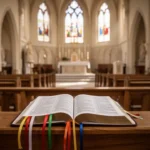
Before opening the book, identify the liturgical date and the current week of the psalter. If you use an app, this may happen automatically. If you use a printed book, look at the calendar and ribbon markers before starting.
Find the Ordinary and read the instructions for the hour if you are still learning.
Locate the correct seasonal or saint material and determine which parts come from the psalter.
Begin with the opening verse and hymn.
Pray the psalms and canticle slowly enough to notice repeated phrases and images.
Read the Scripture passage without rushing to interpret every detail.
Pray the responsory, Gospel canticle, intercessions, and Lord’s Prayer.
Finish with the concluding prayer and dismissal or conclusion given in the book.
In private prayer, you do not need to reproduce the gestures of a group. You may stand, sit, kneel, or walk quietly. Some people pray the psalms aloud; others pray them silently. What matters is attentive participation, not creating a particular atmosphere.
When two people pray together, one person can lead the verses and the other can respond. In a larger group, the psalms may be prayed antiphonally, with each side taking alternate lines. You can also pray the whole psalm together, especially if the group is small or inexperienced.
Lay Catholics are generally not bound to pray the complete Liturgy of the Hours. The obligation to pray certain hours belongs principally to bishops, priests, deacons, and members of religious institutes according to the Church’s law and their particular commitments. Specific obligations can vary, so clergy and religious should follow the guidance of their bishop, superior, or formation program.
For laypeople, the Office is an invitation and a participation in the Church’s prayer. You can pray one hour occasionally, establish a daily practice, or join a parish celebration. There is no requirement to begin with all five or seven daily offices.
Families can pray Night Prayer together before children go to bed. A couple might pray Evening Prayer after dinner. A person who works early shifts may choose Evening Prayer as the regular principal hour and add Night Prayer when convenient. These adaptations do not make the prayer less Catholic; they recognize the realities of a lay vocation.
It is also acceptable to miss an hour because of illness, travel, work, caregiving, or an unexpected need. The Office should support a life of charity and responsibility, not become a source of scrupulosity. If you miss a prayer, simply resume with the next hour that fits your day.
Practical tips and common mistakes for beginners
The Liturgy of the Hours becomes easier through repetition. A few simple habits prevent most of the confusion that discourages new users.
Start with one hour. Morning Prayer or Evening Prayer gives you the central experience without requiring several books or long periods of preparation.
Use a bookmark system. Mark the Ordinary, current psalter week, Proper of Seasons, and Proper of Saints so you do not have to search from the beginning each time.
Check the date first. A saint’s memorial or a solemnity may change the material you need.
Do not restart over a small error. If you turn the wrong page or use yesterday’s antiphon for a moment, continue calmly and correct the mistake when you notice it.
Read the rubrics. Directions such as “all,” “leader,” “repeat,” or “Glory to the Father” explain how the prayer works in a group.
Allow silence. A short pause after the Scripture reading or psalms can help you pray rather than merely pronounce words.
Do not treat every psalm as a personal diary entry. Some texts express the prayer of the whole Church, including people whose experiences differ from yours.
Do not add random substitutions. Devotions such as the Rosary may be valuable, but they are not interchangeable with the official texts of a required hour.
Use approved resources when accuracy matters. An unofficial website may combine old translations, incomplete texts, or a different calendar.
Let consistency grow gradually. A regular 10-minute practice is usually more sustainable than an elaborate plan that lasts only a few days.
One common mistake is assuming that the page number alone identifies the correct prayer. The same page may contain material for different weeks or celebrations. Always read the heading, date, and instructions around the text before proceeding.
Another mistake is trying to understand every psalm intellectually before praying it. Study can deepen the Office, but the prayer itself is not a test. Let the words be proclaimed, repeated, and carried over time. A psalm that seems distant today may become meaningful during a different season of life.
How the Office differs from other Catholic devotions
The Liturgy of the Hours is different from the Rosary, Eucharistic adoration, the Stations of the Cross, and personal prayer. Those devotions can complement it, but they have different structures and histories. The Office is built around the Psalms and daily liturgical prayer, while the Rosary focuses on repeated prayers and meditation on events in the life of Christ and Mary.
The Office is also different from the Mass, although both belong to the Church’s liturgical worship. The Mass centers on the Eucharistic sacrifice and Communion. The Hours sanctify the times of day through Scripture, praise, intercession, and thanksgiving. Neither replaces the other.
Personal prayer can be spontaneous and shaped by your immediate needs. The Office gives you words when you do not know what to say and joins your concerns to those of the entire Church. This fixed structure can be especially helpful during grief, exhaustion, or spiritual dryness.
“The whole course of the day is made holy by the liturgy of the hours.”
This teaching, expressed in the Church’s liturgical tradition, explains why the Office is arranged around morning, daytime, evening, and night. The goal is not to fill every minute with religious activity. It is to return regularly to praise, remembrance, intercession, and hope.
How to join a public celebration of the Hours
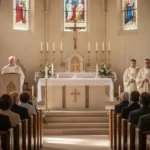
Many monasteries, convents, seminaries, cathedrals, and parishes celebrate Morning Prayer or Evening Prayer publicly. Some communities sing the psalms and canticles; others use spoken recitation. Times may change on feast days, so check the parish or religious community’s schedule before attending.
You do not need to know every response before arriving. Sit where you can follow the book or printed program, watch the leader, and join the responses as you become comfortable. If the community sings, listening for the first visit is perfectly acceptable.
Public prayer can clarify the nature of the Office. The intercessions are not only about private needs, and the psalms are not selected according to personal preference. The group prays as part of the Church, carrying the needs of the world into a shared act of worship.
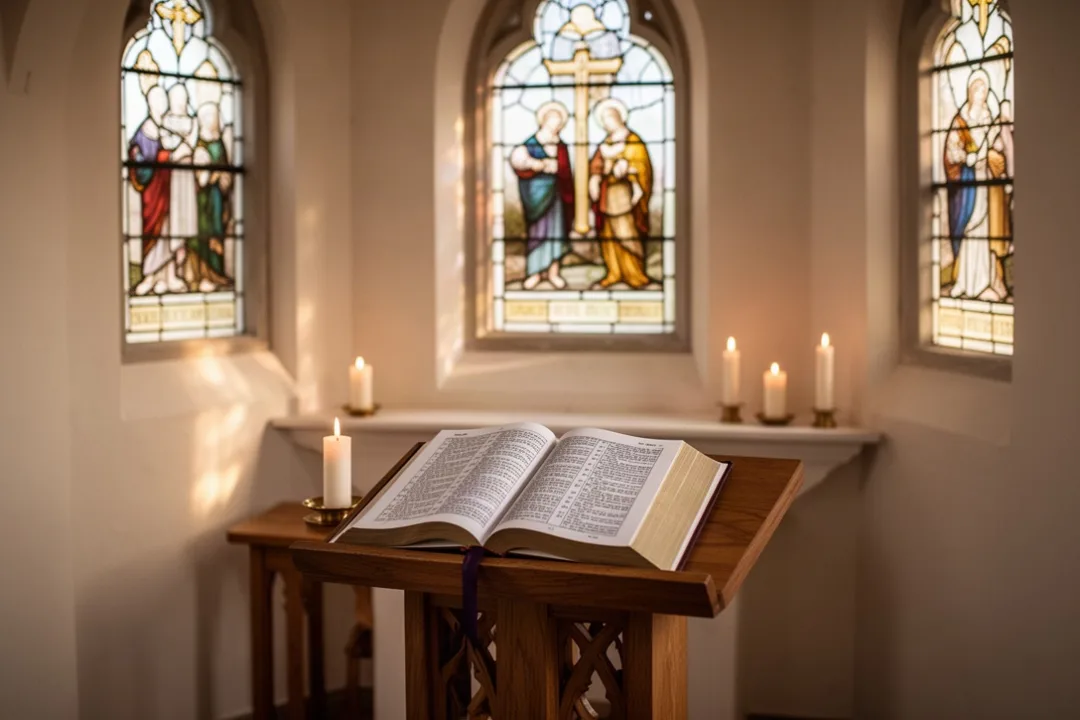
If no public celebration is available, praying at home still connects you with that same form of prayer. You may light a candle, place the book on a small table, or sit in a quiet room, but none of these surroundings is required. The essential elements are the approved prayer, a receptive attention, and a willingness to let the Church’s rhythm shape your day.
Ways to deepen a lasting practice
Once the basic order is familiar, you can begin to pray with greater awareness. Learn why the current season uses particular themes. Notice how the psalms return in different contexts. Pay attention to the relationship between the short reading, the canticle, and the intercessions.
It can help to keep a small notebook with questions or phrases that remain with you. Avoid turning every prayer into a study session, but record references you want to explore later. Commentaries on the Psalms, introductions to the liturgical year, and writings from the saints can provide background without replacing the prayer itself.
Singing is another way to deepen participation. You do not need a trained voice or musical accompaniment. A simple, steady tone for a hymn or psalm can make the words easier to remember and can help a household pray together.
Over time, the Office may become a reliable framework for intercession. When you pray the petitions, include people who have asked for prayer, local and world events, those who are sick or lonely, and people you find difficult to understand. The structure keeps intercession from narrowing only to your immediate concerns.
A sustainable routine might look like this:
First month: Pray Evening Prayer three or four times each week.
Second month: Add Morning Prayer on selected days if Evening Prayer feels familiar.
Later: Experiment with Night Prayer, Daytime Prayer, or the Office of Readings according to your schedule.
The value of the Liturgy of the Hours does not depend on completing the entire cycle perfectly. Its strength comes from returning to the Church’s prayer with patience. Morning praise, evening thanksgiving, the words of the Psalms, and the needs of the world gradually become part of the shape of your day.
Frequently asked questions
Is the Liturgy of the Hours the same as the breviary?
The breviary is the book or set of books used to pray the Liturgy of the Hours. “Liturgy of the Hours” names the prayer itself, while “breviary” commonly refers to the physical volume containing its texts and instructions. Some shorter books include only selected hours, so they are useful for prayer but may not contain the complete Office.
How long does it take to pray the Liturgy of the Hours?
The length depends on the hour and whether it is prayed privately or sung with a community. Night Prayer may take only a few minutes. Morning Prayer and Evening Prayer commonly take around 10 to 20 minutes when spoken privately, while the Office of Readings and sung celebrations usually require more time.
Can I pray the Liturgy of the Hours in another language?
Yes. Catholics may use an approved translation in a language they understand. The Church publishes the Office in many languages, and communities may celebrate it bilingually or in a language used by the local congregation. If you are fulfilling a formal obligation, follow the guidance given by your bishop or religious superior.
What should I do if I cannot keep a daily schedule?
Treat the Office as a dependable invitation rather than an all-or-nothing assignment. Choose one hour on the days when you can pray, use a shorter hour during demanding periods, and return without guilt after an interruption. A weekly parish celebration can also provide structure when private prayer is difficult.










Leave a Reply