When you need words for prayer but cannot find your own, the Roman Catholic Psalms offer a starting place. They give voice to gratitude, fear, anger, repentance, confidence, and praise, so you can pray honestly even when your emotions are mixed. The Church uses the Psalms at Mass, in the Liturgy of the Hours, and in personal devotion.
The most useful way to begin is simple: choose a Psalm that fits your situation, read it slowly, notice the words that stand out, and respond to God in your own words. You do not need to understand every image or pray an entire Psalm at once. A few attentive verses can become a complete prayer.
The Book of Psalms contains 150 prayers and songs from Israel’s worship tradition. They address God directly and cover a broad range of human experience. Some Psalms celebrate creation and God’s faithfulness; others ask for mercy, protest injustice, mourn loss, or express trust in danger.
Roman Catholics pray the Psalms as both ancient Jewish prayers and prayers fulfilled in Christ. Jesus prayed the Psalms, quoted them, and used their language during his suffering and death. Because of this, Christians hear the Psalms on several levels: as the prayer of Israel, as the prayer of Christ, and as the prayer of the Church.
The Psalms are not arranged as a modern devotional book with one simple lesson per chapter. A Psalm may move from fear to confidence, or from complaint to praise. That movement can reflect your own prayer. You may begin by telling God what hurts and finish by remembering that you are not abandoned.
A helpful principle: You do not have to feel the emotion expressed in a Psalm before praying it. The Church gives you these words so you can stand before God with honesty, including when your faith feels weak.
Where Roman Catholics hear and pray the Psalms
The Psalms are woven through the Church’s public worship rather than reserved for private reading. Their repeated use helps Catholics learn them by heart, even when they do not realize it. You may recognize a Psalm response from Sunday Mass long before you know its number.
The Responsorial Psalm: At Mass, a Psalm follows the first reading. A cantor or reader usually proclaims the verses, and the assembly repeats a response. The selected Psalm connects with the readings and the liturgical season.
The Liturgy of the Hours: Morning Prayer, Evening Prayer, and other hours use Psalms as the central language of daily praise. Priests, religious communities, and many lay Catholics pray these services.
Other liturgical celebrations: Psalms appear in celebrations such as baptisms, funerals, weddings, penance services, and the rites of Holy Week.
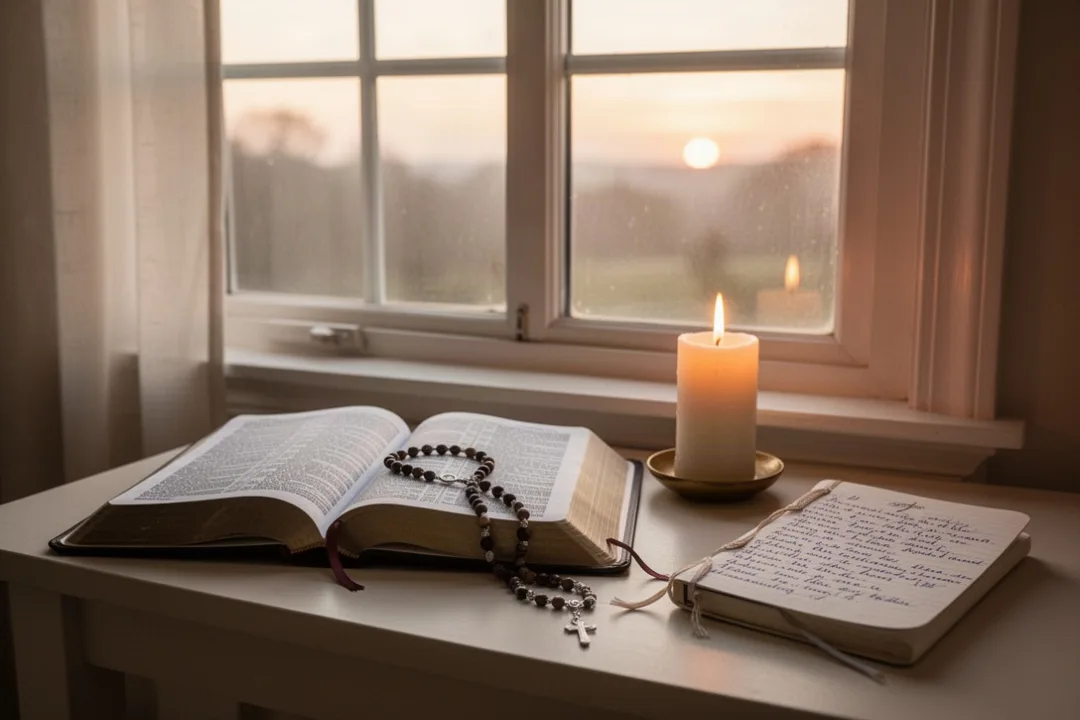
Personal prayer: Individuals may use a Psalm during quiet prayer, before sleep, when making a difficult decision, or while seeking words for grief and gratitude.
Lectio divina: A Psalm can be read slowly as part of prayerful Scripture reading, with attention to a word or phrase that invites reflection.
At Mass, the Responsorial Psalm is not a musical break between readings. It is itself a proclamation of Scripture and a response from the worshiping community. The assembly’s repeated refrain allows everyone to participate, even if the verses are sung by a cantor.
In the Liturgy of the Hours, the Psalms are generally prayed over a recurring cycle. The four-week psalter organizes the main hours so that many of the Psalms are prayed regularly. Some passages may be omitted or adapted in the liturgical books, and the arrangement differs among approved editions and communities.
How to pray a Psalm step by step
A consistent method can make the Psalms easier to approach. You can use a Bible, a Catholic prayer book, a breviary, or an approved digital resource. Begin with a Psalm selected for the day, or choose one that reflects what you are carrying.
Become still. Take a moment to recognize that you are entering prayer. You might make the Sign of the Cross and ask for the grace to listen.
Read the whole Psalm. Notice its general movement before focusing on individual lines. Look for changes in mood, repeated ideas, and references to God.
Read it again slowly. Let one word or phrase catch your attention. You do not need to force an interpretation or analyze every image.
Name your response. Ask whether the Psalm leads you toward praise, repentance, petition, thanksgiving, trust, or lament. Tell God honestly how it connects with your life.
Remain quiet. Give yourself a short period without adding more words. Silence allows the prayer to settle.
Choose a practical response. You might forgive someone, ask for help, write a concern in a journal, or carry one phrase into the day.
For a brief prayer, select a single Psalm and spend five to ten minutes with it. For a longer period, read the Psalm alongside its heading, cross-references, or a trusted Catholic commentary. A repeated reading often reveals details that were easy to miss the first time.
Do not treat the steps as a test. If you become distracted, return to the refrain or the phrase that first drew your attention. The purpose is not to produce an impressive interpretation but to let Scripture shape your conversation with God.
Which Psalms fit common situations
You can pray any Psalm at any time, but certain themes make particular Psalms natural companions for common experiences. The list below is a starting point, not a set of rules. Read the entire Psalm before deciding whether its language fits your prayer.
When you need forgiveness: Psalm 51 is traditionally associated with repentance and asks God for mercy, cleansing, and a renewed heart.
When you feel anxious or unsafe: Psalm 27 expresses confidence in God’s protection while acknowledging fear and the desire for God’s presence.
When you are grieving: Psalm 23 uses the image of God as a shepherd who accompanies a person through danger, darkness, and loss.
When you are thankful: Psalms 8, 100, and 103 praise God’s care, creation, mercy, and generous gifts.
When you need guidance: Psalm 25 asks God to teach the way forward and lead the person in truth.
When you feel abandoned: Psalm 22 gives words to profound distress while moving toward a wider proclamation of trust and praise.
When you want to praise God’s word: Psalm 119 reflects at length on God’s instruction and the desire to live faithfully.
When you are beginning or ending the day: Psalms 5, 63, and 91 can help frame the day with attention to God’s presence and care.
When you need hope: Psalms 42–43 express spiritual thirst and longing while repeatedly turning toward hope in God.
Some Psalms contain difficult language about enemies, punishment, or revenge. These passages should not be used to justify harming another person. Catholics may bring feelings of anger and injustice to God, while asking for purification, justice, and conversion rather than treating violent language as a personal command.
How to understand difficult passages in the Psalms
The Psalms emerged from a world shaped by war, royal conflict, illness, exile, and communal danger. Their language can be intense because the people praying them faced real threats. A Psalm’s emotional honesty does not mean every image should be copied as an action for ordinary life.
Read difficult verses in light of the Psalm’s full movement and the Gospel. The Church’s use of these prayers does not require you to deny anger or pain. Instead, the Psalms bring those emotions into God’s presence, where they can be judged, healed, and redirected.
It also helps to distinguish between praying for justice and praying for personal revenge. A person who has been harmed may need to name the wrong clearly and seek protection. The Psalm can provide language for that cry while Christian faith continues to call for mercy and refuses to celebrate cruelty.
When a passage troubles you, try these questions:
What situation seems to stand behind the Psalm?
Is the speaker expressing fear, grief, anger, confidence, or praise?
What does the Psalm reveal about the speaker’s relationship with God?
How does the ending change or deepen the opening emotion?
How can the prayer be read through Christ’s command to love and forgive?
A Catholic Bible with introductions and notes can help with historical setting and literary structure. Choose resources that explain rather than flatten the text. A good note may clarify who is speaking, how the Psalm was used in worship, or why a particular image mattered to its original audience.
How the Psalms point Catholics toward Christ
The New Testament frequently presents Jesus in relation to the Psalms. The early Christians saw his mission, suffering, resurrection, and reign in the language of Israel’s prayer. This does not erase the Psalms’ original meaning; it gives them an additional Christian reading.
For example, Psalm 22 begins in the voice of someone experiencing extreme abandonment, and the Gospel accounts connect its imagery with Jesus’ Passion. Psalm 110 is used in the New Testament to speak about Christ’s exalted place. Psalm 118 becomes a prayer of thanksgiving associated with salvation and the Lord’s decisive action.
When praying a Psalm christologically, avoid forcing every detail into a prediction. Instead, ask how the Psalm’s pattern appears in Christ: suffering and trust, obedience and deliverance, death and new life, rejection and vindication. This approach lets the Psalm remain a genuine prayer while showing how the Church hears it in the light of Jesus.
“The Psalms are the voice of the Church.”
This traditional idea means more than the fact that Christians recite Psalms together. It means the Psalms give the Church a shared vocabulary for worship. A person praying alone can use the same words prayed by a parish, a monastery, and Catholics across the world.
How to use the Psalms at Mass
At Sunday Mass, listen to the Psalm as a bridge between the first reading and the Gospel. The response often captures a central theme of the readings, such as trust, mercy, praise, or God’s enduring faithfulness. Repeating it is a way of receiving the Word rather than merely listening to a performance.
If you are serving as a reader or cantor, prepare the Psalm as prayer before presentation. Understand its mood and structure before choosing an emphasis. A lament should not sound artificially cheerful, and a hymn of praise should not be delivered as though it were a private complaint.
As a member of the assembly, you can pray the response intentionally. Read the verses in the missal or worship aid when available, and notice which phrase relates to your own need. The Psalm can continue working in you after the readings have ended.
Families can also use the Sunday Psalm at home. Read it once before discussing the readings, or repeat the response around the dinner table. This practice connects personal prayer with the Sunday celebration of the Eucharist without trying to recreate the liturgy at home.
How the Liturgy of the Hours organizes the Psalms
The Liturgy of the Hours sanctifies the day through regular prayer. Morning Prayer looks toward the beginning of the day, while Evening Prayer gives thanks and entrusts the coming night to God. Night Prayer is shorter and often has a quiet, reflective character.
The Psalms form the backbone of these services, together with hymns, Scripture readings, intercessions, and prayers. The arrangement helps Catholics pray not only when they feel inspired but also through the ordinary rhythm of work, family responsibilities, and rest.
A beginner does not need to start with every hour. Many people begin with Morning Prayer or Evening Prayer and learn the pattern gradually. Printed breviaries can seem complicated because they include calendars, seasonal sections, and four-week cycles. An approved app or parish guide may make the first steps easier.
When praying the Psalms in the Liturgy of the Hours, observe the antiphon before and after the Psalm. The antiphon gives the prayer a particular liturgical emphasis. The doxology at the end directs praise to the Father, Son, and Holy Spirit, placing the Psalm within Christian worship.
Start small: Pray one Psalm from Morning Prayer or Evening Prayer for a week before adding more material. Repetition helps you become familiar with the rhythm instead of turning the breviary into a task to complete quickly.
How to pray the Psalms during grief and suffering
People often reach for the Psalms after a death, diagnosis, betrayal, or major change because the prayers do not demand a cheerful mood. Psalms of lament make room for tears, confusion, protest, and longing. They show that bringing pain to God can itself be an act of faith.
Psalm 13, for example, repeatedly asks how long suffering will continue before turning toward trust. Psalm 42 describes an interior thirst for God amid discouragement. These prayers do not offer a quick explanation for suffering. They offer companionship and a way to remain in relationship with God when answers are absent.
If you are praying with someone who is grieving, read only a few lines and allow silence afterward. Avoid using a Psalm as a shortcut to explain the person’s loss. The most faithful response may be to let the words stand, acknowledge the pain, and remain present.
The Psalms can also accompany the dying and those who care for them. Families may choose a familiar Psalm, pray it slowly, and repeat a short response. A priest, deacon, chaplain, or trained pastoral minister can help select readings suited to the person’s circumstances and the Church’s rites.
How to include Psalms in family and personal prayer
Personal prayer does not need to be elaborate. Place a Bible or prayer book where you will see it, choose a regular time, and begin with one Psalm. Reading the same Psalm several days in a row can be more fruitful than rushing through many passages.
For family prayer, select Psalms with a clear refrain or image. A parent can read the verses while children repeat a response. Older children may choose a word describing the Psalm’s mood, such as “trust,” “mercy,” or “praise,” and say a short prayer based on it.
A journal can help you notice patterns. Write down the Psalm, the phrase that stood out, and one sentence about your response. Do not judge whether your prayer sounds spiritual. The record is simply a way to see how the Psalms meet different seasons of your life.
For five minutes: Read one Psalm and repeat a chosen phrase.
For fifteen minutes: Read it twice, reflect on its movement, and write a personal response.
For group prayer: Assign a leader, reader, and response, then leave time for silence.
For bedtime: Choose a calm Psalm, ask forgiveness for the day, and entrust your concerns to God.
Music can deepen the prayer, but singing is not required. A spoken Psalm prayed attentively is fully a prayer. If a sung setting distracts you or makes the words difficult to follow, use a plain reading until the text becomes familiar.
Choosing a reliable Catholic edition or resource
Look for a Bible approved for Catholic use, with the deuterocanonical books, introductions, notes, and a translation suitable for prayer. Catholic liturgical books may use wording that differs from the Bible on your shelf because the liturgy follows an approved liturgical translation.
For the Liturgy of the Hours, use a current approved edition or a Catholic resource that follows the proper calendar. Check that the service includes the correct season, feast, memorial, or Sunday. The calendar matters because the antiphons and readings change throughout the Church year.
Commentaries are helpful when they explain historical background, poetic structure, and the Church’s use of the Psalm. They should support prayer rather than replace it. Read the Psalm first, then consult notes when an image, title, or difficult passage needs clarification.
If you encounter different Psalm numbers, do not assume one resource is wrong. Some Bibles follow Hebrew numbering while older Christian and liturgical traditions use the Greek numbering for certain Psalms. A Catholic prayer book may show both numbers or explain the difference.
Questions to bring to a Psalm
A few focused questions can keep your reading prayerful and concrete. You do not need to answer every question each time. Choose one or two that match your circumstances.
What does this Psalm say about God’s character?
Where does the speaker feel secure, threatened, grateful, or confused?
What changes between the opening and the ending?
Is there a command, promise, image, or prayer I need to remember today?
What would honest response to God sound like after reading this?
How might this Psalm be heard in the life, death, and resurrection of Christ?
The Psalms become more familiar through use. At first, some may seem distant because of their poetry or ancient images. Over time, particular lines may become associated with a funeral, a Sunday response, a season of repentance, or a moment when you needed to trust God.
The Church’s gift is not merely a collection of old religious poems. It is a shared treasury of prayer that can hold the full range of human life. When you pray the Psalms, you join a tradition that brings joy, sorrow, repentance, and hope before God with honesty and confidence.
Frequently asked questions
How many Psalms are in the Catholic Bible?
The Catholic Bible contains 150 Psalms. Numbering can look different in some editions because Hebrew and Greek traditions assign numbers differently in a few places. Catholic liturgical books may follow traditional numbering that differs from the numbering in a modern Bible, but the collection itself remains the same.
Are all 150 Psalms prayed in the Catholic Liturgy of the Hours?
The Liturgy of the Hours uses a four-week psalter that distributes the Psalms across the cycle. Some passages are omitted or used differently for pastoral and liturgical reasons, and special feasts change the normal schedule. The exact arrangement depends on the approved edition and the hour being prayed.
What is a good Psalm to pray before bed?
Psalm 4, Psalm 91, or Psalm 121 can work well for nighttime prayer because they express trust, protection, and peace. You can read one slowly, thank God for the day, ask forgiveness for any harm done, and place tomorrow’s concerns in God’s care.
Can I pray a Psalm that expresses anger?
Yes. Psalms of anger and lament allow you to bring painful emotions honestly before God. Pray them as a request for justice, healing, and conversion rather than as permission to harm someone. If a passage feels overwhelming, choose a shorter section and discuss it with a priest or trusted pastoral guide.











Leave a Reply