How to pray Catholic: A practical guide for daily prayer
How to pray Catholic: A practical guide for daily prayer
Catholic prayer is a relationship with God, built through honest attention, trust, and regular practice.
You do not need perfect words, a special feeling, or an elaborate setting to begin. Catholic prayer can be as simple as turning your mind toward God in the morning, thanking him for a good moment, asking for help during a difficult one, or quietly resting in his presence. The goal is not to perform flawlessly but to open your heart to God and let prayer shape the way you live.
Catholic prayer is centered on the Trinity: God the Father, Jesus Christ the Son, and the Holy Spirit. Catholics pray to the Father, through the Son, in the Holy Spirit. This does not require complicated language. It means that Christian prayer is grounded in a relationship with the God revealed through Jesus Christ.
Catholics also pray with the Church rather than treating faith as only a private activity. The Mass, the sacraments, the Liturgy of the Hours, the Rosary, and many traditional devotions connect personal prayer with the worship of the worldwide Catholic community. You can pray alone, with your family, or with other Catholics, and each setting has a meaningful place.
Another central feature is the use of both formal prayers and spontaneous prayer. Formal prayers give you words when you feel distracted or uncertain. Spontaneous prayer allows you to speak to God in your own language about what is happening in your life. A healthy prayer life usually includes both.
Start small: Five attentive minutes every day can be more fruitful than an ambitious prayer plan that you abandon after a week.
How to begin a simple Catholic prayer
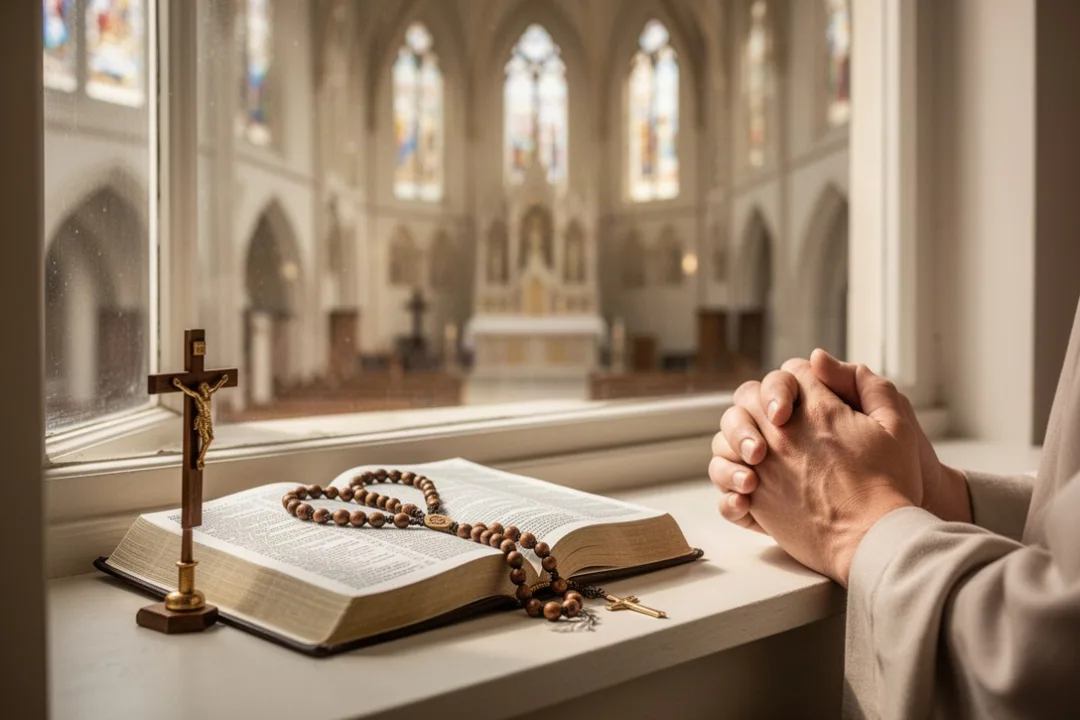
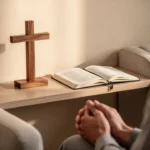
Choose a place where you can be reasonably undisturbed. You might sit beside your bed, stand in front of a crucifix, pray in an empty church, or take a quiet walk. A dedicated location can help your mind recognize that you are entering a time of intentional prayer, but God is not limited to one place.
Begin with the Sign of the Cross. This familiar gesture reminds you that you are praying as a Christian and places your attention on the Father, Son, and Holy Spirit. Then become quiet for a moment. Notice your breathing, set aside the immediate rush of the day, and acknowledge that God is present.
Next, speak to God honestly. You can thank him for something specific, ask for forgiveness, bring him a concern, or simply say that you are there. If your thoughts wander, return gently to a short phrase such as “Jesus, I trust in you” or “Lord, be with me.” The repeated return is part of prayer, not proof that you have failed.
A basic prayer period might follow this pattern:
Become present: Make the Sign of the Cross and settle your attention.
Praise God: Recognize who God is and thank him for his goodness.
Review your life: Bring your joys, fears, duties, and relationships before him.
Ask: Pray for your needs and for the needs of other people.
Listen: Sit quietly with a sacred word, Scripture passage, or peaceful awareness of God.
Respond: End by asking for help to live faithfully in the next part of your day.
This pattern is flexible. You may spend most of the time asking for help on one difficult issue, or you may remain quietly attentive without many words. Prayer is not measured by the number of sentences; it is measured by the sincerity with which you turn toward God.
How to use traditional Catholic prayers
Traditional prayers are valuable because they have been prayed by generations of Catholics. They teach the basic movements of faith: adoration, thanksgiving, repentance, petition, and surrender. When you are tired, upset, or unsure what to say, a familiar prayer can carry you through the moment.
The Our Father teaches you to honor God, seek his kingdom, depend on him for daily needs, ask forgiveness, forgive others, and request protection from evil. The Hail Mary honors Mary as the mother of Jesus and asks her to pray for you. The Glory Be directs praise to the Father, Son, and Holy Spirit.
Other common Catholic prayers include the Apostles’ Creed, the Act of Contrition, the Angelus, the Memorare, and prayers to particular saints. You do not need to memorize all of them. Keep a prayer book, parish handout, or approved Catholic prayer app nearby, and choose one prayer that fits your current need.
When you pray a memorized prayer, avoid treating it like a task to finish quickly. Pay attention to one phrase at a time. For example, while praying the Our Father, you might pause mentally on God’s holiness, your need for forgiveness, or your responsibility to forgive someone else. Repetition becomes prayer when your attention and intention are involved.
Catholics read the Bible as the inspired word of God within the life and teaching of the Church. Prayerful Bible reading is not mainly a search for a prediction about your day or a quick answer to every problem. It is a way to encounter God, understand the story of salvation, and allow Scripture to correct and encourage you.
A simple method is lectio divina, traditionally described through four movements. Begin with a short passage, perhaps from one of the Gospels, a psalm, or the daily Mass readings. Read slowly more than once, noticing a word or phrase that draws your attention.
Read: Pay attention to what the passage actually says, including its people, actions, and setting.
Reflect: Consider what the passage reveals about God, human life, sin, mercy, or discipleship.
Respond: Speak to God about what you have noticed and how it touches your life.
Rest: Remain quiet for a few moments, receiving God’s presence without forcing more thoughts.
For a first attempt, read a short section from one of the Gospels rather than several chapters. Ask questions such as: What is Jesus doing? What does this scene reveal about his character? Where might I need to respond with greater faith, humility, or love?
Do not assume that every thought that occurs during prayer is a direct message from God. Scripture should be read in context and interpreted consistently with the faith of the Church. If a passage is confusing or troubling, consult a reliable Catholic Bible commentary, priest, deacon, or catechist rather than drawing a quick conclusion from one isolated line.
How to pray the Rosary
The Rosary is a Christ-centered meditation prayed with the help of Mary. Its repeated prayers create a steady rhythm while your mind considers important events in the lives of Jesus and Mary. The Rosary is not worship of Mary; Catholics honor her as the mother of Jesus and ask her to intercede with him.
To pray a standard five-decade Rosary, begin with the Sign of the Cross, the Apostles’ Creed, an Our Father, three Hail Marys, and a Glory Be. Then announce the first mystery, pray an Our Father, ten Hail Marys, and a Glory Be. Repeat that pattern for five mysteries, then finish with the customary closing prayers you prefer.
The mysteries are grouped according to the major events they contemplate:
Joyful Mysteries: Events surrounding Jesus’ conception and birth.
Sorrowful Mysteries: Jesus’ suffering and death.
Glorious Mysteries: The Resurrection, the work of the Holy Spirit, and Mary’s heavenly glory.
Luminous Mysteries: Important moments in Jesus’ public ministry.
You do not need to picture every detail perfectly. Choose one feature of each mystery and consider what it teaches about Jesus’ love, obedience, mercy, or mission. If you lose count or become distracted, continue peacefully. The purpose is prayerful attention, not numerical perfection.
How to make the Mass part of your prayer life
For Catholics, the Mass is the central act of public worship. It is not simply a private prayer service or a lecture. In the Mass, the Church gathers to hear the word of God, give thanks, pray for the world, and participate sacramentally in Christ’s self-offering to the Father.
Your prayer begins before the first readings. Arrive with enough time to become quiet, place your concerns before God, and recognize that you are joining other believers. During the Liturgy of the Word, listen for how the readings reveal God’s work. During the Eucharistic Prayer, unite your own life, gratitude, suffering, and hopes with Christ’s offering.
The physical actions of Mass also teach you how to pray. Standing can express respect and readiness. Sitting allows attentive listening. Kneeling expresses adoration and humility. Responses, singing, silence, and gestures help the whole congregation pray together rather than remaining a group of separate observers.
After receiving Holy Communion, remain quiet for a few minutes if possible. Thank Jesus, ask for deeper conversion, and pray for people who need help. If you are not receiving Communion, you can still pray for a spiritual closeness to Christ and for growth in faith. Anyone unsure about receiving should ask a priest or parish minister for guidance.
How to include silence and contemplation
Not every prayer period needs many words. Contemplative prayer means spending time with God in loving attention. You may use a sacred word, gaze quietly at a crucifix, sit before the tabernacle, or rest with a short passage from Scripture.
Silence can feel uncomfortable because ordinary thoughts become more noticeable. That does not mean the prayer is going badly. When your mind wanders, recognize the distraction without self-criticism and return to your chosen focus. You may need to do this many times in a single minute.
Adoration before the Blessed Sacrament offers a particularly Catholic setting for quiet prayer. In Eucharistic adoration, the consecrated host is displayed for prayer outside of Mass. You can read Scripture, pray the Rosary, write in a journal, or simply sit in the presence of Christ according to your parish’s practice.
Do not judge prayer by emotional intensity. Some days may bring peace or consolation, while others feel dry and ordinary. Faithfulness during a dry season can be a deeper act of trust than prayer that feels immediately rewarding.
A daily rhythm helps prayer become part of your life rather than something you remember only during a crisis. Attach prayer to routines that already exist: waking, eating, commuting, beginning work, or turning off the lights. A short practice repeated consistently is easier to sustain than an ideal schedule that does not fit your responsibilities.
In the morning, offer the day to God and ask for wisdom in your decisions. At meals, give thanks and remember people who lack food or security. During work or household duties, use brief prayers that bring you back to patience and charity. At night, review the day with honesty and entrust tomorrow to God.
Many Catholics also pray the Angelus or another brief devotion during the day. The Liturgy of the Hours gives the Church a structured way to sanctify the day through psalms, Scripture, intercessions, and praise. You can begin with Morning Prayer or Evening Prayer, even if you do not pray every hour.
A realistic daily plan might look like this:
Morning: Two minutes for the Sign of the Cross, an offering of the day, and one specific intention.
Midday: A short pause to thank God and ask for patience or strength.
Evening: Ten minutes with the day’s Gospel, a traditional prayer, or the Rosary.
Weekly: Participation in Sunday Mass and, when possible, additional quiet prayer.
Regularly: Examination of conscience and the Sacrament of Reconciliation according to your circumstances.
How to pray when asking for help
Petition is a normal part of Catholic prayer. Jesus taught his followers to bring their needs to God, and the Church continually prays for the sick, the poor, families, leaders, the dead, and the whole world. You can ask for a specific outcome while also placing the situation in God’s hands.
Try to make your request concrete. Instead of praying only, “Help me,” you might say, “Give me patience in this conversation,” “Guide the doctors caring for my parent,” or “Help me forgive this person without pretending the harm did not matter.” Specific prayer helps you recognize where grace may be working.
Prayer is not a technique for controlling God or guaranteeing the result you want. A sincere request may be answered differently or more slowly than you hoped. The Christian response is not passive resignation; continue taking responsible action, seeking wise counsel, and accepting help while asking God for strength and clarity.
For serious needs: Pray for the outcome you desire, but also ask for wisdom, endurance, trustworthy support, and the grace to act with love whatever happens.
How to pray for other people and the dead
Intercessory prayer means bringing another person’s needs before God. You can pray for someone by name, ask for a particular grace, or entrust the person to God’s mercy. Intercession is an act of love, not a substitute for practical care, honest conversation, medical treatment, or professional assistance.
When praying for someone who has hurt you, begin honestly. You do not have to deny anger or pretend that a serious wrong was harmless. You can ask God to protect you, bring justice, heal the damage, and free you from hatred. Forgiveness may be a gradual decision to stop seeking revenge and to place the matter in God’s hands; it does not always mean immediate trust or restored access.
Catholics also pray for the dead, asking God to purify and welcome them into eternal life. You might offer a Mass intention, pray a decade of the Rosary, visit a cemetery, or remember deceased family members during personal prayer. These practices express hope in God’s mercy and the spiritual bond between members of the Church.
Common Catholic prayer mistakes and practical corrections
Many difficulties come from unrealistic expectations rather than a lack of faith. Prayer is a relationship that develops over time, and distraction, inconsistency, and uncertainty are common human experiences. The following corrections can make your practice more stable.
Waiting to feel spiritual: Pray because God is worthy of your attention, not only when you feel peaceful or inspired.
Using too many devotions at once: Choose one or two practices and learn them well before adding more.
Praying only in emergencies: Bring ordinary gratitude, work, relationships, and decisions to God as well.
Rushing memorized prayers: Slow down enough to understand the words and offer them intentionally.
Treating distractions as failure: Notice them, let them go, and return to prayer without harsh self-judgment.
Confusing prayer with wish fulfillment: Ask boldly while remaining open to God’s wisdom and timing.
Ignoring the sacraments and community: Personal prayer grows stronger when joined to Mass, confession, and parish life.
Comparing your prayer to someone else’s: Different personalities, duties, and seasons of life require different forms of prayer.
Another common mistake is assuming that every unusual impression, dream, or emotional experience has a divine origin. Catholic discernment values humility, patience, Scripture, sound teaching, and wise counsel. If an experience leads to fear, pride, isolation, or harmful choices, discuss it with a trusted priest or qualified pastoral adviser.
How confession supports a stronger prayer life
Sin can make prayer feel difficult because it damages your relationship with God and with other people. Catholics believe God’s mercy is always available, but the Sacrament of Reconciliation gives a concrete way to confess sins, receive absolution, and begin again with the help of grace.
Before confession, make an examination of conscience. Review your relationship with God, your treatment of family and neighbors, your honesty, responsibilities, use of time, and care for your body and the vulnerable. Ask not only what you did wrong but also where you failed to do the good you were capable of doing.
After confession, thank God for mercy and consider one practical change. If you have harmed someone, make appropriate amends. If the same sin returns, do not conclude that confession was pointless. Bring the pattern back to God, seek accountability where needed, and take concrete steps to avoid the circumstances that lead you into it.
How to tell whether prayer is bearing fruit
Prayer does not make every problem disappear, but it should gradually influence the way you think and act. Look for greater honesty, patience, compassion, courage, and willingness to forgive. You may still struggle, yet become quicker to recognize harm and return to what is good.
Healthy prayer also leads you toward reality rather than away from it. It should not encourage contempt for other people, neglect of responsibilities, refusal of appropriate treatment, or dependence on fear. A mature prayer life brings your whole life before God and helps you love God and your neighbor more faithfully.
Keep a simple record if it helps: note the prayer you practiced, what you asked for, and any change you noticed in your attitude or choices. Avoid turning this into a spiritual performance report. Its purpose is to help you recognize patterns of grace and identify practices that genuinely support your relationship with God.
How to build a Catholic prayer routine that lasts
Choose a modest starting point and protect it. Five to ten minutes at a consistent time may be enough for the first month. Keep a Bible, Rosary, crucifix, or prayer book in the place where you plan to pray so that preparation does not become another obstacle.
Give your routine a clear structure, but leave room for your actual needs. One day you may pray with the Gospel; another day you may need to ask forgiveness, sit silently, or pray for a family member. Consistency matters more than variety, and honesty matters more than impressive language.
If you miss a day, start again at the next opportunity rather than waiting for a new week or month. Share your plan with a trusted Catholic friend, family member, priest, or spiritual director if accountability would help. Over time, personal prayer, sacramental life, Scripture, service, and community can become a unified way of living in God’s presence.
What to do when you do not know how to pray
Begin exactly where you are. Make the Sign of the Cross, name the truth of your situation, and say, “God, help me to pray.” Then remain quiet for a moment. That small act of turning toward God is already a real beginning.
You can also pray with a single traditional prayer, read one short Gospel passage, repeat the name of Jesus reverently, or ask a saint to intercede for you. If grief, anxiety, trauma, or depression makes prayer difficult, seek support from both a priest and an appropriate mental-health professional. Spiritual care and professional care can work together.
When words fail completely, offer your silence. God does not require a polished performance. Bring your attention, your desire, your weakness, and your ordinary life; faithful prayer grows through repeated return.
Frequently asked questions
Do I have to kneel every time I pray as a Catholic?
No. You may kneel, sit, stand, walk, or pray in another respectful posture. Kneeling can express adoration or humility, while sitting may help you read Scripture or remain attentive. Your posture should support prayer rather than cause unnecessary discomfort. The important matters are reverence, honesty, and turning your attention toward God.
Is it acceptable to pray in my own words instead of using formal prayers?
Yes. Catholics are encouraged to speak to God personally about gratitude, fear, repentance, decisions, and other needs. Traditional prayers provide guidance and connect you with the Church’s worship, while spontaneous prayer gives voice to your particular life. Many people find that using both forms keeps prayer grounded and personal.
What should I do if I feel nothing when I pray?
Continue gently without demanding a particular emotion. Feelings change for many reasons, including stress, fatigue, grief, and health. Use a short Gospel passage, a familiar prayer, or a few minutes of silence. If spiritual dryness continues, discussing it with a priest or spiritual director may help you distinguish ordinary distraction from a deeper concern.
Can I pray directly to a Catholic saint?
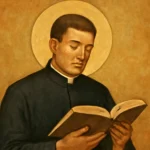
Catholics ask saints to pray for them; they do not treat saints as gods or replace God with them. You can address a saint respectfully and request intercession, much as you might ask another Christian to pray for you. Worship belongs to God alone, while honoring the saints points back to God’s grace at work in their lives.










Leave a Reply